
If you run a sweet shop, a namkeen unit, a hotel kitchen, a caterer’s business, or a grocery store anywhere in Panchkula, Chandigarh, Mohali, or the wider tricity belt, you already know a simple truth: your dishes are only as good as your gram flour. Pakoras that shatter instead of turning soggy, dhoklas that rise light and airy, laddoos that melt in the mouth – all of it starts with one ingredient that rarely gets the credit it deserves.
Finding premium quality besan wholesale in Panchkula isn’t just about ticking a supply-chain box. It’s about protecting the taste, texture, and reputation of everything you cook or sell. Yet most buyers still choose a besan seller near me purely on price, without checking how the flour was milled, stored, or packed – and that decision quietly affects every batch that follows.
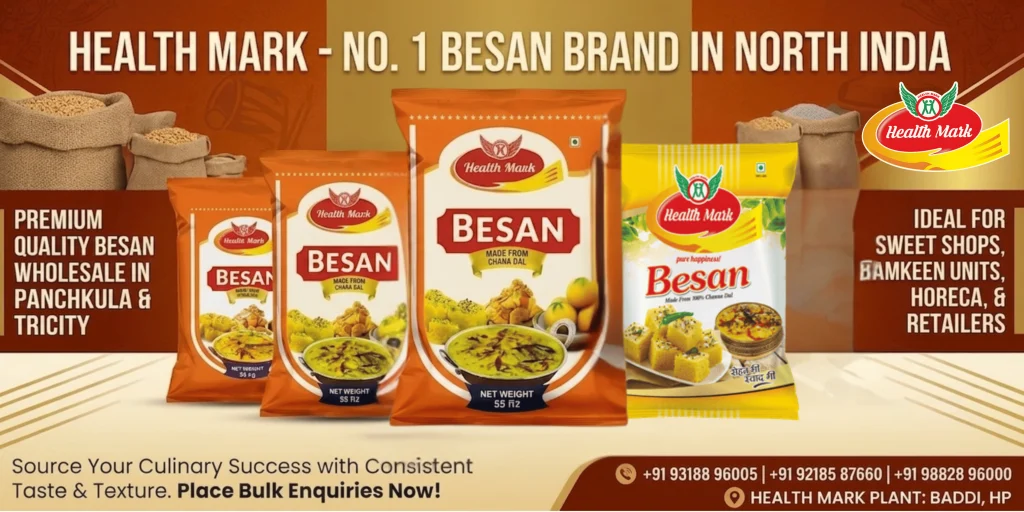
This guide walks you through everything a serious buyer needs to know: what actually makes besan “premium,” how to evaluate a besan manufacturer in India, the mistakes wholesale buyers repeatedly make, and why a growing number of businesses across north India are choosing Health Mark as their besan supplier of choice.
What Is Besan? A Quick Refresher on Gram Flour
Besan, also called gram flour or chana flour, is made by grinding dehusked and split Bengal gram (chana dal) into a fine powder. It’s one of the oldest and most versatile flours in the Indian pantry – equally at home in a savory kadhi, a plate of hot pakoras, or a box of festive laddoos.
Not all besan is created equal, though. Depending on the milling process, you’ll find different grades and textures on the market, and understanding these differences is the first step toward buying smart:
Fine Besan – the everyday, all-purpose gram flour used for batters, curries, and baking.
Bareek Besan – a finely sieved variant prized for silky-smooth batters and delicate sweets.
Motichur / Mota Besan – a coarser grind traditionally used for boondi and motichur laddoo, where texture matters as much as taste.
Powder Besan – an ultra-fine, almost talc-like grind used where a light, smooth finish is essential.
A genuine besan manufacturer in India will offer this full range rather than a single generic pack, because different kitchens – and different recipes – need different textures.
Why “Premium Quality” Actually Matters in Besan
It’s easy to assume that besan is besan – a commodity flour with little room for differentiation. In reality, quality gaps show up in ways that directly hit your bottom line:
Adulteration risk: Cheaper besan is sometimes blended with other pulses or fillers to cut costs, altering both taste and cooking behavior.
Moisture control: Poorly dried or stored besan clumps, develops off-flavors, and spoils faster – a real problem for bulk buyers holding stock.
Milling heat: Fast, high-friction milling can heat the flour and dull its natural nutty aroma, something a trained palate notices instantly in the final dish.
Consistency across batches: A premium high quality besan supplier maintains the same taste, color, and texture batch after batch, so your recipes don’t need constant re-adjustment.
This is exactly why savvy buyers now search specifically for premium quality besan wholesale in Panchkula rather than settling for whatever is available at the nearest kirana wholesale market.
Health Benefits of Choosing Premium Besan
Beyond taste and texture, gram flour is genuinely one of the more nutritious flours available, which is part of why it has held a permanent place in Indian households for generations.
| Nutritional Highlight | Why It Matters |
| High Plant Protein | Supports muscle repair and keeps you fuller for longer, making besan popular among fitness-focused households |
| Naturally Gluten-Free | A safe, everyday flour option for people managing gluten sensitivity or celiac disease |
| Rich in Dietary Fiber | Aids digestion and helps maintain steady blood sugar levels |
| Low Glycemic Index | A gentler carbohydrate choice compared to refined wheat flour |
| Iron & Folate | Contributes to everyday nutrition, especially important for growing children and women |
Because besan is naturally derived from a legume rather than a cereal grain, it also tends to have a gentler impact on blood sugar than refined wheat flour – one more reason health-conscious customers actively look for it on ingredient labels.
Health Mark: A Trusted Besan Manufacturer in North India
Health Mark operates its manufacturing unit at Plot No. 60, Industrial Township, Bhatoli Kalan, Baddi (Himachal Pradesh) – strategically close to Panchkula, Chandigarh, Mohali, and Ludhiana. This proximity means fresher stock reaches tricity retailers and caterers faster, with fewer handling touchpoints between mill and shelf.
Health Mark besan is milled from carefully selected chana dal for a smooth texture and rich, nutty flavor, and is hygienically processed and packed to lock in freshness. The brand’s ambition to be recognised as a No. 1 besan brand rests on a simple approach: consistent raw material sourcing, controlled milling, and packaging that protects the flour until it reaches your kitchen.
The Health Mark Besan Range
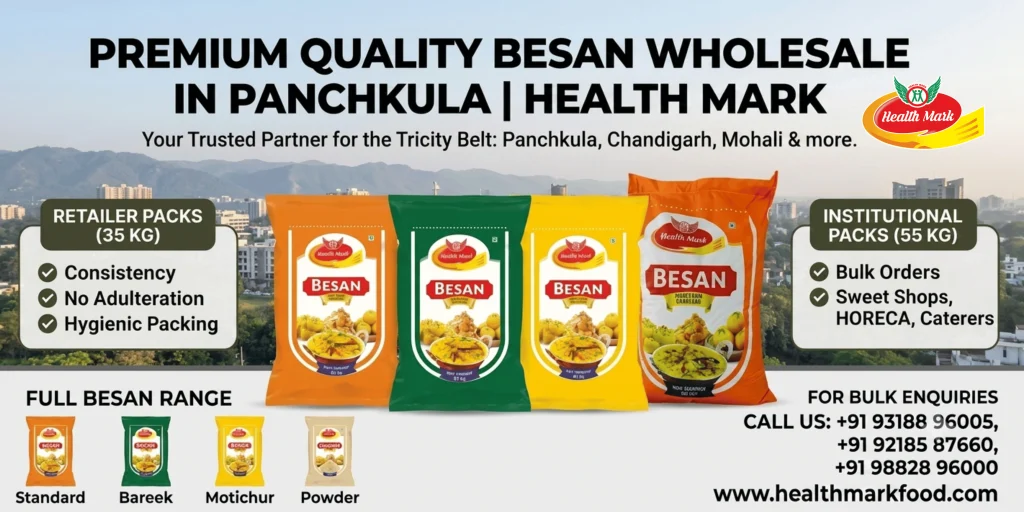
Health Mark offers a complete besan lineup so wholesale buyers can source every grade from one trusted besan seller instead of juggling multiple vendors:
Besan – View product – the everyday, all-purpose gram flour made from premium quality Bengal gram, ideal for pakoras, kadhi, and daily cooking.
Bareek Besan – a fine, sieved grind suited to smooth batters and delicate sweets.
Motichur / Mota Besan – a coarser texture built for boondi, motichur laddoo, and traditional festive sweets.
Powder Besan – an ultra-fine grind for recipes that demand a silky, uniform finish.
Wholesale buyers, distributors, and retailers can browse the full lineup on the Besan category page and place bulk enquiries directly with the Health Mark sales team.
How to Choose the Best Besan Wholesale Supplier
Whether you’re comparing a besan supplier in north India for the first time or reviewing your existing vendor, run through this checklist before signing a bulk order:
Check the raw material source. Ask whether the chana dal is sourced from verified growers and how it’s graded before milling.
Ask about the milling process. Slow, controlled milling protects flavor and nutrition better than high-speed, heat-generating grinding.
Inspect packaging quality. Food-grade, properly sealed packaging keeps moisture and pests out – critical for anyone buying in bulk and storing stock for weeks.
Request a sample before committing. A best besan seller will happily provide a sample batch so you can test color, aroma, and cooking performance.
Compare best besan price against consistency, not just the invoice. A slightly higher per-kilo rate often costs less overall once you factor in reduced wastage and consistent recipe outcomes.
Confirm delivery reliability to your area. For businesses in Panchkula, Chandigarh, or Mohali, a supplier with a nearby manufacturing base (like Baddi) usually means faster turnaround and fresher stock.
Look at product range and MOQ flexibility. A genuine besan manufacturer in India should offer multiple grades (fine, bareek, mota, powder) and reasonable minimum order quantities for growing businesses.
Verify hygiene and processing standards. Ask direct questions about how the facility manages cleanliness, storage, and quality checks.
Common Mistakes Wholesale Buyers Make When Sourcing Besan
Even experienced buyers fall into a few predictable traps when placing bulk besan orders. Watch out for these:
Choosing the lowest price without testing a sample first, only to discover inconsistent texture after the order arrives.
Overstocking besan without checking shelf-life guidance, leading to rancidity and wasted inventory.
Ignoring packaging quality, which allows moisture to seep in during transport or storage.
Switching suppliers frequently, which makes it harder to maintain consistent recipe results across batches.
Not asking where the manufacturing unit is located – distance directly affects freshness and delivery timelines.
Overlooking product variety and assuming one grade of besan works for every recipe, when fine, bareek, mota, and powder besan each serve a different culinary purpose.
Premium Besan vs Ordinary Market Besan: A Side-by-Side Comparison
Here’s how premium quality besan typically compares against the loose, unbranded besan commonly sold in general wholesale markets:
| Parameter | Ordinary Market Besan | Health Mark Premium Besan |
| Raw Material | Mixed-grade chana dal, often blended with cheaper pulses | Handpicked, premium quality Bengal gram (chana dal) |
| Grinding Process | High-speed milling that heats the flour and dulls flavor | Controlled, fine milling that preserves aroma and nutrition |
| Hygiene & Packing | Loose or poorly sealed packaging, exposed to moisture | Hygienically processed and sealed in food-grade packaging |
| Texture & Taste | Inconsistent texture, occasional grittiness | Smooth, uniform texture with a rich, nutty flavor |
| Shelf Life | Shorter shelf life, faster to turn rancid | Longer shelf life due to freshness-first processing |
| Wholesale Pricing | Lower upfront cost but higher wastage | Competitive best besan price with lower spoilage losses |
| Supply Reliability | Fluctuating stock, inconsistent batches | Dependable top selling besan supply for retailers & HORECA |
Everyday and Festive Uses of Premium Besan
A big part of besan’s popularity is how versatile it is across both daily meals and festive cooking. Some of the most common uses include:
Pakoras & bhajis – besan’s binding and crisping properties make it the base of nearly every deep-fried Indian snack.
Dhokla & khaman – a smooth, well-milled besan is essential for that signature light, spongy texture.
Kadhi – besan thickens the yogurt-based gravy while adding its distinctive tang and body.
Besan chilla – a quick, protein-rich savory pancake popular in health-conscious households.
Laddoos & halwa – motichur besan and fine besan are staples in festive sweet-making, from Diwali to weddings.
Coating and thickening agent – used in curries and batters where a smooth, lump-free finish matters.
This range of applications is exactly why HORECA businesses, sweet shops, and namkeen manufacturers prefer sourcing multiple besan grades from a single top Besan supplier rather than mixing and matching between vendors.
What Affects Best Besan Price in Wholesale Buying
Wholesale besan pricing isn’t fixed – it moves with a handful of predictable factors, and understanding them helps you negotiate better:
Order quantity and packaging size (55gm to bulk 25kg+ formats typically carry different per-kilo rates).
Seasonal chana dal prices, which fluctuate with the annual harvest.
Freight distance – buying from a besan seller near me reduces transport cost compared to sourcing from far-off states.
Product grade – fine besan, bareek besan, mota besan, and powder besan can carry slightly different price points based on milling complexity.
Packaging material – food-grade, moisture-resistant packaging costs marginally more but reduces spoilage losses.
Rather than chasing the absolute lowest number, ask any potential best wholesale besan supplier for a transparent price breakdown so you understand exactly what you’re paying for.
Why Tricity Businesses Prefer a Local, Trusted Besan Supplier
Panchkula, Chandigarh, and Mohali form one of north India’s busiest food and hospitality markets, from wedding caterers to sweet shops to quick-service restaurants. For businesses here, working with a besan supplier in north India – rather than one based hundreds of kilometres away – offers real, practical advantages:
Shorter transit times mean fresher besan reaching your shelves.
Lower freight costs can be passed on as a better best besan price.
Faster reordering during peak festive and wedding seasons, when demand spikes suddenly.
Easier communication for custom packaging or bulk order requirements.
Health Mark’s manufacturing base in Baddi places it within easy reach of Panchkula, Chandigarh, and the surrounding tricity and north Indian markets, making it a practical choice for businesses that value both quality and proximity.
FAQ
1. What makes besan “premium quality” compared to regular besan?
Premium besan is milled from carefully selected, high-grade chana dal using a controlled process that protects flavor and texture. It’s typically free from added fillers, properly dried to prevent clumping, and packed in food-grade material to preserve freshness – differences that become obvious in both taste and cooking performance.
2. Where can I buy premium quality besan wholesale in Panchkula?
Health Mark supplies premium besan across Panchkula, Chandigarh, Mohali, and the wider tricity region from its manufacturing unit in Baddi. You can browse the full besan range on the Health Mark website or reach the sales team directly for bulk wholesale enquiries.
3. What is the difference between besan, bareek besan, and mota besan?
Besan is the standard, all-purpose gram flour. Bareek besan is finely sieved for a smoother, silkier texture, ideal for delicate batters. Mota besan (also called motichur besan) has a coarser grind traditionally used for boondi and motichur laddoo, where texture is as important as taste.
4. Is besan gluten-free?
Yes. Besan is made purely from ground chana dal (Bengal gram), a legume, so it’s naturally gluten-free and a suitable flour option for people avoiding gluten in their diet.
5. How should I store besan bought in bulk?
Store besan in an airtight, food-grade container in a cool, dry place away from direct sunlight and moisture. Properly packed premium besan resists clumping better than loosely packed, lower-grade flour, but good storage practices still extend shelf life significantly.
6. What is the typical shelf life of good-quality besan?
Well-processed, properly packed besan generally stays fresh for several months when stored correctly. Exposure to moisture, heat, or poor packaging can shorten this considerably, which is one reason packaging quality matters so much for bulk buyers.
7. How do I know if a besan brand is genuinely a top Besan supplier for wholesale?
Look for consistency across batches, transparent sourcing information, proper hygienic processing, a documented product range across besan grades, and a willingness to provide samples before you commit to a large order. Reliability during peak seasons is another strong indicator.
8. Does Health Mark offer besan in bulk packaging for businesses?
Health Mark’s besan range is available across multiple pack sizes for both retail and business needs. For specific bulk or wholesale packaging requirements, businesses can contact the Health Mark sales team directly to discuss quantities and pricing.
9. Why is besan commonly used in both savory and sweet Indian dishes?
Besan’s neutral, nutty base flavor and binding properties make it equally suited to savory items like pakoras and kadhi as well as sweets like laddoo and halwa. Its texture can also be adjusted through different grinds (fine, bareek, mota, powder) to match the exact dish being prepared.
10. How can I place a wholesale enquiry for Health Mark besan?
You can reach the Health Mark sales team directly at +91 93188 96005, +91 92185 87660, or +91 98828 96000, or submit a bulk enquiry through the Besan product page on the Health Mark website.
Conclusion: Choose Besan That Doesn’t Cut Corners
Besan might look like a simple commodity on a wholesale price list, but the difference between ordinary market besan and a genuinely premium quality besan shows up in every batch you cook – in texture, aroma, consistency, and ultimately, in customer satisfaction. For businesses across Panchkula, Chandigarh, Mohali, and the wider north India belt, choosing a nearby, quality-focused besan manufacturer in India isn’t just convenient; it’s a decision that protects your recipes and your reputation.
Health Mark brings together careful sourcing, controlled milling, and hygienic packaging across its full besan range – Besan, Bareek Besan, Motichur/Mota Besan, and Powder Besan – all manufactured close enough to Panchkula to reach you fresh.
Ready to place a wholesale enquiry? Call the Health Mark sales team at +91 93188 96005, +91 92185 87660, or +91 98828 96000, or explore the full range on the Health Mark Besan category page today.