If you’ve ever stood in a kitchen with a bowl of besan, hot oil bubbling on the stove, and wondered why some pakoras turn out crisp and golden while others go soggy and pale the answer usually isn’t your recipe. It’s the besan. Not all gram flour is created equal, and if you’re a home cook, a sweet shop owner, a restaurant chef, or a distributor sourcing in bulk, choosing the right besan seller can make or break your final product.
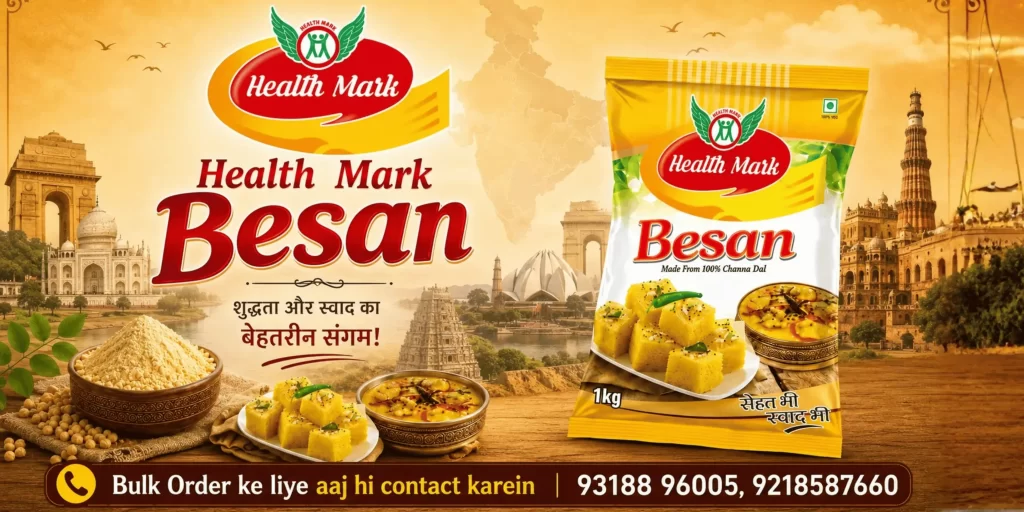
In this guide, we’ll walk through everything you need to know before you buy besan in India how it’s made, what separates premium quality besan from the average sack sold loose in the market, how retail and wholesale pricing works, and why Health Mark has become one of the most reliable names for besan manufacturing and supply across the country. Whether you need a single 1 kg pack for your kitchen or a wholesale order for your shop, you’ll leave this page knowing exactly what to look for.
What Is Besan and Why It Matters in Indian Cooking
Besan, also called gram flour or chana flour, is made by grinding dehusked, split Bengal gram (chana dal) into a fine powder. It’s one of the oldest and most versatile flours in the Indian pantry the base for everything from crispy pakoras and soft dhoklas to smooth kadhi and festive laddoos.
Unlike wheat atta, besan has a naturally nutty aroma, a slightly grainy texture (unless finely milled), and a golden-yellow colour that comes directly from the chana dal it’s ground from. Because it’s used in both savory and sweet dishes, the quality of the besan you buy has a direct impact on taste, texture, colour, and even how well a dish binds together.
This is exactly why so many home cooks and businesses search for the best besan seller rather than just picking up whatever is available at the nearest store. A poorly processed or adulterated besan can leave dishes tasting bitter, raw, or gritty no recipe can fix that.
How Premium Quality Besan Is Made
Understanding the manufacturing process helps you appreciate why some besan performs so much better in the kitchen. Here’s what separates a professional, hygienic besan manufacturing process from a low-grade one:
1. Sourcing the Right Chana Dal
Premium besan starts with carefully selected, high-grade Bengal gram. The dal is cleaned to remove husk, stones, and foreign particles before it ever reaches the grinding stage.
2. Cleaning and Sorting
Reputable manufacturers pass the dal through multiple cleaning and sorting stages to remove broken grains, dust, and impurities a step that’s often skipped by unbranded, loose-market sellers.
3. Fine Milling
The cleaned dal is milled to a consistent, fine texture. This is where the difference between “bareek” (fine), “mota” or “motichur” (coarse), and powder besan comes from each suited to different recipes.
4. Hygienic Packing
The final step is sealing the flour in moisture-proof, hygienic packaging to lock in freshness and prevent contamination during transport and storage. This is one of the biggest quality differentiators between a trusted brand and loose, open-sack besan sold in unregulated markets.
Health Mark’s besan range is prepared using exactly this process from premium chana dal selection to hygienic, sealed packaging so every batch delivers the same smooth texture and rich, nutty flavour.
What Makes a Seller the “Best Besan Seller” in India
When people search for the best besan seller, they’re usually not just looking for the cheapest price. They’re looking for consistency, hygiene, and reliability. Based on what matters most to both households and businesses, here’s a practical checklist:
• Consistent quality across every batch no variation in colour, texture, or taste
• Clear sourcing chana dal that is properly cleaned and graded before milling
• Hygienic, sealed packaging that protects against moisture and pests
• Transparent labelling with manufacturing details and quantity options
• Ability to supply both small retail packs and large wholesale/bulk quantities
• A responsive sales and enquiry process for B2B and repeat buyers
• A track record and visible presence website, product catalogue, and contact details
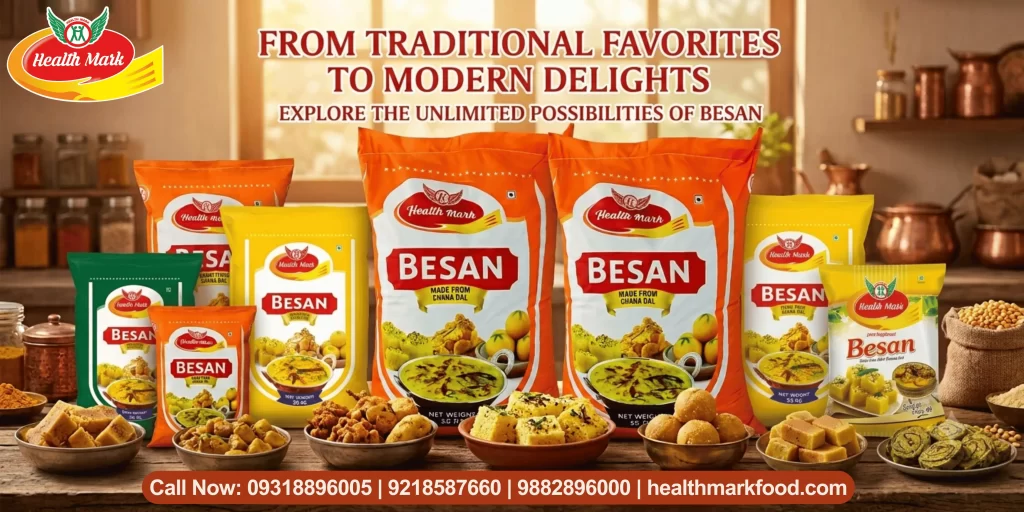
Health Mark checks each of these boxes, offering besan in multiple pack sizes 55 gm, 200 gm, 500 gm, and 1 kg so households and small retailers alike can buy exactly what they need, while also supporting larger wholesale orders for distributors and businesses.
Health Mark: A Trusted Besan Manufacturer in India
Health Mark is an FMCG brand built around the idea that everyday staples atta, besan, pulses, spices, dry fruits, and more should be sourced responsibly and processed with care. The brand’s besan is made from carefully selected chana dal, finely ground to deliver a smooth texture and rich nutty flavour, and it’s positioned for both everyday cooking and festive preparation.
The company operates out of an industrial unit in Baddi, Himachal Pradesh, and supplies across regions including Chandigarh, Panchkula, Ludhiana, and beyond. Health Mark’s product catalogue goes well beyond besan, covering atta, dry fruits, pickles, protein-rich foods, pulses, snacks, spices, and sugar which matters if you’re a retailer looking to consolidate your staple-goods sourcing with a single, dependable supplier.
You can explore the complete besan lineup including Bareek Besan, Motichur/Mota Besan, and Powder Besan on the official besan category page.
Retail vs Wholesale Besan Buying What’s the Difference
Not every buyer has the same needs, and understanding the difference helps you choose the right purchase path.
| Factor | Retail Buying | Wholesale Buying |
| Typical Quantity | 55 gm – 1 kg packs | Bulk quantities (10 kg and above) |
| Ideal For | Households, small kitchens | Sweet shops, restaurants, distributors, retailers |
| Pricing | Per-pack MRP | Negotiated bulk/slab pricing |
| Packaging | Consumer-ready sealed pouches | Bulk sacks or bulk-friendly packaging |
| Ordering Process | Direct purchase / online enquiry | Direct enquiry via phone or product enquiry form |
If you’re a business owner or distributor looking to place a wholesale besan order, the most efficient route is a direct enquiry rather than browsing retail listings. Health Mark accepts wholesale and bulk enquiries directly through its sales team.
You can also submit your requirement through the Product Enquiry page or reach out via the
Contact Us page for location and dispatch details.
Besan Price Today in India: What Affects the Rate
One of the most searched questions is simply: what is the besan price 1 kg today? The honest answer is that besan pricing is not fixed nationally it fluctuates based on several factors, and any number quoted without context can be misleading. Here’s what actually drives the price up or down:
• Chana dal (raw material) prices, which shift with the harvest season and crop output
• Milling and processing costs, including fine grinding and quality-control stages
• Packaging quality sealed, moisture-proof pouches cost more to produce than loose packing
• Brand positioning and quality assurance certified, hygienically processed besan is typically priced slightly above unbranded, loose-market flour
• Transport and regional logistics, since prices can vary between states and cities
• Pack size smaller packs (55 gm, 200 gm) usually carry a higher per-kg rate than 1 kg or bulk packs
Because rates change frequently with market conditions, the most accurate way to check today’s besan price is to contact the seller directly rather than relying on outdated listings. For current retail and wholesale rates on Health Mark besan, you can call the sales team or check the live listing on the
How to Identify Top Selling, Genuine Besan
With so many options on shelves and online, here’s a practical, no-nonsense way to separate genuine, top selling besan from lower-grade alternatives:
Check the colour
Good besan has a natural, even yellow tone. Overly bright or unnaturally uniform yellow can sometimes indicate added colouring a red flag worth avoiding.
Smell before you cook
Fresh besan has a mild, nutty aroma. A sour, musty, or rancid smell means the flour is old or has picked up moisture don’t use it.
Feel the texture
Rub a pinch between your fingers. Fine besan should feel smooth and powdery, without gritty lumps, unless you’ve specifically bought a coarser variety like mota or motichur besan for a particular recipe.
Look at the packaging
Sealed, tamper-proof packaging with clear manufacturing information is a strong signal of a hygienically processed product one of the reasons branded besan tends to outperform loose, open-sack flour in both safety and shelf life.
Do a simple taste test
A small pinch of raw besan should taste mildly nutty, never bitter or chalky. Bitterness usually points to poor-quality or aged chana dal.
Health Benefits and Nutritional Value of Besan
Besan isn’t just a cooking staple it’s genuinely nutrient-dense. Because it’s made from chana dal, it naturally carries the nutritional profile of legumes rather than refined cereal flour.
• Good source of plant-based protein, making it popular in vegetarian and high-protein diets
• Rich in dietary fibre, which supports digestion and helps with satiety
• Naturally gluten-free, making it a common substitute for wheat flour in many recipes
• Contains essential minerals such as iron, magnesium, and folate
• Lower glycemic impact compared to refined wheat flour, when used in balanced recipes
This nutritional profile is part of why besan has moved beyond traditional snacks into modern health-conscious cooking think besan chilla instead of a maida-based dosa, or besan-based baked snacks instead of deep-fried ones.
Popular Uses of Besan in Indian Kitchens
• Savory snacks: pakoras, bhajiyas, and fritters that need a crisp, non-soggy coating
• Steamed dishes: dhokla and khaman, where a smooth batter is essential for the right rise and texture
• Curries: besan-thickened kadhi, and gram-flour based gravies
• Sweets: besan laddoo, mysore pak, and other festive preparations that rely on properly roasted, fine-textured flour
• Breakfast dishes: besan chilla (savory pancakes), a popular high-protein, gluten-free option
• Batter and coatings: for vegetables, paneer, and snacks that need an even, golden fry
Besan Varieties Compared
Not all besan is meant for the same recipe. Health Mark’s range includes different grinds to suit different cooking needs:
| Variety | Texture | Best Used For |
| Bareek Besan (Fine) | Very fine, smooth | Dhokla, khaman, laddoo, smooth batters |
| Motichur / Mota Besan (Coarse) | Coarser grind | Motichur laddoo, traditional sweets needing texture |
| Powder Besan | Ultra-fine powder | Quick-mix batters, everyday cooking, pakoras |
| Standard Besan (1 kg pack) | Balanced, all-purpose | General household cooking snacks, curries, sweets |
Common Mistakes When Buying or Storing Besan
1. Buying loose, unpackaged besan purely because it looks cheaper hygiene and shelf life often suffer
2. Ignoring the manufacturing/packing date, which affects freshness and aroma
3. Storing besan in a damp kitchen area, which invites moisture, clumping, and pest activity
4. Using the wrong grind for the recipe for instance, using coarse besan for dhokla batter, which affects texture
5. Not sealing the pack tightly after opening, leading to faster staleness
6. Assuming all besan brands are the same and choosing based on price alone rather than quality and hygiene
Expert Tips for Home Cooks and Bulk Buyers
For home cooks
• Store besan in an airtight container away from direct sunlight and moisture
• Roast besan on low heat before using it in sweets to bring out its nutty flavour and remove any raw taste
• Sift the flour before making smooth batters like dhokla to avoid lumps
For retailers and wholesale buyers
• Ask suppliers about batch consistency and packaging standards before committing to a bulk order
• Request samples for taste and texture testing before finalising large quantities
• Factor in seasonal chana dal price changes when planning long-term stock
• Build a relationship with one dependable manufacturer rather than switching suppliers frequently consistency matters more to your customers than marginal price differences
Why Choose Health Mark Besan
Health Mark positions itself around purity, transparency, and consistency values that matter just as much to a household cook as they do to a wholesale buyer stocking shelves. The brand’s besan is made from premium quality chana dal, finely milled for a smooth texture, and hygienically processed and packed to preserve freshness.
• Made from carefully selected, premium quality chana dal
• Smooth, consistent texture across every batch
• Rich, natural nutty flavour without artificial additives
• Multiple pack sizes for both retail and household use 55 gm, 200 gm, 500 gm, and 1 kg
• Wholesale and bulk supply available for retailers, sweet shops, and distributors
• Backed by a wider FMCG catalogue, so businesses can source multiple staples from one trusted supplier
For wholesale rates, bulk orders, or distributorship enquiries, contact Health Mark directly: +91 93188 96005 | +91 92185 87660 | +91 98828 96000
FAQ
1. Which is the best besan seller in India for both retail and wholesale?
For buyers who want consistent quality across both small retail packs and large wholesale orders, Health Mark is a strong option. It offers besan in multiple pack sizes, uses premium chana dal, and supplies hygienically processed flour to households, retailers, and distributors alike.
2. What is the besan price today in India?
Besan prices vary by region, pack size, and raw material costs, so there isn’t one fixed national rate. Prices for a 1 kg pack typically shift with chana dal availability and processing costs. For the most accurate, current rate, it’s best to check directly with the seller or call the Health Mark sales team.
3. How can I tell if besan is of premium quality?
Look for a natural yellow colour (not artificially bright), a mild nutty smell, a smooth non-gritty texture for fine besan, and hygienic, sealed packaging. A sour smell or bitter taste usually signals poor quality or old stock.
4. Is besan the same as chana flour or gram flour?
Yes. Besan, chana flour, and gram flour all refer to the same product flour made by grinding dehusked, split Bengal gram (chana dal).
5. What is the difference between fine besan and coarse (motichur) besan?
Fine besan (bareek) has a smooth, powdery texture ideal for batters like dhokla and khaman. Coarse or motichur besan has a grainier texture, traditionally used for motichur laddoo and certain textured sweets.
6. Can I place a wholesale or bulk order for besan directly with Health Mark?
Yes. Health Mark accepts wholesale and bulk enquiries directly through its sales team. You can call or WhatsApp +91 93188 96005, +91 92185 87660, or +91 98828 96000, or submit a request through the product enquiry page.
7. Is besan gluten-free?
Yes, besan is naturally gluten-free since it’s made purely from ground chana dal, making it a popular flour choice for people avoiding gluten.
8. What pack sizes does Health Mark besan come in?
Health Mark besan is available in 55 gm, 200 gm, 500 gm, and 1 kg packs, catering to both small household needs and larger family or small-business requirements.
9. How should besan be stored to keep it fresh longer?
Store besan in an airtight container in a cool, dry place away from direct sunlight and moisture. Always reseal the pack tightly after each use to prevent clumping and prolong shelf life.
10. What can I use besan for besides pakoras?
Besan is extremely versatile it’s used in dhokla, khaman, kadhi, besan chilla, laddoos, mysore pak, and as a coating or thickening agent in a wide range of savory and sweet Indian dishes.
Conclusion
Choosing the right besan seller isn’t just about finding the lowest price on a shelf it’s about consistency, hygiene, and knowing exactly what goes into every batch you cook with or sell to your customers. Whether you’re a home cook stocking your kitchen, a sweet shop owner planning festive-season inventory, or a distributor looking for a dependable wholesale partner, the fundamentals stay the same: check the sourcing, check the processing, and check the packaging.
Health Mark brings all three together premium chana dal, fine and consistent milling, and hygienic packaging across pack sizes that suit both retail and wholesale needs.
Ready to order? Visit the Health Mark Besan product page to buy retail packs, or explore the
Besan category for the full range including bareek, motichur, and powder besan.
For wholesale enquiries, bulk pricing, or distributorship, call or WhatsApp: +91 93188 96005, +91 92185 87660, +91 98828 96000.