
distribution business anywhere in India, you already know that besan isn’t just another item on the shelf it’s one of the fastest-moving, highest-repeat-purchase staples in the entire pantry category. From crispy pakoras served in dhabas to festive laddoos lined up in sweet shops, gram flour touches almost every Indian meal in some form.
But here’s what most buyers don’t realize until they’ve been burned once: not all besan is created equal, and finding the right bulk besan supplier for restaurants, retailers & distributors can make the difference between a menu that keeps customers coming back and one that quietly loses them.
This guide breaks down everything a serious buyer needs how to judge quality, what “best besan” actually means in commercial terms, how bulk pricing works, what today’s besan price trends look like, and how to pick a manufacturer that won’t let your supply chain down during festival season when demand spikes overnight.
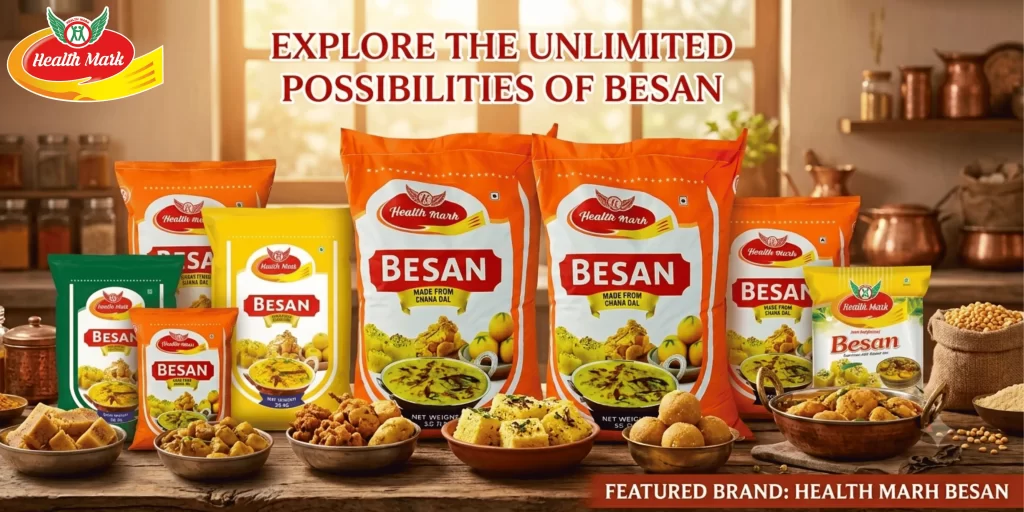
We’ll also look closely at how Health Mark, a well-established FMCG name known for pure, chana-dal-based besan, fits into this picture for restaurants, sweet shops, and wholesale distributors across India.
Why Bulk Besan Sourcing Is a Growing Business Opportunity
Gram flour demand in India isn’t seasonal anymore it’s structural. A few reasons this category keeps expanding for B2B buyers:
- Festive demand spikes: Diwali, Navratri, and wedding seasons push besan-based sweets like laddoos and boondi into overdrive.
- QSR and cloud kitchen growth: Pakoras, cutlets, and besan-battered snacks are staple menu fillers because they’re cheap to produce and universally loved.
- Health-conscious shift: Besan is naturally gluten-free, high in protein and fiber, making it attractive for health-focused menus and packaged snack lines.
- Rural and Tier-2/3 expansion: Distributors are finding strong repeat demand in smaller towns where branded, hygienically packed besan is replacing loose, unbranded flour.
For retailers and distributors, this means besan isn’t a “filler SKU” it’s a category worth building a dependable supplier relationship around.
What Makes Besan “Premium Quality”? The Science of Good Gram Flour
When people search for premium quality besan or the best besan, they’re usually (without realizing it) asking about four measurable things:
a) Source Purity
Good besan starts with 100% chana dal no mixed grains, no cheaper fillers like peas or corn flour blended in to cut costs.
b) Grinding Process
Slow-grinding at a controlled temperature retains the natural aroma and yellow color of chana dal. High-speed, high-heat grinding can scorch the flour slightly, dulling both flavor and nutrition.
c) Cleaning Standards
Before grinding, chana dal must be machine-cleaned to remove stones, dust, and husk. This step is often skipped by unbranded or informal suppliers, which is why loose besan sometimes has a gritty texture.
d) Moisture & Packaging Control
Besan is highly sensitive to moisture. Poor packaging leads to clumping, a musty smell, and reduced shelf life a serious problem for anyone buying in bulk and storing stock for weeks.
Expert tip: When evaluating a manufacturer, ask for their grinding method and packaging specification, not just a sample bag. A supplier who can explain their process in detail is usually more reliable than one who can’t.
Types of Besan Available for Bulk Buyers
Not every recipe needs the same besan. A smart bulk buyer should stock at least two to three grades:
| Besan Type | Texture | Best Used For |
| Barik (Fine) Besan | Very fine, smooth | Pakoras, batters, dhokla, bhajiyas |
| Motichur Besan | Coarse, granular | Boondi, motichur laddoos, festive sweets |
| Mota (Coarse) Besan | Grainy | Traditional laddoos, sweet-shop preparations |
| Powdered Besan | Ultra-fine, low-lump | Modern desserts, quick-mix recipes, bakery use |
Stocking multiple variants lets restaurants and sweet shops serve different dishes without compromising on texture a detail customers notice even if they can’t name it.
Who Needs a Bulk Besan Supplier?
The best besan seller relationship isn’t one-size-fits-all. Different buyers have different priorities:
- Restaurants & Dhabas: Need consistent batter texture for pakoras and snacks taste consistency matters more than price here.
- Sweet Shops (Halwais): Need Motichur and Mota besan that binds well for laddoos and boondi without breaking apart.
- Retailers & Kirana Stores: Need attractive packaging, a recognizable brand name, and reliable margins.
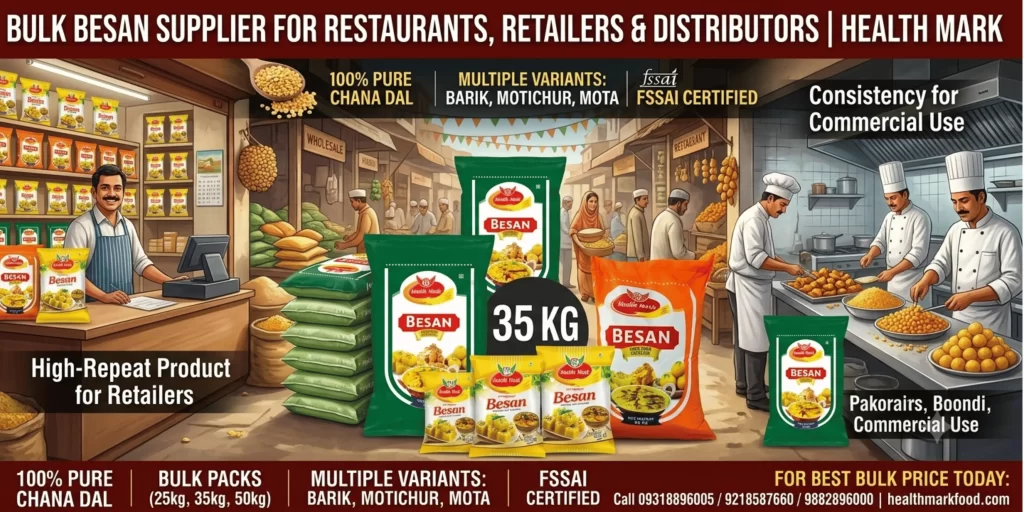
- Distributors & Wholesalers: Need bulk pack sizes (like 25 kg or 35 kg bags), consistent supply, and competitive per-kg pricing to protect their margins across the supply chain.
- Catering Businesses: Need large-volume, predictable delivery schedules, especially around wedding and festival seasons.
How to Choose the Best Besan Supplier for Your Business
Here’s a practical checklist to evaluate any best besan manufacturing partner before signing a bulk order:
- Check the Raw Material Sourcing Ask specifically if it’s 100% chana dal with no blended fillers.
- Ask About Batch Consistency Request samples from two different production batches and compare color, aroma, and texture.
- Verify Packaging Standards Bulk bags should be moisture-resistant and food-grade, not repurposed general-use sacks.
- Confirm Bulk Pack Sizes HORECA and distributor-friendly sizes (25 kg, 35 kg) reduce per-unit handling costs.
- Understand Pricing Transparency A trustworthy best besan seller gives clear, itemized bulk pricing without hidden minimums.
- Look at Delivery Reliability Ask about lead times, especially ahead of festive seasons when demand triples.
- Read Existing Business Reviews Talk to other halwais, retailers, or restaurant owners already buying from the supplier.
- Confirm FSSAI Compliance Any manufacturer supplying food-grade besan in bulk should have valid food safety certification.
Besan Price Today in India: Understanding the 1 Kg vs Bulk Rate
One of the most searched questions from buyers is around besan price 1 kg and besan price today in India. Here’s the honest answer: besan pricing fluctuates based on chana dal crop yields, seasonal demand, and regional logistics costs so no single number stays accurate for long.
What buyers should actually focus on instead of chasing a “lowest price today” figure:
- Price-per-kg drops significantly at bulk volumes (25 kg+ bags) compared to retail 1 kg packs, since packaging and distribution costs are spread across more product.
- Consistent quality at a slightly higher price often beats the cheapest option, because inconsistent besan leads to product wastage, customer complaints, and reputational cost all of which are more expensive than a few extra rupees per kg.
- Ask your supplier for a current rate card rather than relying on outdated online price listings, since raw material costs shift monthly.
For the latest besan price today in India and current bulk rates, buyers are encouraged to directly contact suppliers like Health Mark, since pricing is best confirmed at the point of ordering.
Comparison Table: Retail Besan vs Bulk/Wholesale Besan
| Factor | Retail Besan (1 kg pack) | Bulk/Wholesale Besan (25–35 kg) |
| Ideal Buyer | Households, small kitchens | Restaurants, sweet shops, distributors |
| Cost per Kg | Higher | Lower (economies of scale) |
| Packaging | Small consumer pouch | Food-grade bulk sack |
| Order Frequency | Weekly/monthly | Fortnightly/monthly with standing orders |
| Negotiable Pricing | Fixed MRP | Often negotiable at volume |
| Supplier Relationship | One-time/retail | Long-term, contract-based |
Health Mark: A Trusted Bulk Besan Manufacturing Partner
Among suppliers serving the HORECA, retail, and distribution segment, Health Mark has built a reputation around a straightforward promise: pure chana dal besan, made through slow-grinding and hygienic processing, without shortcuts.
A few things that stand out about Health Mark’s besan range for bulk buyers:
- 100% Chana Dal Sourcing no fillers, no blended grains, keeping both taste and nutrition intact.
- Multiple Variants for Different Needs Barik Besan for crisp pakoras, Motichur Besan for boondi and laddoos, Mota Besan for traditional sweets, and Powdered Besan for modern dessert applications.
- Bulk Pack Options including large-format bags designed specifically for HORECA and distributor use, reducing per-unit packaging costs.
- Moisture-Resistant, Hygienic Packaging protecting shelf life during transport and storage, which matters enormously for bulk buyers holding stock for weeks at a time.
- Wide Distribution Network supplying restaurants, sweet shops, retailers, and wholesalers across Punjab, Haryana, Himachal Pradesh, and neighboring regions, with a track record of consistent supply through peak festival demand.
Halwais and restaurant owners working with Health Mark besan have specifically noted the texture consistency in boondi and laddoo preparation, and the crisp finish it gives to pakoras the kind of small details that keep repeat customers coming back to a food business.
You can explore Health Mark’s full besan range here: Health Mark Besan Products and browse the complete category here: Besan Product Category. For related staples and spices used alongside besan in commercial kitchens, see the Spices Category.
Step-by-Step: How to Place a Bulk Besan Order
- Identify your monthly/weekly volume requirement based on your kitchen or store’s usage patterns.
- Decide which besan variants you need most commercial buyers need at least Barik and Motichur/Mota besan.
- Request current pricing and pack-size options directly from the supplier (pricing changes with raw material cost, so always confirm live rates).
- Ask for a sample batch before committing to a large order, especially if this is a new supplier relationship.
- Confirm delivery timelines, particularly if you’re ordering ahead of a festive season.
- Set up a standing order or contract pricing if your volume is consistent month-to-month this often unlocks better rates.
- Reach out directly to finalize terms for Health Mark besan, you can call 09318896005, 9218587660, or 9882896000, or visit healthmarkfood.com to place your inquiry.
Common Mistakes Restaurants & Retailers Make When Buying Besan
- Choosing solely on lowest price today leads to inconsistent batches and higher wastage over time.
- Not testing samples before bulk commitment a single bad batch can affect an entire festival season’s sweet production.
- Overstocking without proper storage besan absorbs moisture and odors quickly if not stored correctly.
- Sticking with a single besan grade using fine besan for laddoos (or coarse besan for batters) compromises texture.
- Ignoring packaging quality torn or non-food-grade sacks lead to contamination risk and spoilage.
- Not confirming FSSAI/food safety compliance a compliance gap can create real regulatory risk for restaurants and retailers reselling the product.
Storage, Shelf Life & Handling Best Practices for Bulk Besan
- Store bulk besan bags in a cool, dry area away from direct sunlight and moisture sources.
- Keep bags off the floor on pallets to prevent dampness absorption.
- Once opened, transfer besan into airtight containers for kitchen use to avoid clumping and pest exposure.
- Rotate stock (FIFO First In, First Out) so older bags are used before newer deliveries.
- Avoid storing besan near strongly scented items like spices, since gram flour can absorb odors.
- Check for any signs of moisture, discoloration, or unusual smell before use a simple visual and smell check per batch can prevent quality issues in the final dish.
Expert Tips to Maximize Margins as a Besan Distributor
- Negotiate tiered pricing with your supplier based on committed monthly volume rather than one-off orders.
- Bundle besan with complementary staples (atta, sooji, spices) from the same manufacturer to reduce logistics costs per delivery.
- Time bulk purchases ahead of festive demand rather than during the peak, when prices and lead times both stretch.
- Offer smaller repack sizes to retail customers if you’re a distributor, since 1 kg and 500 g packs typically carry better retail margins than raw bulk resale.
- Build a direct relationship with the manufacturer instead of going through multiple middlemen this is usually the single biggest lever for improving margins.
FAQs
Q1. What is the best besan for restaurants and commercial kitchens?
For most commercial kitchens, Barik (fine) besan works best for batters and pakoras, while Motichur or Mota besan suits laddoos and boondi-based sweets. Choosing based on your dish type matters more than picking a single “best” variant.
Q2. How is besan price 1 kg different from bulk besan pricing?
Retail 1 kg packs carry higher per-kg costs due to packaging and distribution overhead. Bulk packs (25–35 kg) typically offer a lower per-kg rate, making them more economical for restaurants, sweet shops, and distributors.
Q3. What is besan price today in India?
Besan prices vary by region and fluctuate with chana dal crop supply, so there isn’t one fixed national rate. It’s best to contact a supplier directly for the current bulk rate rather than relying on outdated listings.
Q4. How do I identify premium quality besan?
Look for a natural yellow color, fine aroma, no grittiness, and no clumping. Premium besan is made from 100% chana dal, cleaned thoroughly before grinding, and packed in moisture-resistant packaging.
Q5. What pack sizes are available for bulk besan orders?
Most bulk besan suppliers, including Health Mark, offer large-format bags (such as 25 kg and 35 kg) designed specifically for HORECA, restaurants, and distributors.
Q6. Is besan good for health-focused menus?
Yes besan is naturally gluten-free and a good source of plant protein and fiber, making it suitable for health-conscious menu items, though portion and preparation method (fried vs. baked) still affect overall nutrition.
Q7. How can restaurants avoid inconsistent besan batches?
Working with an established manufacturer that follows consistent sourcing and grinding processes and testing samples from different batches before large orders helps maintain consistency.
Q8. What’s the shelf life of bulk besan, and how should it be stored?
Properly packaged besan generally lasts several months when stored in a cool, dry place away from moisture. Once opened, transferring it to an airtight container extends freshness.
Q9. Can small retailers order besan in bulk, or is it only for large distributors?
Most manufacturers, including Health Mark, serve a range of buyers from individual retailers and small restaurants to large-scale distributors with pack sizes suited to different order volumes.
Q10. How do I contact Health Mark for a bulk besan order?
You can reach Health Mark directly at 09318896005, 9218587660, or 9882896000, or visit healthmarkfood.com to explore the besan range and place an inquiry.
Conclusion & Call to Action
Besan will likely remain one of the most dependable, high-turnover staples in Indian food service and retail but only if the supply behind it is dependable too. Whether you’re running a restaurant kitchen, managing a sweet shop’s laddoo production, stocking a retail shelf, or handling distribution across a region, the right bulk besan supplier protects your product quality, your margins, and ultimately your customers’ trust.
If you’re ready to move beyond guesswork and partner with a manufacturer known for pure chana dal sourcing, consistent batches, and bulk-friendly packaging, explore Health Mark’s full besan range at healthmarkfood.com/product/besan or the besan product category, and call 09318896005 / 9218587660 / 9882896000 to discuss bulk pricing for your restaurant, retail store, or distribution business today.