
If you run a sweet shop, a snack unit, a restaurant, or a distribution business anywhere in India, you already know that not all besan is created equal. The gram flour sitting in a cheap 50kg sack at a local mandi and the finely milled, hygienically packed besan from an established manufacturer can behave completely differently in the kadhai one binds, browns and tastes the way it should, the other turns gummy, smells raw, or scorches unevenly. For anyone searching for premium quality besan wholesale in India, this guide walks through exactly what separates the best besan brands from the rest, how bulk pricing works, and how to pick a supplier you can depend on order after order.
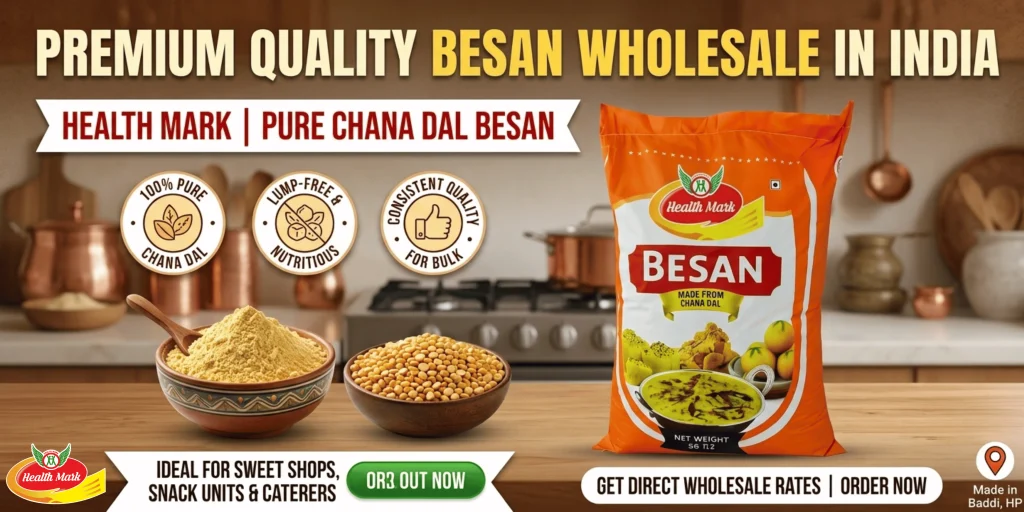
We’ll also look closely at Health Mark, a besan manufacturer in India based out of Baddi, Himachal Pradesh, that supplies fresh chana-dal besan to retailers, caterers, and distributors across Chandigarh, Panchkula, Ludhiana, and the wider north Indian belt.
What Is Besan and Why Quality Matters
Besan, also called gram flour or chana flour, is made by grinding dehusked split Bengal gram (chana dal) into a fine powder. It’s one of the oldest and most versatile ingredients in Indian cooking the base for pakoras, dhokla, kadhi, cheela, laddoos, and countless regional sweets and snacks. Because it’s used in such large quantities across households, sweet shops, restaurants, and snack manufacturing units, even small differences in quality show up quickly in the final dish.
Premium quality besan is defined by a few measurable things: the grade of chana dal used, how finely and evenly it’s milled, moisture content, absence of adulteration, and how it’s packed and stored before it reaches you. Poor-quality besan often has a raw, bitter aftertaste (because it hasn’t been milled from properly cleaned dal), forms lumps when mixed with water, or has inconsistent colour. Premium besan, by contrast, has a pale golden colour, a smooth silky texture, a mild nutty aroma, and dissolves into a lump-free batter almost instantly.
For a household, this difference is a minor inconvenience. For a business buying besan wholesale in India a halwai, a snack brand, a hotel kitchen, or a retail chain inconsistent besan quality means inconsistent product quality, customer complaints, and wasted raw material. That’s exactly why sourcing decisions matter so much more at the wholesale level.
Why Wholesale Buyers Need Premium Quality Besan
When you’re buying besan by the quintal rather than the kilogram, small quality gaps get multiplied across every batch you cook. Here’s what premium quality besan wholesale sourcing actually protects:
Consistency across batches every sack behaves the same way in your recipe, so your dhokla, pakoras or sweets taste identical every single time.
Lower wastage finer, well-milled besan absorbs water evenly and needs less trial-and-error adjustment, cutting down on spoiled batches.
Better shelf life properly dried and packed besan resists moisture, clumping, and early rancidity, which matters when you’re storing bulk stock.
Food safety compliance hygienically processed besan from an FSSAI-compliant manufacturer reduces the risk of contamination complaints.
Stronger customer trust whether you sell sweets, snacks, or ready meals, the flour quality directly shapes the taste your customers associate with your brand.
This is why so many buyers actively search for the best besan brand in India rather than picking whatever is cheapest at the local wholesale market. A slightly higher per-kg cost from a reliable besan manufacturer in India usually works out cheaper overall once you account for wastage, complaints, and re-orders.
Health Mark: A Trusted Besan Manufacturer in India
Health Mark is a food manufacturing brand based in Baddi, Himachal Pradesh, supplying atta, besan, pulses, spices, rice, dry fruits, and other staples to retailers, distributors, and institutional buyers across north India. The brand has built its reputation around a simple promise hygienically processed, purity-tested staples that perform consistently in professional kitchens as well as at home.
Health Mark besan is milled from carefully selected chana dal and ground to a smooth, fine consistency that delivers a rich, nutty flavour in both sweet and savoury preparations. For buyers comparing premium quality besan options, a few things stand out about how Health Mark approaches the product:
● Sourcing from good-quality Bengal gram, selected before milling
● Fine, even grinding for a smooth, lump-free texture
● Hygienic processing and packaging designed to preserve freshness
● A product range built for both retail and bulk/institutional buyers
● Direct sales support for wholesale and distribution enquiries
For businesses across Chandigarh, Panchkula, Baddi, and Ludhiana specifically searching for the best besan brand Chandigarh retailers already trust, or a besan supplier in north India more broadly, Health Mark’s regional manufacturing base means shorter supply chains, fresher stock, and faster reorder turnaround compared to sourcing from distant states.
Types of Besan Health Mark Offers
Not every recipe calls for the same grind. Health Mark’s besan range covers the different textures that professional kitchens typically need:
| Product | Texture | Best Used For |
| Besan (Standard) | Fine, smooth | Pakoras, kadhi, cheela, gatte, everyday cooking |
| Powder Besan | Ultra-fine powder | Sweets, laddoos, delicate batters |
| Bareek Besan | Extra-fine milled | Dhokla, khaman, soft-textured snacks |
| Motichur / Mota Besan | Coarser grind | Motichur laddoo, boondi, traditional sweets |
Having this range under one besan manufacturer in India means a wholesale buyer say, a sweet shop that needs both bareek besan for dhokla and mota besan for boondi can consolidate orders with a single trusted supplier instead of juggling multiple vendors.
How Premium Besan Is Made From Chana Dal to Packet
Understanding the production process helps explain why premium quality besan costs a little more than the loose, unbranded flour sold in open sacks at some local markets.
Step 1: Selecting the Chana Dal
Quality starts before milling even begins. Good besan manufacturers select dehusked split Bengal gram that’s been cleaned of stones, husk, and foreign matter, and checked for moisture content and colour uniformity.
Step 2: Cleaning and Grading
The dal passes through cleaning and grading equipment that removes dust, broken grains, and impurities a step that directly affects the final flour’s colour and taste.
Step 3: Milbing
The cleaned dal is ground using stone or roller mills to the required fineness coarser for motichur besan, ultra-fine for powder besan used in sweets. Even, controlled grinding is what gives premium besan its smooth mouthfeel.
Step 4: Sieving and Quality Checks
The milled flour is sieved to remove any coarse particles and checked for consistency, colour, and aroma before it’s approved for packing.
Step 5: Hygienic Packing
Fresh besan is packed in sealed, moisture-resistant packaging in multiple sizes to protect it from humidity and contamination a step that’s especially important for buyers ordering in bulk and storing stock over several weeks.
Nutritional Profile & Health Benefits of Besan
Besan isn’t just a cooking staple it’s genuinely nutrient-dense, which is part of why it remains popular across both traditional and modern, health-conscious kitchens.
High in plant protein a useful ingredient for vegetarian and high-protein diets
Good source of dietary fibre, which supports digestion and satiety
Naturally gluten-free, making it suitable for gluten-sensitive diets
Contains folate, iron, and magnesium from the chana dal it’s milled from
Lower glycaemic impact compared to refined wheat flour when used appropriately
This is one reason besan-based snacks like chilla, dhokla, and roasted besan mixtures are increasingly positioned as healthier alternatives in restaurant and packaged-food menus another reason wholesale buyers in the health-food and QSR space are actively looking for a reliable, premium high-quality besan source.
Everyday & Commercial Uses of Besan
For wholesale buyers, understanding where the flour will be used helps decide which grade and pack size to order.
Savoury Preparations
● Pakoras and bhajis needs a besan that fries crisp without excess oil absorption
● Kadhi requires a smooth-mixing besan that won’t curdle or lump
● Dhokla and khaman needs the bareek/fine grind for a soft, spongy texture
● Cheela and besan roti works well with the standard fine besan
Sweets & Festive Items
● Besan laddoo best with powder besan for a melt-in-the-mouth texture
● Motichur laddoo and boondi needs the coarser mota besan grind
● Mysore pak and other traditional sweets depends on consistent, fine milling
Commercial & Packaged Food Use
● Snack manufacturing units producing namkeen, sev, and fried mixtures
● Restaurants and catering businesses needing consistent bulk supply
● Health-food brands using besan in gluten-free or high-protein product lines
Besan Comparison: Health Mark vs. Ordinary Market Besan
Here’s a straightforward comparison to help you evaluate what premium quality besan actually delivers over loose, unbranded stock commonly sold at local mandis.
| Factor | Ordinary Loose Besan | Health Mark Premium Besan |
| Sourcing | Mixed-grade dal, unverified | Selected quality chana dal |
| Texture | Uneven, sometimes gritty | Smooth, consistent fine grind |
| Hygiene | Often open/unsealed storage | Hygienically processed & sealed packing |
| Shelf life | Shorter, prone to moisture | Longer, moisture-resistant packaging |
| Taste | Can be raw or bitter | Rich, nutty, consistent flavour |
| Traceability | Difficult to verify origin | Branded manufacturer, traceable sourcing |
| Bulk availability | Variable, market-dependent | Reliable wholesale supply with support |
How to Choose the Best Besan Brand in India A Buyer’s Checklist
With so many sellers claiming to be the No. 1 besan brand, here’s a practical checklist for evaluating any besan manufacturer in India before you commit to a wholesale order.
1. Check the source ask whether the dal is sourced and cleaned in-house or bought pre-milled from unknown vendors.
2. Ask for a sample batch before placing a bulk order, and test it in your actual recipe, not just by look and smell.
3. Verify FSSAI licensing and any other food-safety certifications the manufacturer holds.
4. Check packaging quality moisture-resistant, sealed packs indicate the manufacturer takes shelf life seriously.
5. Compare the best besan price across 2–3 suppliers, but weigh it against consistency, not just the lowest quote.
6. Ask about minimum order quantities, delivery timelines, and whether the supplier can handle recurring bulk orders.
7. Look for a manufacturer with multiple besan grades (fine, bareek, motichur) so you can consolidate your sourcing.
8. Read buyer feedback or ask for references from other retailers or distributors already using that brand.
What Affects Best Besan Price in Wholesale Orders
Besan pricing at the wholesale level isn’t fixed it moves with a few predictable factors, and understanding them helps you negotiate and plan purchases better.
Chana dal market rates besan price tracks the underlying commodity cost of Bengal gram, which fluctuates seasonally.
Grade and fineness powder besan and bareek besan typically cost slightly more than standard-grind besan due to extra processing.
Order volume larger, recurring wholesale orders usually unlock better per-kg rates than one-off purchases.
Packaging size bulk packs (25kg/50kg) work out cheaper per kg than smaller retail packs.
Transport distance sourcing from a regional besan supplier in north India can reduce freight costs compared to importing stock from distant states.
Certification and quality assurance FSSAI-compliant, hygienically processed besan carries a modest premium over uncertified loose stock.
If price is your primary concern, the smartest move is still to request a direct wholesale quote rates vary by season and volume, and a manufacturer can usually offer better terms for consistent, recurring orders than what’s listed for single retail packs.
Where to Find a Besan Seller Near Me / Supplier in North India
If you’re specifically searching for a besan seller near me or a best wholesale besan supplier operating in north India, a regionally based manufacturer offers a real logistical advantage shorter delivery times, fresher stock rotation, and easier communication for repeat orders.
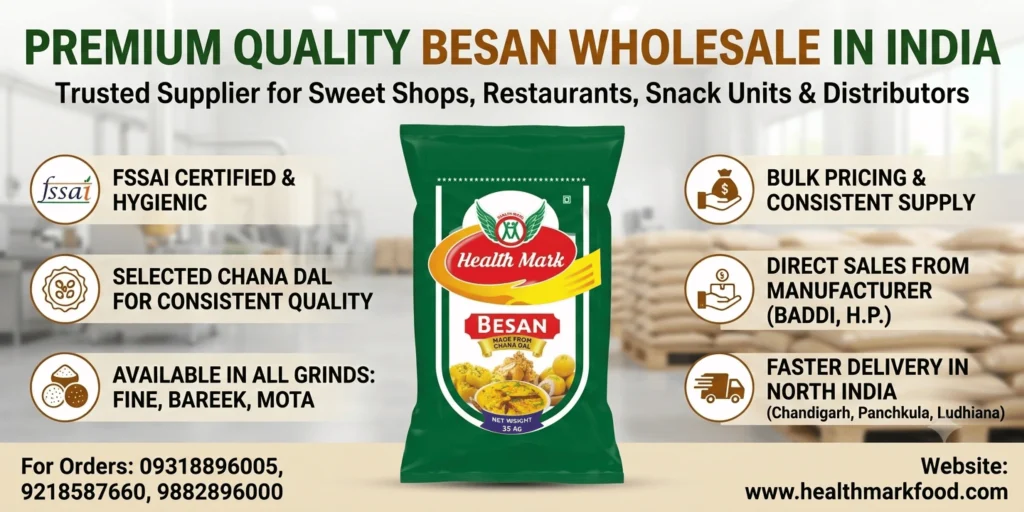
Health Mark, manufactured out of Baddi, Himachal Pradesh, supplies besan and related staples to businesses across Chandigarh, Panchkula, Baddi, and Ludhiana, positioning it as a practical option for buyers across Punjab, Haryana, and Himachal Pradesh looking for a top besan supplier without the delays of long-distance sourcing.
You can view the full besan range and place a wholesale enquiry directly on the Health Mark besan product page, or browse the complete besan category for all available grinds and pack sizes.
Common Mistakes Wholesale Besan Buyers Make
Choosing the lowest price without testing the product first cheap besan often means higher wastage later.
Buying large volumes upfront without checking shelf-life and storage conditions.
Not verifying whether the manufacturer follows hygienic processing and food-safety standards.
Ignoring the difference between besan grades using standard besan for dhokla instead of bareek, for example, hurts texture.
Sticking with a single supplier for years without periodically comparing quality and pricing in the market.
Overlooking regional suppliers in favour of distant, unfamiliar brands, which adds freight cost and delivery delays.
Expert Tips for Bulk Besan Buyers
Always request a small sample batch and test it in your actual production process before committing to a large order.
Ask your supplier about batch-wise quality checks a manufacturer that tests moisture and fineness consistently is more reliable long-term.
Store bulk besan in a cool, dry place away from direct sunlight, and rotate stock using a first-in-first-out approach.
If you use multiple besan grades, consolidate orders with one manufacturer that offers the full range it simplifies logistics and billing.
Build a direct relationship with the manufacturer’s sales team rather than routing every order through a middleman it usually improves pricing and response time.
FAQ
What is the best besan brand in India for wholesale buyers?
The best besan brand for wholesale sourcing is one that combines consistent quality, hygienic processing, multiple besan grades, and reliable bulk supply. Health Mark, manufactured in Baddi, Himachal Pradesh, is a strong option for buyers across north India looking for premium quality besan at competitive wholesale rates.
How is besan different from regular gram flour sold loosely at local markets?
Loose, unbranded besan often comes from mixed-grade dal with no traceability, inconsistent milling, and open storage that shortens shelf life. Branded, hygienically processed besan from a certified manufacturer offers consistent texture, better shelf life, and verified sourcing.
What is the best besan price for bulk or wholesale orders?
Wholesale besan pricing depends on chana dal market rates, the grade of besan (standard, bareek, or powder), order volume, and packaging size. For an accurate, current quote, it’s best to contact the manufacturer directly with your required quantity and pack size.
Which type of besan is best for dhokla and khaman?
Bareek besan, which is finely milled, works best for dhokla and khaman because it creates the soft, spongy texture these dishes need. Standard besan can be used, but the result won’t be as light.
Is besan gluten-free?
Yes, besan is naturally gluten-free since it’s made entirely from ground chana dal (Bengal gram), making it a popular choice for gluten-sensitive diets and gluten-free product lines.
How can I find a besan seller near me for regular wholesale supply?
Search for besan manufacturers with a manufacturing base in your region, since regional suppliers typically offer fresher stock and faster delivery. For buyers in Chandigarh, Panchkula, Baddi, and Ludhiana, Health Mark offers direct wholesale ordering and sales support.
What should I check before choosing a besan manufacturer in India?
Check FSSAI certification, ask for a sample before bulk ordering, verify packaging and hygiene standards, compare pricing across a few suppliers, and confirm the manufacturer can support recurring bulk orders reliably.
How should bulk besan be stored to maintain freshness?
Store besan in a cool, dry area away from direct sunlight and moisture, in sealed, airtight packaging. Use older stock first (first-in-first-out) to avoid spoilage or clumping in long-term storage.
What besan grinds does Health Mark offer for wholesale buyers?
Health Mark offers standard besan, powder besan (for sweets), bareek besan (for dhokla and khaman), and motichur/mota besan (for laddoo and boondi), giving wholesale buyers a full range under one supplier.
How do I place a wholesale inquiry with Health Mark?
You can browse the besan product and category pages on healthmarkfood.com, or contact the sales team directly at 09318896005, 9218587660, or 9882896000 to discuss quantity, pricing, and delivery.
Conclusion: Choosing the Right Wholesale Besan Partner
Besan might seem like a simple commodity, but for any business that depends on it sweet shops, snack manufacturers, restaurants, and retailers quality consistency is what actually protects your margins and your customers’ trust. When you’re evaluating premium quality besan wholesale options in India, look past the lowest quoted price and focus on sourcing, hygiene, milling consistency, and the supplier’s ability to deliver the same quality on order number fifty as it did on order number one.
Health Mark’s chana-dal besan, manufactured in Baddi and supplied across Chandigarh, Panchkula, and Ludhiana, is built around exactly that promise fine, consistent, hygienically packed besan available across multiple grinds for both retail and bulk buyers.
Ready to place a wholesale enquiry? Browse the Health Mark besan range at healthmarkfood.com/product-category/besan, or call the sales team directly at 09318896005, 9218587660, or 9882896000 to discuss your bulk order.