Open any Indian kitchen cabinet and you will almost certainly find a packet of besan sitting next to the atta and the masale dabba. It is the flour behind crispy pakoras on a rainy evening, soft dhokla at breakfast, silky kadhi at lunch, and the besan laddoo that shows up at every festival. Yet not all besan is created equal. The texture, the colour, the aroma, and even how evenly your dhokla rises depend almost entirely on the quality of chana dal used and how finely and hygienically it is milled.
This guide walks you through everything worth knowing before you buy besan what actually separates the best quality besan from an average pack, how to read the fine print on a besan packet, and why Health Mark has built a reputation as a trusted health mark besan producer for households and businesses across North India. Whether you are a home cook looking to buy besan for weekly cooking, or a restaurant or sweet shop owner searching for a reliable besan manufacturer in India, you will find practical, no-nonsense guidance here.
What Is Besan, and Why Does the Quality of Chana Dal Matter?
Besan, also called gram flour or Bengal gram flour, is made by grinding dried, husked, and split chickpeas known as chana dal into a fine powder. It has a naturally nutty aroma, a pale yellow colour, and a slightly grainy-to-smooth texture depending on how it is milled.
The quality of the raw chana dal is where everything begins. Dal that is stored poorly, mixed with broken grains, or milled on old, poorly maintained machinery produces besan that smells stale, cooks unevenly, and can even carry a bitter aftertaste. Premium quality besan, on the other hand, starts with carefully sorted, clean chana dal that is stone-ground or roller-milled to a consistent particle size, then packed quickly to lock in freshness.
• Colour: Good besan is a bright, even pale yellow not dull, grey, or blotchy.
• Aroma: It should smell mildly nutty and earthy, never musty or rancid.
• Texture: Depending on the variant, it should feel uniformly fine (for dhokla and sweets) or evenly coarse (for pakoras), never lumpy.
• Taste: Raw besan should taste faintly sweet-nutty, with no bitterness.
How Health Mark Produces the Best Quality Besan
Health Mark is a Baddi (Himachal Pradesh)-based food manufacturing company that processes a wide range of everyday staples atta, pulses, rice, spices, and, of course, besan under strict hygiene and quality protocols. Health Mark besan begins with premium quality chana dal that is cleaned to remove dust, stones, and broken grains before it ever reaches the grinding stage.
The dal is then finely milled to deliver a smooth, consistent texture and a rich, nutty flavour that performs reliably whether you are whisking a kadhi, folding a dhokla batter, or coating vegetables for pakoras. The entire process, from milling to packing, is designed to preserve natural aroma and minimise exposure to moisture and air, both of which are the biggest reasons packaged flours go stale.
Sourced from carefully selected, high-grade chana dal
Finely milled for a smooth, lump-free consistency
Hygienically processed and machine-packed to protect freshness
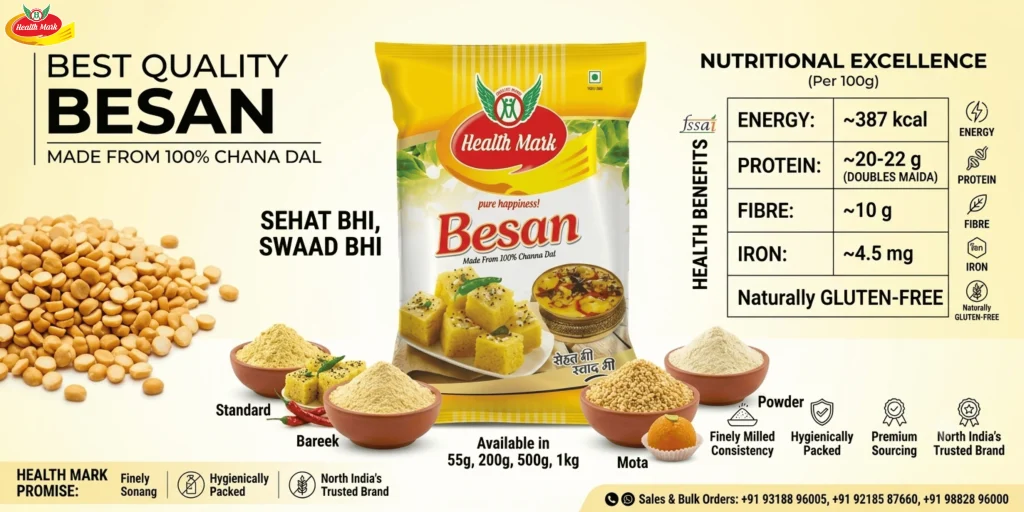
Available in multiple pack sizes 55gm, 200gm, 500gm, and 1kg to suit both trial buyers and regular households
Multiple variants available, including standard besan, Bareek (fine) besan, and Motichur/Mota besan for different recipes
This combination of sourcing discipline and consistent milling is exactly what buyers are searching for when they look up the best besan brand in India or a dependable health mark besan pack for daily cooking.
Nutritional Profile of Chana Dal Besan
Besan is not just a cooking convenience it is genuinely one of the more nutrient-dense flours used in Indian kitchens. Because it is made from a pulse rather than a cereal, it brings a considerably higher protein and fibre content to the table compared with refined wheat flour (maida) and is naturally gluten-free.
| Nutrient (per 100g raw besan) | Approximate Value | Why It Matters |
| Energy | ~387 kcal | A dense source of everyday energy |
| Protein | ~20–22 g | Roughly double that of refined wheat flour; useful for vegetarian diets |
| Dietary Fibre | ~10 g | Supports digestion and helps with satiety |
| Fat | ~5–6 g (mostly unsaturated) | Contributes to heart-friendly fat intake |
| Iron | ~4.5–4.9 mg | Supports healthy blood formation |
| Gluten | None | Naturally suitable for gluten-sensitive diets |
Health Benefits of Premium Quality Besan
Choosing premium quality besan over a cheaper, poorly processed alternative is not just about taste it has a real bearing on the nutrition you actually get on your plate. Here is what a good-quality, unadulterated gram flour brings to your diet:
Supports muscle and tissue repair: Its high plant-protein content makes it a useful staple for vegetarians building daily protein intake.
Gentle on blood sugar: Besan has a comparatively low glycemic index and a good fibre load, which slows down glucose absorption.
Aids digestion: The dietary fibre in besan supports regular bowel movement and feeds beneficial gut bacteria.
Naturally gluten-free: A safe, tasty alternative for anyone avoiding gluten, without compromising on taste or texture.
Supports heart health: Most of the fat in besan is unsaturated, which is considered friendlier for cardiovascular health than saturated fat.
Keeps you fuller for longer: The protein-fibre combination helps curb frequent hunger pangs between meals.
Health Mark Besan Range: Choosing the Right Variant
Not every recipe needs the same besan. Health Mark offers a focused product range so you can pick the right grind for the job, all listed under the Besan category on the website.
| Variant | Texture | Best Used For |
| Besan (Standard) | Fine, smooth | Kadhi, batters, everyday cooking, sweets |
| Bareek Besan | Extra-fine | Dhokla, khaman, delicate batters |
| Motichur / Mota Besan | Coarse | Motichur laddoo, boondi, textured sweets |
| Powder Besan | Ultra-fine powder | Quick-mix batters and smooth pastes |
Home cooks who simply want an all-purpose pack usually reach for the standard besan, while sweet shops and caterers preparing motichur laddoo or boondi typically prefer the coarser mota besan for its distinctive texture.
Best Quality Besan vs Other Common Indian Flours
If you are deciding what to stock in your kitchen, it helps to see how besan compares with the other flours most Indian households use regularly.
| Flour | Protein (approx.) | Gluten | Typical Use |
| Besan (Bengal Gram) | 20–22 g / 100g | None | Pakoras, dhokla, kadhi, sweets, binding |
| Wheat Atta | 11–12 g / 100g | High | Roti, paratha, everyday bread |
| Maida (Refined Wheat) | 9–10 g / 100g | High | Baked goods, certain snacks |
| Rice Flour | 6–7 g / 100g | None | Idiyappam, crepes, coatings |
How to Identify the Best Besan Brand in India: A Practical Buying Checklist
With dozens of packets competing for shelf space, it helps to know exactly what to check before you buy besan whether online or at your local kirana store.
1. Check the ingredient list: Genuine besan should list only chana dal (Bengal gram). Anything beyond that is a red flag.
2. Look at the colour: A bright, even pale yellow is a good sign. Chalky white patches can indicate mixing with cheaper starches.
3. Smell before you buy, if possible: Fresh besan smells mildly nutty; a musty or sour smell suggests old stock or poor storage.
4. Check the packing date and shelf life: Freshly packed besan retains its aroma and cooking performance far better than old stock sitting in a warehouse.
5. Prefer FSSAI-certified, hygienically packed products: This is a basic but important quality and safety marker in India.
6. Do a simple water test at home: Mix a spoon of besan in a glass of water. Pure besan settles evenly; adulterated besan may show unusual colour separation or a chalky layer.
7. Compare best besan price against pack size, not just the number on the label: A 1kg pack at a slightly higher price per kilo but with better freshness and yield is usually the smarter buy.
Common Mistakes People Make When Buying or Storing Besan
Even seasoned home cooks slip up on a few basics that quietly affect how their besan performs in the kitchen.
• Buying in bulk without checking pack freshness, then letting it sit for months in a humid kitchen.
• Storing besan in a paper packet instead of transferring it to an airtight container after opening.
• Choosing the cheapest pack on the shelf without checking the ingredient list or certification.
• Using the wrong variant for example, using coarse mota besan where a smooth, fine batter is needed for dhokla.
• Keeping besan near strong-smelling spices, since gram flour readily absorbs surrounding odours.
• Ignoring visible moisture, clumping, or an off smell instead of discarding a compromised pack.
Why Health Mark Is Recognised Among the Top Selling Besan Brands in India
Health Mark did not build its reputation overnight. As a besan manufacturer in India, the brand focuses on a few fundamentals that matter far more to daily cooking than flashy packaging: consistent sourcing, careful milling, and hygienic, moisture-resistant packing that protects flavour from the factory floor to your kitchen shelf.
Consistent quality across every batch, so what you buy today tastes the same as what you buy next month.
A dedicated besan seller network across North India, including Chandigarh, Panchkula, Ludhiana, and Baddi.
Transparent labelling with clear ingredients just chana dal, nothing else.
A manufacturing base in Baddi’s Industrial Township, supported by organised logistics for timely delivery.
A growing catalogue that goes beyond besan atta, pulses, spices, rice, and more from a single trusted kitchen-staples brand.
These are exactly the qualities that earn a brand consideration as a best besan brand in India among households that reorder the same pack month after month, rather than switching every time a new label appears on the shelf.
Health Mark: A Trusted Besan Manufacturer and Supplier in North India
Health Mark operates out of Plot No. 60, Industrial Township, Bhatoli Kalan, Baddi, Himachal Pradesh a region known for food processing units serving the wider North Indian market. This positions Health Mark as a practical besan supplier in North India for retailers, distributors, and institutional buyers who need reliable stock without long transit delays.
For businesses searching for a besan seller near me or a dependable top Besan supplier for regular restocking, working directly with a manufacturer rather than a middleman typically means fresher stock, more consistent quality, and better pricing at volume.
How to Use Besan: Practical Cooking Tips
Getting the best out of your besan is as much about technique as it is about the flour itself. A few tried-and-tested tips:
For pakoras: Use slightly coarser besan and add a pinch of hot oil to the batter for extra crispiness.
For dhokla and khaman: Sieve the besan first and whisk the batter thoroughly to avoid lumps and get an even rise.
For kadhi: Roast the besan lightly before mixing with curd to reduce the raw, starchy smell.
For laddoos and sweets: Roast on low flame until it turns a shade darker and releases a nutty aroma this step defines the final taste.
For thickening curries: Mix besan with a little water into a smooth paste before adding it to hot liquid, to prevent lumps.
Best Quality Besan for Bulk and Wholesale Buyers
Businesses sweet shops, snack manufacturers, hotels, caterers, and retailers often need more than a single 1kg pack. Health Mark caters to this segment as a best wholesale besan option, supplying larger institutional and trade quantities directly from its Baddi facility.
If you run a business and are comparing suppliers, it is worth asking a few direct questions: What is the sourcing process for the chana dal? Is the facility FSSAI compliant? What is the typical lead time for bulk orders? Health Mark’s sales team can be reached directly to discuss bulk besan price, pack customisation, and delivery timelines for recurring orders.
Expert Tips for Getting the Most Out of Your Besan
Buy smaller packs (55gm–200gm) if you cook with besan infrequently, to always use it fresh.
Store in a cool, dry place, away from direct sunlight and moisture.
Use within 3–4 months of opening for the best aroma and taste, even if the printed shelf life is longer.
Keep a small batch of roasted besan ready for quick laddoos or a fast dessert fix.
Match the variant to the recipe fine besan for batters, coarse besan for textured sweets.
FAQ
1. What makes besan the best quality besan compared to regular gram flour?
The best quality besan comes from carefully selected, clean chana dal that is milled finely and evenly, then packed quickly to preserve freshness. Look for a bright colour, nutty aroma, and a clean ingredient list with no added starches or fillers.
2. Is Health Mark besan pure chana dal flour, or is it blended with other flours?
Health Mark besan is made from carefully selected chana dal, finely ground to deliver a smooth texture and rich, nutty flavour, without added fillers, making it suitable for both everyday cooking and festive preparations.
3. What pack sizes does Health Mark besan come in?
Health Mark besan is available in 55gm, 200gm, 500gm, and 1kg packs, so you can pick a size that matches your household’s usage or business requirement.
4. How can I tell if besan has gone stale or is adulterated?
Fresh, pure besan has a bright pale-yellow colour and a mild nutty smell. A musty odour, dull or patchy colour, unusual bitterness, or clumping are all signs the pack may be stale or of lower quality.
5. Is besan good for weight management and diabetics?
Besan’s combination of protein and fibre helps with satiety, and its comparatively low glycemic index makes it a commonly recommended flour for people watching their blood sugar. That said, individual dietary needs vary, so it is always sensible to check with a healthcare professional or nutritionist for personalised advice.
6. What is the difference between Bareek besan and Mota (Motichur) besan?
Bareek besan is extra-finely milled and works best for smooth batters such as dhokla and khaman. Mota or Motichur besan has a coarser grind, ideal for motichur laddoo and boondi, where a distinct textured bite is expected.
7. How should I store besan at home to keep it fresh longer?
Transfer besan into an airtight container after opening, and store it in a cool, dry place away from sunlight and strong-smelling spices, since gram flour readily absorbs odours. Try to use an opened pack within three to four months.
8. Does Health Mark supply besan in bulk or wholesale quantities?
Yes. Health Mark supplies besan to retailers, distributors, sweet shops, caterers, and other institutional buyers who need best wholesale besan quantities. Bulk buyers can contact the sales team directly to discuss pricing and delivery.
9. Where is Health Mark besan manufactured, and which regions does it serve?
Health Mark besan is manufactured at the company’s facility in Bhatoli Kalan, Baddi, Himachal Pradesh, and the brand serves customers across North India, including Chandigarh, Panchkula, Ludhiana, and neighbouring regions, functioning as an established besan supplier in North India.
10. How do I order Health Mark besan or ask about the best besan price?
You can browse the Besan category on the Health Mark website, view the product page for detailed information, or contact the sales team directly by phone for pricing, bulk orders, and delivery details.
Conclusion: Choose Besan You Can Trust, Every Single Time
Besan is one of those everyday ingredients that quietly makes or breaks a dish. A poor-quality pack can turn a simple dhokla dense, a kadhi bitter, or a batch of pakoras disappointingly soggy. Choosing a brand that takes sourcing, milling, and hygiene seriously is not a small detail it is the difference between an average meal and one that turns out right every single time.
Health Mark’s chana dal besan is built around exactly that promise: carefully selected chana dal, finely milled for a smooth texture, hygienically processed, and packed to stay fresh available in the pack size that suits your kitchen or your business.
Ready to buy Besan or place a bulk order? Explore the Besan product category or view the Besan product page on the Health Mark website. For wholesale enquiries or the best besan price on bulk orders, call the Health Mark sales team at +91 93188 96005, +91 92185 87660, or +91 98828 96000.