
Ask any halwai, namkeen maker or kitchen manager what separates a perfect batch of boondi, sev or pakoda from a disappointing one, and you will hear the same answer: the besan.
It looks like a humble yellow powder, yet it decides how crisp your sev stays, how smooth your batter flows and how long your product holds its taste on the shelf. That is why serious buyers spend time finding a dependable wholesale fine besan supplier in India instead of picking whatever is cheapest at the local mandi.
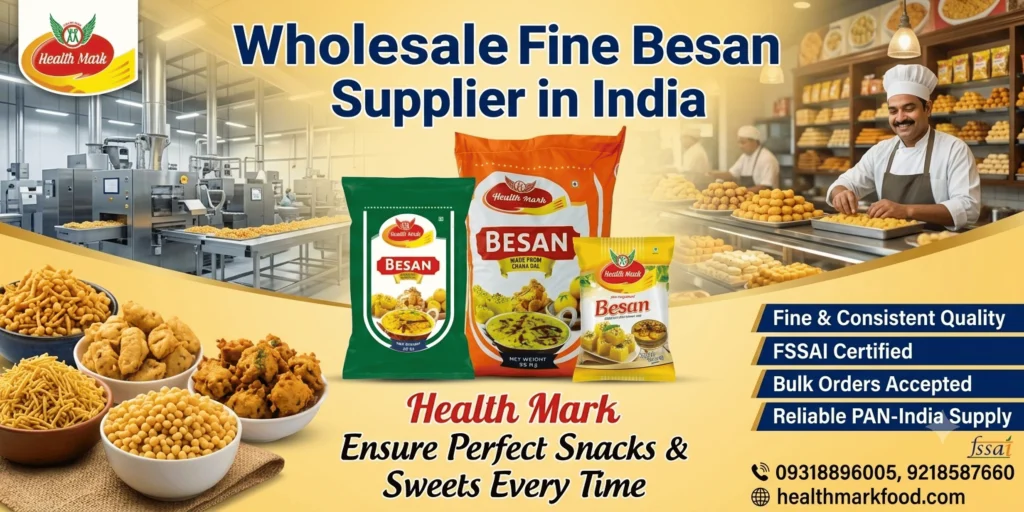
This guide is written for dealers, distributors, sweet shop owners, snack manufacturers, restaurant chains and retailers. You will learn how to judge quality, what questions to ask a supplier, how fineness affects your end product and how to buy with confidence.
Why Fineness Decides Everything in Besan
Besan, also called gram flour, is made by grinding split, husked Bengal gram (chana dal). The grind size changes how the flour behaves in water, oil and heat.
Finer particles mean:
- Faster, more even hydration, so batters turn smooth with fewer lumps
- Better binding, which helps sev, ganthiya and papdi hold their shape
- Lighter, crisper texture after frying
- Cleaner mouthfeel in sweets such as besan ladoo and mysore pak
Coarser flour has its place (some traditional recipes want a grainy bite), but for commercial snack production, consistency matters more than anything. A batch that behaves differently every week costs you money in rejects and customer complaints.
This is the reason Bareek besan, sometimes spelled Barik besan, is in such demand. The word simply means “fine” in Hindi, and buyers now ask for it by name.
Bareek Besan vs Coarse Besan: A Quick Comparison
| Feature | Bareek (Fine) Besan | Coarse Besan |
| Texture | Silky, powder-like | Slightly grainy |
| Batter quality | Smooth, uniform | Can leave bits or settle |
| Best for | Sev, bhujia, pakoda, kadhi, sweets | Certain ladoos, traditional textured recipes |
| Oil absorption | Generally lower when batter is balanced | Can vary by batch |
| Finished look | Even colour, clean surface | Slightly rustic |
| Preferred by | Namkeen units, bakeries, caterers | Home-style or specialty makers |
How to Identify Premium Quality Besan Before You Buy
You do not need a laboratory to spot good flour. A few simple checks, done on a sample before you place a bulk order, will tell you most of what you need to know.
The Five-Minute Sample Test
- Look at the colour. Good gram flour has a natural, even pale yellow shade. Very bright or unnaturally vivid colour deserves a question to the supplier.
- Rub it between your fingers. It should feel soft and silky, not gritty.
- Smell it. Fresh flour has a mild, nutty, pulse-like aroma. A sour, musty or stale smell signals poor storage or old stock.
- Make a small batter. Mix with water and watch for lumps. Premium flour disperses easily and rests without separating quickly.
- Fry a test batch. Check crispness, colour and oil absorption. This is the test that matters most for a snack manufacturer.
Signs of Lower-Grade Flour
- Visible specks, husk or dark particles
- Uneven texture within the same pack
- Dampness or clumping inside the bag
- Bitter or off aftertaste in the cooked product
- No batch details on the packaging
Ask for These Details
A reliable supplier will happily share the raw material source, milling process, packaging format, shelf life and batch information. If a seller dodges these questions, treat it as a warning sign.
Besan for Namkeen Manufacturing: What Processors Need
Snack production is a numbers game. Small differences in flour quality multiply across thousands of kilograms. Here is what namkeen units should look for.
Consistency Across Batches
If your sev is perfect in March and flaky in April, the flour is usually the reason. Choose a supplier who mills to a steady specification so your recipe does not need constant adjusting.
Good Binding and Crunch
Fine particles pack closely, which gives snacks like sev, bhujia, boondi and mixture a clean, crisp bite. Coarse or uneven flour tends to make products dense or oily.
Predictable Water Absorption
Your dough or batter ratio depends on how much water the flour takes up. Stable absorption means predictable production and less wastage.
Shelf Life and Freshness
Packaged namkeen is only as fresh as its raw material. Flour that was stored badly can introduce rancid notes that appear weeks later when your product sits on a retail shelf.
Practical Example
Imagine a mid-sized namkeen unit making 500 kg of sev daily. If a poor flour lot causes just 3% rejects, that is 15 kg of product lost every day. Over a month, the cost of cheap flour can easily exceed the premium you would have paid for premium high quality besan in the first place.
What a Good Besan Manufacturer in India Should Offer
India is the world’s largest producer and consumer of chickpeas, so there is no shortage of mills. The difference lies in how seriously each one treats cleaning, grading and consistency. When you evaluate a besan manufacturer in India, use this checklist.
| What to Check | Why It Matters |
| Raw material cleaning and grading | Removes stones, husk and foreign matter before milling |
| Milling consistency | Gives uniform particle size from bag to bag |
| Food safety compliance | Look for valid FSSAI registration, as required for food businesses in India |
| Packaging options | 1 kg to bulk sacks suited to retail and industrial needs |
| Batch traceability | Helps resolve issues quickly if they arise |
| Supply reliability | Prevents production stoppages |
| Clear communication | Quick answers on pricing, dispatch and samples |
Why Buyers Prefer Bulk Purchasing
Buying in volume is not only about a lower per-kilo rate. For a growing business, bulk besan supply brings several practical advantages:
- Better pricing: Larger orders usually lower your cost per kg.
- Stable recipes: Fewer lots mean fewer variations in your product.
- Fewer reorders: Less time spent chasing stock and arranging transport.
- Easier planning: You can forecast production and margins with more confidence.
- Stronger supplier relationship: Regular buyers often get priority on stock and support.
A good bulk besan supplier will also help with logistics, packaging suited to your storage and dispatch schedules that match your production cycle.
Who Typically Buys in Bulk?
- Namkeen and snack manufacturers
- Sweet shops and mithai makers
- Bakeries and biscuit units
- Hotels, restaurants and cloud kitchens
- Caterers and institutional kitchens
- Wholesalers, distributors and kirana retailers
Nutrition and Health Value of Gram Flour
Beyond its role in cooking, gram flour has a solid nutritional profile, which is one reason retail demand keeps rising.
- Protein: Chickpea flour is a well-known plant protein source, commonly cited at roughly 20 to 22 grams per 100 grams, though exact values vary by product. Always check the label.
- Fibre: It contains dietary fibre that supports digestion and fullness.
- Naturally gluten-free: It is made from chickpeas rather than wheat, making it a common substitute in gluten-free cooking. If you serve people with coeliac disease, confirm cross-contamination controls with your supplier.
- Micronutrients: It provides iron, folate and magnesium in useful amounts.
- Lower glycaemic response: Compared with refined wheat flour, many people find it more filling.
Common Mistakes Wholesale Buyers Make
- Choosing only on price. The cheapest quote often hides inconsistent milling or aged stock.
- Skipping the sample. Never order a large lot without testing a small one in your own recipe.
- Ignoring packaging. Weak or poorly sealed bags let in moisture and pests.
- Not checking dates. Ask about packing date and shelf life on every consignment.
- Storing flour carelessly. Even the best besan deteriorates in a damp godown.
- Relying on one source with no backup. Keep at least a conversation going with a second supplier.
- Overlooking documentation. Invoices, batch records and licence details protect your business.
Storage and Handling Best Practices
Once the flour arrives, your handling decides how long it stays fresh.
Store in a cool, dry, well-ventilated area away from walls and floor.
Place bags on pallets or racks, never directly on the ground.
Keep away from strong-smelling items, as flour absorbs odours.
Follow first-in, first-out (FIFO) so older stock is used first.
Reseal opened bags tightly or transfer to airtight containers.
Inspect regularly for moisture, clumping or insects.
Avoid stacking too high, which can compress and damage the bottom bags.
In humid or monsoon months, pay extra attention. Moisture is the biggest enemy of any flour.
Why Health Mark Besan Is a Trusted Choice
Health Mark Food is an FMCG supplier in Himachal, serving customers who care about consistent everyday staples. Its health mark besan range, including the popular Bareek Besan, is positioned for buyers who want fine texture, dependable quality and straightforward bulk supply.
What buyers look for in the Health Mark range:
- Fine, silky grind suited to snacks, sweets and everyday cooking
- Quality focus from sourcing through packing
- Options for retailers and bulk buyers across different pack requirements
- Direct, responsive support by phone for pricing and orders
If you want to explore the range, start with the besan product category or go straight to the Bareek Besan product page. You can also learn more about the company on the Health Mark Food website.
When comparing any No 1 besan brand claim in the market, remember that real leadership shows up in repeat orders and happy customers, not just in slogans. Test the product yourself and let the results speak.

How to Place a Wholesale Order
- Decide your need: Product type (Bareek Besan), approximate monthly quantity and pack size.
- Request a sample: Test it in your own recipe before committing.
- Ask for a quotation: Include delivery location so freight is calculated correctly.
- Confirm details: Packing date, shelf life, payment terms and dispatch timeline.
- Place the order and plan repeat supply: Agree a schedule so you never run out mid-production.
Contact Health Mark Food:
- 📞 09318896005
- 📞 9218587660
- 📞 9882896000
- 🌐 healthmarkfood.com
FAQ
1. Who is a reliable wholesale fine besan supplier in India?
A reliable supplier mills clean, graded chana dal consistently, offers flexible pack sizes, shares batch and shelf-life details, and supports repeat bulk orders. Health Mark Food supplies fine besan to wholesale and retail buyers and can be reached on 09318896005, 9218587660 or 9882896000.
2. What is the difference between besan and Bareek besan?
Besan is gram flour made from split chickpeas. Bareek besan is the finely milled version, which gives smoother batter and crisper, more uniform snacks.
3. Which besan is best for namkeen manufacturing?
Fine, consistently milled besan with predictable water absorption works best, because it supports good binding and crunch in sev, bhujia and boondi.
4. How can I check the quality of besan?
Check colour, smell, texture and lump-free mixing, then fry a small test batch. Fresh flour smells mildly nutty and feels silky between the fingers.
5. What is the shelf life of besan?
Shelf life depends on the product and packaging, so always read the date printed on the pack. Properly stored in a cool, dry place, gram flour stays fresher for longer.
6. Is besan gluten-free?
Besan is naturally gluten-free because it comes from chickpeas. If you need certified gluten-free flour for medical reasons, confirm processing practices with the supplier.
7. What is the minimum order quantity for bulk besan?
Minimum quantities vary by supplier and pack size. Call Health Mark Food directly to discuss your requirement and get a current quotation.
8. How should I store besan in monsoon season?
Keep bags on pallets in a dry, ventilated room, reseal opened packs tightly and follow FIFO. Check often for moisture or clumping.
9. Can besan be used for anything other than snacks?
Yes. It is widely used in kadhi, chilla, sweets such as ladoo, batters for pakoda, and even in skincare traditions, though food-grade flour should be used for cooking.
10. Where can I see the besan products from Health Mark?
Visit the besan category page or the Bareek Besan page.
Conclusion
Finding the right flour partner is a business decision, not just a purchase. Fineness, consistency, clean sourcing and dependable supply all feed directly into the quality of your snacks, sweets and meals.
If you are searching for a wholesale fine besan supplier in India, take a sample, test it in your recipe, compare it honestly and choose the partner who delivers the same quality every single time.
Ready to try it? Explore Bareek Besan or call 09318896005 / 9218587660 / 9882896000 to request a sample and a bulk quotation today.