Walk into any Indian kitchen on a weekday morning, and there’s a good chance poha is either simmering on the stove or waiting patiently in a jar for its turn. Loved for its light texture, comforting taste, and easy preparation, poha is a popular breakfast choice for families across India. Whether you’re looking for a reliable Poha Manufacturer in India or simply want to Buy Health Mark Poha for your family, choosing good-quality poha can make a noticeable difference in taste, texture, and cooking results.
What Is Poha and Why Is It India’s Favourite Breakfast?
Poha also called flattened rice, beaten rice, or “chivda” in some regions is made by parboiling raw paddy and then pressing it flat under heavy rollers. The result is a light, flaky grain that rehydrates within minutes when soaked in water, making it one of the fastest breakfast options in Indian cuisine.
It’s not just about speed, though. Poha’s popularity spans across the country in different avatars:
Kanda Poha the Maharashtrian classic with onions, peanuts, curry leaves, and a squeeze of lemon
Indori Poha spicier, garnished with sev, pomegranate, and a dash of jeeravan masala
Chivda / Poha Namkeen the crunchy, roasted snack version enjoyed with tea
Poha Chaat a tangy street-food twist popular in North India
This versatility is exactly why demand for high quality Poha has grown steadily not just among households but also hotels, hostels, tiffin services, and quick-service restaurants that need a reliable, high-volume breakfast option.
How Poha Is Made: From Paddy to Flattened Rice
Understanding the manufacturing process helps you appreciate why sourcing from an established Poha manufacturer in India actually matters. Here’s a simplified breakdown of the journey:
Paddy Selection – Manufacturers select specific paddy varieties known for good flattening behaviour and low breakage.
Soaking – The paddy is soaked in water to soften the husk and grain.
Parboiling – It’s then parboiled, a process that locks in nutrients and makes the rice easier to flatten without breaking.
Roasting – The soaked paddy is roasted lightly to reduce moisture content.
De-husking – The husk is removed, leaving behind the rice grain.
Flattening – The rice passes through heavy rollers that press it into thin flakes this determines whether you get thick or thin poha.
Drying and Grading – The flattened rice is dried, sorted by thickness, and graded for quality.
Packaging – Finally, it’s packed in hygienic, moisture-resistant packaging to preserve freshness.
Any shortcut in this chain rushed parboiling, poor grading, or careless packaging shows up as broken flakes, uneven cooking, or a musty smell in the final product. This is precisely why buyers actively search for the best Poha manufacturer rather than picking whatever is cheapest on the shelf.
What Makes a Genuine Poha Manufacturer in India Stand Out
If you’ve ever compared two packets of poha side by side, you already know the difference is visible before you even cook it. Here’s what separates a credible manufacturer from an average one:
Consistent grain size – Uniform flakes cook evenly; mismatched sizes lead to some grains turning mushy while others stay hard.
Low breakage percentage – Premium poha has minimal broken or powdery grains.
Clean, dust-free processing – Reputable manufacturers maintain hygienic, FSSAI-compliant facilities.
Proper moisture control – Poha with excess moisture spoils faster and clumps together.
Transparent sourcing – Established brands are open about where their paddy comes from and how it’s processed.
Certifications and compliance – Look for manufacturers registered with the Food Safety and Standards Authority of India (FSSAI), as this is the baseline requirement for any legitimate food business in the country.
A manufacturer that checks all these boxes isn’t just selling a product they’re selling consistency, which is what keeps customers coming back.
Health Mark: A Trusted Poha Manufacturer and Seller in India
Health Mark is a Baddi (Himachal Pradesh) based FMCG company that has positioned itself as a dependable name across categories like atta, besan, pulses, rice, dry fruits, masale, and snacks with Poha being one of its flagship offerings.
Here’s what Health Mark’s Poha product page highlights about the product:
- Made from premium quality flattened rice with a light texture and authentic taste
- Quick-cooking and absorbs flavours well, whether you’re making Kanda Poha, Indori Poha, or a simple tempered version
- Suitable for breakfast, snacks, or light meals
- Hygienically processed and packed to lock in freshness
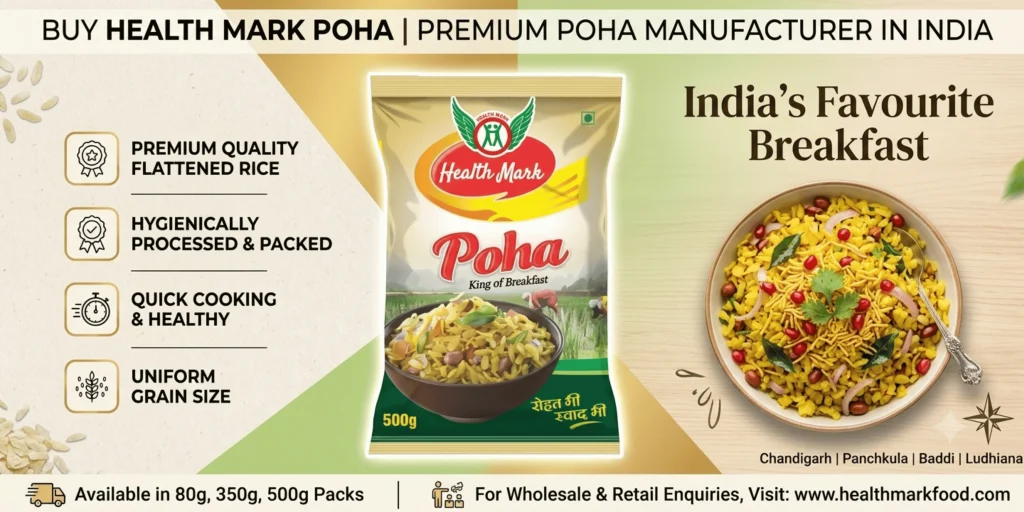
- Available in multiple pack sizes 80gm, 350gm, and 500gm making it convenient for individual households as well as bulk kitchen use
Health Mark’s broader positioning as an organic-focused FMCG brand also reflects in how it talks about its supply chain sourcing selectively, maintaining traceability, and avoiding synthetic shortcuts. For a staple like poha, where the raw grain quality directly impacts the final texture, this kind of sourcing discipline is exactly what buyers should be looking for.
If you’re comparing the best Poha brand in India for your kitchen or your business, Health Mark’s combination of hygienic processing, consistent quality, and multiple pack sizes makes it a practical option worth trying.
Nutritional Value of Poha: Why Dietitians Recommend It
Poha’s reputation as a “light” breakfast isn’t just a marketing line it holds up nutritionally too. A typical serving of plain flattened rice (roughly 100g, dry) offers approximately:
| Nutrient | Approximate Value (per 100g dry poha) |
| Energy | 340–365 kcal |
| Carbohydrates | 76–80 g |
| Protein | 6–7 g |
| Fat | 1–1.5 g |
| Iron | Notable source, especially in fortified variants |
| Fibre | Low to moderate (higher when made with brown rice poha) |
When you add vegetables, peanuts, and a squeeze of lemon, poha can become a more varied and satisfying meal. Lemon provides vitamin C, which can help improve the absorption of non-heme iron from plant-based foods. ODS Adding peanuts and vegetables also brings additional nutrients, texture, and flavour to the dish. Poha can be prepared with relatively little oil, although its overall fat content depends on the amount of oil and other ingredients used during cooking. The ICMR-National Institute of Nutrition’s Dietary Guidelines for Indians 2024 emphasize variety across food groups, including cereals, vegetables, pulses or beans, and nuts or seeds, as part of a balanced diet.
Types of Poha Available in the Indian Market
Not all poha is the same thickness and processing style change how it behaves in the pan. Here’s a quick breakdown:
- Thin Poha – Cooks the fastest, ideal for quick tempering-based recipes; needs a light water rinse rather than soaking.
- Medium Poha – The most commonly used variety for everyday Kanda Poha and Indori Poha.
- Thick Poha – Holds its shape better, preferred for dishes like poha chivda, poha cutlets, or dishes that need soaking time.
- Red/Brown Poha – Made from unpolished or red rice varieties, offering more fibre and a nuttier taste popular among health-conscious buyers.
When you’re buying, always check the pack description or ask your Poha seller near me which thickness variant you’re getting, since recipes and soaking times vary accordingly.
How to Identify the Best Poha Brand in India (Buyer’s Checklist)
Before you settle on a brand, run through this quick checklist:
Does the packaging clearly mention FSSAI license number and manufacturing details?
Are the flakes uniform in size and colour, without excess broken bits or dust?
Does the pack feel dry, with no clumping or moisture spots?
Is there a “best before” date clearly printed?
Does the brand offer multiple pack sizes to suit your needs (small for trial, larger for regular use)?
Is customer support easy to reach for queries or bulk orders?
Does the manufacturer have a track record across other food categories (a sign of established food-safety practices)?
Brands like Health Mark, which operate across multiple staple categories atta, besan, rice, pulses, and snacks tend to have more mature quality-control systems simply because they’re accountable across a wider product range.
Poha Manufacturer vs Local Poha Seller: A Comparison
If you’re deciding between sourcing poha from a branded manufacturer versus a local, unbranded seller, this comparison should help:
| Factor | Established Poha Manufacturer (e.g., Health Mark) | Local/Unbranded Poha Seller |
| Hygiene & Processing | Controlled, hygienic facility with defined processes | Often undocumented, variable hygiene standards |
| Consistency | Uniform grain size and quality batch after batch | Quality can vary from one purchase to the next |
| Packaging | Sealed, moisture-resistant, labelled packaging | Often loose or minimally packed |
| Traceability | Clear sourcing and manufacturing information | Rarely traceable |
| Shelf Life | Longer, thanks to controlled moisture and sealed packs | Shorter, more prone to spoilage |
| Bulk Availability | Reliable supply for wholesalers and retailers | Limited and inconsistent supply |
| Price Transparency | Fixed, published pricing | Prices may fluctuate without explanation |
This doesn’t mean every local seller offers poor quality some genuinely do a great job. But if you’re buying regularly or in bulk, a manufacturer with standardised processes reduces the guesswork considerably.
Best Poha Price in India: What Affects the Cost
inding the best Poha price is not simply about choosing the cheapest option. Several factors can influence the price of Poha, including the quality of the raw paddy, processing standards, pack size, variety, and transportation costs. Understanding these factors can help you compare products more effectively and choose Poha that offers a good balance of quality and value.
- Paddy quality and variety – The quality and type of paddy used to make Poha can influence the overall cost. Carefully selected grains may result in a higher-quality finished product.
- Processing standards – Hygienic processing, moisture control, proper flattening, drying, and quality checks can affect manufacturing costs and, consequently, the final product price.
- Pack size – Smaller packs, such as 80gm, may have a higher per-kilogram cost compared with larger packs such as 350gm or 500gm. Comparing the price against the net quantity can help you understand the actual value.
- Poha thickness and variety – Thin, medium, thick, or specialty Poha varieties may have different prices depending on the raw material, processing requirements, and market demand.
- Transportation and regional availability – Logistics, transportation distance, local demand, and availability can also cause Poha prices to vary between different cities and regions.
If a price looks unusually low compared to the market average, it’s worth checking the pack size, freshness date, and grain quality before assuming it’s a good deal. For current pricing on Health Mark Poha in 80gm, 350gm, and 500gm packs, it’s best to check the product page directly or reach out via the contact details shared later in this guide.
Poha for Retailers, Wholesalers, and Bulk Buyers
If you run a grocery store, a tiffin service, a hostel mess, or a small restaurant, sourcing from Poha wholesalers in India directly (rather than through multiple middlemen) can noticeably improve your margins and consistency. Here’s what to look for as a bulk buyer:
- Minimum order quantities (MOQ) that fit your business size
- Consistent supply schedules so you’re never caught short during peak demand
- Bulk pack sizes that reduce per-unit packaging cost
- Dedicated support for repeat and wholesale orders
Health Mark’s presence across the Chandigarh, Panchkula, Baddi, and Ludhiana region visible from its operational base in Baddi’s Industrial Township positions it as a convenient top Poha supplier for businesses across North India looking for a dependable, FMCG-grade partner rather than a one-off vendor.
For bulk enquiries, businesses can reach Health Mark directly at +91 93188 96005, +91 92185 87660, or +91 98828 96000, or through the Product Enquiry section on their website.
How to Cook Perfect Poha at Home: Step-by-Step
Even the best Poha can turn mushy or clumpy if it’s not handled right. Here’s a simple, foolproof method:
- Choose the right poha thickness – Medium poha works best for classic Kanda Poha.
- Rinse, don’t soak, thin poha – For thin poha, a quick rinse under running water is enough. Thicker variants may need a brief soak (2–3 minutes).
- Drain thoroughly – Excess water is the number one reason poha turns mushy. Let it sit in a strainer for a few minutes.
- Temper your spices first – Heat oil, add mustard seeds, curry leaves, chopped onions, green chillies, and turmeric before adding the poha.
- Add poha gently – Fold it into the tempering rather than stirring vigorously, to keep the flakes intact.
- Season and finish – Add salt, a pinch of sugar (optional, Maharashtrian style), roasted peanuts, and a generous squeeze of lemon juice at the end.
- Garnish and serve – Fresh coriander, grated coconut, or sev (for Indori style) make a great finishing touch.
Common Mistakes People Make When Buying or Cooking Poha
Over-soaking poha – This is the single biggest reason poha turns into a sticky mess. Match soaking time to the poha’s thickness.
Buying without checking the pack date – Poha does have a shelf life; older stock tends to taste stale and cooks unevenly.
Ignoring grain thickness for the recipe – Using thin poha for a chivda recipe (which needs thick poha) leads to overly soft, broken results.
Storing poha in humid conditions – This causes clumping and can eventually lead to spoilage.
Choosing price over quality for bulk orders – Cheaper unbranded poha can lead to higher wastage due to breakage and inconsistency, actually costing more in the long run.
Expert Tips for Storing Poha the Right Way
Store in an airtight container, away from direct sunlight and moisture.
Keep it in a cool, dry place avoid storing near the stove or sink.
Once opened, try to use within 4–6 weeks for the best taste and texture.
If you live in a humid region, consider adding a food-safe silica packet to the storage container.
Why Health Mark Is the Top Poha Seller in Chandigarh and Beyond
Based out of Baddi, Himachal Pradesh a region well connected to Chandigarh, Panchkula, and Ludhiana Health Mark has built its identity around being a dependable, quality-first FMCG brand rather than a mass-market discount seller. A few reasons buyers in this region consider it among the best Poha sellers nearby:
Regional accessibility – Its operational base makes it a practical choice for buyers across Punjab, Haryana, and Himachal Pradesh searching for “Poha seller near me.”
Category depth – Beyond poha, Health Mark’s snacks category includes items like roasted chana and papad, reflecting a broader commitment to snack and breakfast staples.
Direct accessibility – Customers can connect via WhatsApp or phone directly for enquiries, rather than navigating layers of distributors.
Consistent packaging standards – Multiple pack sizes cater to both households and bulk institutional buyers.
If you’re in or around Chandigarh and looking for the best Poha seller in Chandigarh, Health Mark’s combination of regional presence and FMCG-grade processing makes it a name worth exploring for both retail and bulk requirements.
People Also Ask
Is poha good for weight loss?
Poha is relatively low in fat and easy to digest, which is why it’s often included in weight-conscious diets. However, portion size and the amount of oil used during cooking make a significant difference to its overall calorie count.
What is the difference between poha and chivda?
Poha refers to the raw flattened rice itself, while chivda typically refers to a roasted, seasoned snack made using poha as the base ingredient, often mixed with peanuts, curry leaves, and spices.
Can diabetics eat poha?
Poha has a moderate glycemic response, and when prepared with vegetables and minimal oil, it can fit into a balanced diet. However, individuals with diabetes should consult a healthcare professional or dietitian for portion guidance specific to their condition.
Which poha is best thick or thin?
Neither is universally “better” it depends on the recipe. Thin poha suits quick tempered dishes, while thick poha holds up better in recipes involving soaking or slow cooking, like chivda.
FAQ
1. Who is a reliable Poha manufacturer in India?
A reliable Poha manufacturer maintains FSSAI compliance, hygienic processing facilities, consistent grain quality, and transparent sourcing. Health Mark, based in Baddi, Himachal Pradesh, is one such FMCG brand offering premium quality flattened rice under hygienic processing standards.
2. Where can I buy the best Poha online in India?
You can order Health Mark Poha directly through their official product page, available in 80gm, 350gm, and 500gm packs, or contact their sales team directly for orders.
3. What is the best Poha price for bulk or wholesale orders?
Bulk pricing depends on order quantity, pack size, and delivery location. For accurate, current wholesale pricing, it’s best to contact the manufacturer directly through their enquiry channel or listed phone numbers.
4. How do I know if poha is high quality?
Look for uniform grain size, minimal broken flakes, a fresh (non-musty) smell, clear “best before” dates, and proper sealed packaging with FSSAI licensing details printed on the pack.
5. Is Health Mark a good Poha brand in India?
Health Mark positions itself as a premium FMCG brand offering hygienically processed, quick-cooking Poha suitable for breakfast, snacks, and light meals, available in multiple pack sizes to suit both household and bulk needs.
6. What is the shelf life of packaged poha?
Shelf life varies by brand and packaging, but properly packed poha stored in a cool, dry place generally stays fresh for several months. Always check the “best before” date printed on the pack.
7. Can I get poha delivered near me?
Availability depends on your location and the seller’s delivery network. Health Mark, based in Baddi, serves the wider Chandigarh, Panchkula, and Ludhiana region and can be contacted directly to check delivery options in your area.
8. What’s the difference between Indori Poha and Kanda Poha?
Kanda Poha is the Maharashtrian style made primarily with onions, peanuts, and lemon, while Indori Poha is spicier, typically topped with sev, pomegranate seeds, and a special jeeravan masala blend.
9. Do I need to soak poha before cooking, or just rinse it?
Thin poha usually only needs a quick rinse under running water, while thicker poha varieties may need a short soak of 2–3 minutes. Over-soaking any variety can make it mushy.
10. How can I contact a Poha manufacturer for wholesale supply?
You can reach out to manufacturers like Health Mark directly through their listed contact numbers +91 93188 96005, +91 92185 87660, or +91 98828 96000 or via their website’s product enquiry section for wholesale and bulk supply discussions.
Conclusion
Poha may be a simple, everyday dish, but the quality behind that simplicity depends greatly on how it is processed and packaged. From paddy selection and flattening to drying and packaging, every step plays a role in determining whether you get soft, evenly flattened flakes or a broken and inconsistent batch.
If you’re looking for a dependable poha brand for your kitchen, retail shelf, or wholesale business, it’s worth choosing a manufacturer that prioritizes hygiene, consistency, and quality throughout the production process. Health Mark offers premium-quality flattened rice with hygienic processing and convenient pack sizes of 80 g, 350 g, and 500 g, making it a practical choice for households, retailers, and bulk buyers across Chandigarh, Panchkula, Baddi, Ludhiana, and nearby areas.
Ready to try it for yourself? Explore Health Mark Poha or browse their full snacks range, and reach out directly at +91 93188 96005 / +91 92185 87660 / +91 98828 96000 for retail or bulk enquiries.