
If you have ever walked through a busy Chandigarh market early in the morning, chances are you have seen steaming plates of kanda poha being served at roadside stalls, tiffin counters, and family breakfast tables alike. Poha is not just a dish in North India it is a ritual. Light, fast to cook, and endlessly customizable, it has earned its place as one of the most loved breakfast staples across Punjab, Haryana, and the tricity region of Chandigarh, Panchkula, and Mohali.
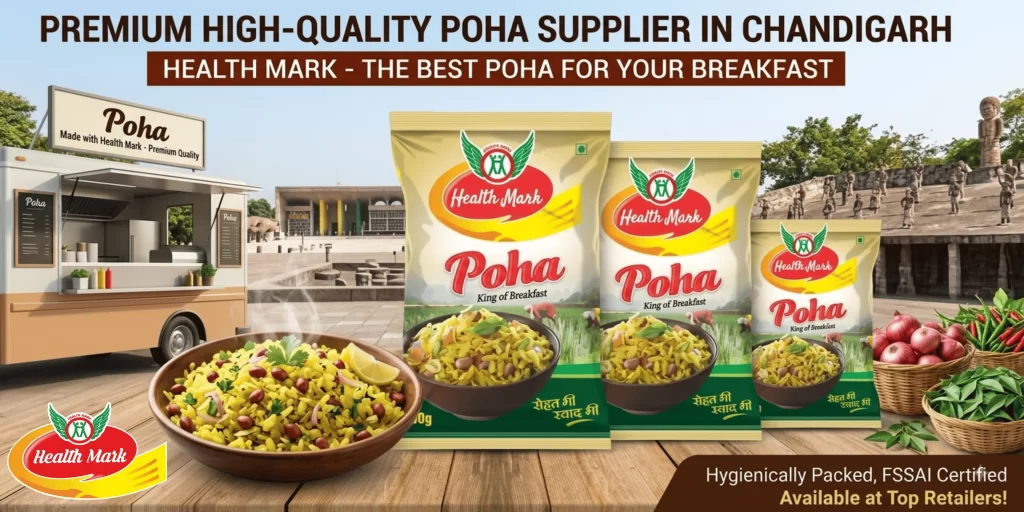
But here is the catch: not all poha is created equal. The taste, texture, and health value of your final dish depend almost entirely on the quality of flattened rice you start with. That is exactly why so many households, restaurants, hostels, and retailers are searching for a premium high quality poha supplier in Chandigarh rather than settling for whatever is available on the nearest shelf.
In this guide, we will walk you through everything you need to know before you buy Poha from what actually makes poha “premium,” to nutrition facts, sourcing standards, wholesale buying tips, and how to identify the best Poha seller near you. Whether you are a home cook, a café owner, or a distributor looking for poha wholesalers in India, this article is built to help you make an informed, confident decision.
What Is Poha and Why Does Quality Matter So Much?
Poha, also known as flattened rice or beaten rice, is made by parboiling paddy and then flattening it into thin, light flakes. It is dried, dehusked, and packed a process that sounds simple but is actually quite delicate. The thickness of the flake, the moisture content, the cleanliness of processing, and the freshness of packaging all directly affect how the poha cooks, tastes, and stores.
Low-grade poha often breaks down into a sticky mush, absorbs oil unevenly, or carries a stale smell because it has been sitting in poor storage conditions for months. High quality Poha, on the other hand, stays light and fluffy, separates easily when rinsed, and holds its shape beautifully once cooked exactly what you want whether you are making a quick breakfast or a professional catering order.
This is precisely why more people today are specifically searching for the best Poha seller instead of buying the first packet they find at a local kirana store.
Why Chandigarh Is Emerging as a Hub for Premium Poha Demand
Chandigarh and the surrounding tricity area have a fast-growing appetite for clean-label, hygienically packed food products. A few reasons behind this shift:
- Health-conscious urban population More residents are actively choosing light, low-oil breakfast options over deep-fried alternatives.
- Booming café and QSR culture Cafés, tiffin services, and cloud kitchens across Chandigarh, Panchkula, and Mohali need a consistent, high-quality poha seller near me for daily bulk supply.
- Working professionals and students Quick-cook meals like poha fit perfectly into busy weekday routines.
- Growing awareness of FSSAI standards Buyers are becoming more cautious about hygiene certifications before choosing a supplier.
As demand rises, so does the number of sellers which makes it more important than ever to identify a genuinely premium high quality poha supplier in Chandigarh rather than a reseller of unbranded stock.
What Makes a Supplier “Premium” and “High Quality”?
Not every brand that calls itself “premium” actually earns the title. Here is what genuinely separates a top poha supplier from an average one:
- Sourcing Premium suppliers use good-quality paddy varieties, avoiding broken or immature grains.
- Processing hygiene Facilities that follow food-safety protocols and minimize manual handling produce a cleaner, safer product.
- Consistency The same packet should taste and cook the same way every single time you buy it.
- Packaging Moisture-proof, sealed packaging protects freshness and prevents contamination during transport and storage.
- Certifications FSSAI registration and other food safety accreditations are non-negotiable trust signals.
- Transparency A trustworthy brand shares clear information about ingredients, shelf life, and manufacturing practices.
These factors together decide whether a brand deserves to be called the best Poha brand in India not just clever packaging or a low price tag.
Health Mark: A Trusted Name Among Poha Suppliers in Chandigarh
Based out of Baddi and serving the Chandigarh, Panchkula, Mohali, and Ludhiana belt, Health Mark has built its reputation as a dependable FMCG food brand with a wide catalog spanning atta, besan, pulses, rice, spices, and snacks including its flagship Poha.
Here is why Health Mark stands out among poha suppliers in the region:
- Premium quality flattened rice sourced and processed with consistency in mind
- Light texture and quick-cooking flakes that absorb spices and flavors beautifully
- Hygienically processed and sealed packaging designed to lock in freshness
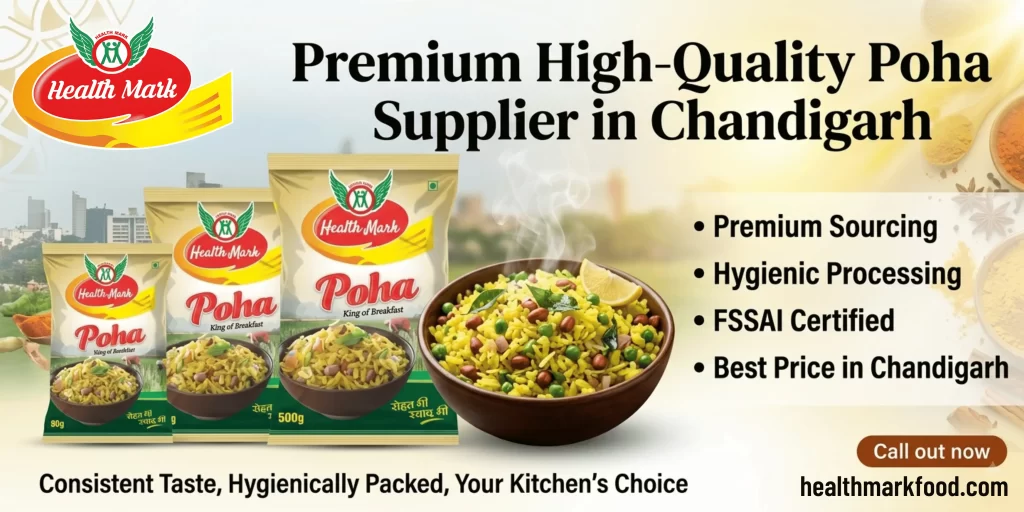
- Multiple pack sizes 80gm, 350gm, and 500gm suitable for households, hostels, and bulk kitchens
- A wider snacks and staples range, so retailers and distributors can source multiple product categories from a single, reliable partner via the Snacks category
For anyone comparing options and searching “best poha seller in Chandigarh” or “top poha seller India,” Health Mark positions itself as a brand built on ingredient quality, hygienic processing, and consistent supply the three pillars buyers actually care about.
Nutritional Benefits of Poha Backed by Everyday Science
Poha’s popularity is not an accident. As a breakfast food, it checks several nutritional boxes that make it a smart everyday choice:
| Nutritional Aspect | Why It Matters |
| Low in fat (when prepared with minimal oil) | Supports weight management and light digestion |
| Naturally gluten-free | Suitable for people avoiding wheat-based grains |
| Source of carbohydrates for quick energy | Ideal for an active morning start |
| Easily digestible | Gentle on the stomach, suitable for most age groups |
| Versatile with add-ins | Can be paired with peanuts, vegetables, sprouts, or paneer to boost protein and fiber |
Because flattened rice is parboiled before flattening, it also retains more of its nutrients compared to some heavily polished rice products one reason nutritionists frequently recommend it as a balanced breakfast option rather than deep-fried alternatives.
How Premium Poha Is Manufactured: From Paddy to Packet
Understanding the journey from raw paddy to the packet on your shelf helps explain why quality varies so widely between brands.
- Paddy Selection High-quality, mature paddy grains are chosen, as broken or immature grains lead to poor-quality flakes.
- Parboiling The paddy is soaked and steamed, which helps retain nutrients and makes dehusking easier.
- Dehusking The outer husk is removed to expose the rice grain.
- Flattening Grains are passed through rollers that press them into thin flakes the thickness here determines whether you get “thick poha” or “thin poha.”
- Drying Controlled drying reduces moisture to a safe level, extending shelf life without compromising texture.
- Quality Checks Reputed manufacturers sort out broken flakes, foreign particles, and inconsistent batches before packaging.
- Hygienic Packaging Sealed, moisture-resistant packaging protects the product from humidity, pests, and contamination during transport.
A shortcut at any one of these stages is usually what separates a mediocre packet of poha from a genuinely premium one.
Types of Poha and Their Best Uses
| Type of Poha | Flake Thickness | Best Used For |
| Thin Poha | Very fine | Chivda, quick-soak breakfast poha |
| Medium Poha | Standard | Classic kanda poha, everyday cooking |
| Thick Poha | Coarser | Poha cutlets, dishes needing more bite/texture |
Knowing which type suits your recipe helps you get the best texture and avoid a mushy or undercooked result.
Health Mark Poha vs. Ordinary Local Poha: A Comparison
| Feature | Health Mark Poha | Typical Loose/Local Poha |
| Sourcing | Premium quality flattened rice | Often unverified or mixed-grade sourcing |
| Hygiene | Hygienically processed and sealed | Frequently sold loose, exposed to dust/moisture |
| Packaging | Sealed multi-size packs (80gm/350gm/500gm) | Loose weighing, inconsistent packaging |
| Freshness | Freshness maintained through sealed packaging | Shelf life difficult to determine |
| Consistency | Consistent texture and taste batch to batch | Quality can vary widely between purchases |
| Traceability | Branded, traceable manufacturer | Often no clear source or accountability |
This is the core reason more buyers are moving away from loose, unbranded poha and actively searching for a premium high quality poha supplier in Chandigarh they can trust batch after batch.
How to Choose the Best Poha Supplier: A Practical Checklist
Use this checklist whether you are a household buyer or a bulk purchaser:
Check for FSSAI certification and other relevant food safety marks
Inspect the packaging it should be sealed, clean, and free of damage
Smell test fresh poha has a neutral, slightly nutty smell, never musty or sour
Look at flake color and uniformity premium poha is generally uniform in size with minimal broken pieces
Review the brand’s reputation check if they supply consistently to retailers, hotels, or households in your city
Ask about minimum order quantities if you’re buying in bulk
Confirm delivery timelines and coverage area, especially if you need a poha seller near me for regular repeat orders
Compare pricing transparently rather than judging on price alone
Understanding Poha Pricing What Affects the Cost?
If you’re comparing the best Poha price across brands, keep these factors in mind rather than choosing on price alone:
- Grain quality Premium sourcing costs more but delivers better texture and shelf life
- Processing standards Hygienic, well-equipped facilities have higher operating costs than informal setups
- Packaging Sealed, moisture-resistant packs cost more to produce than loose sales but protect your investment
- Pack size Smaller packs (like 80gm) typically have a higher per-kg rate than bulk packs (like 500gm)
- Transportation and locality Local suppliers based in or near Chandigarh, Panchkula, Baddi, and Ludhiana can often offer more competitive logistics costs than distant sellers
A slightly higher price for verified, hygienically packed poha is almost always a better long-term value than the cheapest loose option at a local shop.
A Guide for Bulk Buyers: Poha Wholesalers in India
If you run a restaurant, tiffin service, hostel mess, retail store, or distribution business, sourcing from poha wholesalers in India requires a slightly different approach than a household purchase:
- Ask for sample batches before committing to a large order
- Negotiate based on volume, not just per-unit price
- Check delivery consistency a supplier who is a top poha supplier on paper but unreliable on delivery timelines can disrupt your operations
- Look for suppliers with a wider product catalog (like atta, besan, pulses, and spices) so you can consolidate your supply chain with one dependable partner
- Request documentation GST invoices, FSSAI license numbers, and quality certificates should be readily available
- Build a direct relationship with the manufacturer where possible, rather than going through multiple middlemen, to get better pricing and faster issue resolution
Businesses across Chandigarh, Panchkula, Mohali, Baddi, and Ludhiana looking for a reliable top poha supplier can explore Health Mark’s product range directly via their Snacks category page or reach out for bulk enquiries.
Common Mistakes People Make When Buying Poha
Buying loose poha purely because it looks cheaper without checking hygiene or freshness
Ignoring the manufacturing date or shelf-life indicators on the pack
Assuming all poha flakes are the same using thin poha for a recipe that needs thick poha (or vice versa) ruins texture
Not rinsing poha properly before cooking, leading to a soggy or overly dry result
Overlooking the brand’s certifications in favor of familiarity or habit
Buying in bulk from an unverified seller without first testing a smaller quantity
Expert Tips to Cook Restaurant-Style Poha at Home
- Rinse, don’t soak. Run the poha briefly under water in a strainer soaking for too long makes it mushy.
- Let it rest for a few minutes after rinsing so it absorbs residual moisture evenly.
- Temper your oil well mustard seeds, curry leaves, and a pinch of turmeric build the base flavor.
- Add vegetables in stages onions first for sweetness, then peas or potatoes for texture.
- Finish with fresh coriander, lemon juice, and a sprinkle of sev for the classic street-style taste.
- Use fresh, high quality Poha even great technique cannot fix flakes that were stale to begin with.
FAQ
Q1. What is the difference between premium poha and regular poha?
Premium poha is made from carefully selected, mature grains, processed hygienically, and packed in sealed, moisture-resistant packaging to preserve freshness. Regular or loose poha often lacks quality checks and consistent sourcing, which affects taste, texture, and shelf life.
Q2. Where can I buy premium high quality poha in Chandigarh?
You can buy premium poha online or through authorized retailers. Health Mark offers hygienically packed, premium quality poha across the Chandigarh, Panchkula, Mohali, Baddi, and Ludhiana region you can view details on their Poha product page.
Q3. Is poha a healthy breakfast option?
Yes, poha is generally considered a light, easily digestible breakfast that is naturally gluten-free and low in fat when prepared with minimal oil. Adding vegetables, peanuts, or sprouts can further boost its nutritional value.
Q4. What pack sizes are available for Health Mark Poha?
Health Mark Poha is available in 80gm, 350gm, and 500gm packs, suitable for individual households as well as larger family or bulk requirements.
Q5. How do I identify good quality poha before buying?
Check for uniform flake size, a neutral smell (no musty or sour odor), minimal broken pieces, sealed and undamaged packaging, and a visible manufacturing date along with FSSAI certification.
Q6. What is the shelf life of packaged poha?
Shelf life varies by brand and storage conditions, but hygienically processed and sealed poha generally stays fresh for several months when stored in a cool, dry place away from direct sunlight. Always check the pack for the specific best-before date.
Q7. Can restaurants and hostels order poha in bulk from Health Mark?
Yes, businesses such as restaurants, cafés, tiffin services, and hostels looking for consistent bulk supply can reach out to Health Mark directly for wholesale and distribution enquiries.
Q8. What is the difference between thick poha and thin poha?
Thick poha holds its shape better and is often used for dishes like poha cutlets, while thin poha cooks faster and is commonly used for the classic quick-soak breakfast poha and chivda preparations.
Q9. Does Health Mark supply other staple food products besides poha?
Yes, Health Mark offers a broad range of products including atta, besan, pulses, rice, spices, dry fruits, sauces, and snacks, allowing retailers and households to source multiple staples from one trusted supplier.
Q10. How can I contact Health Mark for poha orders or bulk enquiries?
You can reach Health Mark via phone at +91 93188 96005, +91 92185 87660, or +91 98828 96000, or by exploring their product enquiry page directly on their website.
Final Thoughts and Next Steps
Choosing the right poha supplier is not just about grabbing the nearest packet off the shelf it is about consistency, hygiene, nutrition, and trust, meal after meal, order after order. Whether you’re a home cook wanting a light, wholesome breakfast or a business owner sourcing from poha wholesalers in India for daily bulk supply, the fundamentals stay the same: check the sourcing, verify the certifications, and choose a brand that treats quality as non-negotiable.
If you’re searching for a premium high quality poha supplier in Chandigarh, Health Mark’s hygienically processed, premium flattened rice available in convenient 80gm, 350gm, and 500gm packs is built for exactly this kind of everyday reliability.