If you have ever walked into a kitchen in Punjab, Haryana, Delhi-NCR, or Himachal Pradesh early in the morning, chances are someone is stirring a pan of soft, golden flattened rice tossed with mustard seeds, curry leaves, peanuts, and a squeeze of lemon. That dish is poha, and it has quietly become one of the top selling breakfast foods across North India, not just in its traditional strongholds of Madhya Pradesh and Maharashtra.
But here’s the catch: not all poha is created equal. Walk into any local market and you will find loose, unbranded flakes sitting in open sacks next to premium, hygienically packed options from established food brands. The difference between the two isn’t just packaging. It’s grain quality, processing hygiene, shelf life, and ultimately, what ends up on your family’s plate.
In this guide, we will walk through everything you need to know before you buy poha — what makes poha “premium quality,” how top poha brands in India process and pack it, what affects poha price, how to spot a genuinely good poha seller near you, and why more households and businesses across North India are choosing Health Mark as their trusted poha supplier.
What Is Poha? A Quick Introduction
Poha, also called flattened rice, chivda, or aval in different parts of India, is made by parboiling paddy and then pressing it into thin, dry flakes. The parboiling step partially cooks the starch inside the grain, which is why poha rehydrates quickly when soaked in water and cooks in a matter of minutes.
Because it needs almost no cooking time, poha has always been a practical food — something you could prepare before rushing out the door, or serve unexpected guests without a fuss. What has changed over the last decade is scale. Poha is no longer a regional specialty; it is now stocked in grocery stores, quick-commerce apps, and modern kitchens from Ludhiana to Lucknow.
Why Poha Has Become a Top Selling Snack in North India
North India has traditionally leaned on parathas, poori-sabzi, and stuffed breads for breakfast. So why is poha increasingly a top selling poha choice in this region too?
A Lighter Alternative to Heavy Breakfasts
Poha is naturally low in oil compared to fried breakfast staples. It cooks with a spoon or two of oil, a handful of vegetables, and whatever spices are on hand, making it an easy swap for people trying to eat lighter without giving up flavour.
Fast Urban Lifestyles
With more dual-income households and students living away from home, quick-cooking meals matter. Poha takes under fifteen minutes from soaking to serving, which fits neatly into the pace of city life in Chandigarh, Delhi, and Ludhiana.
Festival and Fasting Food
Poha is commonly eaten during Navratri and other fasting periods because it is light on the stomach and easy to digest. It also travels well, which is why it shows up in tiffins, train journeys, and picnic baskets.
Wider Retail Availability
As more manufacturers, including regional players like Health Mark, package poha hygienically and distribute it through retail and online channels, access has improved dramatically. A dish that was once bought loose from a grain merchant is now available as a shelf-stable, quality-checked packet.
Nutritional Benefits of Poha
Poha is often described as a “light” food, and the numbers generally support that reputation, though exact values vary slightly by brand, thickness, and processing method.
| Nutrient (per 100g raw poha, approximate) | Typical Range |
| Calories | 330–360 kcal |
| Carbohydrates | 75–80 g |
| Protein | 6–8 g |
| Fat | 0.5–1 g |
| Dietary Fibre | 2–3 g |
| Iron | 2–4 mg |
| B-Vitamins (Thiamine, Niacin) | Present in moderate amounts |
A few points worth noting:
Easy on digestion: Because the parboiling process partially gelatinises the starch, poha is generally easier to digest than uncooked rice, which is one reason it’s recommended during recovery from illness or for people with sensitive stomachs.
Low oil requirement: Unlike many fried snacks, poha needs very little oil to prepare, which keeps the final dish lighter.
Customisable nutrition: Adding peanuts, vegetables, and sprouts can boost the protein and fibre content of a poha meal considerably.
Iron retention: Some of the B-vitamins and minerals from the outer bran layer migrate into the grain during parboiling, so poha typically retains slightly more of these nutrients than plain polished white rice.
This is general nutritional guidance and not a substitute for medical or dietary advice — always check with a nutritionist for a plan suited to your specific needs.
What Makes Poha “Premium Quality”?
Not every packet labelled “poha” delivers the same experience. Here’s what separates high quality poha from an average one:
Uniform flake size — Premium poha has evenly sized, unbroken flakes. Excessive broken bits or dust in the packet is a sign of poor processing or rough handling.
Clean, natural colour — Good poha has a soft ivory colour, not a dull grey or an artificially bright white.
Low moisture content — Properly dried poha stays crisp in the packet and doesn’t turn sticky or lumpy when stored.
Minimal impurities — Premium quality poha should be free from stones, husk, or foreign particles, a basic hygiene standard that should never be compromised.
Fresh aroma — Good poha smells mild and slightly nutty. A musty or stale smell usually means it has been sitting in storage too long or was packed without proper quality checks.
Correct soaking behaviour — Quality poha softens evenly within a couple of minutes of rinsing or soaking. If it turns mushy instantly or stays hard, the grade of rice used was likely inconsistent.
How to Identify the Best Poha Brand in India
If you are trying to shortlist the for your home or business, here is a practical checklist to run through before you buy poha, especially in bulk:
Grain Sourcing
The best poha brands in India start with good quality paddy. Ask (or check the label) whether the manufacturer sources grain directly or through verified suppliers, since this affects consistency batch to batch.
Processing Hygiene
Look for manufacturers who process in FSSAI-registered facilities with clean, controlled environments. This matters more for poha than many other grains because the flakes are thin and more exposed to contamination during handling.
Packaging Quality
Premium quality poha should come in sealed, moisture-resistant packaging that protects freshness during transport and storage — especially important in a market as large and geographically spread out as India.
Batch Consistency
A top poha supplier will deliver the same taste, texture, and cook time pack after pack. Inconsistency between batches usually points to variable grain sourcing or processing shortcuts.
Transparent Labelling
Reliable brands clearly mention manufacturing details, weight, and contact information on the pack — not just a logo and a tagline.
Health Mark Poha: Why We’re a Trusted Poha Supplier in North India
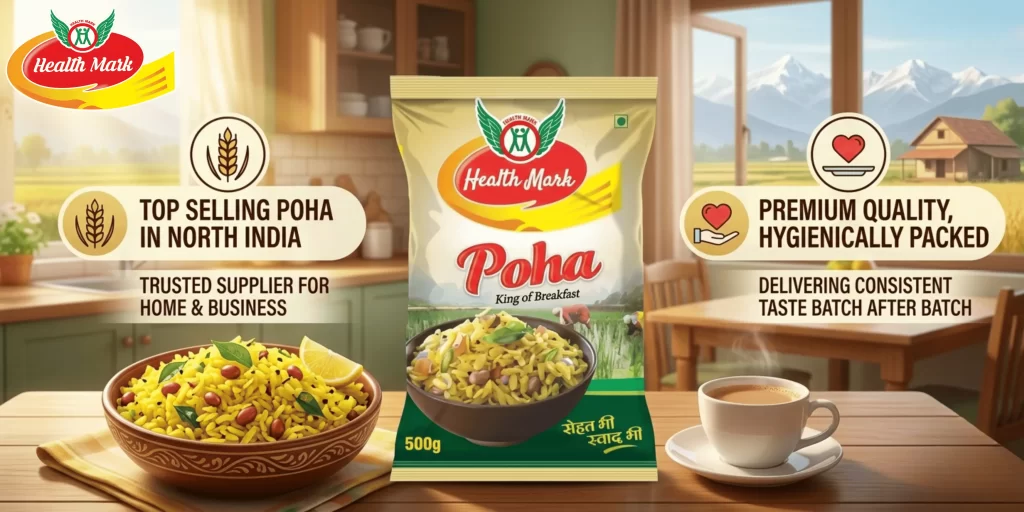
At Health Mark, poha is one of our most requested products in the Snacks category, and for good reason. Our Poha is made from carefully selected, premium quality flattened rice that is processed hygienically to preserve its natural texture and taste.
What sets Health Mark Poha apart:
Premium quality flattened rice — Selected for uniform flake size and clean grain quality.
Light and easy to digest — Ideal for breakfast, evening snacks, or a light meal any time of day.
Quick cooking — Ready in minutes, whether you’re making a quick weekday breakfast or a festival-special dish.
Hygienically packed for freshness — Sealed to protect against moisture and contamination from our facility to your kitchen.
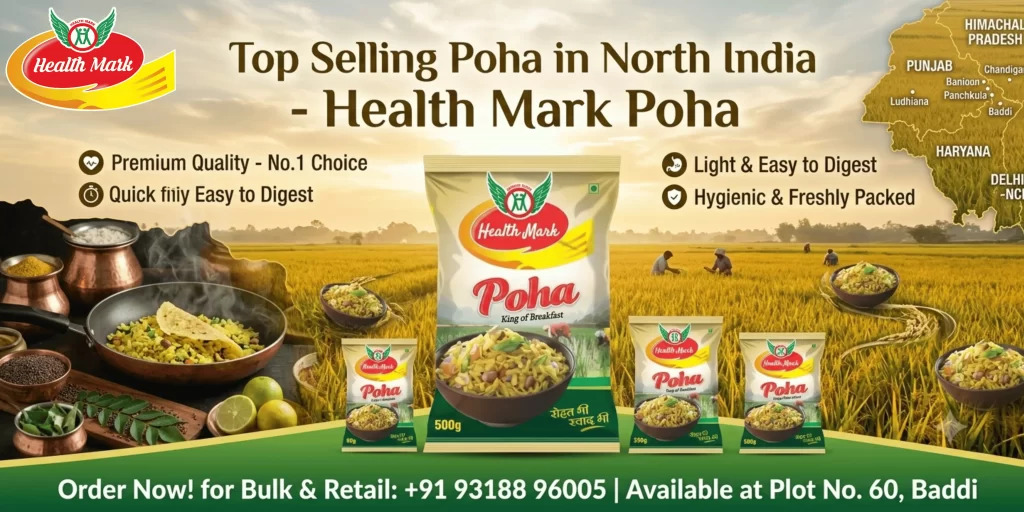
Multiple pack sizes — Available in 80gm, 350gm, and 500gm packs, so you can choose what suits your household or business needs.
Health Mark operates out of our manufacturing unit at Plot No. 60, Industrial Township Bhatoli Kalan, Baddi, and supplies across Chandigarh, Panchkula, Baddi, Ludhiana, and other parts of North India. If you’re searching for a poha seller near me who can also serve you reliably in bulk, our team is set up to handle both retail and business enquiries.
Poha Price in India: What Affects the Cost
Poha price isn’t fixed across the board — it depends on a combination of factors:
| Factor | How It Affects Price |
| Grain quality | Higher-grade paddy and cleaner processing cost more but deliver better texture |
| Thickness (thin/medium/thick) | Thicker poha generally uses more raw material per pack |
| Packaging | Moisture-resistant, sealed packaging adds a small premium but protects freshness |
| Brand & certification | FSSAI-registered, quality-checked brands may price slightly higher than loose, unbranded poha |
| Pack size | Larger packs (like 500gm) typically offer a better per-gram value than small packs |
| Region & transport | Freight and local demand can shift prices between cities |
As a rule of thumb, the cheapest option in the market is rarely the best long-term value once you factor in breakage, impurities, and inconsistent cooking results. Reach out to our team directly for current pricing on Health Mark Poha across pack sizes.
Loose Poha vs Branded Premium Poha: A Comparison
| Aspect | Loose / Unbranded Poha | Branded Premium Poha (e.g., Health Mark) |
| Hygiene | Often exposed to air, dust, and handling | Hygienically processed and sealed |
| Consistency | Varies by shop and season | Consistent batch to batch |
| Shelf Life | Shorter, especially in humid weather | Extended due to sealed packaging |
| Quality Checks | Rarely standardised | Regular quality checks during manufacturing |
| Traceability | Difficult to trace origin | Clear manufacturer details and contact information |
| Price | Slightly cheaper upfront | Marginally higher, but better value per use |
How to Cook Perfect Poha at Home
Getting restaurant-style poha at home comes down to technique more than ingredients. Here’s a simple, reliable method:
Rinse, don’t soak too long. Place poha in a strainer and rinse briefly under running water, or soak for 1–2 minutes only. Over-soaking makes it mushy.
Drain well. Let the rinsed poha sit in the strainer for a few minutes so excess water drains off completely.
Temper the spices. Heat oil, add mustard seeds, curry leaves, green chillies, and chopped onions. Sauté until the onions turn translucent.
Add peanuts and turmeric. This gives poha its classic yellow colour and a bit of crunch.
Fold in the poha gently. Add the drained poha to the pan and mix gently with a light hand — vigorous stirring breaks the delicate flakes.
Season and finish. Add salt, a pinch of sugar if you like it slightly sweet, and finish with fresh coriander and a squeeze of lemon.
Serve warm with sev, a side of curd, or a cup of masala chai.
Common Mistakes to Avoid When Buying or Cooking Poha
Over-soaking the flakes, which turns the final dish gluey instead of light and fluffy.
Buying loose poha without checking for impurities, stones, or an odd smell.
Ignoring the pack date on branded poha — fresher stock always cooks and tastes better.
Using too much oil, which defeats the purpose of poha as a lighter breakfast option.
Skipping the rinse-and-drain step, leading to either soggy or unevenly cooked poha.
Storing opened packs in humid conditions, which causes premium quality poha to lose its crisp texture quickly.
Popular Poha Recipes Worth Trying
Kanda Poha The classic onion-based poha, popular across Maharashtra and now widely eaten in North Indian homes too.
Batata Poha Poha cooked with soft potato cubes for a heartier meal.
Poha Chivda A crunchy, roasted snack version made with poha, peanuts, curry leaves, and spices perfect for evening tea time.
Sweet Poha A milder, jaggery-sweetened version often made during festivals.
Poha Cutlets Mashed poha mixed with boiled potatoes and spices, shallow-fried into crisp patties a great way to use up leftover poha.
How to Find a Reliable Poha Seller Near You
If you’re searching for a “poha seller near me” or comparing the top poha supplier options in your city, here’s what to check before placing an order:
Confirm the manufacturer is FSSAI-registered.
Ask about pack sizes available (small packs for trial, bulk packs for regular use or business needs).
Check if the supplier offers direct ordering Health Mark, for instance, allows you to place a Poha enquiry directly on our product page or connect with our sales team over WhatsApp or phone.
For bulk or business orders, ask about consistent supply capacity, since a genuine top poha seller should be able to fulfil repeat orders without quality dipping.
FAQ
Q1. What is the best poha brand in India?
There isn’t a single universal answer, since preferences vary by region and taste. That said, the best poha brand for you is one that consistently offers premium quality flattened rice, hygienic processing, and transparent packaging — qualities that Health Mark Poha is built around.
Q2. Is poha good for weight loss?
Poha is relatively light and low in oil compared to many fried breakfast options, and it can fit into a balanced, calorie-conscious diet when prepared with vegetables and minimal oil. However, individual results depend on overall diet and lifestyle, so it’s best to consult a nutritionist for personalised advice.
Q3. What is the difference between thin, medium, and thick poha?
Thin poha cooks the fastest and works well for delicate dishes, medium poha is the most commonly used all-purpose variety, and thick poha holds its shape better, which makes it popular for dishes like Batata Poha that need a firmer bite.
Q4. How should I store poha to keep it fresh?
Store poha in an airtight container away from moisture and direct sunlight. Once opened, try to use it within a few weeks for the best taste and texture.
Q5. Why is poha so popular in North India now, when it originated elsewhere? Improved retail distribution, a shift toward lighter breakfasts, and greater awareness of poha as a quick, versatile dish have all contributed to poha becoming a top selling snack well beyond its traditional regions.
Q6. What affects poha price the most?
Grain quality, processing standards, packaging, and pack size are the biggest factors. Branded, hygienically packed poha is often priced slightly higher than loose poha, but tends to offer better consistency and shelf life.
Q7. Can poha be eaten during fasting (vrat)?
Poha is commonly eaten during Navratri and similar fasting periods, though preparation methods may be adjusted (for example, avoiding regular salt or certain spices) depending on individual fasting rules.
Q8. Where can I buy premium quality poha online?
You can order Health Mark Poha directly through our product page or explore our complete Snacks range. For quick queries, you can also reach our team over WhatsApp or phone.
Q9. What pack sizes does Health Mark Poha come in?
Health Mark Poha is available in 80gm, 350gm, and 500gm packs, making it suitable for small households, large families, or bulk requirements.
Q10. Is Health Mark a top poha supplier for bulk or business orders?
Yes, Health Mark supplies poha for both retail and bulk requirements across North India. For business enquiries, pricing, and supply capacity details, you can contact our sales team directly.
Conclusion
Poha’s rise as a top selling snack across North India isn’t an accident it’s light, quick to cook, versatile enough for breakfast or a festival dish, and increasingly available in premium, hygienically packed formats that weren’t common a decade ago. The real difference between an average bowl of poha and a genuinely satisfying one usually comes down to the quality of the flattened rice you start with.
If you’re looking for a best Poha seller that combines premium quality, hygienic processing, and reliable supply, Health Mark Poha is made to fit right into your kitchen whether you need a small 80gm pack to try it out or a 500gm pack for regular use.
Ready to taste the difference? Order Health Mark Poha order now or explore our full Snacks category. For bulk orders or questions, call us at +91 93188 96005, +91 92185 87660, or +91 98828 96000.