If you’ve ever stood in a grocery aisle staring at five different poha packets, wondering which one is actually good, you’re not alone. Poha looks simple just flattened rice but the difference between a mediocre packet and a genuinely premium one shows up the moment you cook it. One turns soft, fluffy, and fragrant. The other turns into a sticky, broken mess that tastes like cardboard.
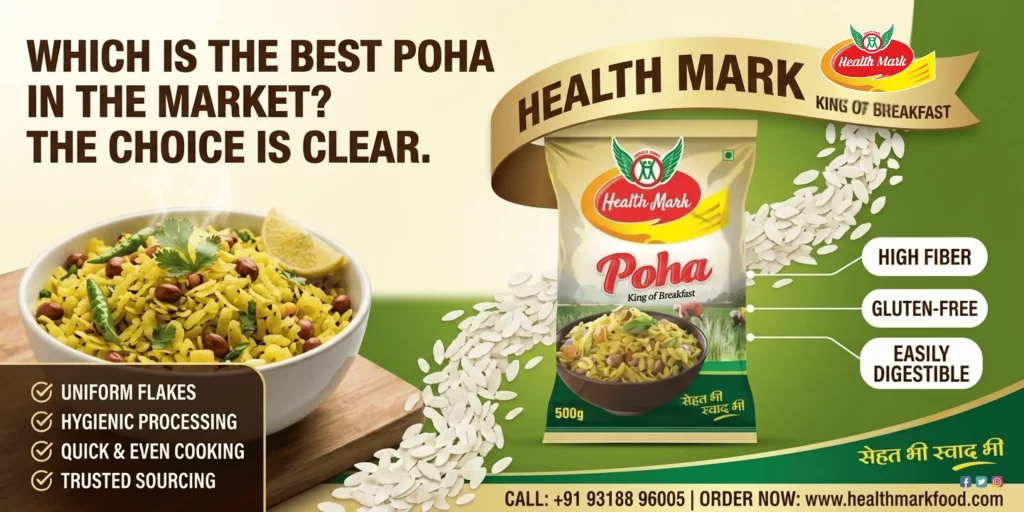
So, which is the best poha available in the market? The honest answer is: it depends on a handful of specific quality markers thickness, freshness, processing hygiene, and how the rice was flattened. In this guide, we’ll break down exactly what separates good poha from great poha, how to evaluate any brand you’re considering, and why so many households across North India have started choosing Health Mark Poha for their everyday breakfast.
What Is Poha? A Quick Refresher
Poha, also called flattened rice or beaten rice, is made by parboiling raw rice and then pressing it flat between rollers. This process removes moisture while keeping the rice’s natural nutrients largely intact. The result is a light, flaky grain that cooks in minutes once it’s rinsed or soaked.
It’s one of India’s most loved breakfast dishes, popular from Madhya Pradesh (where “Indori Poha” is a cultural icon) to Maharashtra’s “Kanda Poha,” all the way to Punjab and Himachal Pradesh, where it’s increasingly eaten as a light, home-style meal.
Poha’s biggest appeal? It’s fast, filling, and endlessly customizable you can make it savory with onions and peanuts, tangy with lemon, or even sweet.
Why “Best Poha” Isn’t a One-Size-Fits-All Answer
Before we go further, it’s worth clarifying something: there’s no single “best poha” that works for every kitchen. The right choice depends on:
- How you plan to cook it (soft breakfast poha vs. crunchy chivda poha)
- Your dietary needs (light and easily digestible vs. high-fiber varieties)
- Regional taste preference (thick poha for heartier dishes, thin poha for quick-cooking meals)
- Bulk vs. household use (a top poha supplier for restaurants vs. a small pack for home)
That said, regardless of the use case, every high-quality poha shares certain non-negotiable traits and that’s what we’ll cover next.
7 Signs of Premium Quality Poha
Here’s what actually separates the best poha brand in India from an average one:
- Uniform Flake Size Premium poha has evenly sized, unbroken flakes. Excess broken bits or “poha dust” at the bottom of the packet is a red flag for poor processing.
- Natural White-to-Cream Color Good poha should look naturally pale, not artificially bleached white or discolored yellow (a sign of old stock).
- Low Moisture, No Clumping Quality poha stays dry and separates easily. If it feels damp or sticks together, it likely wasn’t dried or packed properly.
- Clean, Neutral Smell Fresh poha has almost no smell. A musty or rancid odor signals it’s either old or was stored poorly.
- Quick, Even Cooking When soaked briefly in water, premium poha softens uniformly within 2–3 minutes without turning mushy.
- Hygienic Packaging Sealed, moisture-proof packaging protects against contamination and pests a must for both home use and bulk/business orders.
- Transparent Sourcing The best poha manufacturing units disclose where the rice comes from and follow food safety standards (FSSAI compliance, in India’s case).
Quick tip: Before buying, gently rub a few flakes between your fingers. If they crumble into powder instantly, the poha is likely stale or over-processed.
Types of Poha You’ll Find in the Market
| Type | Thickness | Best Used For |
| Thin Poha | Very fine flakes | Quick breakfast poha, chivda, snacks |
| Medium Poha | Standard thickness | Everyday kanda poha, tomato poha |
| Thick Poha | Heavier flakes | Poha cutlets, stuffed dishes, sweet poha (kheer) |
| Red Poha | Made from red rice | Health-conscious diets, higher fiber content |
Most households default to medium poha for everyday breakfast, since it holds its texture well without turning mushy which is exactly the thickness Health Mark poha is processed to.
Poha Nutrition: Is It Actually Healthy?
Poha’s reputation as a “light and healthy” breakfast isn’t just marketing it holds up nutritionally, especially when paired with vegetables and a light tempering of oil.
General nutritional highlights of flattened rice (per 100g, approximate):
- Low in fat compared to fried breakfast options
- A good source of quick-release carbohydrates for morning energy
- Naturally gluten-free
- Easily digestible, making it suitable for children, elderly family members, and people recovering from illness
- When cooked with peanuts, vegetables, and a squeeze of lemon, it becomes a more balanced meal with added protein, fiber, and vitamin C
According to the National Institute of Nutrition (India), flattened rice-based meals are commonly recommended as part of light, balanced Indian diets due to their easy digestibility and quick preparation time.
How to Choose the Best Poha Brand in India
With dozens of options from hyperlocal mills to national FMCG brands here’s a practical checklist for picking a reliable, best-selling poha brand:
- Check for FSSAI certification on the packaging
- Look at the manufacturing date, not just the expiry date
- Prefer brands with visible accreditation (ISO, HACCP, or similar food safety marks)
- Read the ingredient list pure poha should have zero additives
- Check packaging quality resealable or well-sealed packs keep poha fresher longer
- Look for consistent sourcing brands that source rice from trusted regions tend to have more uniform quality batches
- Read customer reviews or ask local sellers which brand is currently the top selling poha in your area
Comparison Table: What to Check Before You Buy
| Quality Factor | Low-Quality Poha | Premium Quality Poha (e.g., Health Mark) |
| Flake consistency | Uneven, lots of broken bits | Uniform, intact flakes |
| Smell | Musty or stale | Neutral, fresh |
| Cooking texture | Mushy or unevenly cooked | Soft, fluffy, evenly cooked |
| Packaging | Loose or torn seals | Hygienically sealed packs |
| Sourcing transparency | Unclear or unavailable | Clearly stated origin & processing |
| Shelf life | Short, degrades quickly | Longer-lasting freshness |
| Available quantities | Single size only | Multiple sizes (e.g., 80gm, 350gm, 500gm) |
Meet Health Mark Poha: Why It’s Becoming a Top Seller
If you’re looking for premium quality poha that checks every box above, Health Mark Poha is worth a serious look.
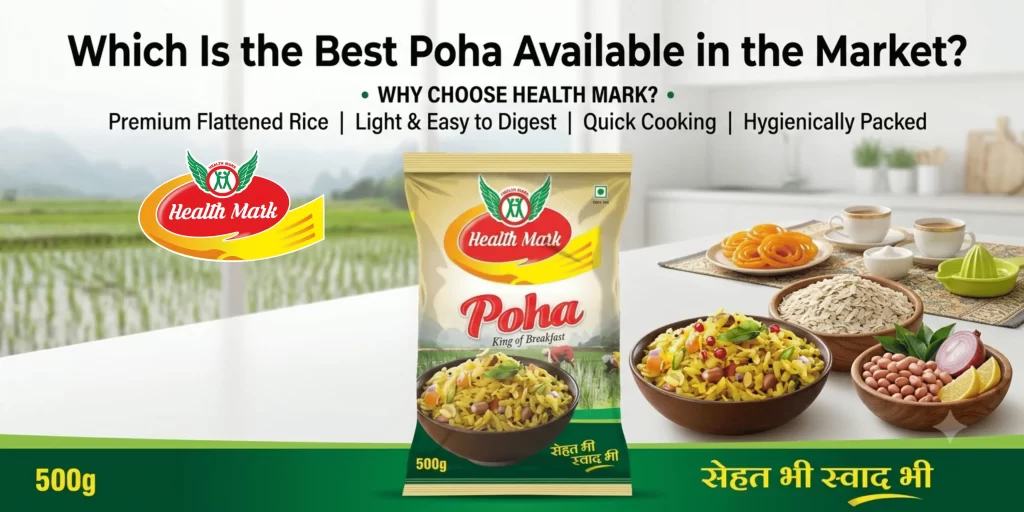
Manufactured at Health Mark’s facility in Baddi, Himachal Pradesh a region known for food processing this poha is made from carefully selected, premium flattened rice grains, processed under hygienic conditions to deliver a light texture and authentic taste in every batch.
Why Health Mark Poha stands out:
- Premium quality flattened rice sourced and processed with consistency in mind
- Light and easy to digest ideal for daily breakfast, even for children and elderly family members
- Quick cooking softens evenly, cutting down your kitchen time
- Hygienically packed sealed to lock in freshness from factory to kitchen
- Multiple pack sizes available in 80gm, 350gm, and 500gm, suitable for both individual households and bulk buyers
Health Mark isn’t a single-product company either it’s part of a broader range of snacks and everyday food staples, which reflects a manufacturing setup built around consistent quality control rather than a one-off product.
Good to know: If you’re comparing multiple sellers, it’s worth asking any best poha seller directly about their sourcing, batch freshness, and hygiene certifications reputable suppliers will always answer this transparently.
Poha Price: What Affects the Cost?
Poha pricing in India typically varies based on:
- Quality grade premium, uniformly processed flakes cost more than mixed-grade poha
- Pack size smaller packs (like 80gm) cost more per gram than bulk packs (500gm+)
- Brand and sourcing brands with transparent sourcing and hygiene certifications are usually priced slightly higher, reflecting quality control
- Region and transport costs prices can vary slightly by state due to logistics
Rather than chasing the cheapest packet on the shelf, it’s smarter to evaluate cost-per-quality a slightly higher price for consistently fresh, well-processed poha usually saves money in the long run since you waste less product to breakage or spoilage.
Common Mistakes People Make When Buying Poha
- Buying based on price alone the cheapest pack often has more broken flakes and shorter shelf life.
- Ignoring the manufacturing date always check this, not just the “best before” date.
- Not checking flake thickness using thin poha for dishes that need thick poha (or vice versa) ruins texture.
- Overlooking packaging quality torn or poorly sealed packets expose poha to moisture and pests.
- Skipping the rinse-soak step while cooking even great poha turns mushy if oversoaked, or stays hard if undersoaked.
- Storing poha incorrectly at home always reseal packets tightly and store in a cool, dry place to prevent premature staleness.
How to Cook Poha So It Turns Out Perfect Every Time
Here’s a simple, foolproof method that works well with premium poha like Health Mark’s:
- Rinse briefly Place poha in a strainer and rinse under running water for 5–10 seconds. Don’t soak it in standing water.
- Let it rest Set the rinsed poha aside for 5 minutes to soften naturally.
- Temper the spices Heat oil, add mustard seeds, curry leaves, chopped onions, and green chilies. Sauté until onions turn translucent.
- Add turmeric and salt Mix well for even color and flavor.
- Fold in the poha Add the softened poha gently, mixing with a light hand to avoid breaking the flakes.
- Finish with peanuts, lemon, and coriander Cook on low heat for 2–3 minutes, then garnish and serve hot.
Pro tip: Use a fork or wide spatula to fold poha instead of stirring vigorously this keeps the flakes intact and prevents a mushy texture.
Expert Tips From Home Cooks and Food Professionals
- Test a small batch first. Before committing to a large pack, buy a small size (like Health Mark’s 80gm pack) to check texture and taste.
- Match thickness to dish. Thin poha for chivda, medium for daily breakfast, thick for cutlets or kheer.
- Store in airtight containers once opened, rather than leaving the original packet loosely folded.
- Pair with protein adding peanuts, sprouts, or a boiled egg on the side balances out the meal nutritionally.
- Avoid over-rinsing poha only needs a quick rinse, not a prolonged soak, to preserve its texture.
Where to Buy the Best Poha Near You
If you’re searching for a poha seller near me or a top poha supplier for bulk/business needs, Health Mark offers direct ordering with multiple contact options:
- Sales Contact: +91 93188 96005 | +91 92185 87660 | +91 98828 96000
- Explore More Snacks: Health Mark Snacks Category
Whether you need a small pack for home or are sourcing as a best poha manufacturing partner for retail or food service, reaching out directly ensures you get the freshest batch and accurate pricing.
FAQ
Q1. Which is the best poha available in the market?
The best poha is one with uniform flake size, a clean neutral smell, hygienic packaging, and transparent sourcing. Brands like Health Mark focus on these exact quality markers, making their poha a reliable choice for daily use.
Q2. What is the difference between thick and thin poha?
Thick poha holds its shape better and is ideal for cutlets, stuffed preparations, or sweet poha. Thin poha cooks faster and is commonly used for chivda or quick breakfast poha.
Q3. Is poha good for weight loss?
Poha is relatively light and low in fat compared to many fried breakfast options, and it can fit into a balanced diet. However, portion size and the ingredients cooked with it (oil, peanuts, potatoes) matter, so it’s best to consult a nutritionist for personalized advice.
Q4. How do I know if poha is fresh or stale?
Fresh poha has a neutral smell, dry texture, and cooks evenly. Stale poha often has a musty odor, feels damp or overly brittle, and may cook unevenly or taste off.
Q5. What is the ideal poha price range in India?
Poha pricing varies by pack size, quality grade, and brand, generally ranging from budget options to premium quality poha priced slightly higher for better sourcing and processing standards. It’s best to compare price per quality rather than price alone.
Q6. Is Health Mark Poha good for daily breakfast?
Yes. Health Mark Poha is made from premium quality flattened rice, processed to be light and easy to digest, making it suitable for everyday breakfast for the whole family, including children and elderly members.
Q7. Can poha be eaten by people with gluten intolerance?
Poha is made from rice and is naturally gluten-free, making it a suitable option for those avoiding gluten. As always, check individual product labeling to confirm there’s no cross-contamination during processing.
Q8. What pack sizes does Health Mark Poha come in?
Health Mark Poha is available in 80gm, 350gm, and 500gm packs, catering to both individual households and bulk requirements.
Q9. How should I store poha at home for maximum freshness?
Store poha in an airtight container in a cool, dry place away from direct sunlight and moisture. Once opened, reseal the packaging tightly or transfer it to a sealed jar.
Q10. How can I order poha directly from Health Mark?
You can order directly through the Health Mark Poha product page or contact their sales team at +91 93188 96005, +91 92185 87660, or +91 98828 96000.
Final Verdict
So, which is the best poha available in the market? It comes down to a few clear, checkable factors: flake consistency, freshness, hygienic processing, and transparent sourcing not just brand recognition or the lowest price tag.
If you’re looking for a premium quality poha that ticks these boxes without the guesswork, Health Mark Poha offers a dependable, everyday option made from carefully selected flattened rice, hygienically packed, and available in sizes that suit both home kitchens and bulk buyers.
Ready to try it for yourself? Order Health Mark Poha online today or call +91 93188 96005 to place a bulk enquiry.