
If you’ve ever bitten into a plate of bhujia that snapped instead of crunched, or one that turned oily and limp within an hour of frying, the problem probably wasn’t your recipe. It was your besan.
Bhujia looks like a simple snack of deep-fried strands of gram flour dough, seasoned and crisped to perfection. But ask anyone who has run a namkeen stall, a sweet shop, or even a home kitchen that makes bhujia every Diwali, and they’ll tell you the same thing: the flour makes or breaks the batch. Two cooks can use the exact same recipe, the same oil, the same spices, and still get completely different results, simply because one used the right besan and the other didn’t.
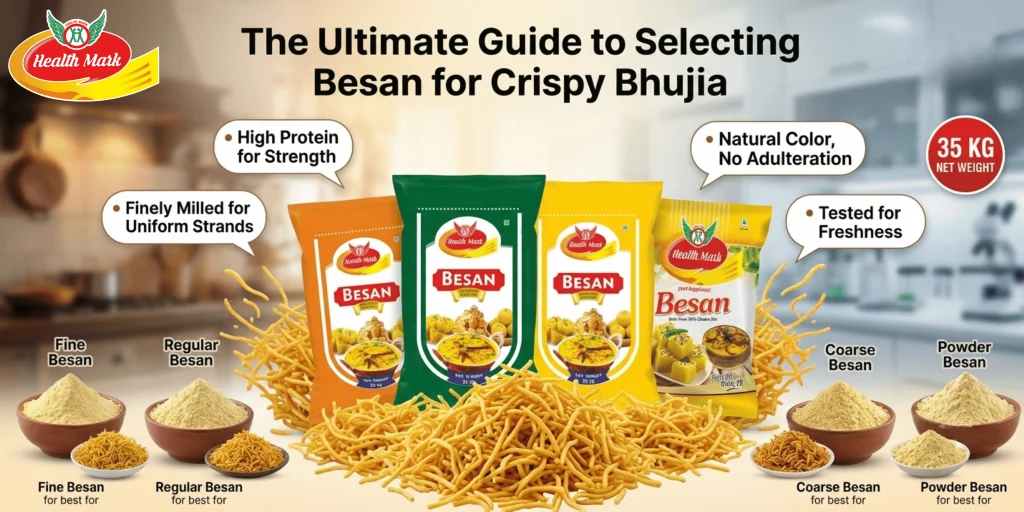
This guide breaks down exactly what “right” means. We’ll cover the texture, protein content, color, aroma, and moisture level that separate ordinary gram flour from besan that’s actually built for bhujia. We’ll also look at fine besan versus coarse besan, how to spot adulteration, what a fair besan price looks like in 2026, and how to choose a besan manufacturer in India you can rely on batch after batch.
By the end, you’ll be able to walk into a shop or open an online store and know within seconds whether the pack in front of you is worth buying.
What Is Besan and Why Does It Matter So Much for Bhujia
Besan, also called gram flour or chana flour, is made by grinding dehusked, split chana dal (Bengal gram) into a fine powder. It’s one of the oldest and most versatile flours in Indian cooking used in everything from pakoras and dhokla to kadhi, laddoo, and of course, bhujia.
What most people don’t realize is that not all besan is milled the same way, and not every batch of chana dal used to make it is equal in quality. The grinding method, the fineness of the particles, the moisture content, and even how the chana dal was stored before milling all affect the final flour’s behavior in a fryer.
For dishes like curries or batters, small quality differences barely register. But bhujia is unforgiving. It’s fried in thin strands through a press, so the dough needs to be pliable enough to extrude but strong enough to hold its shape the instant it hits hot oil. That’s a very specific job, and it needs a very specific kind of besan.
Understanding Bhujia: What the Flour Actually Needs to Do
Before you can judge besan quality, it helps to understand what happens during bhujia-making, step by step:
- Dough formation: Besan is mixed with water, spices, and sometimes a small amount of oil (moyan) to form a firm, smooth dough.
- Extrusion: The dough is pressed through a sev/bhujia press (or murukku press) to form thin strands.
- Frying: The strands hit hot oil immediately and must firm up fast, without breaking apart or turning gummy.
- Crisping: As the moisture evaporates, the bhujia should turn light, crisp, and golden, not oily, not chewy, not soft.
Each of these stages depends directly on the flour’s protein strength, particle fineness, and starch behavior. Weak or low-quality besan tends to:
- Crumble during extrusion instead of forming smooth strands
- Absorb excess oil while frying
- Turn soft within hours of cooling instead of staying crisp
- Taste flat, dusty, or slightly bitter due to rancid dal or poor milling
This is exactly why manufacturers and home cooks who make bhujia regularly become extremely particular about which besan brand they trust.
The 7 Factors That Decide Whether Besan Is Right for Bhujia
1 Fineness and Texture
Bhujia needs besan that is finely and evenly milled. Coarse or uneven particles create weak spots in the dough, which is why strands snap unevenly during frying. Run a pinch of besan between your fingers. Premium quality besan should feel silky, almost powder-like, with no gritty specks.
2 Color
Good besan has a bright, natural yellow color, not dull, not greyish, and not artificially deep yellow (which can indicate added color). A pale or patchy color often signals old stock or poor-quality chana dal.
3 Aroma
Fresh besan has a mild, nutty, slightly roasted smell. If it smells musty, sour, or “flat,” the dal was either stored too long or the flour has picked up moisture and started to turn.
4 Protein and Gluten-Free Binding Strength
Besan doesn’t contain gluten, so its binding strength comes entirely from the natural proteins in chana dal. Higher-protein besan holds the bhujia strands together far better during extrusion and frying, which is why protein content is one of the most important (and most overlooked) buying criteria.
5 Moisture Content
Besan with too much residual moisture clumps easily, spoils faster, and behaves unpredictably in dough. Well-processed besan should feel completely dry and flow freely when poured.
6 Absence of Adulteration
Some low-cost besan in the market is mixed with cheaper flours (like tapioca, yellow pea flour, or corn flour) to cut costs. This weakens both the flavor and the frying performance, and it’s one of the biggest reasons bhujia turns out inconsistent.
7 Freshness and Packaging
Even the best besan degrades if it sits in a warehouse for months in poor packaging. Always check the manufacturing date, and buy from a besan manufacturer in India that turns over stock quickly and packs it to block out air and moisture.
Fine Besan vs. Coarse Besan vs. Powder Besan: Which One for Bhujia
Not all besan is milled to the same grain size, and this is where a lot of buyers get confused. Here’s a simple breakdown:
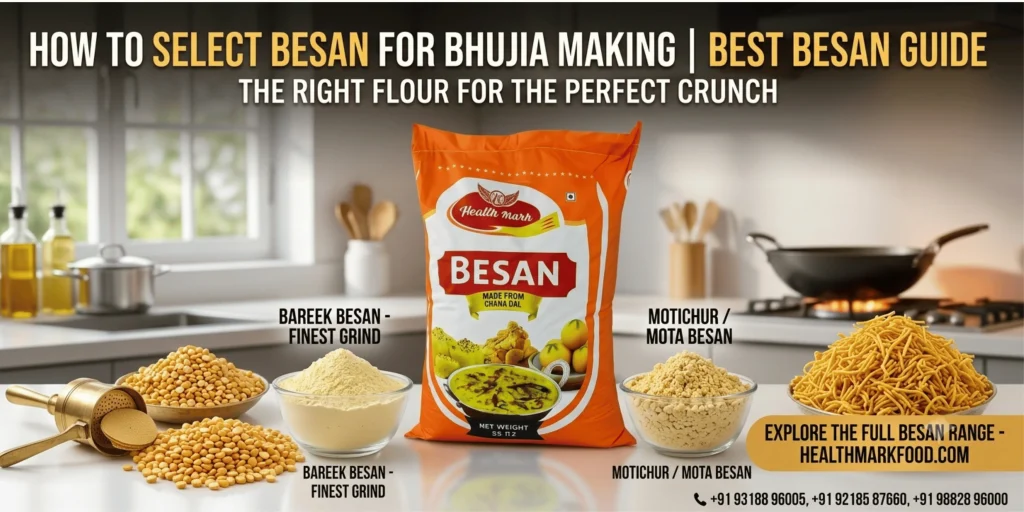
Fine Besan (Bareek Besan): Very finely ground, silky texture. Best for smooth doughs, delicate sweets, and bhujia where a fine, uniform strand is needed.
Regular Besan: The everyday, general-purpose grind versatile for pakoras, curries, and standard bhujia-making.
Coarse Besan (Motichur/Mota Besan): Slightly grainier texture, traditionally used for boondi, motichoor laddoo, and dishes that need a bit more texture rather than a smooth strand.
Powder Besan: Ultra-fine, almost talc-like consistency, ideal where an extremely smooth finish is required.
For bhujia specifically, fine besan (bareek besan) is generally the preferred choice because it extrudes cleanly through a press and fries into thin, even, crisp strands without leaving a gritty texture. Coarser grinds can work for thicker or chunkier bhujia styles, but for the classic thin, crunchy version most people expect, fine besan wins almost every time.
How to Physically Test Besan Quality Before You Buy
You don’t need a lab to judge Besan quality. A few quick, practical checks will tell you almost everything:
- The Rub Test: Rub a small amount between your fingers. It should feel smooth and silky, not gritty or powdery-dusty.
- The Smell Test: Take a sniff. It should smell mildly nutty and fresh. Any sourness or mustiness means the dal has aged poorly.
- The Water Test: Mix a spoon of besan with a little water. Good besan forms a smooth, lump-free paste almost instantly. Poor besan clumps or leaves gritty residue.
- The Color Check: Hold it up to natural light. It should be a consistent, natural yellow throughout the pack no white or grey patches.
- The Pinch-and-Squeeze Test: Squeeze a handful gently. Dry, high-quality besan should fall apart loosely when you open your hand. If it holds together in a damp clump, moisture content is too high.
Common Mistakes People Make When Buying Besan for Bhujia
Buying on price alone: The cheapest besan price often reflects lower protein dal, more filler, or expired stock rewrapped and resold.
Ignoring the manufacturing date: Besan doesn’t have an unlimited shelf life. Stale stock affects both flavor and frying performance.
Assuming all besan is interchangeable: Using laddoo-grade coarse besan for bhujia (or vice versa) leads to disappointing texture.
Not checking for a trusted seal: Buying from an unknown seller with no verifiable manufacturing standards increases the risk of adulteration.
Storing it incorrectly after purchase: Even the best besan can go rancid quickly if left in humid conditions or an open pack.
Besan Grades Compared: A Quick Reference Table
| Besan Type | Texture | Best Used For | Bhujia Suitability |
| Fine Besan (Bareek Besan) | Silky, ultra-smooth | Bhujia, sev, delicate namkeen | Excellent |
| Regular Besan | Medium-fine | Pakora, kadhi, dhokla, daily cooking | Good |
| Coarse Besan (Motichur/Mota) | Slightly grainy | Boondi, motichoor laddoo | Fair |
| Powder Besan | Extra-fine, talc-like | Sweets needing an ultra-smooth finish | Very Good |
| Low-grade / Adulterated Besan | Inconsistent, gritty patches | Not recommended | Poor |
Protein, Nutrition, and Why It Matters for Commercial Bhujia Makers
Besan is naturally high in plant protein and fiber compared to wheat flour, which is part of why it’s such a valued ingredient across Indian cuisine. For bhujia manufacturers specifically, protein content isn’t just a nutrition label detail; it directly affects the structural strength of the dough.
Higher-protein besan, sourced from good-quality, well-processed chana dal, binds the dough more effectively. That means:
- Fewer breakages during extrusion
- Better strand uniformity
- A crisper final bite with less oil absorption
For businesses producing bhujia at scale, this translates into less wastage, more consistent batches, and a better final product for customers which is exactly why sourcing from a reliable besan manufacturer in India, rather than switching suppliers based on short-term price differences, tends to pay off over time.
How to Store Besan So It Stays Fresh Until You Use It
Buying premium quality besan is only half the job storing it correctly keeps it that way:
- Keep it in an airtight container, away from direct sunlight.
- Store in a cool, dry place; humidity is Besan’s biggest enemy.
- Avoid transferring it into containers that previously held strong-smelling spices, as besan absorbs odors easily.
- Use within the recommended shelf life on the pack, and always do a quick smell/texture check before a big batch of bhujia.
- For bulk or wholesale besan, rotate stock (first in, first out) rather than letting older bags sit at the back of storage.
Buying Besan in Bulk: What Namkeen Businesses Should Look For
If you run a namkeen unit, sweet shop, or catering business, sourcing besan in bulk changes the equation slightly. A few extra checks matter here:
Consistency across batches: A good wholesale besan supplier should deliver the same quality, color, and texture every single time not a “hit or miss” experience.
Verifiable sourcing: Ask where the chana dal is sourced and how the manufacturer controls quality at the milling stage.
Certifications and hygiene standards: A credible besan manufacturer in India will be transparent about food safety practices and processing standards.
Reasonable, transparent besan price: The best besan price isn’t always the lowest one, it’s the one that reflects real value without hidden quality trade-offs.
Reliable supply and delivery: As a top Besan supplier, a manufacturer should be able to fulfill recurring bulk orders on schedule, which matters enormously for production planning.
Searching for a “Besan seller near me” is a good starting point, but for consistent commercial results, it’s worth going directly to an established Besan seller with a proven manufacturing track record rather than relying on fragmented local supply.
Why Health Mark Besan Is Built for Bhujia Making
At Health Mark, besan is made from carefully selected, premium quality chana dal, finely milled to deliver the smooth texture and rich, nutty flavor that bhujia and other traditional snacks depend on. It’s hygienically processed and packed to lock in freshness, so what reaches your kitchen or your production line performs the same way every single time.
Health Mark offers besan across the grinds discussed in this guide, so you can match the flour to the exact result you want:
- Besan the everyday, versatile grind for pakoras, curries, dhokla, and general bhujia-making.
- Bareek Besan finely milled for smooth, uniform bhujia and sev strands.
- Powder Besan an ultra-fine grind for the smoothest possible texture.
- Motichur / Mota Besan the coarser grind suited to boondi and motichoor-style sweets.
You can browse the complete range on the Besan category page, available in multiple pack sizes (55gm, 200gm, 500gm, and 1kg) for both home use and bulk requirements.
Whether you’re a home cook looking for the best besan for a festive batch of bhujia, or a business searching for a dependable best wholesale besan supplier, Health Mark’s combination of quality control, consistent milling, and hygienic packaging is designed to solve exactly the problems this guide has walked through.
Best Practices for Making Bhujia at Home With Premium Besan
- Sift the besan first. Even good besan benefits from a quick sift to remove any tiny lumps and aerate it before mixing.
- Add moyan (hot oil) to the dough. A small amount of hot oil worked into the besan before adding water helps create a flakier, crisper bhujia.
- Use lukewarm water, added gradually. This helps you control dough consistency more precisely than cold water.
- Rest the dough briefly. A short resting period allows the besan to hydrate evenly, making extrusion smoother.
- Keep the oil temperature moderate and consistent. Too hot, and the outside browns before the inside cooks; too low, and the bhujia absorbs excess oil.
- Fry in batches. Overcrowding the pan drops the oil temperature and leads to soggy, uneven bhujia.
- Cool completely before storing. Sealing warm bhujia traps steam, which softens the crisp texture almost immediately.
FAQ
Q1. Which besan is best for making bhujia at home?
Fine besan (bareek besan) is generally best for home bhujia-making because its smooth, silky texture extrudes cleanly through a press and fries into thin, even, crisp strands.
Q2. What is the difference between besan and gram flour?
There’s no real difference because besan and gram flour refer to the same product, made by grinding split, dehusked chana dal (Bengal gram) into a fine flour.
Q3. How can I tell if besan is fresh just by looking at it?
Fresh besan has a bright, even yellow color, a smooth texture with no gritty patches, and a mild nutty smell. Dull color, patchy tone, or a musty odor usually signals older or poor-quality stock.
Q4. Why does my bhujia turn soft after a few hours instead of staying crisp?
This is usually caused by low-protein or adulterated besan, excess oil absorption during frying, or sealing the bhujia while it’s still warm and holding residual moisture.
Q5. Is coarse besan or fine besan better for bhujia?
Fine besan is generally preferred for classic thin, crispy bhujia. Coarser besan (like motichur besan) is better suited to boondi and motichoor-style sweets rather than bhujia strands.
Q6. How much protein should good besan have?
While exact figures vary by brand and batch, besan made from good-quality, well-processed chana dal naturally carries a solid plant protein content, which directly improves dough strength and frying performance. Always check the nutrition label on the pack for exact values.
Q7. Where can I buy premium quality besan online in India?
You can buy premium quality besan directly from established food brands with verified processing standards. Health Mark offers besan, bareek besan, powder besan, and motichur besan online, with pack sizes ranging from 55gm to 1kg, along with bulk supply options for businesses.
Q8. How should besan be stored to keep it fresh for bhujia-making?
Store besan in an airtight container in a cool, dry place away from direct sunlight and strong odors, and use it within its recommended shelf life for the best frying results.
Q9. What should a namkeen business look for in a wholesale besan supplier?
Look for consistent quality across batches, transparent sourcing of chana dal, proper hygiene and processing standards, reliable delivery timelines, and a fair, transparent besan price rather than simply the lowest quote.
Q10. Does the Besan price indicate its quality?
Not always directly, but extremely low prices are often a red flag for lower-protein dal, added fillers, or old stock. It’s better to evaluate texture, aroma, color, and sourcing transparency alongside price rather than price alone.
Conclusion
Bhujia is a dish where the smallest ingredient decisions show up the most. The oil, the spices, the frying technique all matter, but none of them can compensate for a besan that isn’t built for the job. Fine texture, natural color, good aroma, solid protein content, low moisture, and zero adulteration aren’t “nice-to-haves.” They’re the actual difference between bhujia that stays crisp for days and bhujia that turns disappointing by evening.
The good news is that once you know what to check for the rub test, the smell test, the color, the grind type, choosing the right besan becomes second nature. And when you’re ready to buy, sourcing from a trusted besan manufacturer in India that mills specifically for texture and freshness, like Health Mark, takes most of the guesswork out of the process entirely.
Ready to upgrade your bhujia game?
Explore Health Mark’s full range of besan from fine bareek besan to everyday besan and motichur besan on the Besan product category page, or check out the Besan product page for pack sizes and details. For bulk or wholesale enquiries, call +91 93188 96005, +91 92185 87660, or +91 98828 96000.