If you’ve typed “premium quality besan wholesale nearby” into Google, you’re probably not looking for a random shelf pack. You’re looking for a dependable, hygienic, consistently good besan supply for your kitchen, your sweet shop, your restaurant, or your snack business from a source you can actually trust and reorder from without surprises.
Besan, or gram flour, is one of the most-used ingredients in Indian cooking, from crispy pakoras to soft dhokla, tangy kadhi, and festive laddoo. But not all besan is created equal. The colour, the aroma, the fineness of the grind, and how hygienically it’s processed can make or break a dish and for businesses buying in bulk, quality inconsistency can be costly.
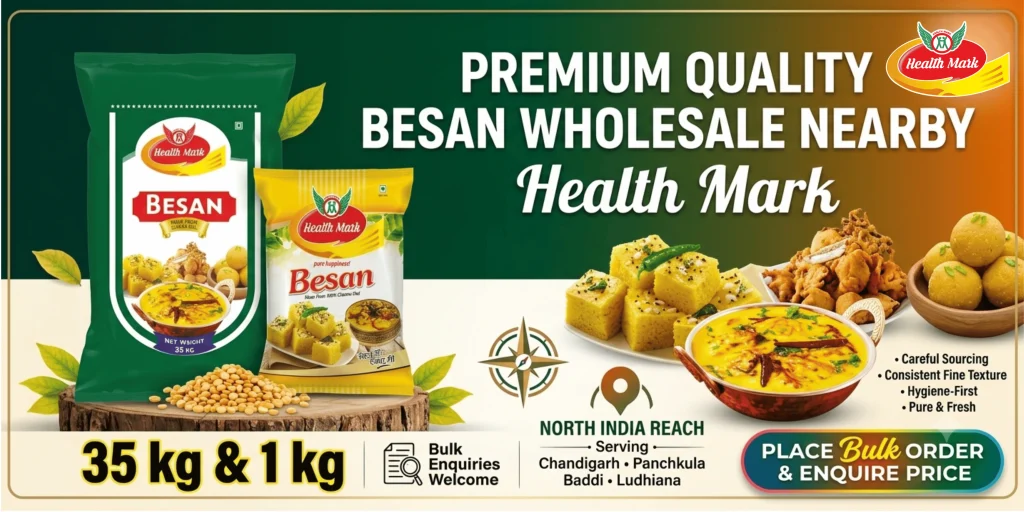
This guide breaks down exactly how to judge premium quality besan, what to expect from a genuine besan manufacturer in India, how wholesale besan pricing works, and why Health Mark a besan brand based in Baddi and serving Chandigarh, Panchkula, and Ludhiana has become a go-to besan seller near me for households and businesses across North India.
What Is Besan and Why Does Its Quality Matter?
Besan is a fine flour made by grinding dehusked, split chana dal (Bengal gram). It’s naturally gluten-free, mildly nutty in flavour, and forms the base of an enormous range of Indian recipes savoury snacks, curries, batters, and sweets alike.
Quality matters more than most people realise, because besan isn’t a neutral ingredient the way plain flour can be. A poor-quality or stale batch can:
• Taste bitter or raw, even after cooking
• Clump, lump, or refuse to blend smoothly into batters
• Carry an off, musty smell that transfers into the final dish
• Contain husk, grit, or inconsistent particle size that ruins texture
This is exactly why buyers actively search for premium quality besan and a best besan seller rather than picking up the first loose pack available the difference shows up on the plate.
How to Identify Premium Quality Besan: A Buyer’s Checklist
1. Colour and Texture
Good besan has a consistent, light yellow colour and a fine, slightly grainy feel not powdery-slippery, and not gritty with visible husk. A dull, greyish, or blotchy colour is usually a sign of poor chana dal or old stock.
2. Aroma Test
Fresh, premium besan carries a mild, pleasant, nutty smell. If a batch smells sour, musty, or “off,” it has likely absorbed moisture or aged past its prime a common issue with poorly packed or loosely stored stock.
3. Purity Check
Take a small pinch in water: pure besan settles with a natural, slightly grainy texture. Excess foaming, an unusually smooth slip, or a starchy smell can hint at adulteration. Buying from a certified, transparent besan manufacturer in India significantly reduces this risk compared to unbranded, loose besan.
4. Packaging and Certification
Premium besan brands pack their product in sealed, moisture-resistant packaging and display essential details manufacturer address, FSSAI registration, batch details, and net weight. This isn’t just compliance; it’s a direct signal of how seriously a besan manufacturer treats hygiene and shelf life.
Why Are People Searching “Premium Quality Besan Wholesale Nearby”?
This particular search phrase tells us a lot about intent. It’s not a casual recipe search it’s someone actively trying to buy, and buy locally, in a quantity larger than a single retail pack. Typical searchers include:
• Sweet shop and namkeen manufacturers needing a steady, high-volume besan supply
• Restaurants and hotels sourcing consistent-quality gram flour for daily menus
• Distributors and retailers looking for a best wholesale besan supplier to stock
• Households in Chandigarh, Panchkula, Baddi, and Ludhiana wanting to buy besan in bulk for festivals or family use
If you fall into any of these categories, the priority isn’t just “cheapest besan” it’s a besan supplier in North India who can deliver the same quality, batch after batch.
Health Mark: A Trusted Besan Manufacturer in North India
Health Mark is a Baddi (Himachal Pradesh)-based food brand built around one simple idea that everyday staples like atta, besan, pulses, and spices should be as pure and hygienically processed as possible. Its besan is made from carefully selected chana dal, finely milled to deliver a smooth texture and rich, nutty flavour suited to both everyday cooking and festive preparations.
Our Besan Variants Explained
Besan (Standard): The everyday, all-purpose gram flour for pakoras, curries, and general cooking.
Bareek Besan: Extra-fine milled besan, ideal for smooth batters, dhokla, and kadhi.
Motichur / Mota Besan: A slightly coarser grind, traditionally preferred for boondi and laddoo.
Powder Besan: An ultra-fine variant for recipes that need a silky-smooth finish.
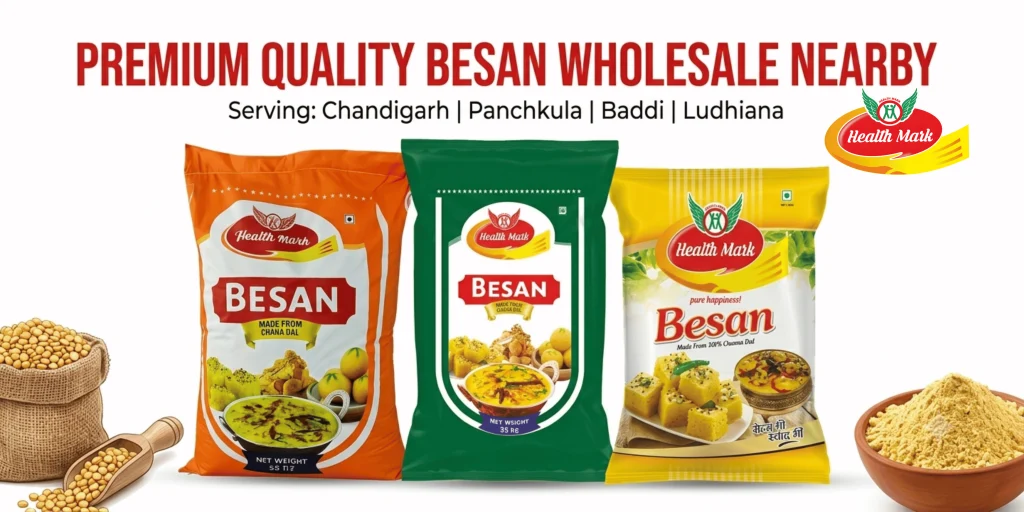
Retail packs are available in 55gm, 200gm, 500gm, and 1kg sizes, with bulk and wholesale quantities available on direct enquiry making Health Mark a practical besan manufacturer in India for both home cooks and commercial kitchens.
Hygienic Processing and Fine Milling
Every batch is hygienically processed and packed to preserve freshness and purity, from the selection of premium-quality Bengal gram through to fine milling and sealed packaging the same standards that matter most to buyers evaluating any premium quality besan.
Top Reasons Health Mark Ranks Among the Best Besan Brands in India
• Careful Sourcing: Besan is made from premium-quality chana dal, not mixed or unverified stock.
• Consistent Fine Texture: Smooth, even milling delivers reliable results in every recipe, every batch.
• Product Range: Multiple besan variants suited to different dishes, instead of a one-size-fits-all flour.
• Hygiene-First Processing: Packed to protect freshness, aroma, and purity from factory to kitchen.
• North India Reach: A besan supplier in north India serving Chandigarh, Panchkula, Baddi, and Ludhiana.
• Direct Wholesale Access: Bulk buyers can speak directly with the sales team rather than going through layers of middlemen.
Local Besan Seller vs. Trusted Besan Manufacturer: Comparison Table
Before you commit to any besan seller near me, it helps to compare what a typical unbranded local seller offers versus a certified besan manufacturer like Health Mark:
| Factor | Random Local Besan Seller | Health Mark – Trusted Besan Manufacturer |
| Sourcing of Chana Dal | Often unverified, mixed batches | Carefully selected, quality-checked chana dal |
| Hygiene & Processing | Varies, rarely documented | Hygienically processed and packed facility |
| Texture Consistency | Inconsistent from batch to batch | Consistent fine, smooth milling every batch |
| Product Variety | Usually one generic type | Besan, Bareek Besan, Motichur/Mota Besan, Powder Besan |
| Packaging Options | Loose or unbranded packing | Sealed packs from 55gm to 1kg plus bulk options |
| Price Transparency | Negotiated, inconsistent | Clear wholesale pricing on enquiry |
| Reach in North India | Limited to one locality | Serves Chandigarh, Panchkula, Baddi, Ludhiana & beyond |
Best Besan Price: What Determines Wholesale Pricing
There’s no single, fixed “best besan price” wholesale rates shift with several factors, and any brand quoting a flat, unchanging number year-round should be treated with caution:
• Chana dal market rates, which fluctuate seasonally
• Order quantity larger, recurring bulk orders typically unlock better per-kg pricing
• Type of besan (standard, bareek, motichur, or powder besan)
• Packaging format (retail pouches vs. bulk sacks)
• Delivery distance and logistics, especially outside the immediate region
How to Buy Besan Wholesale Nearby: Step-by-Step
1. Estimate your requirement: Work out your monthly or weekly besan volume before reaching out this shapes both pricing and packaging.
2. Shortlist certified manufacturers: Prioritise a besan manufacturer in India with a verifiable address, FSSAI registration, and transparent processing not just the lowest quote.
3. Request a sample: A small sample lets you check colour, aroma, and texture before committing to a bulk order.
4. Compare pricing and MOQ: Ask about minimum order quantities, per-kg wholesale rates, and any packaging charges.
5. Confirm hygiene and packaging standards: Ask how the besan is stored, packed, and sealed before dispatch.
6. Check delivery coverage: Confirm whether the supplier serves your city Health Mark, for instance, covers Chandigarh, Panchkula, Baddi, and Ludhiana.
7. Place a trial order, then scale up: Start with a manageable quantity, evaluate consistency, and move to a recurring bulk arrangement once satisfied.
Common Mistakes to Avoid When Buying Besan in Bulk
• Chasing the lowest price only: Unusually cheap besan is often a sign of poor sourcing or old stock.
• Skipping the sample step: Committing to a large order without testing a small batch first is a common, costly mistake.
• Ignoring packaging quality: Loose or poorly sealed besan spoils faster and is harder to store in bulk.
• Not checking certification: An FSSAI number and a verifiable address are basic trust signals worth confirming.
• Overlooking variant differences: Using standard besan where a fine bareek besan is needed (or vice versa) affects the final dish.
Health Benefits of Besan (Gram Flour)
Beyond its role in traditional recipes, besan brings genuine nutritional value to the table:
• Naturally gluten-free, making it suitable for gluten-sensitive diets
• A good plant-based source of protein and dietary fibre
• Comparatively lower glycemic impact than refined flours like maida
• Widely used in skincare routines as a natural face-pack ingredient
As with any ingredient, the overall healthiness of a dish also depends on how it’s cooked deep-fried pakoras and roasted cheela made from the same besan will naturally differ in their health profile.
Best Culinary Uses of Premium Besan
• Pakoras and Bhajis: The everyday go-to for crisp, golden-fried snacks.
• Dhokla and Khaman: Bareek besan gives the soft, spongy texture these Gujarati favourites need.
• Kadhi: A fine, lump-free besan is essential for a smooth, well-blended kadhi base.
• Laddoo and Boondi: Motichur/mota besan is traditionally preferred for its texture in festive sweets.
• Besan Cheela: A quick, protein-rich savoury pancake made straight from batter.
Why Health Mark Is a Leading Besan Choice Near Chandigarh and North India
Health Mark operates from Plot No. 60, Industrial Township Bhatoli Kalan, Baddi, India a location that places it within easy reach of Chandigarh, Panchkula, and Ludhiana, three of North India’s busiest food and hospitality markets. For buyers specifically searching for the best besan brand Chandigarh or a besan supplier in north India, this regional presence means shorter delivery timelines, fresher stock turnover, and a supplier that understands local recipe preferences.
Expert Tips to Store Besan for Maximum Freshness
• Always store besan in an airtight container, away from direct sunlight and moisture
• Keep it in a cool, dry pantry; refrigerate during humid months or for large bulk stock
• Use a completely dry spoon every time to prevent moisture and clumping
• Reseal packaging tightly immediately after each use
• Buy in quantities you’ll realistically use within a few months for the best flavour
FAQ
1. What actually makes besan a “premium quality” besan?
Premium quality besan starts with clean, well-graded chana dal that is free from stones, husk, or foreign matter. It is then milled to a fine, even texture, packed in a hygienic, moisture-controlled environment, and sealed quickly so it retains its natural nutty aroma. If a besan pours smoothly, smells fresh and slightly nutty, and doesn’t clump or smell musty, it’s a strong sign of premium quality besan.
2. How do I find premium quality besan wholesale nearby?
Start by shortlisting FSSAI-registered besan manufacturers in your region rather than unbranded loose sellers. Look for a besan manufacturer in India with a physical processing unit, ask for a small sample before committing to bulk quantity, and compare hygiene practices, packaging, and pricing. Health Mark, based in Baddi and serving Chandigarh, Panchkula, and Ludhiana, is one such option for buyers searching for a besan seller near me across North India.
3. Which is the best besan brand in India?
There is no single official ranking for the “best besan brand in India,” since preference depends on taste, region, and use case. That said, brands that consistently score well with buyers share a few traits: hygienic processing, a consistent fine texture, transparent sourcing, and a wide product range. Many households and businesses in North India consider Health Mark among the top besan supplier options for exactly these reasons.
4. What is the best besan price for bulk or wholesale orders?
Besan pricing is never fixed it moves with chana dal market rates, order quantity, packaging type, and season. As a rough guide, wholesale rates are almost always lower per kilogram than retail packs, and prices dip when you order in larger, recurring quantities. For an accurate, current best besan price quote, it’s best to contact the supplier directly rather than rely on old listings.
5. Is Health Mark besan suitable for pakora, dhokla, and kadhi?
Yes. Health Mark offers besan variants suited to different recipes a finer Bareek Besan works beautifully for soft dhokla and smooth kadhi, while the standard besan and Motichur/Mota Besan are well suited to crisp pakoras and traditional sweets like laddoo. Choosing the right variant makes a noticeable difference in texture.
6. How can I check if besan is pure or adulterated at home?
A few simple checks help: pure besan has a light yellow colour and a mild, nutty smell a dull, greyish tint or a raw, starchy smell can indicate poor quality or adulteration. It should feel fine and slightly grainy, not powdery-slippery like added starch. Buying from a certified besan manufacturer in India with visible hygiene standards reduces this risk considerably compared to loose, unbranded stock.
7. What is the difference between Besan, Bareek Besan, and Motichur/Mota Besan?
Besan is the standard, all-purpose gram flour used across most Indian recipes. Bareek Besan is milled extra fine, ideal for dhokla, kadhi, and smooth batters. Motichur/Mota Besan has a slightly coarser grain, traditionally preferred for boondi, laddoo, and certain sweets where texture matters. Health Mark also offers a Powder Besan variant for recipes that need an ultra-smooth finish.
8. How should besan be stored to keep it fresh longer?
Keep besan in an airtight container away from direct sunlight, moisture, and strong odours, ideally in a cool, dry pantry. In humid weather or for larger stock, refrigeration helps prevent lumping and rancidity. Always use a dry spoon and reseal the pack tightly after every use to protect the flour’s aroma and shelf life.
9. Is besan actually healthy to eat regularly?
Besan is naturally gluten-free and a good plant-based source of protein and fibre, which makes it a filling option compared to refined flours. It also has a comparatively lower glycemic impact than maida, so it’s often favoured in balanced, everyday Indian cooking. As with any flour, moderation and the overall recipe (oil, sugar, frying) still matter for a healthy diet.
10. Does Health Mark supply besan to businesses and wholesale buyers across North India?
Yes. Health Mark is based at Plot No. 60, Industrial Township Bhatoli Kalan, Baddi, and serves retail and bulk buyers across Chandigarh, Panchkula, Baddi, Ludhiana, and neighbouring regions. Restaurants, sweet shops, snack units, and distributors looking for a best wholesale besan supplier can reach the sales team directly at +91 93188 96005, +91 92185 87660, or +91 98828 96000.
Conclusion: Choosing the Right Besan Supplier, Nearby and Beyond
Finding premium quality besan wholesale nearby comes down to a few non-negotiables: clean sourcing, hygienic processing, a consistent fine texture, and a supplier who’s transparent about pricing and certification. Whether you’re stocking a sweet shop, running a restaurant kitchen, or simply keeping your home pantry ready for festival season, the right besan brand makes a visible difference in every dish.
Health Mark brings together carefully sourced chana dal, hygienic milling, and a full range of besan variants Besan, Bareek Besan, Motichur/Mota Besan, and Powder Besan from its Baddi facility, serving buyers across Chandigarh, Panchkula, Baddi, and Ludhiana.
Ready to place a retail or wholesale besan order? Explore the full besan range at Health Mark website