
Walk into any Indian kitchen, and you’ll find the same truth hiding in plain sight: the difference between an average meal and an unforgettable one almost always comes down to the masala dabba. Spices are not just flavour enhancers in India; they are inherited recipes, family traditions, and a genuine mark of culinary identity. Yet, with hundreds of packets crowding supermarket shelves, one question keeps popping up in search bars every single day: who is really the best spices brand in India?
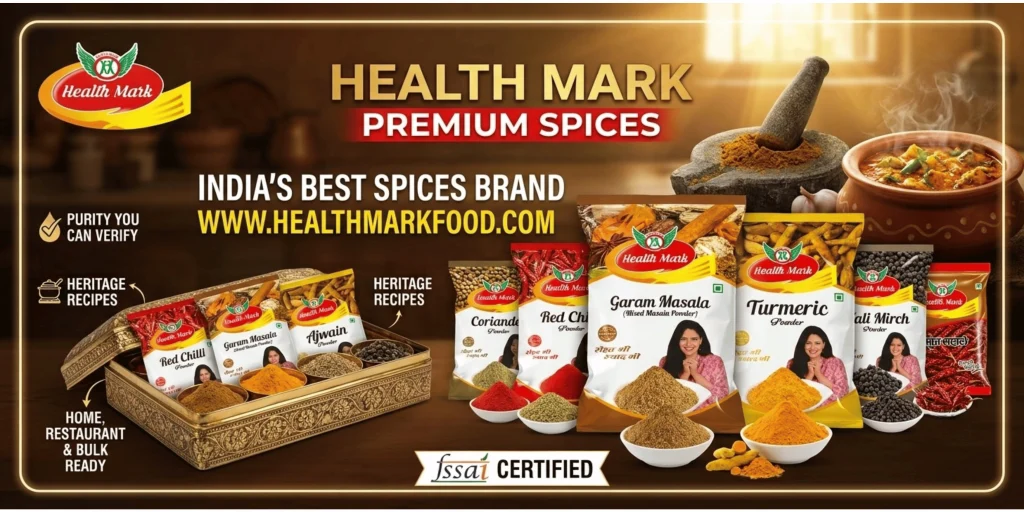
This guide is built to answer exactly that without the marketing fluff. We’ll walk through what “best” actually means when it comes to spices, how to judge purity and quality like a professional buyer, what a fair best spices price looks like, and why brands like Health Mark are increasingly trusted by households, restaurants, and bulk buyers across India. Whether you’re a home cook searching for the best spice powder, or a business owner looking for a best wholesale spices supplier, this article is designed to give you a decision-ready answer.
Why the Spice You Choose Matters More Than You Think
Spices do far more than add heat or aroma. They are functional ingredients that affect health, digestion, and the authenticity of a dish. Poor-quality spices, the kind bulked up with fillers, husk, artificial colour, or stored in humid warehouses can quietly ruin both your food and your health over time.
Here’s why the brand behind your spice powder matters:
- Purity affects flavour depth. Adulterated turmeric or chilli powder tastes flat, chemical, or overly sharp instead of naturally aromatic.
- Health impact is real. Contaminants like lead chromate (in turmeric) or Sudan dye (in chilli powder) have been flagged by food safety bodies in India for years.
- Shelf life depends on processing. Spices ground and packed under controlled hygiene conditions retain oil content and aroma far longer than loosely processed ones.
- Consistency builds trust. A dependable brand delivers the same taste, colour, and aroma in every batch something home cooks and commercial kitchens both rely on.
This is exactly why searches like high quality spices, health mark spices, and premium high quality spices are trending. Buyers are actively looking for brands that can be verified, not just advertised.
What Actually Makes a Brand the “Best Spices Brand in India”
If you strip away branding and packaging, the “best spices brand in India” title should really be earned through five measurable pillars:
a) Sourcing Transparency
The best brands can tell you where their turmeric, chilli, or coriander was grown and ideally work directly with farms rather than anonymous middlemen.
b) Certification & Compliance
Look for FSSAI licensing at a minimum. Brands that go further with ISO, HACCP, or organic certification demonstrate a stronger quality commitment. You can learn more about India’s food safety standards through the Food Safety and Standards Authority of India (FSSAI).
c) Processing Standards
Hygienic grinding, moisture control, and contamination-free packaging protect both flavour and shelf life.
d) Product Range & Availability
A brand that offers whole spices, ground powders, and blended masalas along with wholesale and bulk options signals operational maturity and scale.
e) Customer Trust Signals
Repeat purchases, business/restaurant partnerships, and consistent batch quality are stronger indicators than one-off reviews.
Health Mark, as a Baddi-based FMCG spice and food products manufacturer, is built around exactly these five pillars which is why it’s increasingly discussed in searches for best spices seller and top spices seller across North India.
Meet Health Mark: A Trusted Name Among India’s Best Spices Sellers
Health Mark positions itself around a simple promise: purity, nutrition, and sustainability in everyday food products. The brand’s spice range sits within a wider portfolio that includes atta, besan, pulses, rice, dry fruits, pickles, and more giving it the manufacturing depth that many single-category spice sellers lack.
What stands out about Health Mark’s approach to spices:
- Wide product range: From whole spices like Badi Elaichi (black cardamom), Dalchini (cinnamon), Javitri (mace), and Kali Mirch (black pepper), to ground essentials like Coriander Powder and blended Garam Masala the Spices category currently lists 28+ SKUs.
- Manufacturing base: Products are processed at their facility in Plot No. 60, Industrial Township, Bhatoli Kalan, Baddi a region known for FMCG and food manufacturing in Himachal Pradesh.
- Traceability focus: Health Mark emphasises sourcing from certified farms and maintaining traceability from farm to consumer, which directly supports the “purity you can verify” expectation buyers have.
- B2B and bulk-ready: With a dedicated Product Enquiry page and direct sales contact numbers, the brand is structured to serve both individual households and wholesale spices in India buyers such as restaurants, hostels, caterers, and retailers.
If you’re evaluating brands for best spices manufacture capability, this combination of range, traceability, and B2B accessibility is a strong signal.
Types of Spices: Whole, Ground, and Blended Masalas Explained
Not all spices serve the same purpose in cooking. Understanding the categories helps you buy smarter.
Whole Spices (Sabut Masala)
These retain essential oils the longest and are ideal for tempering (tadka), slow-cooked curries, and biryanis. Examples: Dhaniya Sabut (whole coriander seeds), Kali Mirch Sabut (whole black pepper), Chhoti Elaichi (green cardamom), Badyan Khatai (star anise).
Ground Spice Powders
Pre-ground for convenience and faster cooking, these should be finely milled without lumps or visible husk. Examples: Coriander Powder, red chilli powder, turmeric powder.
Blended Masalas
A carefully balanced mix of multiple spices roasted and ground together the heart of authentic Indian cooking. Example: Garam Masala, which typically blends cardamom, cinnamon, cloves, black pepper, and bay leaf in a proprietary ratio.
Specialty & Health-Forward Additions
Modern spice ranges now also include health-oriented seeds like Chia Seeds and Carom Seeds (Ajwain) reflecting growing demand for functional, wellness-linked kitchen staples.
Quick tip: If you cook daily, buying a mix of whole spices (for aroma) and ready powders (for convenience) usually gives the best balance of flavour and time-efficiency.
How Premium Spices Are Made: From Farm to Packet
Understanding the journey behind your spice packet helps you judge whether a brand truly deserves the “premium” or “high quality” label.
| Stage | What Happens | Why It Matters |
| 1. Sourcing | Raw spices procured from farms/regions known for that crop | Determines base aroma & oil content |
| 2. Cleaning & Sorting | Removal of stones, husk, and damaged produce | Prevents contamination and adulteration |
| 3. Drying | Controlled moisture reduction | Impacts shelf life and mould prevention |
| 4. Roasting (for blends) | Light roasting to release essential oils | Enhances aroma in masalas like garam masala |
| 5. Grinding | Fine, consistent milling | Affects texture and cooking performance |
| 6. Quality Testing | Checks for purity, colour, and contamination | Core of FSSAI compliance |
| 7. Packaging | Moisture-proof, sealed packaging | Preserves freshness till it reaches you |
A brand that controls most of these stages in-house rather than outsourcing blindly is far more likely to deliver premium high quality spices consistently, batch after batch.
Best Spices Brand in India Comparison Table
Here’s a simplified comparison framework you can use when evaluating any spice brand, including Health Mark, against typical market alternatives.
| Factor | Health Mark (Spices Range) | Typical Local/Unbranded Spices | Large Mass-Market Brands |
| Product Range | 28+ SKUs whole, ground & blended | Limited, inconsistent stock | Wide, but mostly ground/blended only |
| Sourcing Transparency | Farm-linked, traceable sourcing | Rarely disclosed | Varies by brand |
| Bulk/Wholesale Support | Dedicated enquiry & direct sales contact | Informal, inconsistent pricing | Available but less personalised |
| Manufacturing Base | Owned facility in Baddi, HP | Small unorganised units | Multiple large-scale plants |
| Price Transparency | Direct pricing via enquiry/contact | Negotiated, inconsistent | MRP-based, less flexible for bulk |
| Best For | Homes, restaurants, retailers, bulk buyers | Small local households | General retail households |
This table is a starting template that always requests the latest batch quality certificates and pricing directly from the seller before large or wholesale orders.
Best Spices Price in India: What Should You Actually Pay?
One of the most searched questions is simply: what is the best spice price? The honest answer is it depends on the spice, the form (whole vs powder), and the quantity you’re buying. However, a few pricing principles apply universally:
- Whole spices generally cost more per kg than ground versions of the same spice, because of lower processing loss and higher perceived freshness.
- Bulk and wholesale spices in India are usually 15–30% cheaper per unit than retail packs, since packaging and distribution costs are shared across larger volumes.
- Extremely cheap spice powders are a red flag. If a price feels unusually low compared to the market average, it often indicates fillers, low-grade raw material, or under-weight packaging.
- Premium spices (like whole mace, star anise, or high-grade cardamom) command a natural price premium due to lower yield and higher demand.
For accurate, current pricing on any product from Garam Masala to whole Dalchini the most reliable approach is to check the Health Mark Spices category page directly or reach out via their Product inquiry form, since spice prices shift with seasonal harvests and raw material costs.
Wholesale & Bulk Spices in India: A Guide for Restaurants, Caterers & Retailers
If you run a restaurant, catering business, hostel mess, retail store, or export operation, buying spices individually at retail price rarely makes financial sense. Here’s what to look for in a best wholesale spices supplier:
- Consistent Batch Quality Bulk buyers need the same taste and colour in every 25kg or 50kg sack, not just in single retail packets.
- Reliable Supply Chain A manufacturer with its own facility (like Health Mark’s Baddi unit) is less likely to face sudden stock-outs compared to resellers.
- Direct Manufacturer Access Buying closer to the source (manufacturer level) instead of through multiple distributors usually improves your margins.
- Custom Packaging Options Businesses often need private labelling or bulk sack packaging rather than retail pouches.
- Dedicated Business Contact A brand offering direct sales lines is far more convenient for negotiating bulk pricing.
For bulk and wholesale spice inquiries, Health Mark can be reached directly at:
- Sales: +91 93188 96005 / +91 92185 87660 / +91 98828 96000
- Facility Address: Plot No. 60, Industrial Township Bhatoli Kalan, Baddi, India – 173205
This kind of direct-to-manufacturer access is exactly what businesses searching for bulk spices and spices seller near me are typically looking for a dependable, scalable supply relationship rather than a one-time retail purchase.
How to Spot High-Quality Spices (Buyer’s Checklist)
Use this checklist whether you’re buying online or in-store:
- Check the FSSAI license number printed on the packaging.
- Smell before you commit genuine spices have a strong, natural aroma; weak or musty smell suggests age or poor storage.
- Look at the colour carefully unnaturally bright turmeric or chilli powder can indicate artificial colouring.
- Check for a manufacturing and expiry date, not just a “best before” vague label.
- Prefer sealed, moisture-proof packaging over loose or poorly sealed pouches.
- Read the ingredient list: pure spice powder should list only the spice itself, with no starch, husk, or “added flavour” fillers.
- Buy from manufacturers with a verifiable address and contact details rather than anonymous sellers.
Common Mistakes People Make When Buying Spices
Even experienced home cooks fall into these traps:
- Buying based on packaging colour alone bright red or yellow packaging doesn’t guarantee bright, pure spice inside.
- Stocking too much at once spices lose potency after 6–12 months; buying huge quantities “to save money” often backfires.
- Ignoring storage conditions at the point of sale, spices stored near sunlight or heat (common in open-market stalls) degrade faster.
- Assuming all garam masala blends are the same, ratios vary widely between brands and regional styles.
- Choosing the cheapest option without checking certification is the single biggest cause of adulterated spice complaints in India.
- Not comparing bulk vs retail pricing before making large business purchases.
Expert Tips to Store Spices and Keep Them Fresh Longer
- Store spice powders in airtight glass or steel containers, away from direct sunlight and stove heat.
- Buy whole spices and grind small batches at home if you use spices infrequently whole spices last significantly longer than pre-ground powder.
- Keep a first-in-first-out (FIFO) system in your kitchen using older stock before opening new packets.
- Avoid storing spices near the refrigerator vent or stove, where temperature fluctuation speeds up flavour loss.
- For bulk-purchased spices, repackage into smaller airtight batches instead of repeatedly opening one large sack, which exposes the whole stock to air and moisture.
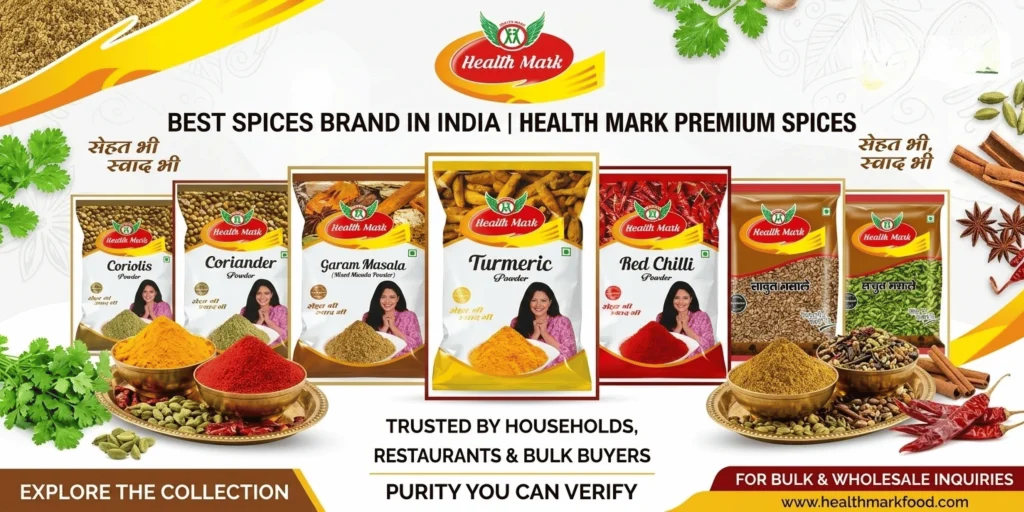
Why Health Mark Is Considered a No. 1 Spices Brand Choice
Bringing everything together, here’s why Health Mark consistently comes up in conversations around India’s best spices brand:
- A genuinely wide spice catalogue from rare whole spices like Javitri and Badyan Khatai to daily essentials like Garam Masala and Coriander Powder.
- A manufacturing-first model, rather than pure reselling, which supports better quality control.
- Transparent sourcing philosophy, aligned with certified organic farming practices as described on their About Us page.
- Direct accessibility for both individual and bulk buyers, through dedicated sales contacts and an online enquiry system.
- A broader food ecosystem (atta, besan, pulses, rice, pickles, sauces) that reflects long-term manufacturing experience rather than a single-product operation.
Whether you’re comparing options for best spices powder, evaluating a best spices manufacturing partner for your restaurant, or simply searching for a trustworthy everyday masala brand, Health Mark’s combination of range, transparency, and direct accessibility makes it a strong contender for the top spot.
Explore the full range here: Health Mark Spices Collection
People Also Ask
Which is the No. 1 spices brand in India?
There isn’t a single universally-ranked “No.1” brand; it depends on category leadership, region, and buyer needs. However, brands that combine a wide product range, certified sourcing, and direct wholesale access (like Health Mark) are frequently recommended for both retail and bulk buying.
What should I check before buying spices online?
Check FSSAI certification, manufacturing/expiry dates, ingredient purity, and seller transparency around sourcing and address details.
Are wholesale spices cheaper than retail spices?
Yes, typically 15–30% cheaper per unit due to reduced packaging and distribution costs, though pricing varies by spice type and order volume.
How can I tell if turmeric or chilli powder is adulterated?
Watch for unnaturally bright colour, chemical smell, and absence of FSSAI details. A simple water test (turmeric adulterated with chalk or artificial colour often leaves a distinct colour trail in water) can also help at home.
What is the shelf life of ground spice powder?
Most ground spices retain peak flavour for 6–12 months when stored properly in airtight containers away from heat and light.
FAQ
Q1. What makes Health Mark one of the best spices brands in India?
Health Mark combines a wide catalogue of whole, ground, and blended spices with a manufacturing-first approach, transparent sourcing, and direct accessibility for both retail and bulk buyers key factors that define a trustworthy spice brand.
Q2. Where can I buy Health Mark spices powder online?
You can explore and enquire about the full range through the official Spices category page on the Health Mark website.
Q3. Does Health Mark supply bulk or wholesale spices?
Yes. Health Mark supports bulk and wholesale spice orders for restaurants, caterers, and retailers. You can reach their sales team directly at +91 93188 96005, +91 92185 87660, or +91 98828 96000, or use the Product inquiry form.
Q4. What types of spices does Health Mark offer?
The range includes whole spices (Badi Elaichi, Dalchini, Javitri, Kali Mirch, Dhaniya Sabut), ground powders (Coriander Powder), blended masalas (Garam Masala), and specialty seeds (Chia Seeds, Carom Seeds/Ajwain), among 28+ total SKUs.
Q5. How is the best spice price determined?
Price depends on the spice type, whether it’s whole or ground, order quantity, and seasonal raw material costs. Bulk orders typically bring the price per unit down significantly.
Q6. Is Health Mark suitable for small home kitchens as well as large businesses?
Yes. Health Mark caters to both individual retail buyers and B2B/bulk buyers such as restaurants, hostels, and retailers, thanks to its flexible ordering and direct sales contact system.
Q7. What should I look for to ensure spices are not adulterated?
Check for FSSAI licensing, a natural (not overly bright) colour, a strong authentic aroma, clear manufacturing/expiry dates, and an ingredient list with no added fillers.
Q8. How should I store spices to keep them fresh longer?
Use airtight containers, keep them away from direct sunlight and stove heat, buy whole spices where possible, and follow a first-in-first-out usage system.
Q9. Does Health Mark manufacture its own spices or resell third-party products?
Health Mark operates its own manufacturing facility in Baddi, Himachal Pradesh, which supports better quality control compared to pure resale models.
Q10. Can I find near-me spice sellers through Health Mark?
While Health Mark primarily operates through its website and direct sales contacts, interested buyers searching for a “spices seller near me” can connect via the Contact Us page or call the sales numbers listed above for regional availability.
Conclusion & Call to Action
Choosing the best spices brand in India isn’t about picking the loudest packaging on the shelf, it’s about verifying purity, sourcing, certification, and consistency, whether you’re stocking a home kitchen or running a restaurant that depends on bulk spices every week. Brands that combine a wide, well-processed product range with transparent sourcing and genuine accessibility for wholesale buyers like Health Mark are the ones worth building a long-term relationship with.
If you’re ready to experience premium, high-quality spices for your home or business, explore the full collection at the Health Mark Spices Store, or connect directly with their sales team for bulk and wholesale pricing: