Open any Indian kitchen and you will almost certainly find a tin of besan tucked next to the atta and rice. It is the flour behind crispy pakoras on a rainy evening, soft dhokla at breakfast, silky kadhi at lunch, and ladoos during festivals. Yet ask ten home cooks what makes one pack of besan better than another, and most will struggle to answer beyond “it smells fresher” or “it doesn’t have lumps.”
That gap is exactly what this guide closes. We are going to walk through what besan actually is, why quality differences matter far more than most shoppers realise, how to judge a good batch by sight, smell and touch, what fair besan price in India looks like in 2026, and how to choose a best besan seller or besan manufacturer in India you can trust whether you are a home cook buying a single 500 gm pack or a hotel, sweet shop, or restaurant looking for a top besan supplier for bulk purchase.
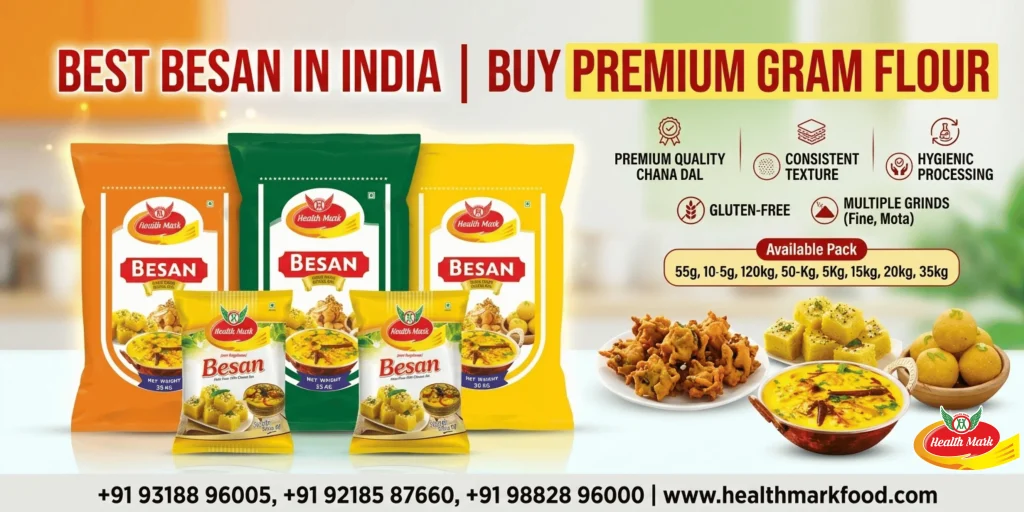
Along the way, we will also look at where to buy besan online, how to find a reliable besan seller near me, and why a growing number of households across Punjab, Chandigarh, Panchkula, Baddi, Himachal Pradesh, and Ludhiana are switching to Health Mark Besan for its consistent texture, hygienic processing, and nutty aroma.
What Is Besan? A Quick Introduction
Besan, also called gram flour or chana flour, is made by grinding dehusked, split Bengal gram (chana dal) into a fine powder. It is naturally gluten-free, protein-rich, and carries a mild nutty flavour that forms the base of hundreds of Indian recipes from everyday pakoras and besan chilla to festive ladoos, farsan, and dhokla.
What separates ordinary besan from truly good besan is the quality of the chana dal used, how finely and evenly it is milled, and how carefully it is cleaned, stored, and packed. Two packets sitting side by side on a shelf can look identical, yet cook completely differently once they hit the kadhai.
Why Besan Quality Matters More Than You Think
A lot of home cooks assume besan is besan that any pack from any brand will behave the same way. In practice, quality affects almost everything:
Taste: Fresh, well-milled besan has a distinct nutty aroma. Stale or adulterated besan often tastes flat, slightly bitter, or musty.
Texture: Fine, evenly ground besan blends smoothly into batter without lumps, giving pakoras and dhokla a lighter, crispier finish.
Colour consistency: Good besan holds a uniform pale-yellow colour. Uneven or greyish tones usually signal poor milling or old stock.
Shelf life: Besan that is hygienically processed and properly packed resists moisture, insects, and rancidity for much longer.
Nutrition: Chana dal is naturally rich in protein and fibre, but improper processing or blending with cheaper starches can dilute these benefits.
In short, when you search for the best Besan in India, you are really searching for consistency a flour that performs the same way, batch after batch, whether you are frying pakoras for guests or preparing dhokla batter for a large family gathering.
Types of Besan Available in India
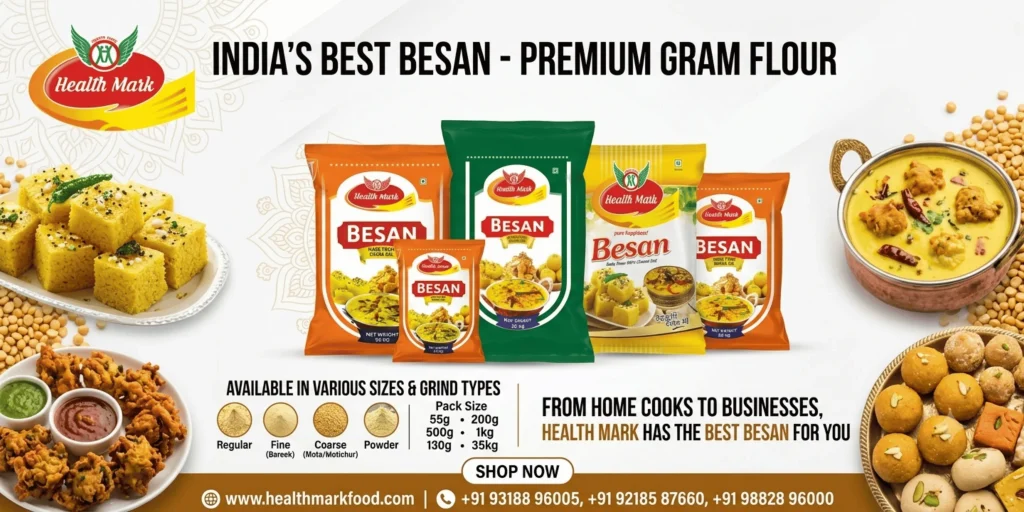
Not all besan is milled the same way, and the type you choose should match the dish you are making. Health Mark, for example, offers besan across four distinct grinds so that home cooks and businesses alike can pick the right consistency.
| Besan Type | Texture | Best Used For |
| Fine Besan (Bareek Besan) | Very smooth, powdery | Dhokla, khaman, cakes, smooth batters |
| Regular Besan | Medium-fine, all-purpose | Pakoras, chilla, kadhi, everyday cooking |
| Motichur / Mota Besan | Slightly coarse | Motichur ladoo, boondi, traditional sweets |
| Powder Besan | Ultra-fine, silky | Face packs, quick-mix batters, baking blends |
Fine Besan (Bareek Besan)
This finely milled variant dissolves easily into batter without lumps, which is why it is preferred for steamed dishes like dhokla and khaman where a smooth, airy texture is essential.
Regular Besan
The most commonly bought grind, suitable for almost every everyday recipe from pakoras and bhajiyas to besan chilla and thickening curries.
Motichur / Mota Besan
A slightly coarser grind traditionally used for making boondi and motichur ladoo, where the granular texture helps form small, round droplets when fried.
Powder Besan
An ultra-fine grind that is popular not just in cooking but also as a natural skincare ingredient, commonly used in homemade face packs and ubtans.
How to Identify the Best Besan Brand in India
Whether you are comparing a local besan seller near me or an established besan manufacturer in India, these checks will help you separate premium quality besan from an average pack.
1. Colour abnd Aroma
Genuine, fresh besan has a pale yellow colour and a mild, nutty aroma. A dull grey tint or a sharp, musty smell usually indicates old stock or poor storage.
2. Texture Test
Rub a pinch of besan between your fingers. It should feel smooth and slightly powdery, not gritty or coarse (unless you have specifically bought a coarse variant like Mota Besan).
3. Hygiene and Certification
Look for FSSAI registration and clear manufacturing details on the pack. A best besan seller will always be transparent about sourcing and processing standards.
4. Packaging and Freshness
Well-sealed, moisture-resistant packaging protects besan from humidity and pests. Brands that mention batch dates or “best before” details are usually more serious about freshness control.
5. No Artificial Colour or Additives
Good besan does not need added colour to look appealing. If a pack looks unnaturally bright yellow, it is worth double-checking the ingredient list.
What Makes Health Mark a Premium Quality Besan Choice
Health Mark Besan is prepared from carefully selected chana dal and finely milled to deliver a smooth texture with a rich, nutty flavour the kind that holds up whether you are making crispy pakoras, soft dhokla, or a comforting bowl of kadhi.
A few things set it apart:
Sourced from premium quality chana dal, chosen for consistency in colour and protein content
Hygienically processed and packed to lock in freshness and prevent contamination
Available in multiple grinds Besan, Bareek Besan, Motichur/Mota Besan, and Powder Besan to suit different recipes
Flexible pack sizes of 55 gm, 200 gm, 500 gm, and 1 kg, so both small households and larger families can buy what they actually need
No unnecessary additives, keeping the flour as close to home-ground quality as possible
You can browse the complete besan range on the Health Mark Besan category page and pick the grind that best matches your recipe.
Besan Price in India: What Should You Expect to Pay
Besan price in India varies by region, pack size, brand reputation, and the quality of chana dal used. As a general guide for 2026:
| Pack Size | Typical Use Case | Indicative Price Range |
| 55 gm | Trial pack / single recipe | Budget-friendly, ideal for first-time buyers |
| 200 gm | Small household, weekly cooking | Moderate, everyday value |
| 500 gm | Regular family use | Best value per gram for most households |
| 1 kg | Large families, frequent cooking, festive season | Most economical per gram |
Prices naturally shift with chana dal market rates, but a genuinely premium quality besan is rarely the cheapest option on the shelf and it shouldn’t be. Extremely low prices are often a sign of blended or adulterated flour, while paying a fair, mid-range price for a brand with visible quality checks (like Health Mark) usually delivers noticeably better results in the kitchen. For the most current besan price, it’s best to check the live listing on the Health Mark product page or speak directly with the sales team.
Top Selling Besan in India: Popular Uses in Indian Kitchens
Part of what makes besan one of the top selling flours in Indian households is its sheer versatility. Here is where it shines:
Pakoras and Bhajiyas
The classic monsoon snack. A good regular besan gives pakoras a crisp outer shell while staying soft inside, without turning greasy.
Dhokla and Khaman
Fine besan (Bareek Besan) is essential here it needs to ferment and steam into a light, spongy texture, which coarser grinds cannot achieve as reliably.
Kadhi
Besan is whisked into yogurt to create the base of kadhi. Fine, lump-free besan blends smoothly, preventing the grainy texture that ruins many home-made kadhis.
Laddoos and Traditional Sweets
Motichur or Mota Besan is specifically milled for boondi-based sweets, giving that signature small, round texture when fried in ghee.
Face Packs and Natural Skincare
Powder Besan is a household staple in beauty routines too, often mixed with turmeric, milk, or rosewater for a gentle, natural face pack.
How to Buy Besan Online in India: A Step-by-Step Guide
If you are ready to buy Besan online rather than relying on loose market stock, here is a simple process to follow:
Decide the grind you need regular, fine (Bareek), coarse (Mota/Motichur), or powder, based on the recipe you cook most often.
Check the pack size options Health Mark offers 55 gm, 200 gm, 500 gm and 1 kg, so you can start small or stock up.
Review the product description and tags on the Besan product page to confirm sourcing and processing details.
Compare besan price across pack sizes to find the best value per gram for your household size.
Place your enquiry or order through the website’s product enquiry option, or reach out directly via WhatsApp or phone for quick confirmation.
Reorder from the same trusted brand once you notice the consistency in taste and texture this is usually the clearest sign you have found your best besan brand in India.
Best Besan Seller and Manufacturer in India: Why the Source Matters
Not every besan seller mills their own flour. Many simply repack besan sourced from third-party mills, which means quality can vary from batch to batch even under the same brand name.
A genuine besan manufacturer in India that controls its own sourcing, milling, and packaging like Health Mark, based out of its facility in Baddi, Himachal Pradesh is generally able to offer:
• More consistent quality across batches
• Better hygiene control during processing
• Faster response to quality feedback
• Fresher stock, since it isn’t sitting with multiple middlemen before reaching you
When comparing sellers, it helps to ask directly: is this brand a manufacturer, or a reseller? A top besan supplier that manufactures in-house is usually in a stronger position to guarantee premium quality besan consistently.
Besan Seller Near Me: Finding Local and Regional Suppliers
Searches like “besan seller near me” spike especially across North India, where besan-based dishes are cooked almost daily. Health Mark has built a strong regional presence across this belt, making it a practical choice if you are searching for a besan seller nearby.
Top Besan Seller in North India
Health Mark operates out of its manufacturing base in Baddi and supplies across the North Indian belt, making it one of the accessible options for households and businesses searching for a top besan seller in north India.
Top Besan in Chandigarh
For buyers in the tricity area, Health Mark Besan range is a strong option among Chandigarh’s besan sellers, known locally for its fine texture and hygienic packaging ideal whether you’re stocking a home kitchen or a small food business.
Top Besan Seller in Himachal
Being manufactured in Baddi, Himachal Pradesh, Health Mark Besan reaches customers across the state quickly and fresh, making it a natural choice for those looking for a top besan seller in Himachal.
If you are located in or around Chandigarh, Panchkula, Baddi, or Ludhiana, you can reach the Health Mark sales team directly for product availability and delivery details:
Best Wholesale Besan: Buying in Bulk for Business
Restaurants, sweet shops, caterers, and small food manufacturers often need best wholesale besan rather than retail packs. Buying wholesale besan directly from a manufacturer like Health Mark instead of a middle-tier distributor typically offers:
Better pricing per kilogram compared to buying multiple retail packs
Consistency across large batches, which matters when you’re producing at scale
Direct communication with the supplier for custom quantities or recurring orders
Reliable supply, since the manufacturer controls production timelines
If your business needs regular, large-quantity supply, it’s worth reaching out directly to discuss wholesale terms rather than relying on standard retail pack sizes.
Common Mistakes to Avoid When Buying Besan
Buying purely on price: The cheapest besan is often blended with cheaper starches or lower-quality dal, which affects both taste and nutrition.
Ignoring the pack date: Old stock loses aroma and can develop a bitter, rancid taste even before the printed expiry.
Not checking the grind type: Using coarse besan for dhokla, or fine besan for boondi ladoo, gives noticeably different (and often disappointing) results.
Storing it incorrectly after opening: Leaving besan exposed to humidity invites lumping and, over time, insect infestation.
Overlooking FSSAI details: Always check that the pack carries proper food safety registration, especially when buying from a new or unfamiliar besan seller.
Besan Nutrition: Health Benefits Backed by Research
Besan is made from chana dal (Bengal gram), which is naturally a good source of plant protein and dietary fibre, and is inherently gluten-free a reason it is widely recommended in gluten-free cooking. According to nutrition data compiled by the USDA FoodData Central, gram flour provides a meaningful amount of protein and fibre per serving compared to many refined flours, along with micronutrients like folate and iron.
Some general benefits associated with chana-based flour include:
Higher protein content than most refined flours, useful for vegetarian diets
Good dietary fibre, which supports digestion and helps with satiety
Naturally gluten-free, suitable for those avoiding wheat-based products
Lower glycaemic impact compared to many refined flours, when consumed as part of a balanced meal
As always, individual nutritional needs vary, so it’s worth consulting a qualified nutritionist or your doctor for guidance specific to your health goals, particularly if you have an existing medical condition.
Health Mark vs Loose Market Besan: A Quick Comparison
| Factor | Health Mark Besan | Typical Loose Market Besan |
| Sourcing | Premium quality chana dal, controlled sourcing | Often mixed-quality dal, inconsistent sourcing |
| Processing | Hygienically processed and packed | Frequently open, exposed to dust and moisture |
| Grind Options | Regular, Bareek, Motichur/Mota, Powder | Usually one generic grind |
| Packaging | Sealed, multiple sizes (55 gm–1 kg) | Loose or basic packaging, limited sizes |
| Consistency | Batch-to-batch consistency | Can vary significantly by vendor and season |
| Traceability | Clear manufacturer details, FSSAI compliant | Often unclear origin |
Expert Tips to Keep Besan Fresh for Longer
Store in an airtight container rather than the original paper or thin plastic packaging once opened.
Keep it in a cool, dry place, away from direct sunlight and stove-side humidity.
Avoid using a wet spoon to scoop besan, as moisture is the fastest way to trigger lumping and spoilage.
Buy pack sizes you’ll actually finish within a reasonable time a 1 kg pack makes sense for frequent cooks, while a 200 gm or 55 gm pack suits occasional use.
Refrigerate in humid climates during monsoon season to extend shelf life further.
FAQ
1. Which is the best Besan in India for daily cooking?
For everyday recipes like pakoras, chilla, and kadhi, a well-milled regular besan from a trusted, hygienically certified manufacturer such as Health Mark is generally the best fit, offering consistent texture and flavour batch after batch.
2. What is the difference between besan and gram flour?
There is no real difference besan is simply the Hindi name for gram flour, both made by grinding dehusked, split Bengal gram (chana dal).
3. Is besan good for weight loss?
Besan is relatively high in protein and fibre compared to refined flours, which can help with satiety as part of a balanced diet, though it should be consumed alongside an overall healthy eating and exercise routine rather than treated as a standalone solution.
4. How can I tell if besan has gone stale?
Stale besan often develops a musty or slightly bitter smell, a duller colour, and may feel gritty or clumped due to moisture exposure.
5. What is the best besan for making dhokla?
Fine besan, often labelled Bareek Besan, works best for dhokla and khaman because it blends smoothly into a lump-free batter that steams into a light, spongy texture.
6. Where can I buy premium quality besan online in India?
You can order premium quality besan directly from the Health Mark Besan product page, which lists available pack sizes and grind types.
7. What is a fair besan price in India right now?
Besan price varies by pack size, brand, and regional chana dal rates. It’s best to check current listings directly, such as on the Health Mark website, for up-to-date pricing.
8. How do I find a reliable besan seller near me?
Look for a besan manufacturer or seller with visible FSSAI registration, hygienic packaging, and regional delivery coverage. Health Mark, for instance, serves customers across Chandigarh, Panchkula, Baddi, and Ludhiana with direct contact support.
9. Can businesses buy wholesale besan in bulk?
Yes, many manufacturers, including Health Mark, offer bulk or wholesale besan for restaurants, sweet shops, and food businesses it’s best to contact the sales team directly to discuss quantities and pricing.
10. Is Health Mark Besan suitable for both sweet and savoury dishes?
Yes, Health Mark besan range covers multiple grinds regular, fine, coarse, and powder making it suitable for savoury dishes like pakoras and kadhi as well as sweets like motichur ladoo.
Final Thoughts
Choosing the best Besan in India isn’t just about picking whichever pack is closest on the shelf it comes down to the quality of the chana dal, how finely and evenly it’s milled, how hygienically it’s processed, and how consistently a brand delivers that quality, order after order. Whether you’re a home cook after the best health mark besan for your weekly pakoras and dhokla, or a business searching for a best wholesale besan supplier, the fundamentals stay the same: check the sourcing, check the processing, and buy from a manufacturer that’s transparent about both.
Health Mark brings all of this together premium quality chana dal, hygienic processing, multiple grinds to match different recipes, and flexible pack sizes from 55 gm to 1 kg making it a dependable choice whether you’re in Chandigarh, Panchkula, Baddi, Ludhiana, or anywhere else across North India.
Ready to taste the difference? Browse the full range on the Health Mark Besan category page, or reach out directly for orders and wholesale inquiries at +91 93188 96005, +91 92185 87660, or +91 98828 96000.