
Every halwai, namkeen factory, and busy home kitchen depends on one essential ingredient: besan. This golden, nutty flour made from chana dal is used to prepare crispy pakoras, soft dhokla, delicious laddoos, and crunchy sev. However, choosing the right besan is not always easy. Two packets may look identical, but differences in texture, freshness, and grinding quality can significantly affect cooking results.
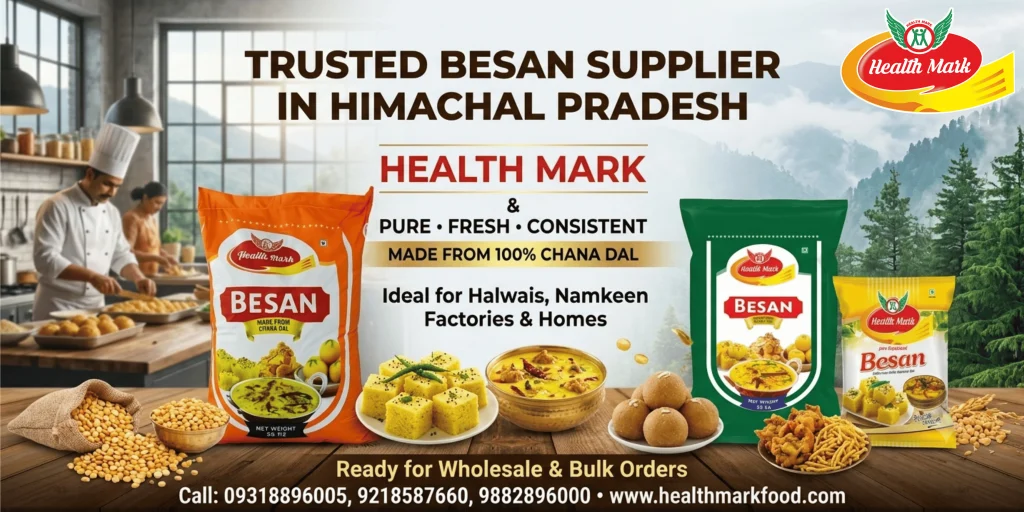
If you are searching for a besan supplier in Himachal Pradesh, Health Mark is a brand worth exploring. Whether you run a snack manufacturing unit, manage a retail store, operate a hotel or catering business, or simply want quality ingredients for everyday cooking, selecting the right supplier is important. Freshness, consistency, and product suitability are key factors that can influence both taste and customer satisfaction.
This guide will help you understand how to identify quality besan, compare fine and coarse varieties, and make informed purchasing decisions. We will also discuss important factors to consider before placing a wholesale order, common buying mistakes, and practical tips for selecting a reliable supplier that meets your requirements.
What Is Besan and Why Does Quality Matter?
Besan, also called gram flour or chickpea flour, is made by grinding dehusked and split Bengal gram (chana dal). Raw or lightly roasted dal is milled into a fine powder, sifted, and packed. That sounds simple, but quality changes dramatically depending on the dal, the milling process, and the handling afterwards.
Quality matters for three practical reasons:
- Taste and aroma: Fresh besan has a mild, nutty smell. Old or poorly stored flour smells stale, sour, or musty.
- Cooking behaviour: Particle size controls how a batter binds, how much water it absorbs, and how much oil a fried snack soaks up.
- Consistency: For a business, the same bag should perform the same way every time. Variation means rejected batches and unhappy customers.
For a household, poor besan means lumpy batter and dull flavour. For a factory, it can mean thousands of rupees of wasted product. That is why serious buyers treat quality gram flour as a raw material decision, not an afterthought.
Why Source Besan from Himachal Pradesh?
Himachal Pradesh has grown into one of north India’s most important manufacturing and distribution belts. Industrial clusters such as Baddi, Barotiwala, Nalagarh, Kala Amb, and Paonta Sahib host food, pharma, and FMCG units, and the state connects smoothly to Punjab, Haryana, Chandigarh, Delhi NCR, Uttarakhand, and Jammu & Kashmir.
For a buyer, sourcing from a besan supplier in Himachal Pradesh brings tangible benefits:
- Shorter transit times: Fresh flour reaches you faster, which matters for a product with a limited shelf life.
- Lower freight cost: Nearby supply usually means more competitive delivery rates for bulk loads.
- Easier sample checks and visits: You can inspect the product and speak to the team directly instead of relying on a distant trader.
- Reliable repeat supply: Regional suppliers can plan dispatches around local demand cycles, such as festivals and winter snack season.
- Cold-climate awareness: Suppliers in hill-state regions understand moisture and storage challenges during monsoon and winter.
If you have been typing “besan seller near me” into Google, a supplier based in the region gives you a real advantage over a faraway distributor.
Fine Besan vs Coarse Besan: Know the Difference
Not all besan is the same grind. The two main grades behave very differently.
| Feature | Fine / Barik Besan | Coarse Besan (Ladoo-style) |
| Texture | Silky, powder-like | Slightly grainy, sandy |
| Best for | Pakora, kadhi, sev, bhujia, dhokla, cheela, face packs | Besan ladoo, mohanthal, some sweets |
| Batter quality | Smooth, lump-free | May feel gritty |
| Oil absorption in frying | Typically lower with correct batter | Can vary |
| Look | Pale yellow, uniform | Deeper yellow, visible granules |
| Demand among namkeen makers | Very high | Low to medium |
Barik besan (the Hindi word for fine) is what most snack and food businesses ask for. It mixes quickly with water, produces a smooth batter, and gives sev and bhujia a cleaner, crisper finish. This is why searches such as “best fine besan” and “barik besan” are so common among manufacturers.
How to Identify the Best Besan (Simple Tests)
You do not need a lab to make a good first judgement. These quick checks work at the shop counter or when a sample arrives.
The Smell Test
Open the bag and smell it. Fresh besan smells mild and nutty. A sour, oily, or musty smell signals old stock or poor storage.
The Touch Test
Press a little between your thumb and finger. Good fine besan feels soft, smooth, and almost silky. Gritty or lumpy flour points to poor milling or moisture.
The Colour Test
Look for a natural pale-to-golden yellow, even across the bag. Very bright, unnatural yellow can be a red flag for added colour. Dull grey-brown can mean old or poor-quality dal.
The Water Test
Stir one teaspoon into a glass of water. Pure besan settles gradually without large floating specks. Heavy residue or odd floating particles deserve a closer look.
The Batter Test
Make a small batter and let it rest 10 minutes. It should stay smooth and hold together without separating. Fry a sample pakora: it should puff nicely, turn evenly golden, and taste clean rather than bitter.
The Label Check
For packaged besan, check the manufacturing and best-before date, FSSAI licence number, ingredients (it should say only chana dal), net weight, and batch number.
Besan for Namkeen Manufacturing: What Producers Need
Namkeen is a volume business with thin margins. The right besan for namkeen manufacturing protects both quality and profit.
Why Particle Size Matters
Sev, bhujia, boondi, and mixture dough depend on a smooth, uniform flour. Fine grind lets the dough pass through sev machines cleanly and produces consistent thickness. A coarse grind can clog moulds and give uneven texture.
Water Absorption and Dough Handling
Different flours absorb water differently. A supplier who keeps milling parameters stable means you do not have to re-adjust your recipe every batch.
Oil Absorption
A well-milled, fresh flour combined with a correct dough can help keep snacks crisp instead of greasy, which supports both taste and shelf life.
Colour and Aroma Consistency
Your customers recognise your product by its colour and smell. Switching between flours of varying shade can change the look of your final snack.
Moisture Control
Higher moisture shortens shelf life and invites lumps and pests. Ask the supplier how moisture is managed during milling and packing.
Packaging for Production Use
Factories typically need bulk-friendly packaging that is easy to store and stack. Discuss pack sizes and delivery schedules in advance so your production line never waits for raw material.
Wholesale and Bulk Besan Buying: Step-by-Step
Whether you are a retailer, distributor, caterer, or manufacturer, here is a practical way to buy wholesale besan without regrets.
- Define your requirement. Fine or coarse? Monthly quantity? Pack size? Delivery location and frequency?
- Shortlist two or three suppliers. Search for a besan supplier or bulk besan seller with a clear product page and reachable contact numbers.
- Request samples. Test them using the smell, touch, and batter checks above.
- Verify compliance. Ask for the FSSAI licence number and confirm it on the official FSSAI portal.
- Ask about batch consistency. How does the supplier ensure each lot matches the sample?
- Compare total landed cost. Look at price per kg plus freight, taxes, and any packaging charges, not just the headline rate.
- Clarify payment and credit terms. Agree on invoicing, GST details, and delivery timelines in writing.
- Start with a trial order. Test in real production before committing to large volumes.
- Review after the first few deliveries. Track quality, timeliness, and responsiveness.
What an FMCG Besan Supplier Must Offer
If you are a packaged-foods brand or private-label business, you need more than a good flour. A dependable FMCG besan supplier should offer:
- Documented food safety compliance and a valid FSSAI licence
- Consistent batch quality with traceable batch numbers
- Clean milling and packing practices
- Reliable lead times so your launch calendar does not slip
- Flexible packaging and quantity options for pilot runs and scaling
- Open communication with a named contact for orders and complaints
- Ability to scale as your volumes grow
For brands, switching suppliers mid-way is expensive. Choosing a partner who can grow with you from the start is the smarter long-term move.
Local Seller vs Mandi Trader vs Branded Supplier
| Factor | Local Retail Seller | Mandi Trader | Branded / Direct Supplier |
| Quality consistency | Variable | Variable | Higher, batch-controlled |
| Traceability | Often none | Limited | Batch and licence details |
| Packaging | Loose or repacked | Bulk sacks | Sealed, labelled |
| Sample availability | Rare | Sometimes | Usually yes |
| Best for | Small household needs | Price-focused bulk buyers | Namkeen units, FMCG, retailers |
| Risk of adulteration | Higher | Moderate | Lower with proper checks |
A branded or direct supplier may not always quote the lowest rate, but fewer rejected batches and steadier output usually make it cheaper in the end.
Nutrition and Food Safety Facts
Besan is naturally gluten-free and valued for its protein and fibre. According to USDA FoodData Central, chickpea flour contains roughly 20 to 22 grams of protein per 100 grams, along with fibre, iron, and folate. Exact values vary by product, so always check the label on your pack.
Health and cooking highlights:
- Plant-based protein source for vegetarian diets
- Naturally gluten-free, suitable for people avoiding wheat
- Versatile: savoury snacks, sweets, batters, and even skincare uses
- Best enjoyed in balanced portions, especially when deep-fried
For food safety rules, licensing, and labelling requirements in India, refer to the Food Safety and Standards Authority of India (FSSAI) at fssai.gov.in. Always buy from a supplier who holds a valid licence.
Common Mistakes Buyers Make
- Choosing only on price. The cheapest flour can cost more through wastage and complaints.
- Skipping samples. A sample takes a day to test and can save months of trouble.
- Ignoring manufacturing dates. Old stock loses aroma and shelf life.
- Not checking grind size. Using coarse flour for sev or bhujia leads to rough texture.
- Overlooking storage conditions at the supplier’s end. Damp godowns spoil flour before it reaches you.
- Not verifying the FSSAI licence. This is a basic compliance step.
- Buying too much at once. Besan is best used fresh. Order in quantities you can consume within a sensible time.
- No written terms. Vague agreements on rates and quality cause disputes later.
Storage Tips to Protect Quality
Even the best besan can spoil if stored badly. Follow these practices:
- Keep it in a cool, dry, airtight container or sealed bag.
- Store away from the floor and walls on pallets or racks.
- Avoid humid areas, particularly during monsoon.
- Use a clean, dry scoop every time. Wet spoons introduce moisture.
- Follow first in, first out so older stock gets used first.
- Inspect for lumps, off smell, or insects regularly and discard affected flour.
- In very humid regions, consider smaller batches rather than one huge stock.
Healthmark Food Bareek Besan | A Closer Look
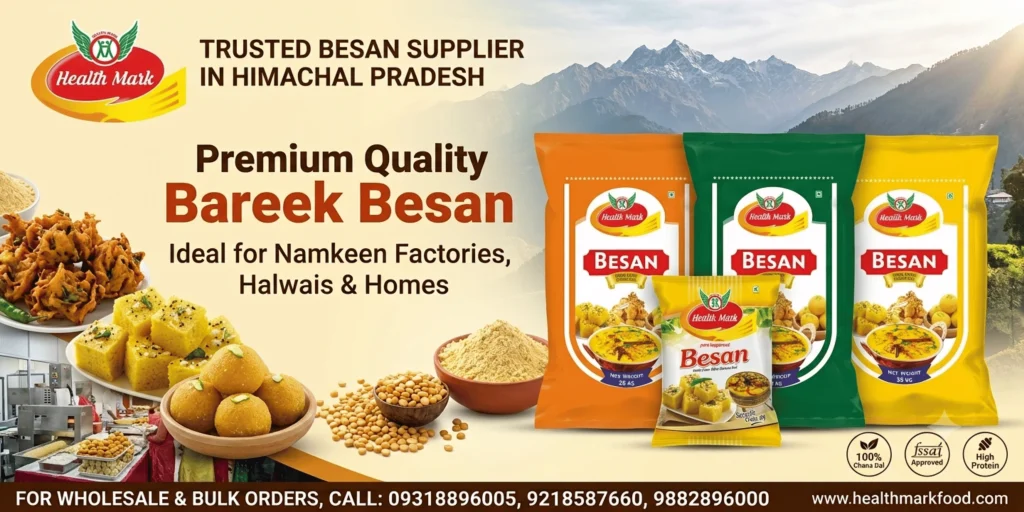
If you want a supplier that matches the checklist above, you can explore the range at Healthmark Food. The brand’s besan category is dedicated to gram flour for both everyday and commercial use, and its Bareek Besan is aimed at buyers who want a fine, smooth texture for namkeen, pakora, kadhi, and sweets.
What buyers typically look for, and why it matters here:
- Fine, barik texture for smooth batter and clean frying
- Suitability for bulk and repeat orders, useful for namkeen makers, retailers, and caterers
- Reachable support through direct phone numbers for quotes and queries
Browse the full besan product category to compare available options, then call to discuss quantities, packaging, and delivery to your location.
FAQ
1. Who is the best besan supplier in Himachal Pradesh?
The best supplier is one that offers consistent fine-grain flour, valid FSSAI compliance, samples before bulk orders, transparent pricing, and dependable delivery. Healthmark Food is one option to evaluate, and you can compare it against others using the checklist in this guide.
2. What is fine besan or barik besan?
Fine besan, called barik besan in Hindi, is gram flour milled to a very smooth, powder-like texture. It forms lump-free batter and is preferred for sev, bhujia, pakoras, and kadhi.
3. Which besan is best for namkeen manufacturing?
Namkeen makers generally prefer fine, fresh, uniformly milled besan with stable moisture and consistent colour. Always run a trial batch on your own machines before placing a large order.
4. How can I find a besan seller near me?
Search for local suppliers with clear product pages and phone numbers, request samples, and verify FSSAI licences. If you are in or around Himachal Pradesh, Punjab, Haryana, or Chandigarh, a regional supplier can reduce delivery time and cost.
5. How do I check if besan is pure and fresh?
Check for a mild nutty smell, soft smooth texture, even pale-yellow colour, and a recent manufacturing date. A small batter and frying test confirms performance.
6. What should I ask a wholesale besan supplier before ordering?
Ask about FSSAI licence number, grind type, batch consistency, packaging sizes, shelf life, minimum order quantity, delivery timelines, payment terms, and whether samples are available.
7. Is bulk besan cheaper than retail packs?
Generally, yes, per kilogram. But compare the total landed cost including freight and consider how quickly you will use the stock, since fresh flour performs best.
8. How long can besan be stored?
Stored in a cool, dry, airtight container, besan stays good for several months, but the best-before date on the pack is your guide. Use it sooner during humid weather.
9. Is besan healthy?
Besan is gluten-free and provides plant protein and fibre. Health impact depends on how it is cooked. Baked or steamed items like dhokla and cheela are lighter than deep-fried snacks.
10. Can I buy besan in bulk for my FMCG brand?
Yes. Choose a supplier that can provide consistent batches, compliance documents, and scalable supply. Share your quantity, pack, and delivery needs when you call.
Conclusion
Choosing the right besan supplier in Himachal Pradesh is not just a purchasing task. It shapes the taste of your snacks, the smoothness of your batters, and the trust your customers place in your product. Focus on fine and uniform grind, freshness, food safety compliance, and a supplier who answers your calls and respects your deadlines.
Start with a sample, test it against your own recipe, and then scale your order with confidence. Whether you need barik besan, quality gram flour, or a long-term wholesale besan supplier for your factory, a conversation is the quickest way to get clarity.
Ready to order or request a quote?
- Visit Healthmark
- Explore the Besan Category
- View Bareek Besan
- Call 09318896005, 9218587660, or 9882896000