
If you run a restaurant, a sweet shop, a snack manufacturing unit, or even a busy household kitchen, you already know that besan is non-negotiable. It’s the backbone of pakoras, dhokla, kadhi, laddoos, and dozens of everyday Indian dishes. But the moment you move from buying a small packet off a retail shelf to sourcing besan in bulk for your business, the game changes completely. Suddenly you’re not just picking a brand you like you’re vetting a manufacturer, checking certifications, negotiating pricing, and hoping the quality doesn’t dip from batch to batch.
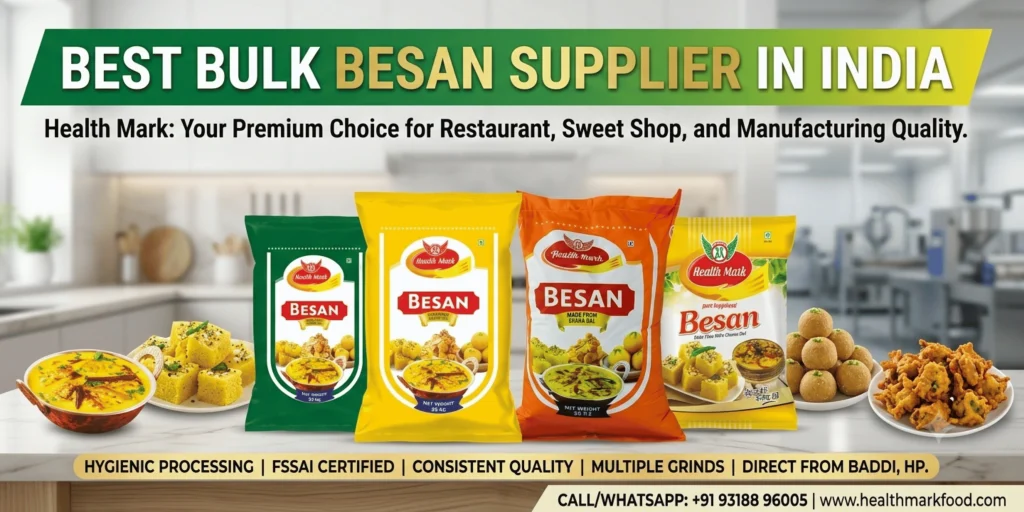
This guide walks you through exactly how to find the best bulk besan supplier in India what to check, what questions to ask, and which mistakes to avoid so you can lock in a supplier who delivers premium quality, consistently, at a fair price.
What Is Besan and Why Sourcing Quality Matters
Besan, also called gram flour or chana flour, is made by finely milling chana dal (split Bengal gram). It’s a staple across Indian households and food businesses because of its versatility it thickens gravies, binds batters, forms the base of sweets like motichur laddoo, and adds a distinct nutty flavour that wheat flour simply can’t replicate.
For a home cook, the difference between an average besan and a premium one might mean a slightly less fluffy pakora. For a business, that same gap in quality shows up in customer complaints, inconsistent batch results, wasted raw material, and in the worst cases, food safety issues. That’s why sourcing besan isn’t just about price it’s about finding a manufacturer who can guarantee purity, fineness, and hygiene, order after order.
Who Needs a Bulk Besan Supplier?
Bulk besan sourcing isn’t limited to giant food companies. A wide range of buyers regularly look for a reliable besan manufacturer in India:
Restaurants, dhabas, and cloud kitchens that go through besan daily for snacks and gravies
Sweet shops (mithai stores) that need specific grind types like motichur besan for laddoos
Snack and namkeen manufacturers producing besan-based products at scale
Hostels, canteens, caterers, and event kitchens with high-volume daily cooking
Retailers and distributors who want to stock a trusted besan brand for resale
Exporters and FMCG blenders sourcing powder besan for instant mixes
10 Factors to Consider When Choosing the Best Bulk Besan Supplier in India
Not every supplier who claims to sell “premium quality besan” actually delivers on it. Here’s what genuinely separates a dependable besan manufacturer from an average one.
1. Raw Material Quality (Chana Dal Sourcing)
The flavour, colour, and nutritional value of besan starts with the chana dal itself. A good supplier sources clean, well-graded Bengal gram, free from foreign particles, discolouration, or moisture damage. Ask your supplier directly where their raw material comes from and how it’s graded before milling.
2. Manufacturing Process & Hygiene Standards
Besan is a food product, so the milling unit’s hygiene standards matter enormously. Look for suppliers who mention hygienic processing and sealed packaging this reduces the risk of contamination, pest activity, and moisture absorption, all of which shorten shelf life and affect taste.
3. Certifications & Food Safety Compliance
A legitimate besan manufacturer in India should be FSSAI registered at minimum, and ideally hold additional quality certifications. Certifications aren’t just a formality they’re your proof that the supplier follows documented food safety practices, which matters even more when you’re buying in bulk for commercial resale.
4. Texture & Grind Variants
Not all besan is the same. Depending on what you’re making, you’ll need a different grind standard besan for everyday cooking, bareek (superfine) besan for sweets, motichur or mota besan for boondi and laddoos, and powder besan for industrial or instant-mix applications. The best besan seller will offer multiple variants rather than a one-size-fits-all product.
5. Consistency in Quality & Batch Testing
One good batch doesn’t make a reliable supplier. Ask how the manufacturer maintains consistency do they test colour, moisture, and fineness across production runs? For a business that reorders every week or month, batch-to-batch consistency is often more important than a single sample being excellent.
6. Packaging & Shelf Life
Packaging protects besan from moisture and pests, which directly impacts shelf life. A good supplier offers a range of pack sizes from small retail packs to bulk sacks with proper sealing that keeps the product fresh in transit and storage.
7. Pricing & Bulk/Wholesale Discounts
Bulk buyers should expect tiered pricing the more you order, the better your per-kg rate should be. However, the cheapest besan price isn’t always the best deal if it comes at the cost of quality. Compare pricing against the quality, certifications, and reliability the supplier offers.
8. Delivery Network & Location
If you’re a business in North India Punjab, Haryana, Himachal Pradesh, or nearby regions sourcing from a besan supplier in north India cuts down transit time, keeps the product fresher on arrival, and often reduces logistics costs compared to ordering from a manufacturer based far away.
9. Reputation, Reviews & Track Record
Check how long the brand has been operating, whether they supply to known restaurants or retailers, and what existing buyers say about consistency and service. A besan seller with an established track record is generally a safer long-term partner than an unverified new entrant.
10. Customer Support & inquiry Process
For B2B buyers, quick communication matters. A supplier who responds fast to calls, WhatsApp enquiries, or product enquiry forms and who can quote pricing and lead times without delay makes bulk ordering far less stressful.
Step-by-Step Guide: How to Evaluate and Shortlist a Besan Manufacturer in India
Shortlist 3–5 suppliers who serve your region and offer the besan variant you need.
Check for FSSAI registration and any additional certifications on their website or product enquiry.
Request a small sample batch before committing to a large order.
Inspect the sample for colour (pale yellow), aroma (fresh, nutty never musty), and texture.
Ask about minimum order quantity (MOQ), pack sizes, and bulk pricing tiers.
Confirm delivery timelines and whether they can service your city or region reliably.
Place a trial bulk order and evaluate consistency before locking in a long-term contract.
Set up a repeat ordering process many suppliers offer direct WhatsApp or call-based reordering for regular B2B buyers.
Types of Besan Compared: Standard, Bareek, Motichur, and Powder
One sign of a genuinely capable besan manufacturer in India is whether they offer more than a single generic product. Here’s how the main variants compare, so you can match the right grind to your recipe:
| Besan Variant | Texture / Grind | Best Used For | Typical Buyers |
| Besan (Standard) | Fine, smooth, all-purpose grind | Kadhi, dhokla, curries, batters, daily cooking | Households, restaurants, caterers |
| Bareek Besan | Extra-fine, superfine grind | Sweets, delicate batters, bakery-style mixes | Sweet shops, bakeries, mithai makers |
| Motichur / Mota Besan | Coarser grind, granular | Motichur ladoo, boondi, traditional sweets | Sweet manufacturers, festive order bulk buyers |
| Powder Besan | Ultra-fine powder consistency | Instant mixes, snack coatings, industrial blending | Snack food units, FMCG blenders, exporters |
What Sets Health Mark Apart as a Besan Brand
Health Mark produces its besan range from carefully selected chana dal, milled to a smooth, consistent texture with a rich, nutty flavour that holds up across both savoury and sweet preparations. The product line covers exactly the variety a bulk buyer needs:
Besan the standard, all-purpose gram flour for kadhi, dhokla, pakoras, and daily cooking
Bareek Besan a finer grind suited to delicate sweets and smoother batters
Motichur / Mota Besan the coarser grind traditionally used for boondi and motichur laddoo
Powder Besan an ultra-fine option suited to instant mixes and industrial blending
The besan is hygienically processed and packed to preserve freshness and purity, and it’s available across multiple pack sizes from 55gm retail packs up to 1kg with bulk and wholesale enquiries handled directly. Health Mark is based out of Baddi, Himachal Pradesh, and serves buyers across North India, including Chandigarh, Panchkula, and Ludhiana, which makes it a practical choice if you’re specifically searching for a besan supplier in north India or a besan seller near me in this belt.
You can browse the full besan range on the Health Mark Besan category page, or view product details on the Besan product page directly.
Common Mistakes to Avoid When Buying Besan in Bulk
Choosing the lowest price without checking hygiene standards or certifications
Skipping the sample-testing step before placing a full bulk order
Not confirming the grind type (standard vs bareek vs motichur) needed for your recipes
Overlooking packaging quality, which affects shelf life during storage and transit
Ignoring the supplier’s delivery reach, leading to delays or spoilage in transit
Failing to build a direct communication channel (phone/WhatsApp) for reordering and urgent queries
What Affects the Best Besan Price for Wholesale Buyers
Besan pricing isn’t fixed it moves with several factors, and understanding them helps you evaluate whether a quoted rate is genuinely competitive or just cheap for the wrong reasons:
• Market price of chana dal, which fluctuates seasonally
• Order quantity and applicable bulk/wholesale discount slabs
• Pack size smaller retail packs typically cost more per kg than bulk sacks
• Grind type bareek and powder besan can involve additional processing
• Packaging material and sealing quality
• Delivery distance and logistics costs from the processing unit to your location
Why North India Is a Hub for Premium Besan Manufacturing
States across North India including Punjab, Haryana, Himachal Pradesh, and neighbouring regions sit close to major chana-growing belts, which gives manufacturers in this region a natural sourcing advantage. For business buyers based in cities like Chandigarh, Panchkula, Ludhiana, and surrounding areas, choosing a nearby besan manufacturer often means fresher stock, shorter delivery timelines, and lower freight costs compared to sourcing from suppliers based far outside the region.
How to Place a Bulk or Wholesale Besan Order
Once you’ve shortlisted a supplier, placing a wholesale order is usually straightforward:
Reach out via phone or WhatsApp to discuss your required quantity and besan variant.
Ask for current bulk pricing and available pack sizes.
Request a sample if you haven’t already tested the product.
Confirm delivery timelines for your city or region.
Place your order and set up a recurring schedule if it’s a regular business requirement.
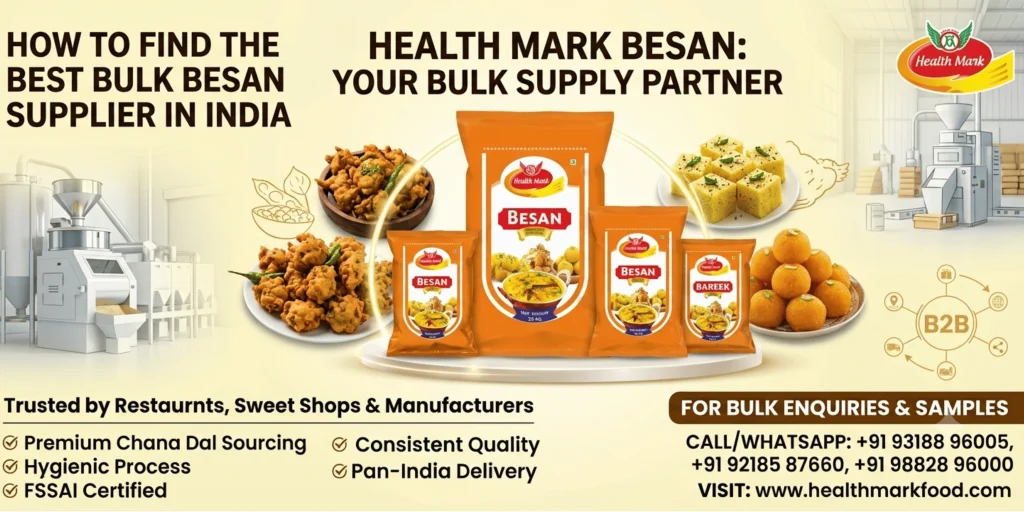
For Health Mark besan inquiries, you can call or WhatsApp +91 93188 96005, +91 92185 87660, or +91 98828 96000, or submit a request through the Product inquiry page.
Expert Tips for Long-Term Supplier Relationships
Lock in pricing agreements for a fixed period to avoid frequent renegotiation
Schedule periodic quality checks even after your supplier relationship is established
Keep a backup supplier for peak seasons like festivals, when demand for sweets and snacks spikes
Maintain a direct line of communication (a saved contact or WhatsApp thread) for fast reordering
Review your usage patterns quarterly and renegotiate bulk slabs as your order volume grows
FAQ
1. Who is the best besan supplier in India for bulk orders?
The best bulk besan supplier is one that sources premium chana dal, processes it hygienically, holds FSSAI certification, and maintains consistent quality across large orders. Health Mark, based in Baddi (Himachal Pradesh) and serving Chandigarh, Panchkula, and Ludhiana, is a strong option for wholesale besan buyers in North India.
2. What is the minimum order quantity for wholesale besan?
Minimum order quantities vary by supplier and pack size from small retail packs to bulk sacks. It’s best to contact the supplier directly to confirm current MOQ and bulk pricing tiers.
3. How do I check besan quality before placing a bulk order?
Check the colour (should be a clean pale yellow, not dull or grey), smell for a fresh nutty aroma with no rancid or musty odour, confirm the fineness matches your recipe, and request a sample batch along with the supplier’s FSSAI licence details.
4. What is the difference between besan, bareek besan, and motichur besan?
Besan is the standard, finely milled gram flour used in everyday cooking. Bareek besan has an extra-fine, superfine texture ideal for sweets and delicate batters. Motichur or mota besan is coarser and granular, best suited for boondi and motichur laddoo.
5. Which region in India is known for producing good quality besan?
North Indian states such as Punjab, Haryana, Himachal Pradesh, and parts of Rajasthan and Madhya Pradesh sit close to chana-growing belts, making them reliable regions for sourcing premium besan.
6. How can I find a besan seller near me?
Look for FSSAI-registered besan manufacturers in your city, review their product range and certifications online, and contact them directly via phone or WhatsApp to confirm pricing before placing a bulk order.
7. What factors affect the best besan price for bulk buyers?
Besan pricing depends on chana dal market rates, order quantity, pack size, grind type, packaging material, and delivery distance from the processing unit.
8. Is besan good for health and daily consumption?
Besan is naturally gluten-free and offers more plant-based protein and fibre than refined wheat flour, which is why it’s widely used in savoury snacks, sweets, and everyday Indian cooking as part of a balanced diet.
9. How should besan be stored to stay fresh for longer?
Store besan in an airtight container away from direct sunlight and moisture, in a cool, dry place. Besan that’s properly sealed and packed by a hygienic manufacturer typically stays fresh for several months.
10. Can restaurants and sweet shops get customised besan packaging?
Many besan manufacturers, including Health Mark, offer multiple pack sizes and are open to discussing bulk or customised packaging for B2B buyers such as restaurants, sweet shops, and snack manufacturers on request.
Conclusion
Finding the best bulk besan supplier in India isn’t about picking the first name that shows up in a search or the lowest quote in your inbox. It comes down to raw material quality, hygienic processing, proper certification, consistent grind and taste, and a supplier who can actually deliver reliably as your order volume grows. Whether you’re stocking a sweet shop’s motichur laddoo counter, running a snack production line, or simply want a dependable besan brand for your restaurant kitchen, working through the checklist in this guide will help you separate genuinely premium quality besan from suppliers who just say they offer it.
If you’re evaluating suppliers right now, explore Health Mark full Besan range including standard, bareek, motichur, and powder besan or reach out directly at +91 93188 96005 for bulk and wholesale pricing.