
Walk into any kitchen in North India on a weekday morning, and there’s a good chance a pan of poha is sizzling on the stove. It’s fast, it’s light, and it’s the kind of breakfast that works whether you’re feeding a toddler, packing a tiffin, or getting your own day started before a 9 AM meeting. But here’s the thing most people don’t think about until they’ve had a bad batch: not all poha is created equal.
If you’ve ever cooked poha that turned mushy in the pan, or tasted stale and slightly off, the problem usually isn’t your recipe it’s the poha itself. The flattening process, the rice variety, the moisture content, and how the batch was stored between the mill and your kitchen all decide whether you get soft, fluffy poha or a sticky, flavorless mess.
This guide is written for two kinds of readers. If you’re a home cook trying to buy the best Poha for your family, we’ll walk you through exactly what to check before you buy. And if you run a hotel, restaurant, canteen, or retail store in Punjab and are hunting for a reliable top Poha supplier in Chandigarh or nearby regions like Panchkula, Mohali, Ludhiana, or Baddi, we’ll cover what separates a serious poha wholesaler from someone just reselling generic stock.
By the end, you’ll know exactly what “premium high quality Poha” actually means, how to spot it on a shelf, and how to find a best Poha seller in Chandigarh you can trust for the long run whether you need a single kilo or a bulk consignment.
What Is Poha and Why Does India Love It So Much?
Poha, also called flattened rice or beaten rice, is made by parboiling raw paddy and then flattening it under rollers until it forms thin, dry flakes. The result is a rice product that cooks in minutes because it’s already partially cooked and dehydrated during processing.
It’s called by different names across the country poha in Maharashtra and North India, aval in Tamil Nadu, chuda in Bihar and Odisha, and chivda when it’s the roasted snack version. Kanda poha, the onion-and-peanut version popular in Maharashtra, has practically become a national breakfast dish.
What keeps poha so popular isn’t just nostalgia. It genuinely solves a practical problem: it’s a whole-grain breakfast that’s ready in under ten minutes, doesn’t need soaking overnight like some grains, and pairs with almost anything vegetables, peanuts, sprouts, curd, or even fruit for a sweeter version.
What Actually Makes Poha “Premium Quality”?
This is where most buyers get confused, because poha all looks roughly the same in a packet. Here’s what separates high quality Poha from the cheaper, mass-produced kind.
1. The paddy variety used Better poha starts with better paddy. Mills that use a consistent, good-quality rice variety produce flakes that are more uniform in thickness and color. Cheaper poha is often made from mixed or lower-grade paddy batches, which is why you sometimes see flakes of different sizes and shades in the same packet.
2. Flake thickness and texture Poha comes in thick, medium, and thin varieties. Thick poha holds its shape better for dishes like kanda poha and doesn’t turn mushy as easily. Thin poha is better suited for chivda and snacks that need a crisper bite. A quality manufacturer will clearly grade and separate these rather than mixing them.
3. Moisture content This is the single biggest factor buyers overlook. Poha with too much residual moisture spoils faster, clumps together, and can develop a musty smell. Well-processed poha is dried to the right moisture level and packed in a way that keeps it that way until it reaches you.
4. Hygiene during processing Flattened rice is handled multiple times soaking, roasting, flattening, sieving, and packing. Every one of those steps is an opportunity for contamination if the facility isn’t clean. A trustworthy best Poha manufacturing unit follows hygienic processing standards from the paddy stage right through to sealing the pack.
5. Packaging that actually protects the product Poha is porous and absorbs moisture and odors from the air easily. Good packaging sealed, moisture-resistant, and appropriately sized keeps it fresh far longer than loose or poorly sealed packs.
6. Absence of adulteration Unfortunately, adulteration with chalk powder, starch, or low-grade fillers isn’t unheard of in unbranded poha sold loose in the market. Buying from a known best Poha brand in India with visible certifications is the simplest way to avoid this risk entirely.
Poha Nutrition: Why It’s a Genuinely Healthy Choice
Poha earns its reputation as a light, easy-to-digest food for real reasons, not just tradition.
- Low in fat when prepared with minimal oil, making it a sensible choice for weight-conscious eaters
- Iron content especially when made from parboiled rice, poha retains more nutrients than fully polished white rice
- Gentle on digestion because the parboiling and flattening process makes it easier to break down than raw rice
- Naturally gluten-free, which makes it a safe breakfast option for people avoiding gluten
- Quick source of carbohydrate energy without the heaviness of a fried or dairy-heavy breakfast
- Versatile enough to boost nutrition further adding peanuts brings protein and healthy fats, vegetables add fiber and vitamins, and a squeeze of lemon adds vitamin C that also helps with iron absorption
This combination of speed, digestibility, and nutritional flexibility is exactly why poha remains a staple across income groups and regions, from home kitchens to hotel breakfast buffets.
How to Choose the Best Poha Brand in India: A Step-by-Step Checklist
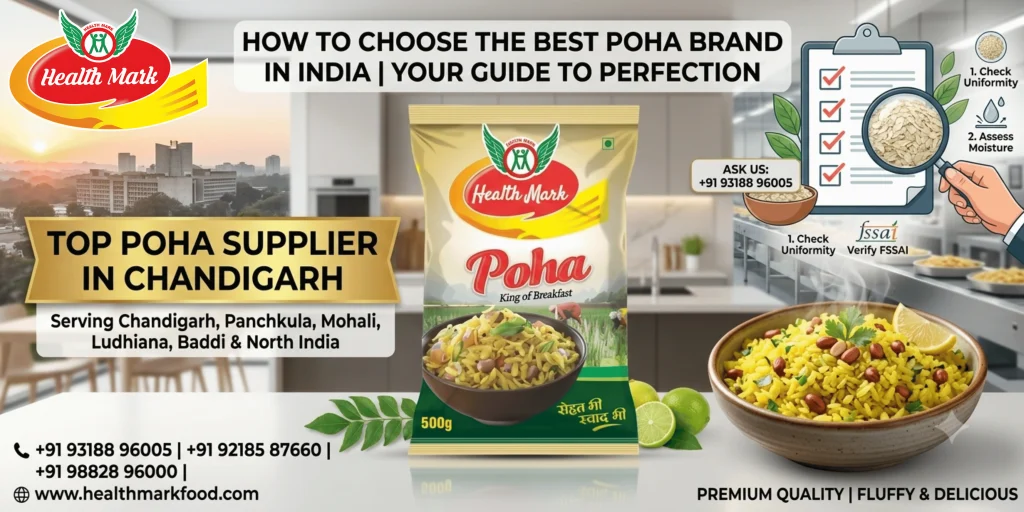
If you’re standing in front of a shelf or scrolling a supplier’s website trying to decide, run through this checklist.
Step 1: Check the color and uniformity
Good poha is a consistent pale white to slightly off-white color. Flakes that are too white may have been over-bleached, while overly yellow or brownish flakes can indicate poor-quality or aged paddy.
Step 2: Look for flake consistency
Open the pack and look at the flakes. Uniform size and thickness signal careful processing. A mix of broken bits, powder, and whole flakes usually points to lower-quality sorting.
Step 3: Smell test
Fresh poha has a very mild, neutral rice smell. Any sour, musty, or stale odor is an immediate red flag it usually means the moisture content was too high or the stock has been sitting too long.
Step 4: Check the certification and labeling
A best health mark Poha product should list:
- FSSAI license number
- Manufacturing and expiry/best-before dates
- Net weight
- Manufacturer’s name and address
- Batch number
If any of this is missing, that’s a sign to look elsewhere.
Step 5: Match the poha type to your recipe
- Thick poha → kanda poha, poha upma, batata poha
- Medium poha → most everyday breakfast preparations
- Thin poha → chivda, poha chaat, layered snacks
Step 6: Compare price against quality, not just against the lowest number
The cheapest packet on the shelf is rarely the best value once you factor in wastage from broken flakes, inconsistent cooking, and shorter shelf life.
Step 7: Buy from a brand with a traceable supply chain
Brands that can tell you where their rice is sourced from and how it’s processed are generally more accountable for quality and more likely to catch problems before the product reaches you.
Common Mistakes People Make When Buying Poha
- Buying loose, unbranded poha purely because it’s cheaper you lose all visibility into hygiene, storage conditions, and adulteration risk
- Not checking the manufacturing date poha that’s been sitting in a warehouse for months loses texture and flavor even if it hasn’t technically expired
- Ignoring flake thickness for the recipe using thin poha for kanda poha often results in a mushy dish, leading people to blame the recipe instead of the mismatch
- Over-washing before cooking even good quality poha can turn pasty if rinsed too aggressively or soaked for too long; a quick rinse and short rest is usually enough
- Storing it in a humid kitchen area even premium poha will absorb moisture and spoil faster if left near the stove or in an unsealed container
- Assuming all “premium” labels mean the same thing always verify with FSSAI details and manufacturer information rather than trusting packaging claims alone
Types of Poha You’ll Find in the Market
| Poha Type | Best For | Texture |
| Thick Poha | Kanda poha, batata poha, poha upma | Holds shape, slightly chewy |
| Medium/Thin Poha | Everyday breakfast poha, quick meals | Soft, light |
| Ultra-thin (Nylon) Poha | Chivda, layered snacks | Crisp, delicate |
| Red Poha | Traditional/regional recipes | Nuttier flavor, slightly firmer |
Why Chandigarh Buyers Need a Reliable Local Poha Supplier
Chandigarh and the surrounding tricity area Panchkula and Mohali along with nearby industrial hubs like Baddi and cities like Ludhiana, have a fast-growing food retail and hospitality market. Hotels, canteens, hostels, grocery chains, and online grocery platforms all need a dependable poha wholesalers in India relationship, not a one-time transaction.
Working with a local or regionally-based top poha seller India buyers can rely on has a few clear advantages:
- Shorter supply chains mean fresher stock reaches you faster, with less time sitting in transit warehouses
- Easier bulk ordering and reordering without long-distance shipping delays
- Faster resolution if there’s ever a quality or delivery issue
- Better pricing on bulk orders since regional suppliers save on long-haul logistics
- Consistent supply during high-demand periods like festivals, wedding season, or exam-time hostel catering
If you’re a business owner searching “Poha seller near me” or “best poha seller in Chandigarh,” the goal isn’t just finding the nearest option it’s finding one that combines proximity with proven quality standards.
What Makes a Top Poha Supplier Different From a Regular Seller
Not every seller stocking poha is equipped to be your long-term wholesale partner. Here’s what actually separates a genuine top Poha supplier from a middleman simply reselling stock:
- Their own manufacturing or a direct sourcing relationship rather than buying from multiple unverified traders and repacking
- Documented quality checks at each stage of processing
- Consistent batch quality your 50th order should taste and cook the same as your first
- Proper storage infrastructure to prevent moisture damage before dispatch
- Transparent pricing for different order volumes, from retail packs to bulk sacks
- Responsive communication a supplier who answers enquiries quickly and clearly, especially important for hotels and retailers that can’t afford stock-outs
- Compliance documentation readily available, including FSSAI registration and relevant food safety accreditations
Health Mark Poha: What You’re Actually Getting
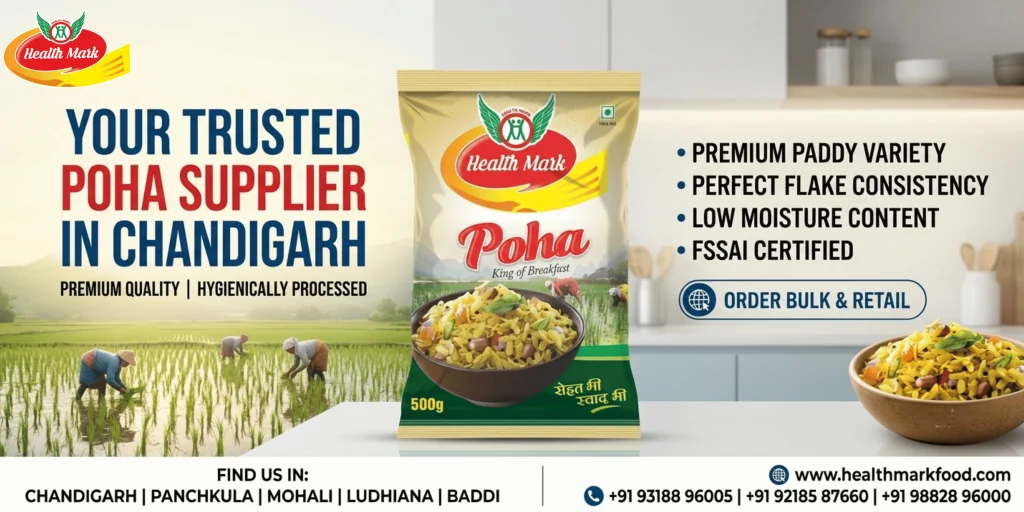
Health Mark is a Baddi-based FMCG company supplying the Chandigarh, Panchkula, Mohali, Ludhiana, and wider North India market with a range of everyday food staples from atta and besan to pulses, spices, and snacks. Their Poha, listed under the Snacks category, is made from premium quality flattened rice, processed to deliver a light texture and clean taste.
Here’s what stands out about Health Mark Poha:
- Made from carefully selected rice grains, flattened and processed under hygienic conditions
- Soft texture with authentic taste, suited to everyday breakfast preparations like kanda poha
- Quick-cooking, which matters for busy households and high-volume kitchens alike
- Available in multiple pack sizes 80gm, 350gm, and 500gm so home buyers and small retailers can pick what suits them, while larger orders can be arranged directly through the sales team
- Hygienically packed for freshness, reducing the moisture and contamination risks discussed earlier in this guide
Health Mark positions itself around organic and sustainably sourced food products more broadly, with an emphasis on traceability from source to shelf a principle that carries through to how their poha and other snack products are handled.
If you’re a home buyer looking to buy Poha for your kitchen, or a business owner looking for a poha wholesalers in India partner for regular bulk supply, Health Mark’s Poha is worth adding to your shortlist, particularly if you’re based in or around Chandigarh, Panchkula, Baddi, Ludhiana, or the broader Punjab-Himachal belt.
Poha Price Guide: What Should You Expect to Pay?
Best Poha price naturally varies based on pack size, brand positioning, and order quantity (retail vs. wholesale). A few general pointers to keep in mind rather than exact figures, since prices shift with paddy costs and season:
- Smaller retail packs (like 80gm) generally cost more per kilo than larger packs, since you’re partly paying for packaging convenience
- Bulk or wholesale orders bring the per-kilo cost down significantly this is where working directly with a manufacturer instead of a retail middleman pays off
- Branded, quality-checked poha will typically sit slightly above unbranded loose poha in price and that gap is usually justified by lower wastage, longer shelf life, and consistent cooking results
- Always ask for current bulk pricing directly, since published retail prices online don’t always reflect wholesale rates for businesses
For an accurate, current best Poha price for either retail or bulk quantities, it’s best to reach out directly to the supplier rather than relying on prices you may see quoted elsewhere online.
How to Store Poha for Maximum Freshness
Even premium poha won’t stay fresh if it’s stored poorly at home or in a commercial kitchen. Follow these simple rules:
- Transfer poha to an airtight container immediately after opening the original pack
- Store in a cool, dry place away from direct sunlight and away from the stove or any heat source
- Avoid storing near strong-smelling spices, since poha can absorb odors
- For bulk/commercial storage, keep sacks off the floor on pallets, in a ventilated, moisture-controlled space
- Use older stock first (first-in, first-out) if you’re managing inventory for a business
- Check periodically for any change in smell, color, or the presence of moisture clumping
Poha vs Other Breakfast Grains: A Quick Comparison
| Feature | Poha (Flattened Rice) | Upma (Semolina) | Oats |
| Cooking time | 5–10 minutes | 10–15 minutes | 5–10 minutes |
| Pre-soaking needed | Light rinse only | Not usually | Not usually |
| Digestibility | Easy, light | Moderate | Easy |
| Gluten-free | Yes | No | Yes (check labeling) |
| Common add-ins | Peanuts, onion, curry leaves | Vegetables, mustard seeds | Fruits, nuts, milk |
| Regional popularity | Pan-India, especially North & West | Strong in South India | Growing nationwide |
For Businesses: How to Become a Poha Wholesale Buyer
If you run a hotel, restaurant, hostel mess, retail store, or grocery chain and want to source poha in bulk, here’s a practical approach:
- Shortlist 2–3 suppliers with verifiable FSSAI registration and a track record of consistent supply
- Request samples before committing to a large order cook a small batch to test texture, color, and taste
- Ask about minimum order quantities and available pack sizes for bulk purchasing
- Clarify delivery timelines, especially if you’re in Chandigarh, Panchkula, Mohali, Ludhiana, or nearby areas where delivery windows matter for daily kitchen operations
- Negotiate pricing tiers based on order frequency and volume commitments
- Set up a direct communication channel many suppliers, including Health Mark, offer WhatsApp or direct phone lines for quick reordering
- Review the product periodically, not just on the first order, to make sure quality stays consistent over time
For bulk and wholesale inquiries, you can directly reach Health Mark’s sales team at +91 93188 96005, +91 92185 87660, or +91 98828 96000, or place a request through their Product inquiry page.
FAQ
1. What is the best Poha brand in India?
The “best” brand depends on your priorities texture, price, or sourcing transparency. Look for a manufacturer with clear FSSAI certification, hygienic processing, and consistent flake quality, such as Health Mark, which supplies premium quality flattened rice across North India.
2. How do I identify high quality Poha before buying?
Check for uniform flake size and color, a mild neutral smell (no sour or musty odor), clear FSSAI and manufacturing details on the label, and proper airtight packaging.
3. Is poha healthy for daily breakfast?
Yes, when prepared with minimal oil and paired with vegetables or protein like peanuts, poha is light, easy to digest, and provides a good energy source for a daily breakfast routine.
4. What is the difference between thick and thin poha?
Thick poha holds its shape better and is ideal for dishes like kanda poha, while thin poha cooks faster and is commonly used for chivda and crisp snack preparations.
5. Where can I find a reliable poha supplier near Chandigarh?
Businesses and home buyers in Chandigarh, Panchkula, Mohali, Baddi, and Ludhiana can source premium poha directly from regional manufacturers like Health Mark, which is based in Baddi and serves the wider North India market.
6. How should poha be stored to keep it fresh longer?
Store it in an airtight container in a cool, dry place away from heat and moisture. Avoid keeping it near the stove or in a humid area, as poha easily absorbs moisture and odors.
7. What pack sizes are typically available for buying poha?
Poha is usually available in small retail packs (like 80gm), medium packs (350gm), and larger household packs (500gm), with bulk/wholesale quantities available on request from manufacturers.
8. Does poha contain gluten?
No, poha is made from rice and is naturally gluten-free, making it a suitable breakfast option for people avoiding gluten in their diet.
9. How can a business place a bulk or wholesale order for poha?
Businesses can contact the manufacturer directly to request samples, discuss minimum order quantities, and negotiate wholesale pricing. Health Mark, for example, can be reached at +91 93188 96005, +91 92185 87660, or +91 98828 96000 for bulk enquiries.
10. Why does poha sometimes turn mushy when cooked?
This usually happens due to over-rinsing or over-soaking before cooking, using thin poha for a recipe suited to thick poha, or the poha itself having inconsistent flake quality from poor processing.
Final Thoughts and How to Order
Poha’s appeal is simple: it’s fast, light, nutritious, and endlessly adaptable. But that simplicity only holds up if the poha you’re cooking with is genuinely good quality. From flake consistency and moisture control to hygienic processing and proper certification, every factor covered in this guide plays a role in whether your poha turns out fluffy and flavorful or clumpy and forgettable.
Whether you’re a home cook wanting to buy Poha for your family’s breakfast table or a business owner searching for a dependable top Poha supplier in Chandigarh for regular bulk orders, the checklist in this guide should make the decision far easier.
If you’d like to try premium quality flattened rice sourced and processed with hygiene and consistency in mind, explore Health Mark’s Poha or browse their full Snacks range. For bulk, wholesale, or business enquiries, reach out directly at +91 93188 96005, +91 92185 87660, or +91 98828 96000 or send a quick message on WhatsApp to get started.