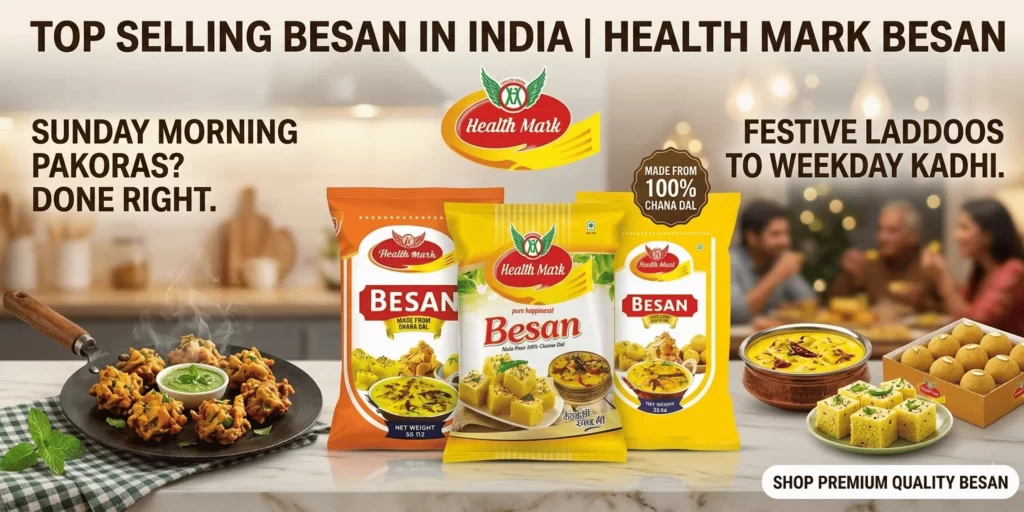
Walk into any Indian kitchen and you’ll find a tin of besan tucked next to the atta and the spice box. It’s the flour behind your Sunday morning pakoras, your festive laddoos, your quick weekday kadhi, and even your grandmother’s skincare routine. Yet, when you actually stand in front of a shelf or scroll through an online store trying to pick the top selling Besan in India the choice suddenly feels harder than it should.
Not all besan is created equal. Colour, texture, aroma, and the quality of the chana dal used can make the difference between a dhokla that rises beautifully and one that falls flat, or a pakora that stays crisp versus one that turns soggy in minutes. This guide breaks down everything you need to know from how besan is made, to what separates a premium quality Besan from an average one, to practical buying advice whether you’re a home cook or a bulk buyer looking for a best wholesale besan supplier.
We’ll also introduce you to Health Mark, a besan manufacturer in India based out of Baddi, Himachal Pradesh, that has built its reputation on hygienic processing and consistent quality and show you exactly where you can order it.
What Is Besan and Why Does It Matter in Indian Kitchens?
Besan, also called gram flour or chickpea flour, is made by grinding dehusked and split Bengal gram (chana dal) into a fine powder. It’s naturally gluten-free, has a distinct nutty aroma, and carries a light golden-yellow colour when it’s fresh and properly milled.
Besan isn’t a niche ingredient it’s foundational to Indian cooking across regions:
- North India: Pakoras, kadhi, besan ka halwa, missi roti
- West India: Dhokla, khandvi, handvo, thepla
- South India: Mysore pak, various snack mixtures
- Pan-India: Laddoos, sweets, and thickening agents for curries
Because it’s used in both savoury and sweet preparations, the quality of the besan directly affects taste, texture, and even the nutritional value of the final dish. This is exactly why so many households and businesses actively search for the best Besan rather than picking whatever is available on the nearest shelf.
What Makes a Besan the “Top Selling” Choice in India?
When people search for the “top selling Besan in India,” they’re usually not just asking which brand has the highest sales volume they’re asking which besan is worth buying repeatedly. A few consistent factors drive repeat purchases:
- Fine, uniform texture no grittiness, no lumps
- Rich, natural aroma a sign the chana dal wasn’t over-processed or adulterated
- Bright, consistent colour a pale, dull, or greyish tone often signals poor storage or lower-grade dal
- Hygienic packaging sealed, moisture-resistant packs that prevent contamination
- Consistent performance in recipes same taste and texture batch after batch
- Certification and traceability FSSAI compliance and clear sourcing
Brands that consistently deliver on these points naturally become the best Besan brand in india in the eyes of repeat customers and that reputation is what actually drives “top selling” status, far more than marketing alone.
Types of Besan Available in the Indian Market
Not all besan is milled the same way, and different recipes genuinely need different grinds. Understanding this helps you buy smarter instead of grabbing whichever pack is in front of you.
- Fine Besan (Bareek Besan): Ground to a very fine, smooth consistency ideal for sweets, halwa, and batters that need a silky finish.
- Regular Besan: The everyday, all-purpose grind used for pakoras, kadhi, and general cooking.
- Motichur / Mota Besan: A coarser grind, traditionally used for motichur laddoo and dishes that need a slightly grainy bite.
- Powder Besan: An ultra-fine milled version often preferred for quick-mixing batters and commercial kitchen use.
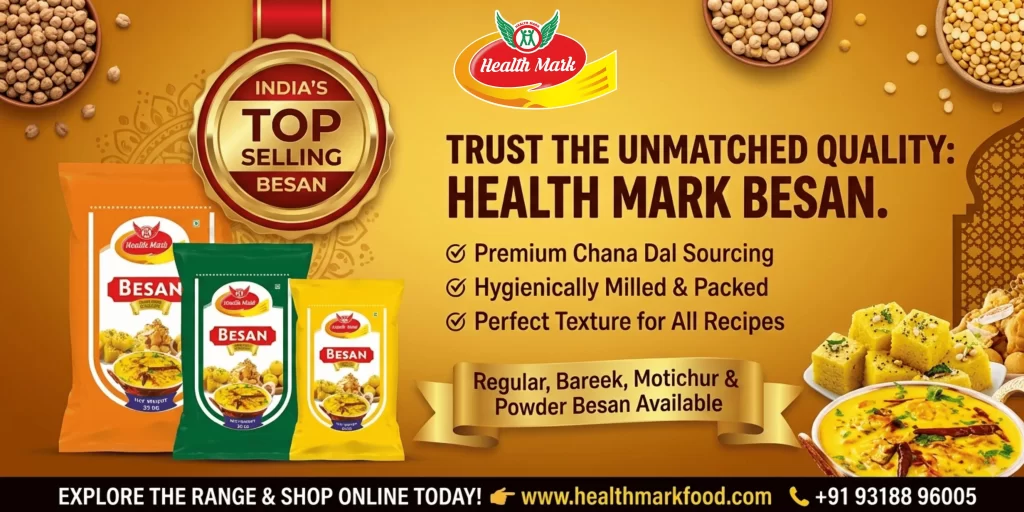
Health Mark actually manufactures across this entire range Besan, Bareek Besan, Motichur/Mota Besan, and Powder Besan which means home cooks and commercial buyers alike can pick the exact grind their recipe demands instead of compromising with a single generic product.
How to Identify the Best Besan Brand in India
Here’s a practical checklist you can use the next time you’re standing in front of a shelf or comparing listings online:
- Check the colour. Fresh besan should be a warm, consistent yellow not pale, not greyish.
- Smell before you commit (where possible). Good besan has a mild, nutty aroma. A musty or flat smell usually means it’s been sitting too long.
- Look for FSSAI licensing. This is the baseline mark of food safety compliance in India.
- Read the ingredient sourcing claim. Brands that mention chana dal sourcing and processing standards tend to be more transparent.
- Check packaging integrity. Moisture-proof, sealed packaging protects against weevils and clumping a common complaint with loose or poorly packed besan.
- Compare pack sizes to your usage. A besan price that looks cheap per kg in a large bulk pack may not suit a small household that can’t finish it before it turns stale.
Health Mark Besan: A Premium Quality Besan Manufacturer in North India
Health Mark positions itself around a simple idea: food should be pure, traceable, and free from unnecessary shortcuts. As a besan supplier in north india, operating out of its Baddi, Himachal Pradesh facility, the brand supplies fresh gram flour to Chandigarh, Panchkula, Ludhiana, and surrounding markets, while also fulfilling orders across India through its online store.
Why Health Mark Besan stands out:
- Made from carefully selected chana dal, finely milled for a smooth texture and rich, nutty flavour
- Hygienically processed and packed to lock in freshness and purity
- Available in multiple grinds Besan, Bareek Besan, Motichur/Mota Besan, and Powder Besan so you can match the product to your recipe
- Offered in flexible pack sizes 55gm, 200gm, 500gm, and 1kg suitable for both households and small commercial kitchens
- Backed by a brand that also manufactures Atta, Pulses, Spices, and other staples, reflecting broader food-safety infrastructure rather than a single-product operation
If you’re specifically researching a health mark Besan purchase, the product is built for both everyday cooking pakoras, kadhi, dhokla and festive preparations like laddoos and halwa, without compromising on texture or aroma.
Besan Price in India: What Affects the Cost?
If you’ve compared listings while searching for Besan price, you’ve probably noticed a wide range even within the same city. Several factors explain this:
| Factor | Impact on Price |
| Quality of chana dal used | Higher-grade dal costs more but yields better texture and taste |
| Milling process (stone-ground vs machine-ground) | Fine, consistent milling can add to cost |
| Packaging (sealed pouches vs loose/open sale) | Sealed, hygienic packs cost slightly more but protect freshness |
| Pack size | Bulk packs (1kg+) typically offer a better per-kg rate than small packs |
| Brand certification & traceability | FSSAI-certified, traceable brands are usually priced slightly higher than unbranded loose besan |
| Seasonal chana dal supply | Prices can fluctuate with dal harvest cycles |
Practical tip: Don’t judge purely on price per kg. A cheaper besan that clumps, smells stale quickly, or gives inconsistent results in cooking often ends up costing more in wasted ingredients and failed dishes.
Besan Comparison Table: Fine vs Bareek vs Motichubr vs Powder
| Type | Texture | Best For | Typical Pack Sizes |
| Besan (Regular) | Smooth, fine | Pakoras, kadhi, everyday cooking | 200gm, 500gm, 1kg |
| Bareek Besan | Very fine, silky | Sweets, halwa, delicate batters | 200gm, 500gm, 1kg |
| Motichur / Mota Besan | Coarse | Motichur laddoo, grainy-textured sweets | 500gm, 1kg |
| Powder Besan | Ultra-fine | Quick-mix batters, commercial kitchens | 500gm, 1kg |
Health Benefits of Besan (Backed by Nutrition Research)
Besan isn’t just a cooking staple it’s genuinely nutrient-dense. According to information published by India’s, Bengal gram and its flour are recognised as a good plant-based source of protein and dietary fibre, which supports satiety and helps moderate blood sugar spikes compared to refined wheat flour.
Key nutritional highlights of besan:
- Good source of plant protein useful for vegetarian diets
- Naturally gluten-free suitable for people avoiding gluten
- Rich in dietary fibre supports digestion
- Lower glycemic impact than refined flours makes it a popular choice in diabetic-friendly recipes
- Contains folate, iron, and magnesium micronutrients important for everyday health
This is one reason besan has moved beyond traditional snacks into modern diet plans, protein-rich recipes, and even homemade skincare (as a natural exfoliant and cleanser).
Common Mistakes People Make While Buying Besan
- Buying loose besan without checking freshness loose stock is often exposed to air and moisture for extended periods.
- Ignoring the grind type using coarse besan for delicate sweets (or fine besan where a grainy texture is needed) affects the final dish.
- Choosing price over quality the cheapest option isn’t always the most economical once wastage is factored in.
- Not checking the pack date or shelf-life indicators besan can turn rancid faster than people expect, especially in humid climates.
- Overlooking storage instructions even the best besan will degrade quickly if stored incorrectly at home.
- Assuming all “gram flour” labels are the same some blended or adulterated products are sold under generic gram flour labels; sourcing transparency matters.
How to Store Besan for Maximum Freshness
- Keep it in an airtight container exposure to air speeds up rancidity.
- Store in a cool, dry place away from direct sunlight and moisture.
- Avoid storing near strong-smelling spices besan can absorb odours.
- Use within the recommended shelf period check packaging for guidance.
- For bulk buyers: consider dividing large packs into smaller airtight batches to reduce repeated exposure to air.
Best Uses of Besan in Everyday Cooking
- Pakoras & Bhajis the classic crispy snack base
- Kadhi thickens the yogurt-based curry and adds tang
- Dhokla & Khandvi steamed Gujarati specialties requiring fine besan
- Cheela / Besan Chilla a quick, protein-rich breakfast option
- Laddoos & Halwa festive sweets that rely on quality and grind
- Coating for vegetables & fish used as a light, crisp coating before frying
- Face packs a traditional natural skincare ingredient
How to Find a Besan Seller Near Me / Wholesale Besan Supplier
If you’re searching for a besan seller near me or evaluating a top Besan supplier for regular household or business use, here’s what to check:
- Consistency across orders does the besan taste and perform the same way every time you reorder?
- Delivery reliability especially important for commercial kitchens that can’t afford stock-outs
- Bulk order support a genuine best wholesale besan supplier should offer flexible quantities and clear pricing for bulk orders
- Direct contact for enquiries a responsive supplier makes it easier to resolve quality or delivery questions quickly
Health Mark, as a top Besan supplier based in North India, serves both individual households and businesses looking for consistent supply. You can view the full product range on the Besan category page or reach out directly for bulk and wholesale enquiries.
Expert Tips for Bulk & B2B Buyers
- Ask for sample batches before committing to large volume orders.
- Confirm packaging type for transport moisture-resistant packaging matters more for bulk shipments.
- Discuss lead times clearly, especially around festive seasons when demand for besan spikes.
- Verify FSSAI licensing and any additional certifications the manufacturer holds.
- Negotiate pricing based on volume commitment, not just a one-time bulk purchase.
FAQ
1. What is the top selling Besan in India right now?
The “top selling” besan varies by region and retailer, but the products that consistently perform well share common traits: fine and consistent texture, hygienic packaging, natural aroma, and FSSAI compliance. Brands like Health Mark have built demand in North India through these consistency factors.
2. What is the difference between besan and gram flour?
There is no difference besan is simply the Hindi/Indian term for gram flour, made by grinding split, dehusked Bengal gram (chana dal).
3. Which type of besan is best for pakoras?
Regular or fine besan works best for pakoras since it creates a smooth, crisp batter. Coarser grinds like Motichur besan are better suited for laddoos rather than fried snacks.
4. Is besan good for weight loss?
Besan is high in protein and fibre, which can support satiety and help manage overall calorie intake as part of a balanced diet. However, besan alone isn’t a weight-loss solution portion control and overall diet matter.
5. How can I check if besan is pure or adulterated?
Look for a bright, natural yellow colour, a mild nutty smell, and a smooth (not gritty or overly powdery) texture. Buying from an FSSAI-certified, transparent manufacturer significantly reduces the risk of adulteration.
6. What is the average besan price in India?
Besan pricing varies based on pack size, brand, and grind type, and it can also shift with seasonal chana dal supply. It’s best to check current pricing directly on the Health Mark Besan product page.
7. Is besan gluten-free?
Yes, besan is naturally gluten-free since it’s made purely from chana dal (Bengal gram), making it suitable for people avoiding gluten in their diet.
8. How should besan be stored at home?
Store besan in an airtight container in a cool, dry place away from sunlight and moisture to prevent clumping and rancidity, and try to use it within its recommended shelf life.
9. Can besan be used for skincare?
Yes, besan has traditionally been used in India as a natural face pack ingredient, often mixed with turmeric, milk, or yogurt as a mild exfoliant and cleanser.
10. Where can I buy premium quality besan online in India?
You can order premium, hygienically packed besan directly from Health Mark’s official website. Visit the Besan product category to explore Besan, Bareek Besan, Motichur/Mota Besan, and Powder Besan options.
Conclusion
Choosing the top selling Besan in India isn’t about chasing the loudest marketing claim it’s about understanding texture, sourcing, hygiene, and how well a product performs in your actual kitchen, batch after batch. Whether you’re a home cook trying to nail the perfect dhokla or a business owner searching for a best wholesale besan supplier you can rely on month after month, the fundamentals stay the same: fine milling, clean sourcing, proper packaging, and consistency.
Health Mark brings all of this together as a trusted besan manufacturer in India, offering Besan, Bareek Besan, Motichur/Mota Besan, and Powder Besan in flexible pack sizes for both households and bulk buyers across North India and beyond.
Ready to taste the difference? 👉 Shop the full Besan range at Health Mark 👉 View the Health Mark Besan product page 📞 For bulk/wholesale enquiries, call +91 93188 96005 / +91 92185 87660 / +91 98828 96000