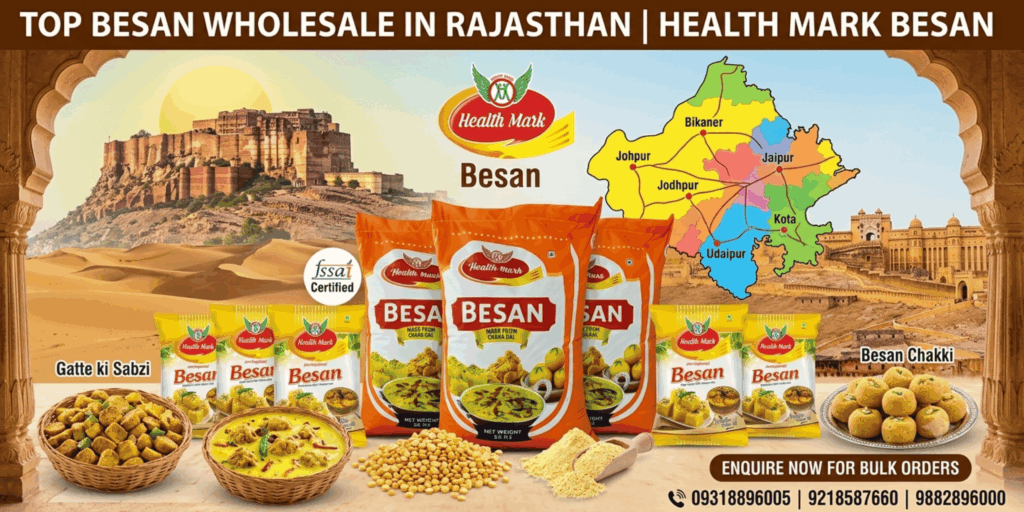
If you run a sweet shop in Jodhpur, a namkeen unit in Bikaner, a restaurant in Jaipur, or a kirana store anywhere between Udaipur and Kota, you already know one thing: besan is not optional. It’s the backbone of Rajasthani cuisine from crisp pakoras and golden boondi to the beloved besan chakki and gatte ki sabzi. So when it comes to sourcing besan for your business, the difference between an average batch and a truly premium quality besan can make or break your final product.
This guide walks you through everything you need to know before you buy besan in bulk how to judge quality, what drives besan price, which mistakes to avoid, and why so many bulk buyers across Rajasthan are turning to Health Mark as their preferred besan manufacturer in India. Whether you’re a distributor, a halwai, a restaurant owner, or simply searching for a “besan seller near me” who can deliver consistent quality month after month, you’ll find practical, no-fluff answers here.
Rajasthan isn’t just a big consumer of besan it’s practically synonymous with it. Think of Bikaneri bhujia, Jodhpuri mirchi bada, Jaipur’s famous pyaaz kachori, or the everyday kadhi that shows up on almost every thali in the state. Every one of these depends on one ingredient staying consistent: the besan.
As the snacking and sweets industry in Rajasthan has grown fuelled by tourism, weddings, festivals, and a thriving export market for namkeen demand for top selling Besan in India has grown right along with it. Local halwais, namkeen manufacturers, hotels, caterers, and retail chains are all looking for one thing: a supplier who can deliver the best wholesale besan at scale, without the quality dipping from batch to batch.
That’s exactly the gap this guide and a brand like Health Mark is built to fill.
What Exactly Is Besan (And Why Quality Varies So Much)
Besan is simply gram flour, milled from chana dal (split Bengal gram). Sounds straightforward, but the quality of the final product depends heavily on a few things most buyers never think to ask about:
- The quality of the raw chana dal used cleaner, well-graded dal produces a better-tasting, better-textured flour
- The milling process stone-ground or controlled milling preserves flavor and gives a finer, more consistent texture
- Moisture control poorly dried besan clumps, develops off-flavors, and spoils faster
- Hygiene during processing and packing this affects shelf life, purity, and food safety compliance
- Storage and packaging even great besan can go stale if it isn’t packed and stored correctly
This is why two bags of besan sitting side by side on a wholesale shelf can behave completely differently once they hit your kadhai. If you’ve ever wondered why your dhokla batter doesn’t rise the same way twice, or why your pakoras sometimes come out gritty, the answer is almost always in the flour, not your recipe.
How to Identify the Best Besan Before You Buy
Before committing to a bulk order, here’s what to actually check:
| What to Check | Why It Matters | What Good Looks Like |
| Color | Indicates dal quality and freshness | Bright, even yellow not dull or greyish |
| Texture | Affects cooking performance | Smooth and fine, free of lumps |
| Smell | Reveals rancidity or poor storage | Fresh, nutty aroma no sour or musty smell |
| Purity | Flags adulteration | No visible foreign particles or unusual grittiness |
| Packaging | Impacts shelf life | Sealed, moisture-proof, clearly labeled |
| Certification | Confirms food safety compliance | FSSAI-compliant labeling and hygienic processing |
A simple trick used by many experienced buyers: take a small pinch of besan and rub it between your fingers. Premium quality besan feels silky and fine, not sandy or coarse (unless you’ve specifically ordered a coarser grade like motichur or mota besan for a particular recipe).
Meet Health Mark: A Trusted Besan Manufacturer in India
This is where Health Mark comes in. As a besan manufacturer in India with a growing base of wholesale and retail buyers, Health Mark focuses on one simple promise consistency you can build a business on.
Health Mark Besan is made from carefully selected chana dal, finely ground to deliver a smooth texture and rich, nutty flavor. It’s designed to perform reliably across both savory and sweet applications crisp pakoras, soft dhokla, thick kadhi, and traditional Rajasthani preparations alike.
Why buyers keep choosing Health Mark Besan:
- Made from premium quality Bengal gram (chana dal)
- Smooth, fine, consistent texture batch after batch
- Rich, natural, nutty flavor with no artificial additives
- Hygienically processed and sealed for freshness
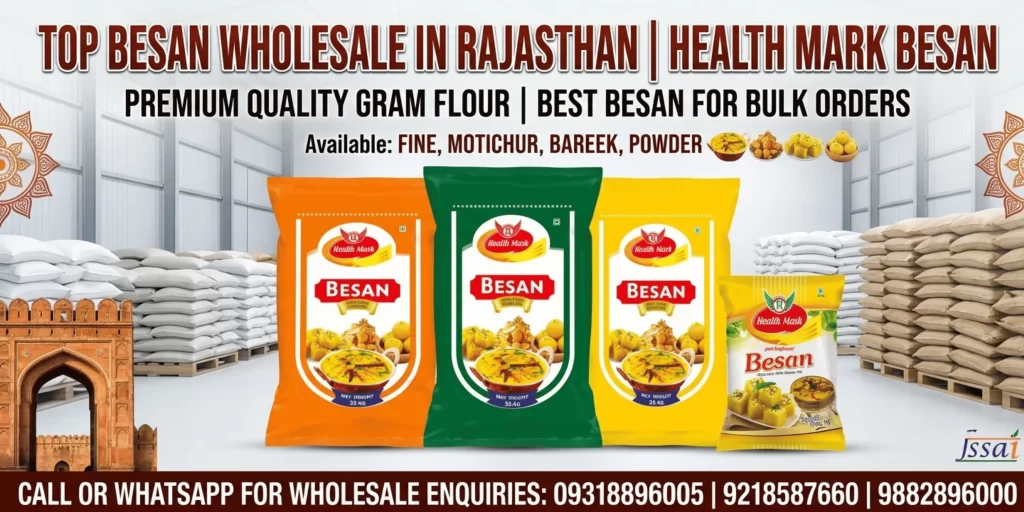
- Available across multiple pack sizes (55gm, 200gm, 500gm, 1kg) with bulk and wholesale quantities available on enquiry
- Backed by a brand with a track record in FMCG food manufacturing
If you’re comparing the best Besan brand in India for a long-term wholesale relationship, it’s worth looking beyond just the price tag on a single order. What actually protects your business is a supplier who can maintain the same quality at scale, order after order which is the core of what makes Health Mark a best Besan seller for growing food businesses.
Besan Varieties Explained: Fine, Motichur, Bareek & Powder
Not every recipe calls for the same grind. A common mistake among first-time bulk buyers is ordering a single “standard” besan for every use case, when different besan varieties are actually built for different purposes:
- Fine Besan – The everyday all-purpose besan, ideal for kadhi, curries, batters, and general cooking.
- Motichur / Mota Besan – A coarser grind traditionally used for motichur ladoo and boondi, where texture and bite matter.
- Bareek Besan – An extra-fine grade often preferred for delicate sweets and smoother batters.
- Powder Besan – Ultra-fine, quick-dissolving besan suited to specific bakery and processed-food applications.
Choosing the right grade isn’t a small detail it directly affects the texture, appearance, and consistency of your final dish. This is one more reason working with a manufacturer that offers multiple besan varieties under one roof, like the full range on the Besan category page, saves both time and sourcing headaches.
Understanding Besan Price: What Affects the Cost
Besan price isn’t fixed it fluctuates based on a combination of market and quality factors. Understanding these helps you evaluate whether a quoted rate is fair or a red flag.
| Factor | Impact on Besan Price |
| Chana dal market rates | Raw material cost is the biggest driver |
| Seasonal demand (festivals, weddings) | Prices often rise before Diwali, Holi, and wedding season |
| Order quantity | Wholesale/bulk orders typically bring a lower per-kg rate |
| Packaging type | Premium sealed packaging costs slightly more than loose bulk |
| Quality grade | Fine, bareek, and specialty grades are priced differently |
| Transport & logistics | Delivery distance and freight affect final landed cost |
A practical tip: don’t chase the lowest besan price in isolation. An unusually cheap rate is often a sign of lower dal quality, poor moisture control, or shortcuts in processing all of which cost you more in customer complaints and product wastage down the line. For current bulk rates and quantity-based pricing, it’s best to send a direct product enquiry rather than relying on outdated listings.
Health Benefits That Make Besan a Smart Business Bet
Beyond taste and texture, besan has a genuine nutritional edge that’s increasingly attractive to health-conscious customers:
- Naturally gluten-free, making it popular with customers avoiding wheat
- Good source of plant-based protein, appealing to vegetarian and vegan diets
- Rich in dietary fiber, which supports digestion
- Lower glycemic impact compared to many refined flours, useful for diabetic-friendly recipes
- Contains essential minerals like iron, magnesium, and folate
For food businesses, this means besan-based products aren’t just traditional comfort food they also fit neatly into the “healthier snacking” trend that’s picking up across Indian retail, including in Rajasthan’s growing health-food and namkeen segments.
Top 7 Mistakes Bulk Buyers Make When Sourcing Besan
- Buying purely on price the cheapest quote rarely holds quality across repeat orders.
- Not checking for consistent grind size inconsistent texture ruins batter and frying results.
- Ignoring packaging quality poor packaging leads to moisture damage and shorter shelf life.
- Skipping a sample order always test a small batch before committing to bulk quantities.
- Overlooking hygiene standards always confirm hygienic processing and proper storage practices.
- Not asking about supply consistency a great one-time batch means nothing if the next one is different.
- Sticking with unreliable local sellers a “besan seller near me” search is a good start, but reliability matters more than proximity alone.
A Practical Checklist for Choosing a Wholesale Besan Supplier
Use this quick checklist before finalizing any bulk besan order:
Does the besan have a bright, natural yellow color and fresh aroma?
Is the texture fine and consistent, without lumps or grit?
Is the product hygienically processed and properly sealed?
Does the supplier offer multiple pack sizes and besan varieties?
Can the supplier maintain consistent quality across repeat bulk orders?
Is pricing transparent and competitive for the quantity you need?
Does the supplier respond quickly to product enquiries?
Are contact details (phone/WhatsApp) easily available for direct communication?
If a supplier checks most or all of these boxes, you’re likely looking at one of the top Besan suppliers worth building a long-term relationship with.
Health Mark vs. Typical Local Besan Sellers
| Parameter | Health Mark Besan | Typical Local/Unbranded Besan |
| Raw material sourcing | Carefully selected chana dal | Often inconsistent, unverified sourcing |
| Texture consistency | Uniform, fine grind across batches | Can vary significantly batch to batch |
| Packaging | Hygienically sealed, multiple pack sizes | Often loose or basic packaging |
| Product range | Fine, bareek, motichur, powder besan | Usually one generic grade only |
| Brand accountability | Established FMCG brand presence | Limited traceability or accountability |
| Bulk order support | Direct enquiry and WhatsApp support | May lack structured wholesale process |
This kind of comparison is exactly why more distributors and shopkeepers across Rajasthan are moving away from unpredictable local sourcing toward a dependable besan manufacturer in India that can scale with their business.
How Health Mark Serves Besan Buyers Across Rajasthan
While Health Mark’s production facility is based in Baddi, Himachal Pradesh, its wholesale and distribution network extends across India including strong and growing demand from Rajasthan’s key trading and food-manufacturing hubs such as:
- Jaipur
- Jodhpur
- Bikaner
- Udaipur
- Kota
- Ajmer
- Bhilwara
Business owners and distributors in these cities searching for a “besan seller near me” or a reliable top Besan supplier can place bulk orders directly through Health Mark’s product enquiry process, with orders shipped and coordinated to reach buyers across the state.
Expert Tips for Storing Besan in Bulk
Buying premium quality besan is only half the job storing it correctly protects that quality until it reaches your kitchen or shop shelf:
- Store in a cool, dry place away from direct sunlight and humidity
- Keep bulk stock in airtight containers or well-sealed original packaging
- Avoid storing besan near strong-smelling spices, as flour absorbs odors easily
- Follow a first-in-first-out (FIFO) system for large inventory
- Periodically check for any change in smell, color, or texture before use
- Keep storage areas pest-controlled and moisture-free
Good storage practice isn’t just about food safety it directly protects your profit margins by reducing wastage on bulk stock.
FAQ
Q1. Which is the best besan for wholesale business in Rajasthan?
The best wholesale besan is one that offers consistent fine texture, hygienic processing, and reliable supply at scale. Health Mark Besan is built specifically to meet these needs for bulk and business buyers.
Q2. What is the current besan price for bulk orders?
Besan price depends on order quantity, packaging, and market rates for chana dal, which fluctuate seasonally. For accurate, up-to-date wholesale pricing, it’s best to contact the supplier directly through a product enquiry.
Q3. How can I identify premium quality besan before buying in bulk?
Check for a bright natural yellow color, fine and lump-free texture, a fresh nutty aroma, and hygienic, sealed packaging. Ordering a sample batch before a full bulk order is always a smart practice.
Q4. Does Health Mark supply besan to buyers in Rajasthan?
Yes. Health Mark’s distribution network serves buyers across India, including major cities and food-trading hubs across Rajasthan such as Jaipur, Jodhpur, Bikaner, and Udaipur.
Q5. What besan varieties does Health Mark offer?
Health Mark offers fine besan, motichur/mota besan, bareek besan, and powder besan each suited to different culinary applications, from everyday cooking to sweets like motichur ladoo.
Q6. Is Health Mark besan suitable for both sweets and savory dishes?
Yes, its smooth texture and rich, nutty flavor make it suitable for both from crisp pakoras and kadhi to soft dhokla and traditional Indian sweets.
Q7. How do I place a wholesale or bulk order with Health Mark?
You can send a product enquiry through the Health Mark website or contact the sales team directly via phone or WhatsApp for bulk pricing and order details.
Q8. What makes besan a good product category for retailers to stock?
Besan is a daily-use staple with year-round demand and additional spikes during festival and wedding seasons, making it a consistently high-turnover product for retailers and distributors.
Q9. How should besan be stored to maintain freshness in bulk quantities?
Store it in a cool, dry, pest-free area in airtight or well-sealed packaging, away from moisture, sunlight, and strong odors, and follow a first-in-first-out inventory approach.
Q10. Is besan gluten-free and suitable for health-conscious customers?
Yes, besan is naturally gluten-free and a good source of plant-based protein and fiber, making it appealing to health-conscious and gluten-sensitive customers.
Final Thoughts & How to Order
Sourcing besan in bulk isn’t just about finding the lowest price it’s about finding a partner who can deliver premium quality Besan consistently, order after order, season after season. Whether you’re stocking shelves in Jaipur, running a namkeen unit in Bikaner, or supplying sweets across Rajasthan, the right besan manufacturer directly impacts your product quality, your customer satisfaction, and ultimately, your bottom line.
Health Mark brings together careful sourcing, hygienic processing, and a genuine product range from fine besan to bareek and motichur grades designed to support businesses that can’t afford inconsistency. If you’re ready to explore wholesale pricing or place a bulk order, browse the full range on the Besan product page or the Besan category page, and reach out directly:
📞 Call or WhatsApp for wholesale enquiries: 09318896005 | 9218587660 | 9882896000