
Walk into an Indian kitchen around four in the evening and there is a good chance a bowl of yellow batter is sitting on the counter. Besan, the fine flour ground from chana dal, has fed families for generations as pakora, kadhi and ladoo. Lately it has picked up a new fan club: people who want more plant protein without giving up home-style food.
There is solid reasoning behind the comeback. The besan benefits for cooking go far beyond flavour. It carries roughly 22 g of protein and about 11 g of fibre per 100 g, it is naturally gluten-free, and it thickens, binds and crisps without any special skill. In a vegetarian pantry, few flours work as hard.
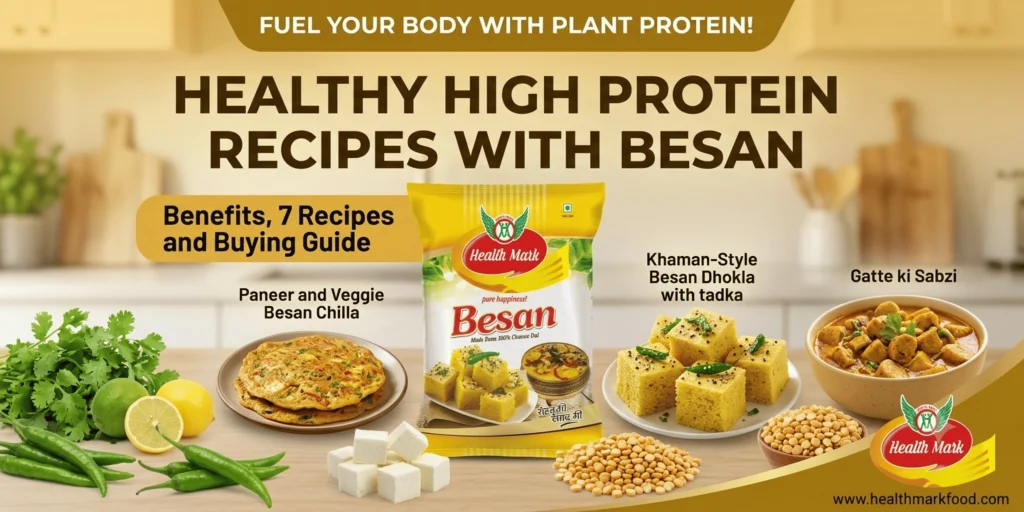
This guide is for home cooks, gym-goers, tiffin-packing parents and small food businesses alike. You will find the nutrition picture, seven healthy high protein recipes with quantities, a checklist for judging quality, the mistakes that ruin a batter, and honest notes on who should go easy. Let us begin.
What Is Besan? Types and Uses
Besan is flour milled from husked, split Bengal gram, known in Hindi as chana dal. It is a smaller, darker cousin of the chickpea you may know from chole. You will see it labelled gram flour or chana flour in India and chickpea flour overseas. The names change, but the pale yellow powder in the pack behaves the same way.
What makes it special is how it acts in the pan. Whisk it with water and you get a smooth batter that sets crisp. Simmer it in curd and it turns into silky kadhi. Roast it in ghee and it becomes the nutty base of a ladoo. Few single ingredients cover breakfast, snacks, mains and mithai this well.
Types of besan and what each does best
| Type | Texture | Best for |
| Fine (Bareek) besan | Silky, fine grind | Pakora batter, chilla, dhokla, kadhi, coating |
| Coarse (Motichur / Mota) besan | Slightly grainy | Boondi, motichur ladoo, mohanthal, halwa |
| Powder besan | Smooth everyday grind | Daily batters, gravies, binding tikkis |
Health Mark makes all three, alongside its regular Besan sold in 55 g, 200 g, 500 g and 1 kg packs. So which is the best Besan for crisp pakoras? Go fine. For boondi and ladoo, go coarse.
Besan Nutrition at a Glance
Numbers matter when you are planning meals, so here is what 100 g of besan typically provides. These are approximate figures based on USDA FoodData Central values for chickpea flour, and brand labels can differ slightly.
| Nutrient (per 100 g) | Approx. amount | Why it matters |
| Energy | 387 kcal | Dense fuel, so portion size counts |
| Protein | 22 g | Muscle repair and lasting fullness |
| Dietary fibre | 11 g | Digestion and steady energy |
| Carbohydrates | 58 g | Mostly slow-digesting starch |
| Fat | 7 g | Mainly unsaturated |
| Iron | 5 mg | Plant iron; pair with vitamin C to absorb more |
| Folate | 437 mcg | Cell renewal, especially valued in pregnancy |
| Magnesium | 166 mg | Muscle and nerve function |
Besan vs other everyday flours
| Flour (per 100 g) | Energy | Protein | Fibre |
| Besan (gram flour) | 387 kcal | 22 g | 11 g |
| Whole wheat atta | 340 kcal | 13 g | 11 g |
| Refined flour (maida) | 364 kcal | 10 g | 3 g |
The takeaway is simple. Besan gives you about 1.7 times the protein of whole wheat atta, with a similar fibre count. Swap it in for part of your flour and the numbers move in the right direction.
Besan Benefits for Cooking: 8 Reasons It Earns Its Shelf Space
1. It packs serious plant protein
At around 22 g per 100 g, besan is one of the most protein-dense flours in an Indian pantry. A half-cup serving (about 45 g) gives you roughly 10 g, which is a real head start on a vegetarian breakfast.
2. Fibre keeps you full for longer
The 11 g of fibre slows digestion. That is why a besan chilla keeps hunger away far longer than a plain paratha. Studies on chickpea-based foods also point to a gentler blood sugar response than refined flour, though portion size still rules.
3. It is naturally gluten-free
Besan contains no wheat, so it suits people avoiding gluten. If you have coeliac disease, buy packs from a facility that guards against cross-contact and read the label carefully.
4. It binds and thickens without help
Need a tikki to hold together? A spoon of besan does the job. Want a gravy thick without cream? Whisk in a little besan slurry. Vegans also use it as an egg substitute in omelette-style dishes.
5. It crisps fast, so you can use less oil
Besan batter sets into a crunchy shell within seconds. That means shallow-pan and air-fryer versions of pakora turn out brilliantly, without a deep-fry bath.
6. It brings iron, folate and magnesium
These micronutrients come along with the protein, which makes besan more than empty carbohydrate. It is a small but steady contribution to daily needs.
7. One flour, sweet and savoury
The same packet makes dhokla on Monday and ladoo on Sunday. That versatility means less waste and a smaller shopping list.
8. It is affordable and keeps well
Besan costs far less per gram of protein than most packaged protein products, and it stores for months when kept dry. For budget-conscious families, that combination is hard to beat.
How Besan Supports Your Protein Goals
Most healthy adults need around 0.8 g of protein per kilogram of body weight each day, according to ICMR-NIN guidance. Active people often aim higher. Besan helps you get there, but a few smart habits make it work harder.
Pair it to complete the amino acid picture
Like most legumes, besan is short on sulphur-containing amino acids such as methionine. Grains, dairy and seeds fill that gap. In everyday terms, that means:
• Serve chilla with curd or a glass of chaas.
• Eat kadhi with rice or roti, as tradition already suggests.
• Roll missi roti dough with a little wheat atta.
• Sprinkle sesame or pumpkin seeds on dhokla.
Easy ways to raise the protein count
• Stir grated paneer or crumbled tofu into batters.
• Add finely chopped sprouts to chilla.
• Replace some water with thick curd.
• Swap one third of your usual atta with besan in rotis.
7 Healthy High Protein Besan Recipes
Every recipe below uses everyday ingredients. Protein figures are estimates worked out from standard food composition values, so treat them as a planning guide rather than a lab result.
Recipe 1: Paneer and Veggie Besan Chilla
Serves 2 | 20 minutes | about 16 g protein per serving (2 chillas)
Ingredients
• 1 cup besan (about 90 g)
• 60 g grated paneer
• 1/4 cup thick curd plus 1/4 cup water
• 1/2 cup finely chopped onion, capsicum and coriander
• 1 green chilli, 1/2 tsp ajwain, 1/2 tsp turmeric, salt
• 1 tsp oil per chilla
Method
1. Whisk besan, curd and water into a smooth, pourable batter with no lumps.
2. Rest it for 10 minutes, then fold in paneer, vegetables and spices.
3. Heat a non-stick tawa and spread a ladleful into a thin round.
4. Drizzle oil around the edges and cook 2 to 3 minutes until golden underneath.
5. Flip, cook another minute and serve hot with green chutney.
Recipe 2: Khaman-Style Besan Dhokla
Serves 4 | 35 minutes | about 6 g protein per serving
Ingredients
• 1 cup besan (about 100 g)
• 1/4 cup curd and 3/4 cup water
• 1 tsp ginger-chilli paste, 1/2 tsp turmeric, salt, 1 tsp lemon juice
• 1 tsp fruit salt or 1/2 tsp baking soda
• For the tadka: 1 tsp oil, mustard seeds, curry leaves, 1 tsp sesame seeds
Method
1. Mix besan, curd, water, paste, turmeric, salt and lemon juice into a lump-free batter.
2. Rest for 15 minutes so the flour hydrates fully.
3. Grease a plate and bring water to a boil in your steamer.
4. Add fruit salt to the batter, stir gently once and pour it in straight away.
5. Steam 15 to 18 minutes until a toothpick comes out clean.
6. Cool slightly, cut into squares and pour the hot tadka over the top.
Protein tip: serve with a sprout salad or a bowl of curd to lift the meal past 12 g.
Recipe 3: Air-Fried Palak Paneer Pakora
Serves 3 | 25 minutes | about 9 g protein per serving
Ingredients
• 1/2 cup besan (about 45 g)
• 2 cups chopped spinach
• 100 g crumbled paneer
• 1 small onion, thinly sliced
• 1 tsp chilli flakes, 1/2 tsp ajwain, salt, 3 to 4 tbsp water
Method
1. Toss spinach, onion, paneer and spices in a bowl.
2. Sprinkle besan over the top and add water a spoon at a time, just enough to bind.
3. Shape small mounds and place them on the air-fryer basket lined with parchment.
4. Spray lightly with oil and cook at 180 degrees C for 10 to 12 minutes, turning halfway.
Recipe 4: Besan Missi Roti
Makes 4 | 25 minutes | about 6 g protein per roti
Combine 1 cup whole wheat atta, 1/2 cup besan, 1/2 tsp ajwain, a pinch of kasuri methi, chopped onion, 2 tbsp curd and salt. Knead with water into a soft dough, rest for 10 minutes, roll out and cook on a hot tawa with a little ghee. It pairs beautifully with dal or a bowl of curd.
Recipe 5: Light Besan Kadhi
Serves 4 | 30 minutes | about 4 g protein per bowl
Whisk 1/4 cup besan into 1 cup curd and 3 cups water until smooth. Simmer on low heat, stirring often, for 20 minutes so the raw taste cooks out. Finish with a tadka of cumin, dried red chilli, curry leaves and a pinch of asafoetida. Serve with brown rice or millet roti for a balanced plate.
Recipe 6: Besan Gatte ki Sabzi
Serves 4 | 40 minutes | about 7 g protein per serving
Knead 1 cup besan with 2 tbsp curd, ajwain, chilli powder, salt and 1 tsp oil into a firm dough. Roll into logs, boil for 10 minutes, then slice. Simmer the pieces in a spiced curd gravy for another 10 minutes. The boiled gatte are filling, and the gravy stays lighter than most restaurant versions.
Recipe 7: Roasted Besan Energy Ladoo
Makes 12 | 25 minutes | about 2 g protein per ladoo
Dry roast 1 cup coarse besan for 5 minutes, then add 3 tbsp ghee and roast on low heat until fragrant and lightly golden. Cool slightly, stir in 1/3 cup powdered jaggery, 2 tbsp chopped almonds and 1/2 tsp cardamom, and shape into ladoos. This one is a mindful treat rather than a protein bar, yet it is far more filling than a sugar-heavy sweet.
Recipe comparison at a glance
| Recipe | Time | Approx. protein | Best for |
| Paneer besan chilla | 20 min | 16 g per serving | Breakfast, post-workout meal |
| Khaman-style dhokla | 35 min | 6 g per serving | Light snack or dinner |
| Air-fried palak pakora | 25 min | 9 g per serving | Evening snack |
| Besan missi roti | 25 min | 6 g per roti | Lunch or dinner |
| Light besan kadhi | 30 min | 4 g per bowl | Comfort meal with grains |
| Besan gatte sabzi | 40 min | 7 g per serving | Main course |
| Roasted besan ladoo | 25 min | 2 g per ladoo | Occasional sweet |
Expert Tips for Perfect Besan Results
1. Sift before mixing. It removes hidden lumps and makes the batter airy.
2. Add water gradually. Besan absorbs unevenly, so whisk as you pour.
3. Rest the batter 10 to 15 minutes. The flour hydrates and the taste mellows.
4. Cook it properly. Raw besan tastes bitter and can feel heavy on the stomach.
5. Use cold water for crisp pakoras and warm water for soft dhokla.
6. Add ajwain or a pinch of hing. Traditional cooks use them to make legume dishes easier to digest.
7. Dry roast for sweets. Slow roasting on low heat brings out the nutty aroma.
8. Measure by weight when you can. A packed cup and a loose cup can differ by 20 g.
Common Besan Mistakes and Quick Fixes
| Mistake | What happens | Fix |
| Adding all the water at once | Stubborn lumps | Pour slowly and whisk in one direction |
| Too much baking soda | Soapy, bitter taste | Stay under 1/2 tsp per cup of besan |
| Undercooking kadhi or gravy | Raw, chalky flavour | Simmer at least 15 to 20 minutes |
| Thick batter for chilla | Doughy, hard to spread | Aim for a dosa-batter consistency |
| Storing in a humid corner | Clumping, musty smell | Keep in an airtight jar in a cool, dry place |
| Relying on besan alone for protein | Missing amino acids | Pair with dairy, grains or seeds |
How to Choose Best Quality Besan Before You Buy
Good besan makes a visible difference, so a few seconds at the shelf pay off. Here is what to check:
Colour: an even, light golden yellow. Grey, dull or patchy shades suggest age or poor grinding.
Smell: a fresh, mildly nutty aroma. Any sour, musty or stale note means walk away.
Texture: rub a pinch between your fingers. It should feel smooth and silky, not gritty (unless you want coarse mota besan).
Packaging: sealed, undamaged, with a clear manufacturing date and a visible FSSAI licence number.
Ingredients: a single line reading chana dal. Nothing else should be listed.
Source: a manufacturer that names its grain and its plant, such as premium quality Besan from a facility that can tell you where it is milled.
Ignore the hype, read the label
Search for the top selling Besan in India and you will meet dozens of confident claims. Ask for the No 1 besan brand and you will hear a different answer from every shop. Sales rankings shift by city and season, so rely on what you can verify: ingredients, freshness, hygiene and consistency batch after batch.
Think in price per 100 g
A cheaper pack is not automatically the smarter one. The best Besan price is the one that gives you fine texture, fresh flavour and no wastage, so compare rates per 100 g rather than per packet. A 1 kg pack usually works out cheaper for families that cook with besan every week, while the 55 g and 200 g packs suit trials and small kitchens.
Who Should Be Careful with Besan
Besan suits most people, yet a few groups should take a little extra care. This is general information and not medical advice.
Chickpea or legume allergy: avoid besan completely and speak to an allergist.
Sensitive digestion or IBS: chickpea flour can cause gas or bloating. Start with small portions and cook it thoroughly.
Diabetes: besan is a better choice than refined flour, but calories and carbohydrates still count. Watch portions and skip deep frying.
Kidney conditions: legumes are rich in potassium and phosphorus, so ask your doctor or dietitian how much fits your plan.
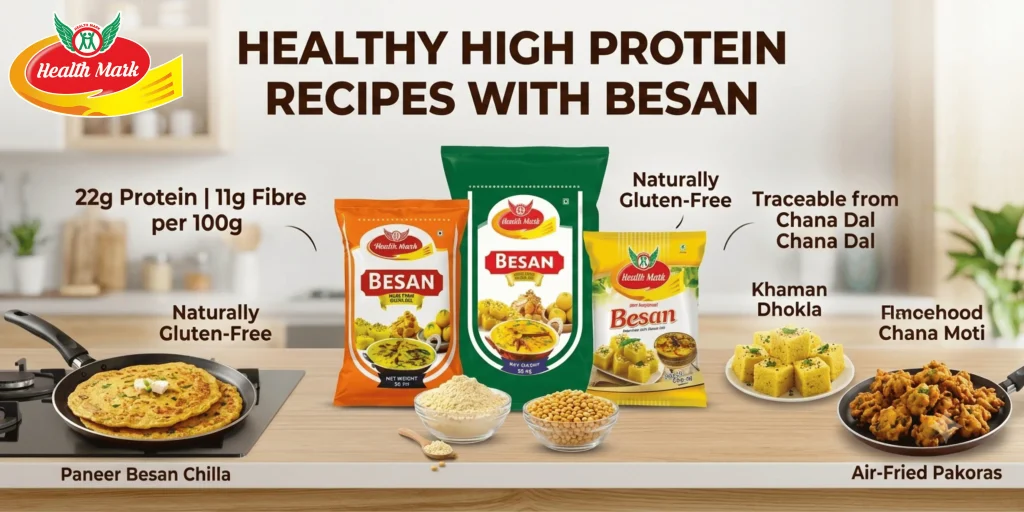
Where to Buy Besan: Health Mark Quality You Can Cook With
Health Mark is a food brand headquartered at Plot No. 60, Industrial Township, Bhatoli Kalan, Baddi, Himachal Pradesh. Its besan is made from carefully selected chana dal, finely ground for a smooth texture and a rich nutty flavour, then hygienically processed and packed to hold its freshness. As a besan manufacturer in India with its own processing base, the team can answer questions about grades, pack sizes and dispatch directly.
If you want to buy besan for daily cooking, the Health Mark Besan product page lists all four pack sizes and lets you send an enquiry or WhatsApp message in seconds. To compare fine, coarse and powder grades side by side, open the Besan category. You can also explore the rest of the pantry range on the Health Mark homepage.
What separates a best Besan seller from an average one is traceability and responsiveness. Can they tell you the grain, the grind and the pack date? Do they pick up the phone? Those answers say more than any badge. And if you have typed besan seller near me into a search bar, calling the sales team is the quickest way to learn which nearby outlet or delivery route works for you.
For bulk buyers, the same principle applies. Cafes, sweet shops, caterers and retailers need consistent grind and reliable supply. When you need best wholesale besan, look for a top Besan supplier that offers larger packs, steady quality and clear pricing. Health Mark is ready to discuss requirements for institutional and trade orders, and blends premium high quality besan with fast communication.
FAQ
Is besan good for protein?
Yes. Besan provides roughly 22 g of protein per 100 g, which is about 1.7 times more than whole wheat flour. It is not a complete protein by itself, so combine it with curd, paneer, grains or seeds to cover all essential amino acids.
How much protein is in one cup of besan?
A cup of besan (about 90 to 100 g) provides around 20 g of protein. A typical chilla portion uses half a cup, giving roughly 10 g before you add paneer, curd or sprouts.
Is besan good for weight loss?
It can help. The protein and fibre keep you full, so you snack less. Preparation matters, though. Chilla, dhokla and baked or air-fried pakora fit a weight-loss plan, while deep-fried bhajiya and sugar-heavy ladoo do not.
Can diabetics eat besan?
Most people with diabetes can include besan in moderation. Its fibre and protein slow glucose absorption compared with refined flour. Keep portions measured, avoid deep frying and check with your doctor or dietitian for personal advice.
Is besan gluten-free?
Pure besan is made only from chana dal and contains no gluten. If you must avoid gluten strictly, check that the pack is processed in a facility that prevents cross-contact with wheat.
Are besan, gram flour and chickpea flour the same?
For cooking purposes, yes. Besan is the Indian name for gram flour, made from split Bengal gram. Chickpea flour sold abroad is often made from pale chickpeas, but the two behave in a very similar way.
Can I eat besan every day?
In sensible portions, yes. One or two servings a day within a varied diet is fine for most healthy adults. If you notice bloating, reduce the portion, cook it thoroughly and add digestive spices like ajwain.
Why does my besan taste bitter?
The usual causes are undercooking, too much baking soda or stale flour. Cook batters and gravies fully, measure your soda carefully and use fresh besan that smells nutty rather than musty.
How should I store besan?
Keep it in a clean, airtight container away from moisture, heat and strong odours. In hot or humid weather, refrigerating it can help prevent clumping, and using it within a few months preserves the best flavour.
How can I buy besan in bulk for a business?
Contact the manufacturer directly. Health Mark offers besan in several grades and pack sizes, and its sales team at +91 93188 96005, +91 92185 87660 and +91 98828 96000 can share bulk quotes and supply details.
Final Thoughts: Make Besan Your Everyday High Protein Ally
Besan proves that healthy eating does not need imported powders or complicated recipes. A single flour, used well, delivers plant protein, fibre and key minerals in dishes your family already loves. Start with the chilla, try the dhokla on a weekend, and swap a portion of atta for besan in your rotis. Small changes add up quickly.
When you are ready to stock up, pick a fine, fresh, cleanly processed flour. Explore the Health Mark Besan range, view the Besan product page, or call +91 93188 96005 for personal guidance. Your next batch of pakoras, and your protein target, will thank you.