
Open almost any Indian kitchen cupboard and you’ll find a small sack of pale-yellow flour sitting quietly next to the wheat atta and rice. That’s besan gram flour and it is doing far more work than most of us give it credit for. It thickens kadhi, binds kebabs, crisps up pakoras, and turns into melt-in-the-mouth ladoos, all from one humble ingredient.
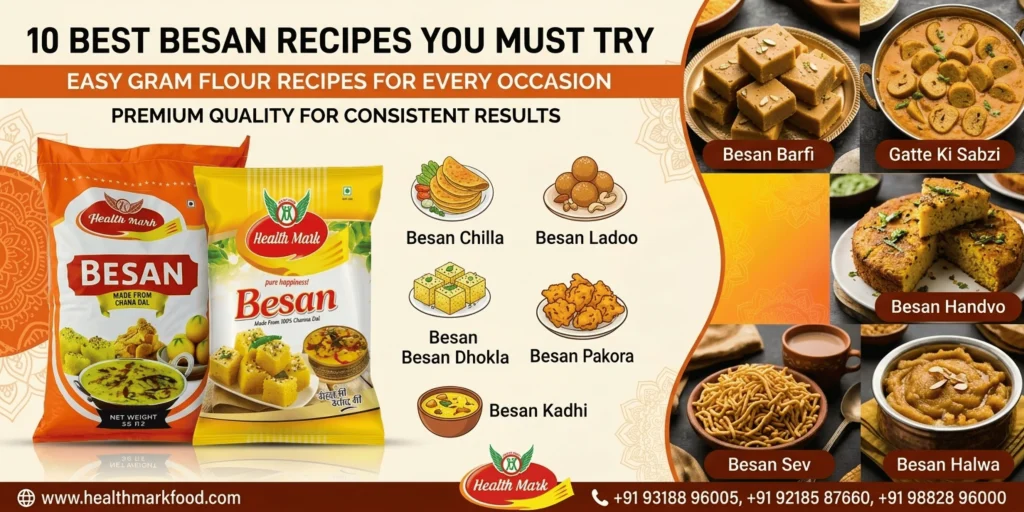
If you’ve ever typed “easy besan recipes” into Google at 6 pm wondering what to make for evening chai, this guide is for you. Below are the 10 best besan recipes home cooks actually make on repeat snacks, sweets, curries and a couple of festive specials along with the science of why besan behaves the way it does, how to pick the best quality besan for consistent results, and the mistakes that quietly ruin a recipe.
We’ll also talk about what separates ordinary gram flour from premium quality Besan, because the recipe is only half the story the flour you start with decides the other half.
What Is Besan? A Quick Introduction to Gram Flour
Besan is the flour made by grinding chana dal (split, skinned Bengal gram) into a fine powder. In English it’s called gram flour or chickpea flour, though it’s worth noting besan comes specifically from Bengal gram, not the larger white chickpea (kabuli chana) used in hummus.
You’ll usually find two textures on the shelf:
• Bareek besan (fine besan) smooth, powdery, ideal for batters, ladoos, and sweets where texture needs to be silky.
• Mota / Motichur besan (coarse besan) slightly grainy, traditionally used for motichur ladoo and certain sweets that need a beaded texture.
Both are simply chana dal ground to a different degree of fineness the nutrition is nearly identical, and the choice comes down to what the recipe calls for.
Why Besan Deserves a Permanent Spot in Your Kitchen
Besan isn’t just a convenient thickener it earns its place on nutritional merit too. Here’s why nutritionists and home cooks alike keep coming back to it:
High in plant protein roughly 20–22g of protein per 100g, making it a smart addition for vegetarian diets.
Naturally gluten-free a reliable swap for wheat flour in pakoras, chillas, and some baked snacks.
Rich in dietary fibre supports digestion and helps you feel fuller for longer.
Lower glycemic response than refined flour pairs well with balanced, mindful eating.
Good source of folate, iron, and magnesium useful for everyday micronutrient needs.
Versatile texture works as a batter, dough, thickener, and coating, all in one pack.
How to Choose the Best Besan (Buyer’s Guide)
Every recipe on this list depends on one thing before technique even comes into play: the quality of the besan itself. Cheaper, poorly processed gram flour can taste raw, turn bitter when heated, or clump in liquid. Here’s what actually separates best quality besan from the average pack on a store shelf:
Colour a consistent, natural pale yellow. Greyish or dull flour usually means old or poorly stored dal.
Smell fresh, nutty aroma. Any sour or musty smell is a sign of moisture damage.
Texture no visible lumps, husk bits, or foreign particles; fine besan should feel silky between your fingers.
Source dal flour ground from carefully selected, cleaned chana dal performs better and tastes richer than mixed-grade dal.
Packaging & hygiene sealed, hygienically packed besan protects against moisture and pests far better than loose, open-market flour.
Brand transparency a genuine besan manufacturer in India will be upfront about sourcing, processing, and quality checks.
This is exactly where health mark Besan fits in. Made from carefully selected chana dal and finely milled for a smooth, consistent texture, it’s built for the kind of everyday cooking this guide covers from crisp pakoras to soft dhokla without the guesswork of an unfamiliar or inconsistent brand. It’s a good example of what to look for if you’re comparing options and want the best Besan brand in India for regular home use.
10 Best Besan Recipes (Step-by-Step)
Here are ten besan recipes that cover every part of the meal breakfast, snacks, mains, and dessert starting with the quickest one.
1. Besan Chilla (Savoury Gram Flour Pancake)
A 15-minute breakfast that’s protein-rich, gluten-free, and endlessly customisable with vegetables.
Ingredients:
• 1 cup besan
• 1 small onion, finely chopped
• 1 small tomato, finely chopped
• 1 green chilli, chopped
• ¼ tsp turmeric, ½ tsp cumin seeds
• Salt to taste, water as needed
• 1 tbsp oil for cooking
Method:
1. Whisk besan with water into a smooth, lump-free batter of pouring consistency.
2. Stir in onion, tomato, chilli, turmeric, cumin and salt.
3. Heat a tawa, pour a ladleful and spread into a thin circle.
4. Drizzle oil on the edges; cook 2–3 minutes per side until golden.
5. Serve hot with mint chutney or ketchup.
2. Besan Ladoo (Gram Flour Sweet Balls)
A festive classic that stores well for weeks perfect for Diwali or any celebration box.
Ingredients:
• 2 cups besan (fine)
• 1 cup ghee
• 1 cup powdered sugar
• ¼ tsp cardamom powder
• Chopped almonds or pistachios for garnish
Method:
1. Roast besan in ghee on low heat, stirring constantly, until it turns golden and releases a nutty aroma (20–25 minutes).
2. Cool the mixture slightly, then mix in powdered sugar and cardamom.
3. Shape into small balls while still warm.
4. Garnish with chopped nuts and let set for an hour before storing.
3. Besan Dhokla (Steamed Savoury Cake)
A light, tangy, steamed snack from Gujarat that’s naturally low in oil.
Ingredients:
• 1.5 cups besan
• 1 cup yoghurt (slightly sour)
• 1 tsp ginger-green chilli paste
• 1 tsp Eno fruit salt
• 1 tbsp sugar, salt to taste
• For tempering: mustard seeds, curry leaves, green chillies, oil
Method:
1. Mix besan, yoghurt, ginger-chilli paste, sugar, salt and water into a smooth batter.
2. Just before steaming, add Eno and a splash of water; mix gently as it froths.
3. Pour into a greased tin and steam for 15–18 minutes.
4. Cool slightly, cut into squares, and top with tempered mustard seeds and curry leaves.
4. Besan Pakora / Bhajji (Crispy Fritters)
The definitive monsoon and tea-time snack vegetables dipped in a spiced besan batter and deep-fried until crisp.
Ingredients:
• 1 cup besan
• Mixed vegetables (onion, potato, spinach, or paneer), sliced
• ½ tsp red chilli powder, ¼ tsp ajwain (carom seeds)
• Salt to taste, water as needed
• Oil for deep frying
Method:
1. Make a thick batter with besan, spices, salt and water just thick enough to coat a spoon.
2. Dip vegetable slices in the batter, coating evenly.
3. Deep fry in hot oil until golden and crisp.
4. Drain on paper towels and serve with chutney.
5. Besan Kadhi (Yoghurt-Gram Flour Curry)
A comforting, tangy curry that uses besan as a natural thickener for spiced buttermilk.
Ingredients:
• 1 cup yoghurt, 3 tbsp besan
• 1 tsp ginger-garlic paste
• Mustard seeds, cumin seeds, curry leaves, dried red chilli
• Turmeric, red chilli powder, salt
• Pakoras (optional, for Punjabi kadhi pakora)
Method:
1. Whisk yoghurt, besan, turmeric and water into a smooth mixture with no lumps.
2. Temper mustard and cumin seeds, curry leaves and dried chilli in oil.
3. Add the yoghurt-besan mixture, bring to a gentle boil, then simmer 20–25 minutes, stirring occasionally.
4. Add pakoras if using, and simmer 5 more minutes before serving with steamed rice.
6. Besan Barfi (Fudge-Style Sweet)
A denser, set version of besan ladoo, cut into diamond-shaped pieces a favourite for gifting.
Ingredients:
• 2 cups besan
• ¾ cup ghee
• 1 cup sugar, ½ cup milk or water
• Cardamom powder, chopped pistachios
Method:
1. Roast besan in ghee until deep golden and aromatic.
2. In a separate pan, make a one-string sugar syrup with sugar and water.
3. Combine the roasted besan with the syrup, stirring quickly to avoid lumps.
4. Pour into a greased tray, smooth the top, garnish with pistachios, and cut into pieces once set.
7. Gatte Ki Sabzi (Rajasthani Besan Dumpling Curry)
Steamed and then simmered besan dumplings in a spiced yoghurt gravy a Rajasthani specialty that keeps well without refrigeration.
Ingredients:
• 1.5 cups besan, 2 tbsp oil, ½ tsp ajwain
• Salt, red chilli powder, turmeric
• 1 cup yoghurt, whisked
• Onion-tomato masala base with standard spices
Method:
1. Knead besan with oil, ajwain, salt and water into a firm dough; shape into thin logs.
2. Boil the logs in water for 10–12 minutes until firm, then slice into pieces.
3. Prepare a yoghurt-based masala gravy with onion, tomato and spices.
4. Add the gatte pieces to the gravy and simmer for 10 minutes before serving with rice or roti.
8. Besan Handvo (Savoury Baked/Steamed Cake)
A wholesome Gujarati bake that mixes besan with vegetables and rice, often studded with sesame seeds on top.
Ingredients:
• 1 cup besan, ½ cup rice flour or cooked rice
• 1 cup grated bottle gourd or mixed vegetables
• Yoghurt, ginger-green chilli paste
• Mustard seeds, sesame seeds, curry leaves for tempering
Method:
1. Mix besan, rice flour, grated vegetables and yoghurt into a thick batter; rest for 30 minutes.
2. Temper mustard seeds, sesame seeds and curry leaves in oil, and pour half over the batter, mixing in.
3. Pour batter into a greased pan and bake at 180°C for 30–35 minutes, or steam if preferred.
4. Top with the remaining tempering before serving in slices.
9. Besan Sev (Crunchy Namkeen Strands)
The crispy strands that top chaat, or simply get munched on with evening chai.
Ingredients:
• 2 cups besan
• 1 tbsp hot oil, ½ tsp turmeric, ¼ tsp asafoetida
• Salt and water as needed
• Oil for deep frying
Method:
1. Knead besan with hot oil, turmeric, asafoetida, salt and water into a smooth, pliable dough.
2. Fill the dough into a sev maker (murukku press) fitted with a fine disc.
3. Press directly into hot oil in circular motions, frying until crisp and light golden.
4. Drain, cool completely, and store in an airtight container.
10. Besan Halwa (Warm Gram Flour Pudding)
A rich, ghee-roasted dessert traditionally made for celebrations and cold evenings.
Ingredients:
• 1 cup besan, ¾ cup ghee
• 1 cup sugar, 2 cups warm water or milk
• Cardamom powder, chopped nuts for garnish
Method:
1. Roast besan in ghee on low flame until deep golden and fragrant, stirring continuously.
2. Dissolve sugar in warm water or milk and add it gradually to the roasted besan, stirring to avoid lumps.
3. Cook until the mixture thickens and starts leaving the sides of the pan.
4. Garnish with cardamom powder and nuts; serve warm.
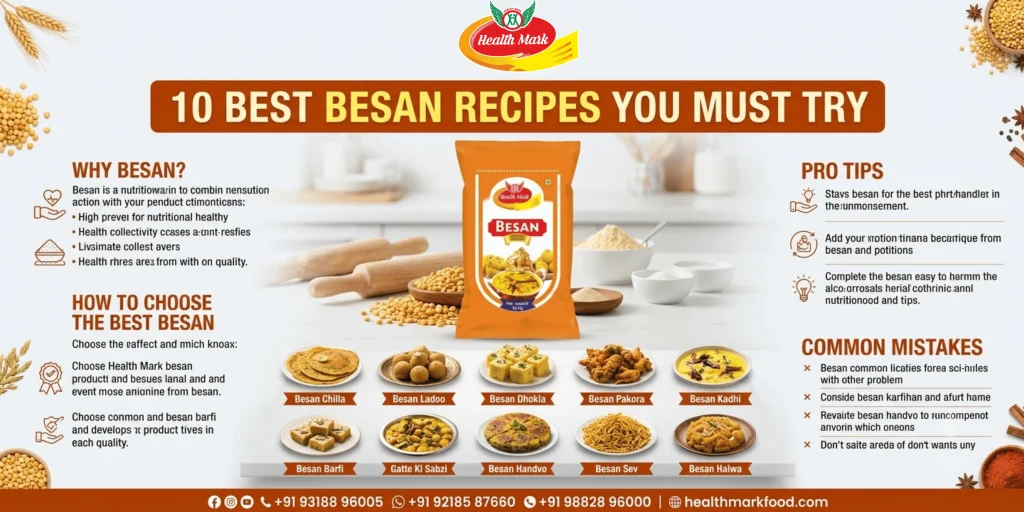
Besan Recipes at a Glance (Comparison Table)
| Recipe | Type | Time | Skill Level | Best For |
| Besan Chilla | Breakfast | 15 min | Beginner | Quick weekday breakfast |
| Besan Ladoo | Sweet | 40 min | Intermediate | Festivals, gifting |
| Besan Dhokla | Snack | 30 min | Intermediate | Light tea-time snack |
| Besan Pakora | Snack | 25 min | Beginner | Monsoon evenings |
| Besan Kadhi | Curry | 35 min | Beginner | Everyday lunch/dinner |
| Besan Barfi | Sweet | 45 min | Advanced | Special occasions |
| Gatte Ki Sabzi | Curry | 45 min | Advanced | Rajasthani thali |
| Besan Handvo | Snack/Cake | 50 min | Intermediate | Wholesome brunch |
| Besan Sev | Namkeen | 30 min | Intermediate | Chaat topping, snacking |
| Besan Halwa | Dessert | 30 min | Beginner | Winter treat, celebrations |
Pro Tips for Perfect Besan Dishes Every Time
Always whisk out lumps before cooking a hand whisk or blender gives a smoother batter than a spoon.
Roast besan on low-medium heat for ladoo, barfi and halwa; rushing this step leaves a raw, bitter aftertaste.
Rest chilla and dhokla batter for 10–15 minutes so the besan fully hydrates and the texture turns silkier.
Use fresh besan old flour tends to taste flat and can turn bitter faster when heated.
Add a pinch of asafoetida (hing) to savoury besan dishes; it cuts the raw smell and aids digestion.
For dhokla, add Eno right before steaming, not earlier the fizz fades fast.
Common Mistakes to Avoid When Cooking With Besan
Skipping the roast under-roasted besan in sweets tastes raw and grainy, no matter how much sugar you add.
Using high heat for frying pakoras this browns the outside before the inside cooks; medium heat gives an even, crisp fry.
Not adjusting batter consistency per recipe chilla needs a thin, pourable batter; pakoras need a thicker, coating batter.
Storing besan in humid conditions it clumps and can develop an off smell within days.
Buying inconsistent or low-grade flour uneven grinding leads to unpredictable texture, which is why the best Besan brands matter more than most people assume.
Where to Buy the Best Besan in India
A recipe is only as good as the flour behind it. If you’re looking to buy Besan for everyday cooking, festive sweets, or larger kitchen requirements, it is important to choose a brand that focuses on quality sourcing, hygienic processing, and consistent texture.
Health Mark offers finely ground besan made from carefully selected chana dal, giving it a smooth texture and a rich, nutty flavour. It can be used for a variety of dishes, including crispy pakoras, soft dhokla, kadhi, chilla, and traditional sweets such as besan ladoo. The product is available in multiple pack sizes, including 55 gm, 200 gm, 500 gm, and 1 kg, making it suitable for both small households and larger kitchens.
For customers comparing the best Besan brand in India or businesses looking for a dependable Besan supplier, Health Mark focuses on maintaining freshness, consistency, and quality across every batch. Its range is suitable for household use, catering requirements, retail supply, and bulk purchasing.
Explore Health Mark Besan
Visit Health Mark Homepage → https://healthmarkfood.com/
Looking for a besan seller near me or want to place a bulk/wholesale enquiry? You can reach the Health Mark sales team directly:
• 📞 +91 93188 96005
• 📞 +91 92185 87660
• 📞 +91 98828 96000
FAQ
Q1. Is besan the same as gram flour?
Yes. Besan and gram flour refer to the same product flour ground from chana dal (split Bengal gram). “Gram flour” is simply the English name used internationally.
Q2. Is besan good for weight loss?
Besan is high in protein and fibre, both of which help with satiety, so it can fit well into a calorie-conscious diet. That said, overall results depend on portion size and how it’s cooked deep-fried besan dishes are calorie-dense, while chilla or dhokla are lighter options.
Q3. Can besan be used as a gluten-free substitute for wheat flour?
Yes, besan is naturally gluten-free and is commonly used as a wheat-flour substitute in pancakes, fritters, and some baked snacks, though it behaves differently in baking due to its protein and fat content.
Q4. What is the difference between fine besan and coarse (motichur) besan?
Fine besan (bareek) is smooth and powdery, ideal for batters and ladoo. Coarse besan (mota/motichur) has a grainier texture, traditionally used for motichur ladoo and certain sweets that need a beaded structure.
Q5. How long does besan stay fresh after opening the pack?
Stored in an airtight container in a cool, dry place, besan typically stays fresh for 3–4 months. Refrigeration can extend this further, especially in humid climates.
Q6. Why does my besan batter taste bitter after cooking?
Bitterness usually comes from under-roasting (in sweets) or from using old/stale besan. Roasting besan on low-medium heat until it turns aromatic and golden removes the raw taste.
Q7. Can I make besan recipes without deep frying?
Yes. Besan chilla, dhokla, kadhi, and handvo are all naturally low-oil options that don’t require deep frying, making them good everyday choices.
Q8. What can I use besan for besides recipes on this list?
Besan is also used as a natural face pack ingredient, a binding agent for kebabs and cutlets, and a thickener for gravies beyond kadhi.
Q9. Which besan is best for daily home cooking?
For everyday use, a finely milled, hygienically packed, premium quality besan like Health Mark Besan gives the most consistent results across both sweet and savoury recipes.
Q10. Is Health Mark Besan suitable for bulk or wholesale orders?
Yes, Health Mark supplies besan in multiple pack sizes and can be contacted directly for bulk, wholesale, or business enquiries via the phone numbers listed above.
Conclusion
Besan is one of those rare ingredients that moves effortlessly between breakfast, snacks, curries, and dessert and once you’ve got a few of these 10 recipes in your regular rotation, you’ll reach for it as often as you reach for atta or rice.
But as this guide has hopefully made clear, technique only gets you halfway. The other half is starting with best quality besan well-sourced, finely milled, and hygienically packed, so every chilla, ladoo, and kadhi turns out the way it’s meant to.
If you’re ready to stock your kitchen with premium quality Besan, explore Health Mark’s besan range or get in touch for wholesale and bulk enquiries your next batch of dhokla or ladoo starts with the flour you choose today.