
Ask any home cook what ruins a plate of pakora and most will blame the oil temperature or the batter consistency. Fair guesses but the truth is, the first mistake usually happens much earlier, at the kitchen shelf. If the besan (gram flour) you picked up was stale, coarsely ground, or padded with cheap filler, no amount of technique will save the fry. It will drink oil, turn limp within minutes, and taste flat instead of nutty.
The good news: picking the best besan for pakora isn’t guesswork once you know what to look for. This guide walks through exactly how professional and home cooks in India identify premium quality besan, how to tell it apart from the types of gram flour meant for dhokla or ladoo, what a fair besan price looks like in 2026, and how to buy from a besan manufacturer in India you can actually trust.
Why the Besan You Choose Makes or Breaks Your Pakora
Pakora batter has one job: coat the vegetable or paneer in a thin layer that turns golden and crisp the instant it hits hot oil, while sealing in moisture so the inside stays soft. That crust is almost entirely a function of the flour’s protein strength, particle size, and moisture content.
Use a flour that’s too coarse and the batter turns gritty and falls apart in the oil. Use one that’s old or damp and the coating turns pale, soggy, and greasy no matter how hot the oil gets. This is exactly why besan brands that mill from clean, well-sorted chana dal and pack it fresh consistently outperform loose, unbranded flour bought off an open sack.
What Is Besan? A Quick Primer Before You Buy
Besan is the flour made by grinding chana dal split, de-husked Bengal gram into a fine powder. It’s naturally gluten-free, rich in plant protein and fibre, and has been a staple of Indian kitchens for generations, used everywhere from pakora and bhajiya to dhokla, kadhi, ladoo, and khaman.
Nutritionally, besan holds its own against refined flours. A well-processed batch typically carries close to 20–22g of protein and around 10g of dietary fibre per 100g, along with iron, magnesium, folate, and B-vitamins which is part of why it’s also a popular gluten-free and low-glycemic-index ingredient beyond just snacking.
What Makes the Best Besan for Pakora: 5 Quality Markers to Check
Not all gram flour behaves the same in hot oil. Here’s exactly what separates the best besan for pakora from an average pack sitting on a store shelf.
1. Fineness of Grind
For pakora, you want a smooth, uniformly fine texture not powdery-soft like custard powder, but fine enough that it dissolves into a lump-free batter within a minute of whisking. Rub a pinch between your fingers: if you feel gritty flecks or husk particles, the milling quality is inconsistent.
2. Colour and Aroma
Genuine premium quality besan carries a natural pale-to-golden yellow colour and a mild, nutty aroma. A dull, greyish tone or a flat, dusty smell usually signals old stock or lower-grade chana dal. Fresh besan should smell faintly earthy and slightly sweet never sour or musty.
3. Protein Content and Binding Strength
Protein is what gives pakora batter its structure and that satisfying crunch. Good besan binds a batter smoothly without needing excess water, and it clings evenly to vegetables instead of sliding off into the oil.
4. Moisture Level
Besan with moisture above roughly 12% clumps easily, spoils faster, and fries unevenly. The best besan for pakora feels bone-dry and free-flowing when you run it through your fingers, with zero visible caking.
5. Purity No Adulteration
This is where Best quality besan is legally defined, not just marketed. As per FSSAI standards, ash insoluble in dilute hydrochloric acid should not exceed 0.5%, total ash should stay under 5%, and foreign matter or damaged grains should not exceed 9% by weight. Always buy from a seller who can show FSSAI registration on the pack it’s the simplest way to avoid flour cut with cheap starches or chalk powder.
Types of Besan in the Market And Which One Wins for Pakora
Walk into any Indian grocery aisle and you’ll spot at least three or four versions of besan. They aren’t interchangeable, and picking the wrong one is a common reason pakora batter underperforms.
| Besan Type | Texture | Best For | Pakora Suitability |
| Fine Besan (standard) | Smooth, evenly milled | Pakora, bhajiya, kadhi, general cooking | Excellent the default choice |
| Bareek Besan | Extra-fine, almost powdery | Delicate coatings, sev, fine batters | Very good crisp, light coating |
| Motichur / Mota Besan | Slightly coarse, granular | Motichur ladoo, boondi | Not ideal batter can feel grainy |
| Powder Besan | Ultra-smooth, low absorbency | Baking, skincare packs, thickening gravies | Average needs less water, easy to over-thin |
If your goal is specifically crispy pakora, fine besan or bareek besan are the two safest picks both mill cleanly, absorb water evenly, and crisp up fast in hot oil without turning heavy.
Best Besan for Pakora vs Other Recipes: A Quick Comparison
Since besan shows up across sweet and savoury Indian cooking, it helps to know how pakora-grade flour differs from what a recipe like dhokla or kadhi actually needs.
| Recipe | Ideal Besan Type | Key Requirement |
| Pakora / Bhajiya | Fine or Bareek Besan | Strong binding, low moisture, fast crisping |
| Dhokla / Khaman | Fine Besan (fresh batch) | Good fermentation response, light texture |
| Kadhi | Fine Besan | Smooth blending with curd, no lumps |
| Motichur Ladoo / Boondi | Mota / Motichur Besan | Slightly coarse grain for texture and shape |
Step-by-Step: How to Test and Select Premium Quality Besan
Whether you’re buying a small pack for home or looking to buy Besan in bulk for a food business, this quick checklist takes under two minutes at the shelf or before you place an online order.
Check the manufacturing and expiry date. Besan is best used within 6–9 months of milling. Older stock loses aroma and picks up a stale, slightly bitter edge.
Do the smell test. Open the pack (or check reviews if buying online) it should smell nutty and fresh, never musty or rancid.
Check the colour. A consistent pale-golden shade signals clean, well-sorted chana dal. Patchy or greyish colour usually means mixed-grade grain.
Rub a pinch between your fingers. It should feel fine and silky with no gritty bits, husk fragments, or visible clumping.
Look for FSSAI certification and a licence number. This is non-negotiable for food safety and purity.
Check the brand’s manufacturing details. A besan manufacturer in India that lists its plant address, hygiene process, and batch information is generally more accountable than an unbranded loose pack.
Compare besan price against pack size and grade. The cheapest option per kilo is rarely the best besan price once you factor in weight loss from moisture, wastage from lumps, and poor frying results.
7 Common Mistakes People Make When They Buy Besan
Buying loose, open-sack besan with no visible packing date or certification.
Assuming a lighter colour always means better quality bleaching can fake this.
Ignoring the aroma test and relying only on the price tag.
Storing besan in a humid kitchen cabinet near the stove, which shortens shelf life fast.
Using motichur or coarse besan for pakora batter and blaming the recipe when it turns out heavy.
Not checking the protein percentage on the pack when buying for commercial or bulk use.
Choosing the lowest besan price online without checking seller ratings, packaging quality, or return policy.
How to Use the Best Besan for Crispy, Non-Oily Pakora
Even the best besan for pakora needs to be handled right. These are the details that separate restaurant-style crisp pakora from soggy, oil-heavy ones.
Batter Ratio and Consistency
Aim for a thick, ribbon-like batter roughly 1 cup besan to 6–7 tablespoons of water, adjusted as you whisk. It should coat the back of a spoon without dripping off instantly.
Rest the Batter Briefly
Letting the batter rest for 10–15 minutes allows the besan to hydrate fully, which improves crispness and reduces the chance of a raw, floury taste at the core.
Add a Crisping Agent
A tablespoon of rice flour or a pinch of cooking soda in the batter noticeably increases crunch and reduces oil absorption a trick most professional pakora stalls use.
Fry at the Right Temperature
Oil that’s too cool makes pakora absorb excess oil before the crust sets; oil that’s too hot browns the outside while leaving the inside undercooked. Medium-high heat (around 170–180°C) is the sweet spot.
Don’t Overcrowd the Pan
Adding too many pieces at once drops the oil temperature sharply, which is one of the most common reasons even premium quality besan produces soggy results.
Best Besan Price in India: What Should You Expect to Pay
Besan price varies with pack size, purity grade, and whether you’re buying retail or wholesale. As a general 2026 market guide:
| Pack Size | Typical Use | Indicative Price Range (INR) |
| 55g – 200g | Trial / small households | ₹15 – ₹45 |
| 500g | Regular home cooking | ₹55 – ₹90 |
| 1kg | Regular household / small business | ₹100 – ₹170 |
| 5kg – 25kg (wholesale) | Restaurants, caterers, retailers | Contact for best wholesale besan pricing |
Prices shift with chana dal procurement costs and milling grade, so treat the above as an indicative range rather than a fixed quote. For an accurate, current best Besan price, it’s always worth checking directly with the seller or manufacturer.
Why Health Mark Is a Trusted Besan Manufacturer in India
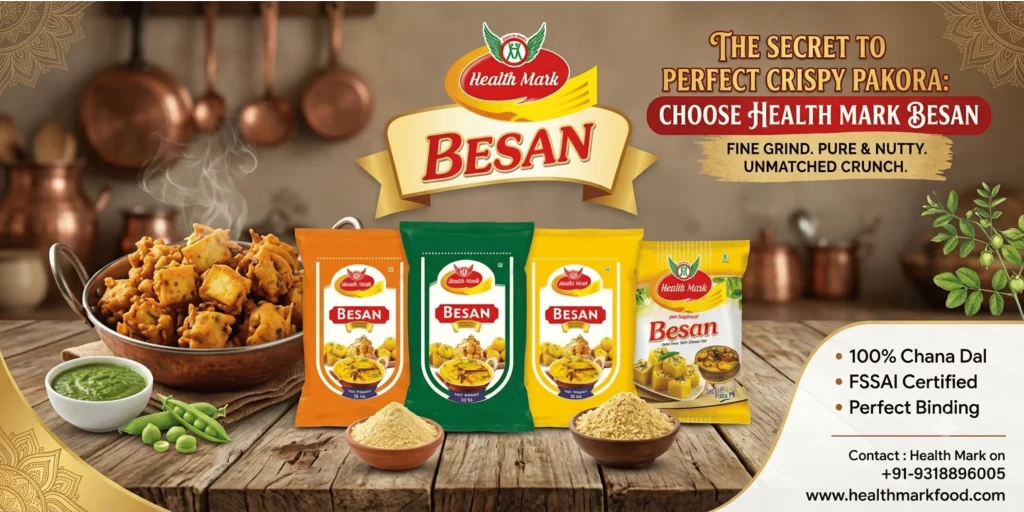
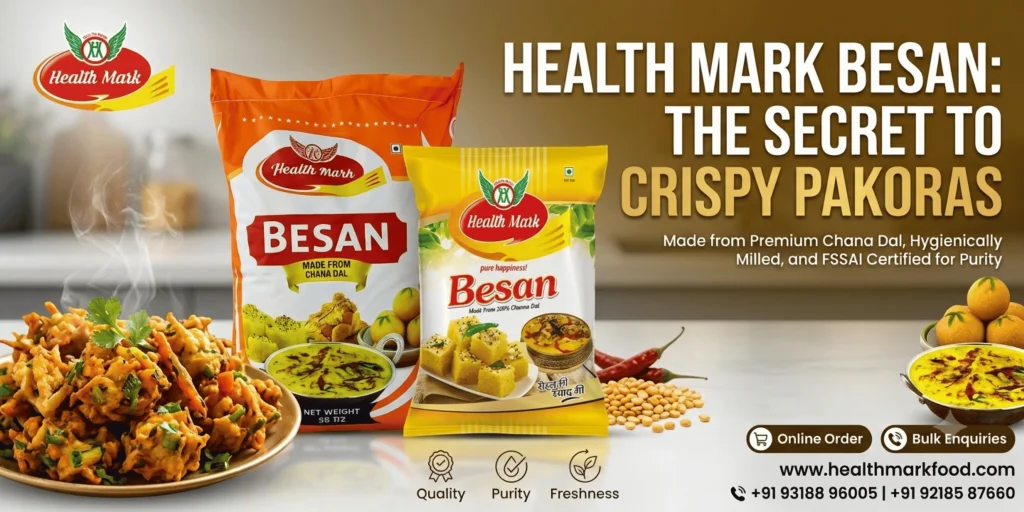
If you’re looking to buy Besan that’s consistently fine-milled, hygienically packed, and made from carefully selected chana dal, Health Mark Besan is built for exactly this. It’s finely ground for a smooth texture and rich, nutty flavour, and it performs reliably across pakora, curries, dhokla, and traditional festive recipes.
• Made from premium quality chana dal, sorted and cleaned before milling
• Smooth, fine texture suited for pakora batter and other everyday cooking
• Rich, natural nutty aroma with no artificial additives
• Hygienically processed and sealed to lock in freshness
• Available in multiple pack sizes 55gm, 200gm, 500gm, and 1kg through the full Besan product range
Health Mark operates out of its processing unit in Baddi, Himachal Pradesh, and produces a wider besan range including Bareek Besan and Motichur/Mota Besan, so you can match the exact grade to the recipe instead of using one all-purpose pack for everything.
Choosing the Best Besan Seller: Online Ordering vs Besan Seller Near You
Whether you’re a home cook comparing a besan seller near me search or a business owner sourcing from a top Besan supplier, the evaluation criteria stay largely the same:
Consistency across batches a reliable best Besan seller should deliver the same colour, aroma, and texture every single order, not just the first one.
Certifications on display FSSAI registration and clear batch/manufacturing details build trust fast.
Transparent pricing a genuine best wholesale besan supplier will quote clearly for bulk quantities without hidden charges.
Packaging integrity sealed, moisture-proof packaging protects freshness far better than loosely tied local sacks.
Responsiveness a good top Besan supplier answers product or bulk-order questions quickly, whether by call or WhatsApp.
FAQ
Which besan is best for crispy pakora?
Fine besan or bareek besan works best for pakora because both mill cleanly, absorb water evenly, and crisp up quickly in hot oil. Coarser types like motichur besan are better suited to ladoo and boondi rather than batter-based frying.
How do I know if besan is pure or adulterated?
Check for FSSAI certification on the pack, a natural pale-yellow colour, a fresh nutty aroma, and a fine, non-gritty texture. Adulterated besan often looks unusually bright, smells flat or dusty, and leaves a chalky residue when mixed with water.
What is the shelf life of good quality besan?
Properly milled and sealed besan typically stays fresh for 6–9 months when stored in a cool, dry, airtight container away from direct sunlight and moisture.
Why does my pakora batter turn soggy even with good besan?
This usually comes down to technique rather than the flour overcrowding the pan, frying at too low a temperature, or using a batter that’s too thin are the most common causes. Pair premium quality besan with the right oil temperature (around 170–180°C) for consistently crisp results.
Is besan the same as gram flour and chickpea flour?
Yes. Besan, gram flour, and chickpea flour all refer to flour milled from chana dal (split Bengal gram), though international recipes sometimes use a slightly different chickpea variety.
What is a fair besan price for a 1kg pack in India?
As of 2026, a good quality 1kg pack of branded besan generally falls between ₹100 and ₹170, depending on the grade, brand, and region. Bulk or wholesale besan pricing is typically lower per kilo it’s best to confirm directly with the manufacturer.
Can I buy besan online instead of visiting a local seller near me?
Yes buying Besan online from a verified besan manufacturer in India is often more convenient and consistent than searching for a besan seller near me, since you can check certifications, reviews, and batch details before ordering.
Is besan gluten-free and suitable for those with gluten sensitivity?
Yes, besan is naturally gluten-free since it’s milled purely from chana dal, making it a popular choice for gluten-sensitive diets provided it’s processed in a facility that avoids cross-contamination with wheat-based products.
What’s the difference between besan for pakora and besan for dhokla?
Both generally use fine besan, but freshness matters more for dhokla since it affects fermentation and rise, while for pakora the priority is low moisture and strong binding for a crisp fry.
How can I tell a top selling Besan brand from a low-quality one?
Look beyond marketing claims: verify FSSAI certification, check the manufacturing address and batch details, read customer reviews on texture and taste, and, where possible, request a sample before committing to a bulk order.
Final Word
The best besan for pakora isn’t the priciest pack on the shelf or the one with the flashiest label it’s the one that’s finely milled, low in moisture, free of adulteration, and backed by a manufacturer that’s transparent about how it’s made. Once you know what to check grind, colour, aroma, certification choosing well takes seconds, and it shows in every batch of pakora you fry afterward.
Ready to taste the difference? Order Health Mark Besan, explore the full Besan range for fine, bareek, and motichur besan, or reach the sales team directly at +91 93188 96005 / +91 92185 87660 / +91 98828 96000 for bulk and wholesale enquiries.