
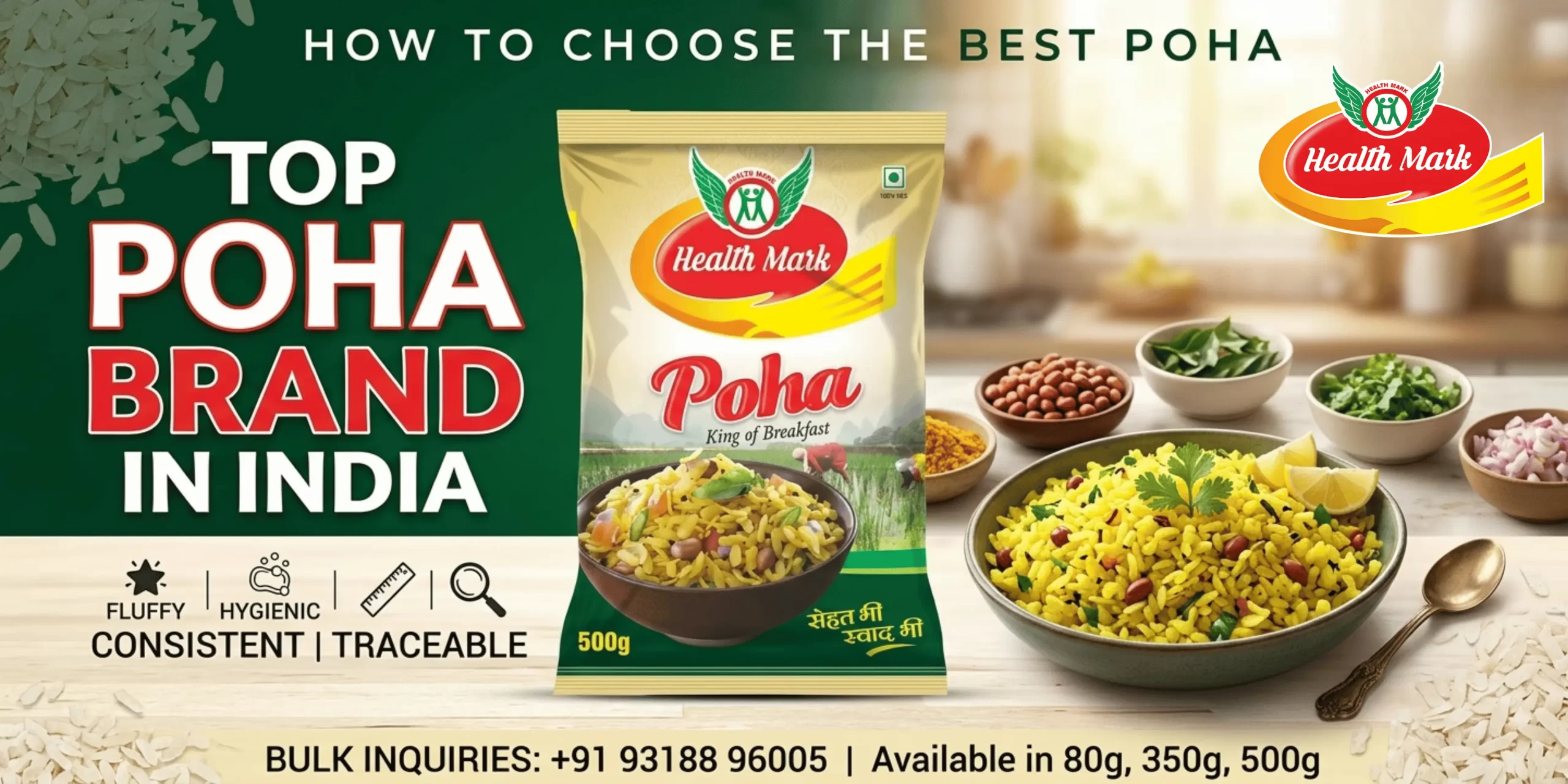
Walk into any Indian kitchen on a weekday morning and there’s a fair chance poha is either already in the pan or about to be. It’s fast, it’s forgiving of a rushed cook, and it somehow tastes like home no matter which state you’re in kanda poha in Maharashtra, chivda-style poha in Gujarat, or the tangy Madhya Pradesh version loaded with sev and lemon.
But here’s the catch most people don’t think about until their poha turns mushy or bland: not all flattened rice is created equal. The brand you pick decides whether your poha turns out light and fluffy or sticky and disappointing. That’s exactly why so many home cooks, hostel mess managers, and small restaurant owners are now searching for the top poha brand in India before they buy poha in bulk or even for a single family pack.
This guide walks you through everything how poha is graded, what separates premium quality poha from the average stuff sitting in loose sacks at the local kirana store, how to evaluate a supplier if you’re buying in bulk, and where Health Mark fits into that picture as a poha manufacturer built on hygiene, freshness, and consistency.
What Exactly Is Poha? A Quick Refresher
Poha, also called flattened rice or beaten rice, is made by parboiling paddy and then flattening it under heavy rollers. The process removes the husk while keeping most of the rice’s natural starch and nutrients intact. The result is a light, flaky grain that cooks in minutes once soaked or rinsed in water.
It’s not just breakfast food. Poha shows up as an evening snack, a festival offering, a travel-friendly tiffin item, and even a base for healthier versions of chivda and namkeen. Its versatility is a big reason poha remains one of the most consistently purchased packaged staples across Indian grocery stores, both online and offline.
Why Poha Deserves a Permanent Spot in Indian Kitchens
A few reasons poha has stayed relevant for generations, rather than fading out like many old-school staples:
- It cooks in under 10 minutes ideal for busy mornings or unexpected guests.
- It’s light on the stomach, making it a popular choice for people recovering from illness or watching their digestion.
- It pairs with almost anything peanuts, curry leaves, potatoes, pomegranate, sev, or even leftover vegetables.
- It’s naturally low in fat when prepared with minimal oil, which is why nutritionists often recommend it over deep-fried breakfast options.
- It has a long shelf life when packed correctly, making it a smart pantry staple for households and businesses alike.
That combination of speed, health value, and flexibility is exactly why demand for good quality poha not just any poha keeps climbing every year.
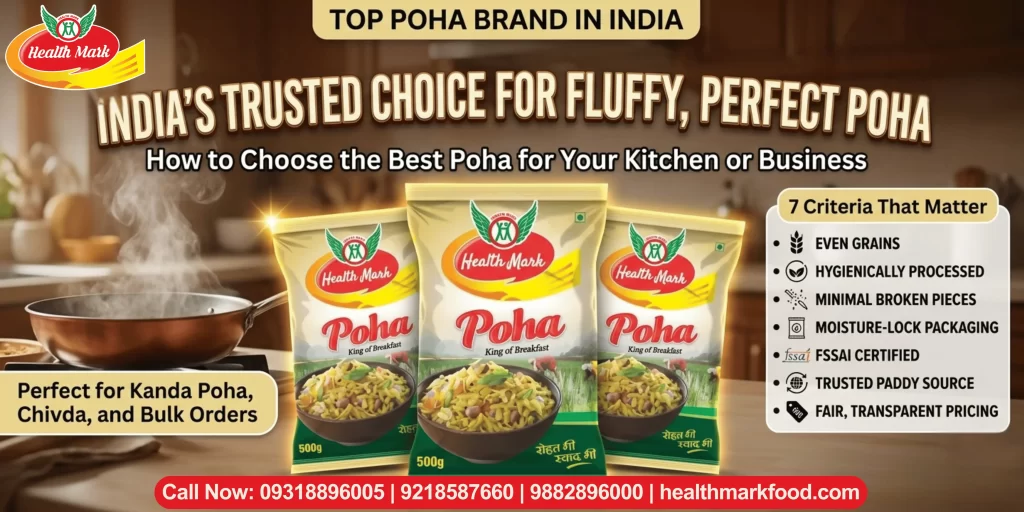
How to Judge the Best Poha Brand in India: 7 Criteria That Actually Matter
If you’ve ever compared two packets of poha side by side, you’ll notice they can look completely different one uniform and creamy white, the other broken, dusty, or unevenly colored. Here’s what separates the best poha from the rest.
a) Grain Uniformity
Good poha has evenly flattened, similarly sized flakes. Inconsistent sizes mean uneven cooking some pieces turn mushy while others stay hard.
b) Freshness and Processing Date
Poha absorbs moisture from the air over time, which affects texture. A brand that’s transparent about batch freshness and hygienic processing has an edge.
c) Minimal Broken Grains
A small percentage of broken flakes is normal, but excessive breakage usually points to poor-quality paddy or rough processing.
d) Packaging Quality
Proper sealed packaging protects poha from moisture, pests, and contamination a basic but often overlooked hygiene marker.
e) Certifications and Compliance
Look for FSSAI registration and other food-safety accreditations. This is non-negotiable if you’re sourcing for a restaurant, hostel, or retail shelf.
f) Consistent Sourcing
Reliable manufacturers source paddy from trusted regions and maintain the same quality batch after batch, which matters a lot if you’re a repeat bulk buyer.
g) Fair, Transparent Pricing
The best poha price isn’t necessarily the cheapest it’s the one that reflects genuine quality without unnecessary markup. Extremely low prices often signal compromised grain quality.
Meet Health Mark: A Trusted Name Among Poha Manufacturers
Among the growing list of poha manufacturers in India, Health Mark has built its reputation on a straightforward promise clean sourcing, hygienic processing, and consistent quality batch after batch.
Health Mark Poha is made from carefully selected, premium quality flattened rice grains that are processed under hygienic conditions to retain a soft texture and authentic taste. The flakes cook quickly, absorb spices and flavors well, and hold their shape instead of turning into a sticky mass a common complaint with lower-grade poha.
A few things that make Health Mark stand out as a poha brand worth considering:
- Premium quality flattened rice sourced with care and consistency
- Light, easily digestible texture suited for daily breakfast consumption
- Quick-cooking flakes that save time without compromising on softness
- Hygienically packed to lock in freshness from the factory to your kitchen
- Multiple pack sizes 80gm, 350gm, and 500gm so households and small retailers can pick what suits them
- Part of a broader trusted food portfolio, including atta, besan, pulses, spices, and other snacks, which reflects an established, accountable food business rather than a one-product seller
If you’re comparing options and want a poha brand that treats hygiene and grain quality as non-negotiable, Health Mark Poha is worth adding to your shortlist whether you need a small pack for home or you’re evaluating a top poha supplier in India for your business.
Types of Poha and Which One You Should Buy
| Poha Type | Thickness | Best Used For |
| Thin Poha | Very thin flakes | Chivda, quick namkeen mixes |
| Medium Poha | Standard thickness | Everyday kanda poha, most home recipes |
| Thick Poha | Heavier, denser flakes | Poha cutlets, poha khichdi, dishes needing more bite |
For most households making the classic breakfast version, medium poha like Health Mark’s hits the right balance between quick cooking and a satisfying texture that doesn’t fall apart during stirring.
Poha Nutrition at a Glance
| Nutrient (per 100g, approx.) | Amount |
| Calories | ~350 kcal |
| Carbohydrates | ~76g |
| Protein | ~6-7g |
| Fat | ~1g |
| Fiber | ~1-2g |
| Iron | Moderate, especially in fortified variants |
Poha’s low-fat, easily digestible profile is one reason dietitians frequently recommend it as part of a balanced Indian breakfast, especially when cooked with vegetables and minimal oil rather than deep-fried preparations.
Home-Made vs Branded Poha: A Fair Comparison
| Factor | Loose/Unbranded Poha | Branded Premium Poha (e.g., Health Mark) |
| Grain Consistency | Often uneven, mixed batches | Uniform, sorted flakes |
| Hygiene | Exposed to open-air handling | Sealed, hygienically packed |
| Shelf Life | Shorter, moisture-prone | Longer, protected packaging |
| Traceability | Rarely available | Traceable sourcing and processing |
| Price Transparency | Variable, negotiable | Fixed, transparent pricing |
| Best For | Occasional, small quantity use | Regular household use, bulk/business orders |
This isn’t to say loose poha is always bad but for anyone who buys poha regularly or in volume, the consistency of a trusted brand reduces the guesswork and the risk of a spoiled batch.
A Practical Guide to Buying Poha Online or Offline
Whether you’re a home cook or someone sourcing for a shop, here’s a simple checklist before you buy poha:
- Check the packaging date fresher stock cooks better and lasts longer.
- Look at the flake color it should be off-white to pale cream, not yellowish or dusty.
- Smell test (if buying loose) poha should smell neutral, not musty.
- Compare pack sizes to your usage smaller packs (like 80gm) work for trial purchases, while 350gm–500gm suit regular households.
- Verify FSSAI details on the packaging for food safety compliance.
- Ask about minimum order quantities if you’re purchasing for a business or event.
If you’d rather skip the guesswork entirely, ordering directly from an established brand’s product page or snacks category is usually the safer, faster route.
Bulk Poha for Restaurants, Caterers, and Retailers
If you run a restaurant, tiffin service, hostel mess, or retail store, sourcing decisions look different from a household buying one pack a month. Here’s what to prioritize when you’re looking for bulk poha or a long-term supply partner:
- Consistency across large orders a top poha supplier in India should deliver the same grain quality whether you order 10kg or 500kg.
- Competitive, transparent bulk pricing always ask for a rate card rather than negotiating blind.
- Reliable delivery timelines, especially important for businesses with daily kitchen demands.
- Direct communication channels a manufacturer who’s easy to reach for reorders, complaints, or custom packaging requests saves you real operational headaches.
- A track record as a best poha seller, not just a trader manufacturers who control their own processing tend to offer better consistency than middlemen.
Health Mark works with retailers, caterers, and institutional buyers looking for dependable, bulk poha supply, alongside its wider range of pulses, atta, besan, and other staples. For bulk or wholesale inquiries, you can reach the team directly:
If you’re specifically searching for the best wholesale poha near me in regions like Punjab, Chandigarh, Panchkula, or Baddi, Health Mark’s manufacturing base in Baddi, Himachal Pradesh, puts it within practical reach for buyers across North India.
Common Mistakes People Make While Buying or Cooking Poha
Even good poha can disappoint if a few basics are ignored. Watch out for these:
- Over-soaking the flakes poha only needs a quick rinse or brief soak, not a long dunk in water, or it turns mushy.
- Skipping the rinse-and-rest step draining excess water and letting the poha sit for a few minutes helps it soften evenly.
- Buying based on price alone the cheapest pack often means more broken grains and inconsistent cooking.
- Storing poha in a humid kitchen corner always keep it in an airtight container away from moisture.
- Ignoring the pack size vs consumption rate buying a large pack you won’t finish quickly can lead to staleness.
Expert Tips for the Fluffiest Poha, Every Time
- Rinse the flakes gently under running water in a strainer instead of soaking them in a bowl this prevents sogginess.
- Let the rinsed poha rest for 5–8 minutes before adding it to the pan; it softens naturally without turning sticky.
- Add poha to the pan only after the tempering (mustard seeds, curry leaves, onions) is fully cooked, then mix gently on low flame.
- A pinch of sugar and a good squeeze of lemon at the end balances the flavor profile in the classic Maharashtrian-style poha.
- For meal-prep purposes, lightly roast dry poha flakes and store them separately from wet ingredients if you’re prepping poha chivda for snacking.
FAQ
Q1. Which is the top poha brand in India for daily home use?
There are several regional and national poha brands available, but the right one for daily use depends on grain quality, hygiene standards, and consistency. Health Mark is a strong option for households looking for premium quality poha with dependable freshness and multiple pack size choices.
Q2. What is the best poha price range for a good quality pack?
Pricing varies by pack size, region, and processing quality, and it changes over time, so it’s best to check current rates directly on the product page or contact the seller for the latest pricing.
Q3. Is poha healthy for weight loss?
Poha is light, low in fat, and easy to digest, which makes it a commonly recommended breakfast for people managing their weight especially when prepared with vegetables and minimal oil instead of deep-fried additions.
Q4. How should poha be stored to keep it fresh longer?
Store poha in an airtight container in a cool, dry place away from direct sunlight and moisture. Once opened, reseal the packaging tightly or transfer it to a container to prevent it from turning stale or attracting pests.
Q5. What’s the difference between thin, medium, and thick poha?
Thin poha is typically used for chivda and quick snacks, medium poha is the standard choice for everyday breakfast dishes, and thick poha holds up better in recipes like poha cutlets or khichdi that need more texture.
Q6. Can poha be eaten by people with diabetes?
Poha has a moderate glycemic profile and is generally considered a better option than many fried breakfast foods, but portion size and preparation method matter. It’s best to consult a doctor or dietitian for personalized advice.
Q7. Where can I buy poha in bulk for my restaurant or shop?
For bulk or wholesale requirements, it’s best to contact a manufacturer directly rather than buying retail packs. Health Mark accepts bulk inquiries through phone at +91 93188 96005, +91 92185 87660, or +91 98828 96000.
Q8. How do I identify premium quality poha before buying?
Look for uniform flake size, minimal breakage, a pale cream color, hygienic sealed packaging, and visible FSSAI compliance details on the label.
Q9. Is Health Mark Poha suitable for both home and commercial use?
Yes. Health Mark Poha is available in 80gm, 350gm, and 500gm packs for household use, and the brand also caters to bulk and institutional buyers for commercial requirements.
Q10. How long does packaged poha typically stay fresh?
When stored properly in a sealed, airtight condition away from moisture, packaged poha generally stays fresh for several months, though it’s always best to check the manufacturing and best-before date on the specific pack.
Final Thoughts and Next Steps
Poha earns its place on Indian breakfast tables the honest way through speed, simplicity, and a texture that’s hard to dislike. But the experience really comes down to the flakes in your pack. Uneven, poorly processed poha turns a five-minute recipe into a frustrating one, while premium quality poha makes the whole process almost effortless.
Whether you’re restocking your kitchen pantry, comparing the best poha manufacturers in India for a small business, or looking to place a bulk poha order for your restaurant, it pays to choose a brand that treats hygiene, sourcing, and consistency seriously.
If you’d like to explore a poha option built around exactly those values, take a look at Health Mark Poha, browse the wider snacks range, or reach out directly for bulk and wholesale pricing at +91 93188 96005 / +91 92185 87660 / +91 98828 96000.