
If you run a sweet shop, a namkeen unit, a restaurant, or a grocery distribution business anywhere in North India, you already know one thing: sourcing besan isn’t as simple as picking any packet off a shelf. The moment you buy in bulk, texture, purity, and consistency stop being nice-to-haves and start being the difference between a batch of pakoras that turns out perfect and one that falls apart in the oil. That’s exactly why so many buyers spend hours searching for the top besan wholesale in Punjab rather than settling for the nearest supplier.
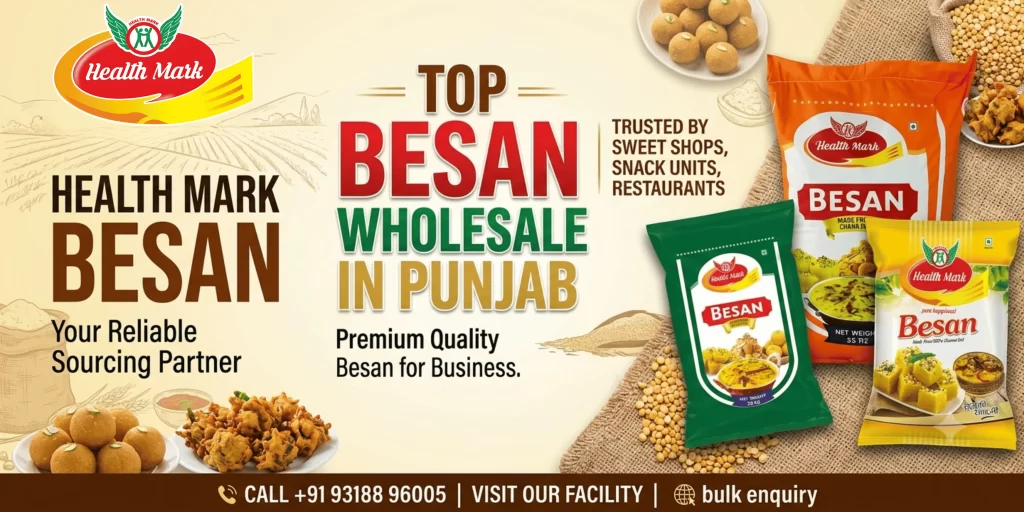
Punjab sits right in the middle of India’s chana (Bengal gram) belt, which makes it a natural hub for besan milling, packaging, and wholesale distribution. But “based in Punjab” alone doesn’t tell you whether a supplier grinds fresh, tests for purity, or packs hygienically. This guide walks through everything a serious buyer needs to know from what separates a good besan from a great one, to how pricing works, to the exact questions you should ask before placing a bulk order.
Along the way, we’ll also look at why Health Mark Besan has become a name that keeps coming up when buyers across Punjab, Chandigarh, Panchkula, Baddi, and Ludhiana talk about reliable besan sourcing.
What Is Besan and Why Does Punjab Matter So Much to India’s Besan Trade?
Besan, also called gram flour or chana flour, is made by finely milling dried Bengal gram (chana dal). It’s one of the most versatile ingredients in Indian kitchens used in everything from crispy pakoras and soft dhokla to kadhi, laddoos, and besan chilla. Because it’s a staple across nearly every Indian household and food business, demand for besan never really slows down.
Punjab’s role in this supply chain isn’t accidental. The state, along with neighboring regions, has strong agricultural infrastructure, established flour mills, and well-connected logistics routes running through Ludhiana, Chandigarh, and Baddi (in nearby Himachal Pradesh, just across the Punjab border). This combination is why so many besan manufacturers in India have built processing units in and around this belt proximity to raw material, skilled milling labor, and easy transport to Delhi NCR, Haryana, Himachal Pradesh, and beyond.
For a buyer, this matters practically. Sourcing from within or near Punjab typically means:
• Fresher stock, since transit time from mill to warehouse is shorter
• Lower freight costs compared to sourcing from distant states
• Easier access to manufacturers who can accommodate custom pack sizes for bulk orders
• Faster reorder cycles when your business needs consistent monthly supply
Why Buying From a Top Besan Wholesale Supplier in Punjab Makes Sense
Retail besan and wholesale besan serve very different needs. A homemaker buying a 500g pack cares about taste and a recent packing date. A business buying 50kg, 500kg, or a full truckload every month cares about all of that plus consistency across batches, price stability, documentation, and reliable delivery timelines.
Here’s what a genuinely top besan wholesale in Punjab supplier should bring to the table:
Consistent grind quality batch after batch, so your recipes don’t vary from month to month
Hygienic processing and packaging, ideally in a facility with proper food safety certification
Transparent pricing without hidden charges buried in the invoice
Flexible quantities from 25kg sacks for small food stalls to bulk pallet orders for larger units
Reliable dispatch and logistics, especially important for businesses running tight production schedules
Direct communication access, so you’re not stuck waiting days for a quote or an order update
If a supplier can’t confidently tick most of these boxes, it’s worth continuing your search rather than compromising on a product that goes directly into food your customers eat.
How to Identify the Best Besan Brand in India Before You Buy
With so many regional and national players claiming to be the best Besan brand in India, how do you actually separate genuine quality from clever packaging? A few practical checks go a long way.
1. Check the Raw Material Source
Premium besan starts with premium chana dal. Ask your supplier where their raw material is sourced from and whether it’s cleaned and graded before milling. Poor-quality dal leads to besan with a bitter aftertaste or inconsistent color.
2. Look at the Texture
Good besan should feel smooth and slightly powdery, not gritty or lumpy. If you’re buying in bulk for the first time, request a small sample before committing to a large order.
3. Smell Test
Fresh besan has a light, nutty aroma. Any sour, musty, or stale smell usually indicates old stock or improper storage a red flag, especially for wholesale quantities where you’re trusting the batch sight-unseen for weeks of production.
4. Verify Certifications
A credible manufacturer will be transparent about food safety compliance, such as registration with the Food Safety and Standards Authority of India (FSSAI), which regulates food manufacturing and packaging standards nationwide.
5. Ask About Batch Testing
Serious manufacturers test for moisture content, adulteration, and particle size consistency. This is often the biggest difference between a mass-market seller and a genuine premium quality besan producer.
Health Mark Besan: A Trusted Name Among Besan Manufacturers in India
Among the many besan manufacturer in India options available to bulk buyers, Health Mark has positioned itself as a brand built around purity, traceability, and consistent processing standards. Health Mark Besan range is prepared from carefully selected chana dal, finely milled to deliver a smooth texture and a rich, nutty flavor suited for both everyday cooking and festive preparations.
What tends to stand out for wholesale buyers is the brand’s approach to sourcing Health Mark works to trace its products back through the supply chain, giving business buyers more confidence about what’s actually going into their bulk order. The company operates out of an industrial facility in Baddi, with strong reach across Chandigarh, Panchkula, Ludhiana, and the wider Punjab belt, making it a practical option for buyers searching for a besan seller near me within this region.
Health Mark’s besan lineup includes multiple grind variants to match different culinary uses, which is particularly useful for businesses that need more than one texture for example, a sweet shop making besan laddoos alongside a snack unit frying pakoras.
Types of Besan You Can Buy in Wholesale (With Uses)
Not all besan is milled the same way, and choosing the right type matters as much as choosing the right supplier. Here’s a quick breakdown of common variants available in wholesale, including options offered under the Health Mark besan range:
| Besan Type | Texture | Best Used For |
| Fine Besan (Powder Besan) | Very smooth, fine powder | Dhokla, kadhi, besan chilla, batters |
| Bareek Besan | Fine, slightly coarser than powder besan | Pakoras, bhajiyas, snacks |
| Motichur / Mota Besan | Coarser grind | Motichur laddoo, boondi, traditional sweets |
| Standard Besan | Medium, all-purpose | General cooking, curries, thickening gravies |
Buying from a supplier that stocks multiple grind types under one roof saves logistics headaches instead of juggling different vendors for your snacks unit and your sweets unit, one top Besan supplier can serve both requirements.
Besan Price in India: What Affects the Rate You Pay
One of the most common questions bulk buyers ask is simply: what should besan actually cost? The honest answer is that Besan price in India fluctuates based on several factors, and any supplier quoting a fixed rate without context should be approached with a little caution.
Key factors that influence besan pricing:
Chana dal market rates since besan is milled directly from chana dal, seasonal crop yield and mandi prices have a direct impact
Grind quality and processing finer, more consistently milled besan typically costs more due to additional processing steps
Packaging type bulk sacks are generally more cost-effective per kg than smaller retail packs
Order volume most wholesale suppliers offer tiered pricing, where larger orders bring down the per-kg rate
Transport distance sourcing from a supplier based within Punjab or nearby regions can reduce freight costs compared to distant states
Certification and quality assurance FSSAI-registered, tested besan may carry a modest premium over uncertified stock, but it reduces business risk significantly
Because rates shift with the agricultural season, the most reliable approach is to request a current wholesale quote directly from your shortlisted supplier rather than relying on outdated online price lists.
Comparison Table: Retail Besan vs Wholesale Besan
| Factor | Retail Besan | Wholesale Besan |
| Typical Pack Size | 55g – 1kg | 25kg – bulk pallets |
| Price Per Kg | Higher | Lower (volume-based) |
| Buyer Profile | Households | Restaurants, sweet shops, snack units, distributors |
| Reorder Frequency | Occasional | Regular, scheduled |
| Supplier Relationship | Transactional | Ongoing, often with dedicated support |
| Customization | Limited | Often available (grind type, pack size) |
| Quality Consistency Needed | Moderate | Very high affects entire production batches |
Step-by-Step Guide to Placing a Bulk Besan Order
If you’re new to wholesale sourcing, here’s a straightforward process to follow:
Define your requirement. Decide on the grind type (fine, bareek, motichur, or standard), the monthly quantity you need, and your preferred pack size.
Shortlist 2–3 suppliers. Look for besan manufacturers with visible product information, certifications, and a physical facility address not just a listing with no verifiable details.
Request a sample. Any credible supplier offering premium quality besan should be willing to send a small sample before you commit to a bulk order.
Ask for current pricing. Since besan price shifts with the market, get a fresh quote rather than relying on old data.
Clarify delivery timelines and logistics. Confirm dispatch schedules, minimum order quantities, and delivery areas covered.
Place a trial order. Start with a moderate quantity before committing to a long-term supply contract.
Evaluate consistency. Check texture, aroma, and performance in your actual recipes across the trial batch.
Set up a recurring order cycle. Once satisfied, establish a regular ordering rhythm with your chosen supplier such as Health Mark’s sales team to avoid stock shortages.
Best Practices for Storing Besan After Bulk Purchase
Buying premium besan is only half the job storing it correctly protects that investment.
Store besan in a cool, dry place away from direct sunlight and moisture
Use airtight containers or resealable sacks to prevent humidity and pest exposure
Avoid stacking besan sacks directly on the floor; use pallets to allow airflow
Rotate stock on a first-in, first-out (FIFO) basis so older batches are used before newer ones
Keep besan away from strong-smelling items, since it can absorb odors easily
Check periodically for any signs of moisture clumping or unusual smell, especially during humid months
Common Mistakes Buyers Make When Sourcing Besan Wholesale
Choosing solely on price. The cheapest quote per kg often reflects lower-grade chana dal or reduced processing quality.
Skipping the sample stage. Committing to a large order without testing a sample first is one of the most avoidable mistakes.
Ignoring certification. Buying from unregistered or undocumented sources increases food safety risk for your business.
Overlooking storage conditions during transit. Besan exposed to moisture during transport can spoil before it even reaches your kitchen.
Not clarifying grind type. Ordering “besan” generically without specifying fine, bareek, or motichur can lead to a batch unsuitable for your specific recipes.
Relying on outdated price information. Since besan price is tied to agricultural market rates, always confirm current pricing before finalizing an order.
Expert Tips to Get the Best Besan Seller Near You
Search locally first a besan seller near me search often surfaces suppliers who can offer faster delivery and lower freight costs than distant vendors.
Prioritize suppliers who provide direct contact numbers rather than only web forms it usually signals faster, more personal service for wholesale queries.
Ask about minimum order quantities upfront so you’re not caught off guard by unexpectedly high thresholds.
Build a relationship with one primary supplier for consistency, while keeping a secondary option in mind for backup during peak demand seasons like festivals.
Visit the manufacturing facility if feasible, especially for larger, long-term supply agreements seeing hygiene practices firsthand builds real confidence.
Why Health Mark Besan Stands Out as a Premium Quality Besan Supplier
Pulling everything together, here’s why buyers across Punjab and neighboring regions consistently shortlist Health Mark when searching for a dependable besan partner:
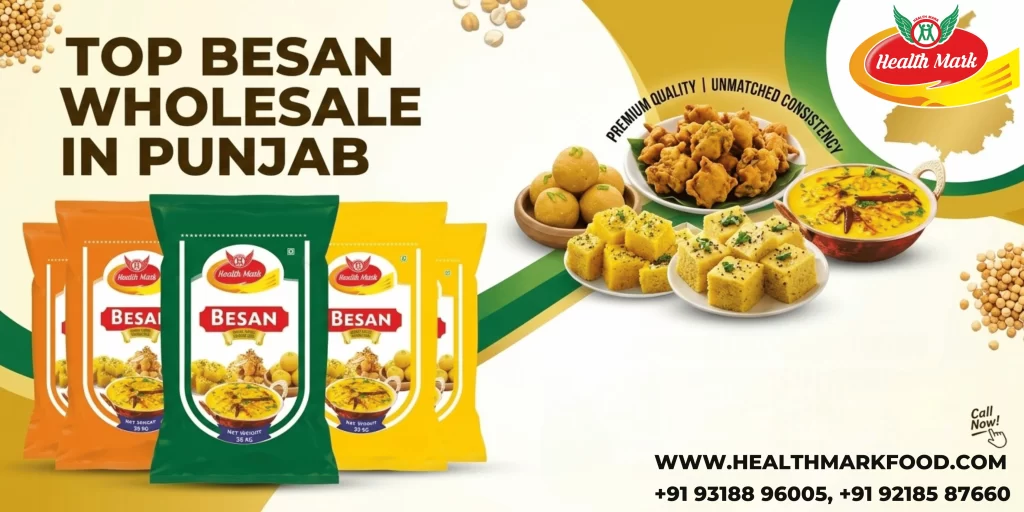
Multiple grind variants under one supplier, covering fine, bareek, and motichur besan for different culinary applications
Hygienically processed and packed product, designed to preserve freshness and purity from mill to kitchen
Regional accessibility, with a facility serving Chandigarh, Panchkula, Baddi, and Ludhiana efficiently
Direct sales access, with dedicated phone lines for wholesale and bulk order enquiries
A broader food product portfolio, including atta, pulses, spices, and more useful for businesses that prefer consolidating suppliers
For businesses evaluating the best health mark Besan options for their specific use case, browsing the full Besan product category is the fastest way to compare grind types and request a wholesale quote.
FAQ
1. What makes a supplier the top besan wholesale in Punjab?
A genuine top wholesale besan supplier in Punjab combines consistent grind quality, hygienic processing, transparent and current pricing, flexible order quantities, and reliable delivery timelines. Certification and a verifiable physical facility add further confidence for bulk buyers.
2. How is besan price determined in India?
Besan price is largely influenced by chana dal market rates, processing and grind quality, packaging type, order volume, and transport distance. Because chana dal is an agricultural commodity, prices can shift with the season, so it’s best to request a current quote rather than relying on old pricing data.
3. What is the difference between bareek besan and motichur besan?
Bareek besan has a fine texture, ideal for pakoras and bhajiyas, while motichur (mota) besan has a coarser grind, traditionally used for motichur laddoos and boondi-based sweets.
4. How can I identify the best Besan brand in India for my business?
Look at raw material sourcing, texture and aroma, certification (such as FSSAI registration), and willingness to provide a sample before a bulk order. A brand that’s transparent about its processing standards is generally a safer long-term choice.
5. Is Health Mark Besan suitable for both sweets and snacks?
Yes. Health Mark offers multiple besan variants, including fine, bareek, and motichur grinds, which cover a wide range of applications from crispy pakoras to traditional sweets like laddoos.
6. What is the minimum quantity for a wholesale besan order?
Minimum order quantities vary by supplier and business type. It’s best to contact the supplier’s sales team directly to confirm current minimum order thresholds and available pack sizes for bulk purchase.
7. How should besan be stored after a bulk purchase?
besan in a cool, dry place in airtight containers, away from direct sunlight and moisture. Use pallets to keep sacks off the floor, and follow a first-in, first-out rotation to maintain freshness across your stock.
8. Why buy besan from a Punjab-based supplier instead of other states?
Punjab and its surrounding belt have strong agricultural and milling infrastructure, which often translates to fresher stock, shorter transit times, and lower freight costs for buyers located in North India.
9. Can I request a sample before placing a bulk besan order?
Most credible besan manufacturers, including reputable brands in this space, are willing to provide a sample so you can evaluate texture, aroma, and performance in your own recipes before committing to a larger order.
10. How do I contact Health Mark for wholesale besan pricing?
You can reach Health Mark’s sales team directly at +91 93188 96005, +91 92185 87660, or +91 98828 96000, or browse their Besan product category for more details before placing an enquiry.
Conclusion
Finding the top besan wholesale in Punjab isn’t about picking the first supplier that shows up in a search it’s about verifying grind quality, hygiene standards, transparent pricing, and reliable delivery before you commit your business to a long-term supply relationship. Whether you’re stocking a sweet shop, running a snacks unit, or supplying a distribution network, the right besan partner directly impacts the consistency of what leaves your kitchen.
If you’re ready to compare options, explore Health Mark Besan range or reach out to their sales team at +91 93188 96005, +91 92185 87660, or +91 98828 96000 for current wholesale pricing and bulk order details.