
If your kadhi continues to be lumpy, overly sour, or thin, rather than the silky, restaurant-style texture you want, the issue is likely with your besan. Kadhi is one of those seemingly basic dishes in which the quality of a single ingredient determines whether you get a smooth, tangy, soothing curry or a grainy, uneven disappointment.
Every home cook eventually asks the same question: which besan works best for kadhi? The honest answer is that not all gram flour is the same. The fineness of the grind, purity of the chana dal, freshness, and even how the besan was stored before it arrived in your kitchen all have an impact on how it behaves when whipped into curd and cooked.
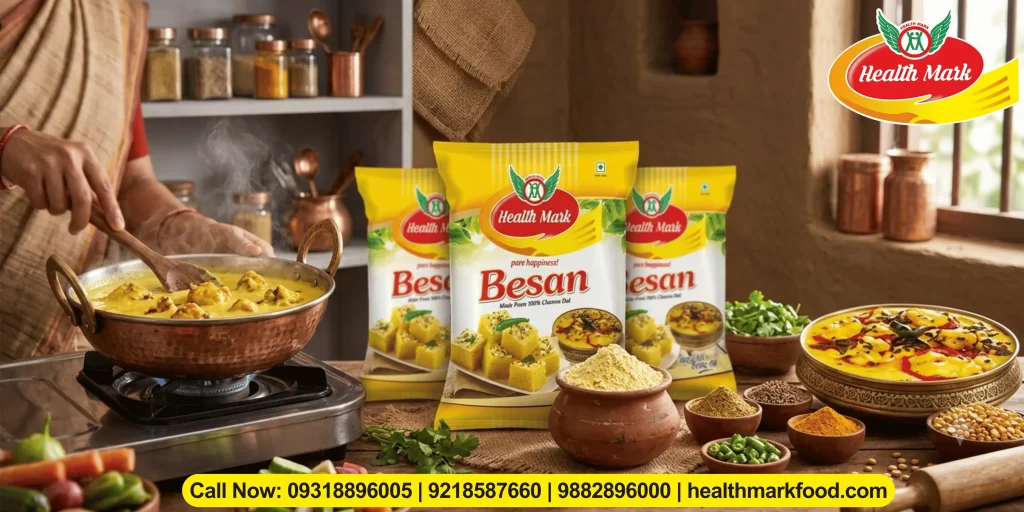
In this guide, we’ll break down exactly what makes besan “kadhi-ready,” how to test quality before you buy, the difference between fine besan and mota besan, step-by-step tips for a lump-free kadhi, and how to choose a best besan brand in India you can trust for both taste and consistency.
Why Besan Quality Makes or Breaks Your Kadhi
Kadhi is essentially a whisked mixture of besan, curd, and water, slow-cooked until it thickens into a smooth, tangy curry. Because besan is doing most of the structural work here thickening the liquid and binding the pakoras or dumplings even small differences in the flour show up immediately in the final dish.
Poor-quality or stale besan tends to:
• Form stubborn lumps that don’t dissolve fully, even after vigorous whisking.
• Carry a raw, slightly bitter aftertaste if the chana dal wasn’t cleaned or roasted properly.
• Turn dull or greyish instead of the appetizing golden-yellow colour good kadhi should have.
• Thicken unevenly, leaving some spoonfuls watery and others pasty.
• Smell musty or oily if it’s been sitting on a shelf too long or was poorly packaged.
On the other hand, fresh, finely milled, pure chana dal besan blends smoothly with curd, cooks evenly, and gives kadhi its signature silky mouthfeel and natural aroma no shortcuts required. That’s why, before you even touch your recipe, choosing the right besan is the first and most important step.
What Makes the Best Besan for Kadhi
Not every packet labelled “gram flour” is suitable for kadhi. Here’s what genuinely matters.
Fineness of Grind
Kadhi needs besan that dissolves into curd without leaving grainy specks behind. A finely milled, barik-style besan disperses evenly and creates that smooth base kadhi is known for. Coarser besan (mota besan) is better suited to laddoos and sweets, where a grainy bite is actually desirable.
100% Pure Chana Dal No Fillers
Some cheaper besan is blended with other pulses or starches to cut costs. This affects both taste and how the flour thickens. Always check the label for besan made from 100% chana dal with no added fillers, as this directly impacts protein content, flavour, and how predictably it behaves when cooked.
Natural Colour and Aroma
Good besan has a vibrant, natural golden-yellow colour and a mild, nutty aroma. If the flour looks pale, greyish, or smells flat and oily, it’s likely old stock or has been stored incorrectly.
Freshness and Packaging
Besan absorbs moisture and odours easily. Flour packed in hygienic, moisture-resistant packaging retains its freshness far longer than loose or poorly sealed stock, and freshness is exactly what prevents that lumpy, uneven texture in kadhi.
Consistency Across Batches
If you cook kadhi regularly, batch-to-batch consistency matters more than most people realise. A best besan brand in India worth trusting will deliver the same texture, colour, and taste pack after pack not a lottery every time you restock.
Fine Besan vs Mota Besan vs Roasted Besan Which One for Kadhi?
Besan isn’t a single, uniform product. Different grinds and preparations are suited to different dishes. Here’s how they compare for kadhi specifically:
| Besan Type | Texture | Best Used For | Good for Kadhi? |
| Fine / Barik Besan | Smooth, finely milled powder | Kadhi, pakora batter, dhokla, chilla | Yes ideal choice |
| Mota (Coarse) Besan | Grainy, slightly textured | Laddoos, boondi, halwa | Not ideal leaves grainy texture |
| Roasted Besan | Fine, pre-toasted, nutty aroma | Sattu drinks, quick sweets, baking | Usable, but changes kadhi’s flavour profile |
| Motichur / Boondi-Grade Besan | Very fine, specially milled | Motichur laddoo, boondi pearls | Not recommended for kadhi |
For kadhi, finely milled besan is non-negotiable. It’s the texture that whisks smoothly into curd without needing to be sieved first, and it’s what gives restaurant-style kadhi its signature velvety consistency.
Step-by-Step: How to Make Lump-Free, Restaurant-Style Kadhi
Even with the best besan, technique matters. Follow these steps for consistently smooth results:
1. Whisk besan and curd together first, before adding any water. Use slightly sour, room-temperature curd for the best tang.
2. Add water gradually, whisking continuously so no dry pockets of besan remain. A hand whisk or blender works better than a spoon here.
3. Strain the mixture through a sieve if you notice any tiny lumps this step is rarely needed with fine, fresh besan.
4. Cook on low to medium heat, stirring frequently. Besan needs slow, steady cooking to lose its raw taste without curdling the curd.
5. Simmer for at least 20–25 minutes after it starts bubbling, stirring occasionally, until the kadhi visibly thickens and turns glossy.
6. Prepare the tempering (tadka) separately with ghee, mustard seeds, cumin, curry leaves, and dried red chillies, and pour it over the kadhi just before serving.
7. Adjust consistency at the end, not the start kadhi thickens further as it cools, so keep it slightly thinner than your target consistency while it’s on the flame.
Common Mistakes That Ruin Kadhi (and How Besan Choice Fixes Them)
• Using stale or old besan: Besan loses its aroma and thickening ability over time. Always check the packing date and buy from a brand with high turnover.
• Skipping the whisking step: Adding besan directly to hot liquid almost guarantees lumps, regardless of flour quality.
• Cooking on high heat: This cooks the outside of the besan particles before the inside is done, leaving a raw taste.
• Choosing coarse besan for convenience: Mota besan may be cheaper or more available, but it was never designed for a smooth, whisked curry like kadhi.
• Ignoring the smell test: Musty or oily-smelling besan is a clear sign of poor storage or age no recipe technique can fix that.
• Buying unbranded, loose besan without traceability: You lose visibility into sourcing, hygiene, and purity, all of which affect both taste and safety.
How to Test Besan Quality at Home Before You Buy (or After)
You don’t need a lab to judge besan quality. A few simple checks tell you most of what you need to know:
• Colour check: Fresh besan is a vibrant golden-yellow. Dull, pale, or greyish flour usually means it’s old or poorly processed.
• Smell test: It should smell mildly nutty and fresh. Any sour, musty, or oily smell signals spoilage or poor storage.
• Touch test: Rub a pinch between your fingers. Fine besan should feel smooth and powdery, not gritty or damp.
• Water test: Mix a small spoon of besan with water. It should dissolve into a smooth paste without leaving hard lumps or excess residue.
• Taste test: A tiny raw pinch should taste mildly earthy and slightly sweet never bitter or chemical.
What Sets a Premium, Best Besan Brand in India Apart
With so many options on shelves and online marketplaces, it helps to know what actually separates a genuinely premium besan brand from an average one. Look for:
• 100% chana dal sourcing with no blended fillers or artificial colouring.
• Modern, hygienic milling facilities with multiple quality checks per batch.
• Consistent fineness and colour across every pack you buy, month after month.
• Moisture-resistant, food-grade packaging that protects freshness during transport and storage.
• Transparent sourcing and a manufacturer you can actually contact not just a label.
• A track record with both households and commercial kitchens, since chefs and halwais tend to be far less forgiving of inconsistent flour.
These are exactly the standards to check for whether you’re buying loose besan from a local store or comparing packaged options while searching for the best besan price online.
Why Health Mark Besan Works So Well for Kadhi
This is exactly where
Health Mark besan was built to perform. Milled from 100% premium chana dal using traditional techniques, it’s designed to retain natural aroma, smooth texture, and essential nutrients the three things that matter most when you’re whisking besan into curd for kadhi.
A few reasons home cooks and commercial kitchens alike reach for it:
• Fine, smooth texture: The Barik Besan variant is specifically suited to batters and whisked preparations like kadhi, pakoras, and dhoklas, dissolving cleanly without leaving grit behind.
• Purity assured: Made from 100% chana dal with no fillers, so the flavour and thickening behaviour stay predictable every time you cook.
• Consistency batch after batch: Whether you’re an occasional home cook or run a kitchen that goes through besan daily, you get the same texture and taste pack after pack no surprises.
• Hygienic packaging: Sealed to protect against moisture and dust, which is exactly what keeps besan fresh enough to whisk smoothly into kadhi weeks after purchase.
• Bulk options available: For restaurants, sweet shops, and caterers who need a reliable wholesale besan supplier, Health Mark offers bulk packs alongside retail-sized ones.
You can browse the full range on the Health Mark besan product page, or explore the wider selection of pantry staples on the

Expert Tips for Consistent, Restaurant-Style Kadhi Every Time
• Always use fresh, finely milled besan check the pack date before buying in bulk.
• Whisk besan and curd into a completely smooth paste before adding water or heat.
• Cook low and slow; kadhi needs at least 20–25 minutes to lose its raw besan taste.
• Store your besan in an airtight container away from moisture and direct sunlight.
• Buy only as much loose besan as you’ll use within a few weeks packaged besan with sealed, food-grade packaging holds freshness far longer.
• If you cook kadhi often, keep a dedicated pack of fine besan separate from the mota besan you use for sweets.
FAQ
Q. Which besan is best for kadhi fine or coarse?
Fine, finely milled besan (often labelled barik besan) is best for kadhi. It dissolves smoothly into curd without leaving grainy lumps, which is exactly the texture kadhi needs.
Q. Can I use roasted besan for kadhi?
You can, but it will change the flavour slightly, adding a toasted, nutty note. Most traditional kadhi recipes use plain (unroasted) fine besan for a milder, tangier profile.
Q. Why does my kadhi always turn out lumpy?
Lumps usually come from adding besan directly into hot liquid, using coarse or stale flour, or not whisking it fully with curd before adding water. Switching to fresh, fine besan and whisking thoroughly before cooking solves this in most cases.
Q. How can I tell if besan is fresh before buying?
Check the colour (should be bright golden-yellow, not dull or grey), the smell (mildly nutty, never musty or oily), and the packing date on the label. Buying from a reliable, best besan manufacturing brand with good packaging also reduces the risk of stale stock.
Q. Is besan good for health, or should I be cautious about how much I use in kadhi?
Besan is naturally gluten-free, rich in protein and fibre, and can support digestion and steady blood sugar when eaten in moderation. Kadhi made with curd and besan is generally a wholesome, protein-rich addition to a balanced meal.
Q. What is the difference between besan and other gram flours?
Besan is specifically gram flour made from ground chana dal (split Bengal gram). Some products blend chana dal with other pulses, which is why checking for 100% chana dal on the label matters if you want authentic taste and texture.
Q. Can I make kadhi with mota besan if that’s all I have?
Yes, but expect a slightly grainier texture. Whisking it more thoroughly and straining the mixture before cooking can help minimise the difference, though fine besan will still give smoother results.
Q. How should I store besan to keep it fresh for kadhi?
Keep it in an airtight container, away from direct sunlight and moisture. Well-packaged besan, like Health Mark’s moisture-resistant packs, naturally stays fresher for longer even before you open it.
Q. Where can I buy good quality besan online in India?
You can order premium, finely milled besan directly from the Health Mark besan product page, with both retail and bulk pack options available for households and commercial kitchens.
Conclusion: Get the Besan Right, and the Kadhi Follows
Kadhi rewards good ingredients more than almost any other everyday Indian dish. Once you start using fresh, finely milled, 100% chana dal besan, you’ll notice the difference immediately smoother texture, richer colour, and a cleaner, more balanced tang without any raw aftertaste.
If you’re ready to try it for yourself,
Health Mark Besan is milled specifically to give you that fine, consistent texture kadhi needs, whether you’re cooking for your family or running a commercial kitchen that can’t afford inconsistent flour.
For bulk orders, wholesale pricing, or questions about the best besan for your kitchen, reach out to the Health Mark team directly:
• Call: 09318896005
• Call: 09218587660
• Call: 09882896000