
If there’s one meal that brings back memories of your mother’s cuisine, it’s besan kadhi pakora. The spicy, golden-yellow curry with crunchy pakoras bobbing inside, served hot over steaming rice, is comfort food at its best. However, many home cooks struggle with it. The kadhi splits. The pakoras become soggy. The taste becomes either excessively sour or too bland.
The truth is, an authentic besan kadhi pakora recipe isn’t complicated once you understand a few fundamentals and it all starts with the quality of besan (gram flour) you use. In this guide, we’ll walk through every step of making restaurant-style kadhi pakora at home, the science behind why kadhi curdles, expert tips from Punjabi and Rajasthani kitchens, and how choosing the best besan makes all the difference to your final dish.
Whether you’re a beginner cook or someone who’s made kadhi a hundred times but wants to perfect it, this article has you covered.
What Is Besan Kadhi Pakora?
Besan kadhi pakora is a North Indian curry made by simmering spiced, whisked yogurt and gram flour until it thickens into a smooth, tangy gravy, then adding crispy besan fritters (pakoras) just before serving. The dish is popular in Punjab, Rajasthan, Uttar Pradesh, and Haryana, with variations depending on the area.
At its core, kadhi pakora relies on two things: fermented or sour curd (yogurt) for tang, and besan for both the curry’s body and the pakoras’ crunch. This is exactly why the quality of besan you cook with directly affects how the final dish tastes, thickens, and holds together.
Why Besan Quality Matters So Much in Kadhi Pakora
Not all besan is created equal, and this matters more in kadhi pakora than in almost any other besan dish. Here’s why:
- Texture of the kadhi: Coarsely ground or adulterated besan leaves a grainy, chalky mouthfeel in the curry, no matter how long you cook it.
- Pakora crispiness: Besan with the wrong protein-to-starch ratio absorbs excess oil and turns limp instead of crisp.
- Color and aroma: Fresh, high quality besan made from good chana dal gives kadhi its characteristic light golden hue and a mild, nutty aroma. Old or low-grade besan can taste bitter or musty.
- Thickening consistency: Because besan is the primary thickener in kadhi, its starch content determines whether your curry turns silky or lumpy.
This is why experienced cooks and commercial kitchens are particular about sourcing besan from a trusted besan supplier in India rather than picking up any packet off the shelf. If you want consistent results every single time, starting with high premium quality besan genuinely changes the outcome.
Ingredients You’ll Need
For the Pakoras
| Ingredient | Quantity |
| Besan (gram flour) | 1 cup |
| Onion, finely chopped | 1 medium |
| Green chili, chopped | 1 |
| Ajwain (carom seeds) | ½ tsp |
| Red chili powder | ½ tsp |
| Salt | To taste |
| Water | As needed for batter |
| Oil | For deep frying |
For the Kadhi
| Ingredient | Quantity |
| Sour curd (yogurt) | 1.5 cups |
| Besan | 4 tbsp |
| Water | 3–4 cups |
| Turmeric powder | ½ tsp |
| Red chili powder | ½ tsp |
| Salt | To taste |
For the Tempering (Tadka)
| Ingredient | Quantity |
| Ghee or oil | 2 tbsp |
| Cumin seeds | 1 tsp |
| Mustard seeds | ½ tsp |
| Fenugreek seeds (methi) | ¼ tsp |
| Dried red chilies | 2 |
| Curry leaves | 8–10 |
| Asafoetida (hing) | A pinch |
| Ginger-garlic paste | 1 tsp |
How to Make Besan Kadhi Pakora Recipe Step by Step
Making kadhi pakora comes down to three connected stages: frying the pakoras, cooking the kadhi base, and bringing everything together with a tadka. Let’s go through each one properly.
Step 1: Making the Perfect Besan Pakoras
- In a mixing bowl, combine besan, chopped onions, green chili, ajwain, red chili powder, and salt.
- Add water gradually, whisking continuously, until you get a thick but scoopable batter (similar to a thick pancake batter, not runny).
- Whisk the batter briskly for 2–3 minutes in one direction. This incorporates air and makes the pakoras fluffier.
- Heat oil in a kadhai on medium flame. Drop small spoonfuls of batter into the hot oil.
- Fry until golden brown and crisp, turning occasionally, for about 4–5 minutes.
- Remove and drain on paper towels. Set aside you’ll soak these into the kadhi later.
Tip: Fry the pakoras on medium heat, not high. High heat browns them too fast on the outside while leaving the inside undercooked and dense.
Step 2: Preparing the Kadhi Base
- In a large bowl, whisk the sour curd until smooth and lump-free.
- Add besan to the curd and whisk again thoroughly, making sure there are absolutely no lumps. This step is the single most important factor in preventing curdling.
- Gradually add 3–4 cups of water while whisking, to form a smooth, thin, pourable mixture.
- Add turmeric powder, red chili powder, and salt. Mix well.
- Transfer this mixture to a heavy-bottomed pan and place it on low-medium heat.
- Keep stirring continuously for the first 8–10 minutes. This is critical if you walk away in these initial minutes, the curd is likely to split.
- Once it starts to gently bubble, reduce the heat to low and let it simmer for 20–25 minutes, stirring occasionally, until the kadhi thickens to a smooth, pourable consistency that coats the back of a spoon.
Step 3: Tempering (Tadka) and Final Assembly
- In a small pan, heat ghee or oil.
- Add cumin seeds and mustard seeds; let them splutter.
- Add fenugreek seeds, dried red chilies, curry leaves, and asafoetida.
- Add ginger-garlic paste and sauté for 30 seconds until fragrant.
- Pour this tempering over the simmering kadhi and mix well.
- Add the fried pakoras into the kadhi about 5–10 minutes before serving, so they soak up the flavor without turning mushy.
- Simmer for another 5 minutes and turn off the heat. Garnish with fresh coriander leaves.
Serve hot with steamed rice or jeera rice, and your besan kadhi pakora recipe is ready.
Pro Tips for a Smooth, Non-Curdled Kadhi
- Use sour curd, not fresh curd. Slightly aged, tangy curd gives kadhi its authentic taste and also reacts better with besan for thickening.
- Whisk besan and curd together before heating, never add besan directly to hot liquid it will clump immediately.
- Stir constantly in the first 10 minutes. This is when curdling risk is highest, before the besan has had a chance to stabilize the mixture.
- Cook on low-medium flame. High heat causes the proteins in curd to separate from the water, resulting in a broken, watery kadhi.
- Don’t cover the pan while simmering. Trapped steam can cause condensation to drip back and disturb the consistency.
- Use fresh, finely milled besan. Coarse or old besan doesn’t dissolve smoothly and leaves a raw, starchy aftertaste even after long cooking.
Common Mistakes to Avoid
| Mistake | Why It Happens | How to Fix It |
| Kadhi turns lumpy | Besan added without proper whisking | Always whisk besan into curd first, strain if needed |
| Kadhi tastes raw/starchy | Not simmered long enough | Simmer at least 20–25 minutes on low flame |
| Pakoras go soggy | Added too early or kadhi too thin | Add pakoras only in the last 5–10 minutes |
| Curry splits/curdles | High heat or curd too fresh | Use sour curd, cook on low-medium heat, stir often |
| Bland taste | Low-quality or old besan | Use fresh, |
| Excess oil in pakoras | Oil not hot enough or batter too thin | Maintain medium-hot oil; keep batter thick |
Regional Variations of Kadhi Pakora
Kadhi pakora isn’t a single fixed recipe it changes character as you travel across India:
- Punjabi Kadhi Pakora: Rich, tempered heavily with ghee, cumin, and sometimes a dollop of butter on top. Slightly thicker consistency.
- Rajasthani Kadhi: Thinner, spicier, often made without pakoras, using just besan and buttermilk with a strong tempering of red chilies and fenugreek.
- Sindhi Kadhi: A completely different, tomato-based besan curry with vegetables no yogurt at all.
- Gujarati Kadhi: Sweeter and milder, often flavored with a touch of jaggery and fewer spices, served slightly thinner.
Understanding these variations helps you tweak the base besan kadhi pakora recipe to match your family’s taste preference.
Nutritional Benefits of Besan Kadhi Pakora
Besan itself is a nutrient-dense ingredient, which is part of why kadhi pakora remains a wholesome comfort food rather than empty calories:
- High in plant protein: Besan is made from chana dal (Bengal gram), making it naturally protein-rich, useful for vegetarian diets.
- Good source of fiber: Helps with digestion and provides satiety.
- Naturally gluten-free: Besan is a popular gluten-free flour alternative.
- Rich in folate and iron: Chana dal-based flour contributes to daily micronutrient intake.
- Curd adds probiotics: The fermented yogurt base supports gut health when kadhi is made with well-soured curd.
Of course, these benefits are only as good as the ingredient quality using high quality besan ensures you’re getting a cleaner nutrient profile without additives or blended low-grade flour.
How to Choose the Best Besan for Kadhi and Pakora
Since besan is the backbone of this recipe, here’s what to actually check before you buy:
- Color: Good besan is pale yellow, not dull grey or overly bright. An unnaturally bright yellow can indicate added color.
- Smell: Fresh besan smells mildly nutty and earthy. A sour, musty, or rancid smell means it’s stale or improperly stored.
- Texture: Rub a pinch between your fingers it should feel fine and smooth, not gritty.
- Taste test: A tiny raw taste should be mildly sweet-nutty, never bitter.
- Source and processing: Buying from an established besan supplier in India that follows hygienic milling and packaging standards reduces the risk of adulteration or contamination.
- Packaging date: Always check the packing date fresher stock performs far better in both kadhi and pakoras.
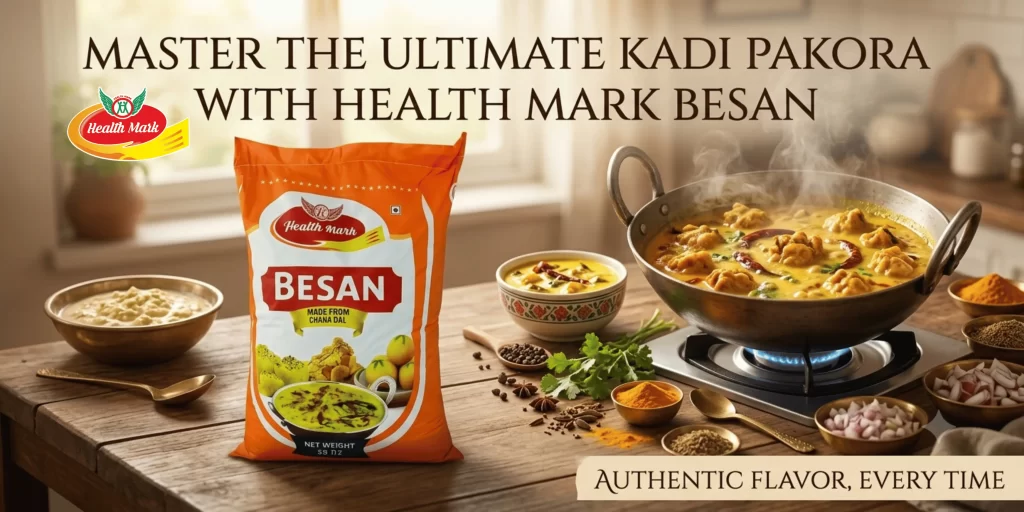
If you cook kadhi pakora often, it’s worth ordering directly from a specialized supplier rather than generic supermarket stock, so you consistently get besan milled specifically for Indian recipes like pakora, dhokla, and kadhi.
Comparison: Types of Besan and Their Best Uses
| Type of Besan | Texture | Best For |
| Fine Besan (Powder Besan) | Very smooth, powdery | Kadhi, sweets, dhokla batter |
| Bareek Besan | Fine, slightly coarser than powder | Everyday cooking, pakoras, curries |
| Mota/Motichur Besan | Coarser grind | Boondi, motichur laddoo, certain snacks |
| Roasted Besan | Pre-roasted, nuttier flavor | Quick sweets, direct-mix recipes |
For besan kadhi pakora specifically, a fine to medium-fine grind works best smooth enough to dissolve seamlessly into the curd for the kadhi, yet sturdy enough to hold structure in the pakora batter.
Serving Suggestions and Pairings
Besan kadhi pakora is traditionally a comfort meal, and pairs beautifully with:
- Steamed basmati rice or jeera rice
- Boondi raita or plain cucumber raita
- Papad, roasted or fried
- A side of simple aloo sabzi
- Pickled mango or lime achar
- Fresh sliced onions with a wedge of lemon
For a complete Punjabi-style thali experience, serve kadhi pakora alongside a simple dal, roti, and a small bowl of ghee-tempered rice.
Storage and Reheating Tips
- Refrigeration: Kadhi pakora stays fresh in the refrigerator for up to 2 days in an airtight container.
- Reheating: Reheat gently on low flame, stirring frequently, and add a splash of water if it has thickened too much. Avoid boiling vigorously, as this can cause the curd base to split.
- Pakora texture after storage: Pakoras soften significantly after storage since they’ve absorbed the kadhi. If you prefer crisper pakoras, store them separately and add fresh ones when reheating.
- Freezing: Not recommended the yogurt-besan base tends to separate and lose its texture after thawing.
Where to Buy High-Quality Besan Online in India
Since the outcome of your besan kadhi pakora recipe depends heavily on the flour you use, sourcing it right matters as much as following the steps correctly.
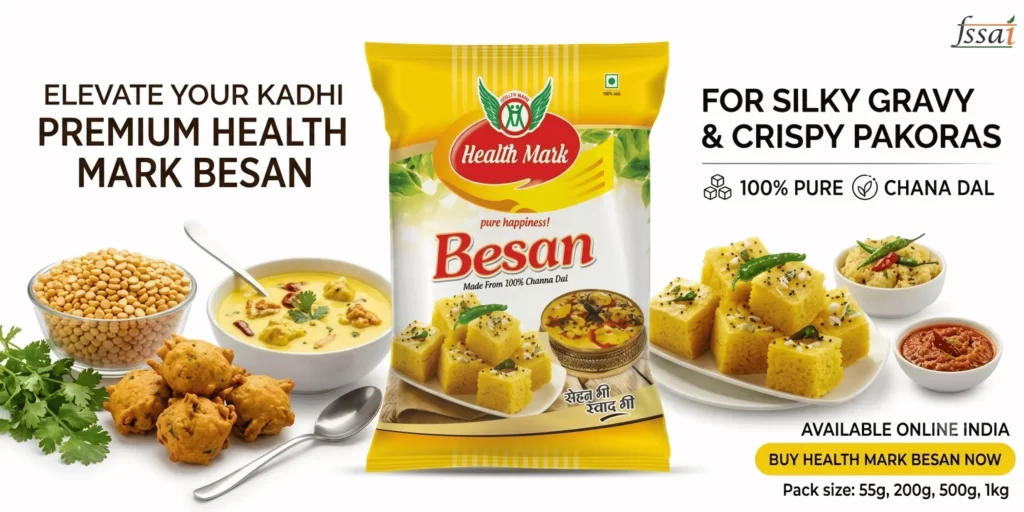
Health Mark offers finely milled, hygienically processed besan made from carefully selected chana dal ideal for kadhi, pakoras, dhokla, and other traditional Indian recipes. You can explore:
- Buy Besan Online India – Health Mark Besan Product Page available in multiple pack sizes including 55gm, 200gm, 500gm, and 1kg, so you can check besan price 1 kg and choose what suits your kitchen or bulk requirement.
- Browse the Full Besan Category including Bareek Besan, Motichur/Mota Besan, and Powder Besan, so you can pick the right grind for kadhi, pakora, or sweets.
- Health Mark Homepage explore the full range of atta, pulses, spices, and other kitchen staples.
If you’re a restaurant, sweet shop, caterer, or retailer looking for bulk supply or the best price besan powder, Health Mark also caters to wholesale and B2B requirements as a trusted besan supplier in India. You can reach the sales team directly at:
FAQ
Q1. Why does my besan kadhi curdle while cooking?
Kadhi typically curdles when besan isn’t whisked properly into the curd before heating, or when it’s cooked on high flame without regular stirring, especially in the first 10 minutes. Using sour curd and cooking on low-medium heat while stirring frequently prevents this.
Q2. Can I make kadhi pakora without curd?
Traditional Punjabi and Rajasthani kadhi relies on sour curd for its signature tang and thickening. Some regional versions, like Sindhi kadhi, use a tomato base instead, but that changes the flavor profile entirely and isn’t the classic besan-curd kadhi.
Q3. What is the ideal besan-to-curd ratio for kadhi?
A general guide is about 3–4 tablespoons of besan per 1.5 cups of curd, adjusted with water to reach a thin, pourable consistency before cooking. This ratio gives a smooth, well-thickened kadhi without making it overly starchy.
Q4. How long should kadhi be simmered?
At least 20–25 minutes on low flame after it starts bubbling. This allows the raw besan taste to cook out completely and lets the kadhi thicken to the right consistency.
Q5. Why are my pakoras soggy in the kadhi?
Pakoras turn soggy if added too early or left simmering for too long. Add them in the last 5–10 minutes of cooking so they soak up flavor while retaining some texture.
Q6. Does the quality of besan really affect the taste of kadhi pakora?
Yes, significantly. High quality besan dissolves smoothly, has a fresh nutty aroma, and doesn’t leave a raw or bitter aftertaste, all of which directly affect the final texture and flavor of both the kadhi and the pakoras.
Q7. Can besan kadhi pakora be made vegan?
Yes, by substituting dairy curd with a well-fermented plant-based yogurt (such as coconut or soy-based) and using oil instead of ghee for tempering. The texture may vary slightly, but the tangy flavor profile can still be achieved.
Q8. What is the best type of besan for making pakoras specifically?
A fine to medium besan, sometimes labeled as “pakora flour” or bareek besan, works best for pakoras since it gives a crisp exterior without becoming overly dense.
Q9. How do I store leftover besan kadhi pakora?
Store it in an airtight container in the refrigerator for up to 2 days. Reheat gently on low flame with a little added water, stirring frequently to avoid splitting.
Q10. Where can I buy good quality besan online in India for kadhi and pakora recipes?
You can order fresh, finely milled besan directly from Health Mark’s besan product page or explore the full besan category for different grinds suited to kadhi, pakora, and sweets, with options across pack sizes and bulk quantities.
Conclusion
A great besan kadhi pakora recipe isn’t about complicated techniques it’s about respecting a few fundamentals: whisking besan smoothly into sour curd, cooking low and slow while stirring, frying pakoras to a perfect golden crisp, and finishing with a fragrant tadka. Get these right, and you’ll have a kadhi that’s silky, tangy, and deeply comforting every single time.
However, none of these methods can totally compensate for low-quality besan. Since besan is the foundation of both the curry and the pakoras, beginning with fresh, finely milled, hygienically processed flour makes a noticeable difference in taste and texture.
If you’re ready to recreate this recipe at home, explore Health Mark’s range of besan trusted for consistent quality across kadhi, pakora, dhokla, and more. For bulk orders or wholesale enquiries, reach out directly at 09318896005 / 9218587660 / 9882896000.