
Open any kitchen cabinet in an Indian home and you will find turmeric powder sitting in the front row. It is the spice that goes into almost everything dal, sabzi, milk, marinades, even face packs. But walk into a grocery store or scroll through an online spice shop and the question gets complicated fast: which brand turmeric powder is best?
The truth is that “best” isn’t a single brand name printed on a package. It is a combination of factors that can be checked, including where the turmeric was produced, how it was dried and powdered, whether anything was added to it, and how it was packed and stored before it arrived at your home. When you know what to look for, selecting the best turmeric powder becomes much easier, whether you’re comparing huge supermarket brands or a regional supplier you’ve never tried before.
This tutorial explains how to determine the quality of turmeric powder, what the best-selling turmeric powder in India has in common, how a purity-focused producer like Health Mark conducts production, and how to buy turmeric powder online without regret. By the conclusion, you’ll be able to answer the question “which brand is best” for yourself, using the same criteria as serious shoppers and food specialists do.
Why “Which Brand Is Best” Is the Wrong First Question
It may seem strange to say, but chasing a single “best brand” is frequently what leads to unsatisfactory purchases. Brand names change hands, sourcing shifts from season to season, and a turmeric powder that was great last year may be replaced with a cheaper filler this year if the maker switches vendors. That is why quality-conscious shoppers ask the better question: what criteria does this brand genuinely adhere to, batch after batch?
Instead of relying purely on a logo, it helps to evaluate turmeric powder the way a quality inspector would by source, process, and transparency. A best turmeric powder seller will happily tell you where the turmeric is grown, how it is processed, and what tests it goes through. A seller who avoids these questions is telling you something too.
What Actually Makes Turmeric Powder High Quality
High quality turmeric powder is not defined by price alone. It comes down to a handful of measurable factors:
• Curcumin content: Curcumin is the active compound responsible for turmeric’s colour and much of its traditional health reputation. Good turmeric roots naturally carry a healthy curcumin percentage, and proper drying and grinding preserve it.
• Purity of the root: The best turmeric powder is made from whole, mature turmeric rhizomes not turmeric dust, stems, or waste mixed in to bulk up the batch.
• Absence of artificial colour: Some low-cost powders use synthetic dyes like metanil yellow to make pale turmeric look brighter. This is exactly what a genuine, natural product avoids.
• Fine, uniform grinding: A smooth, consistent texture without grit indicates careful milling rather than rushed, low-grade processing.
• Aroma and colour: Fresh turmeric powder has a warm, earthy smell and a deep golden-orange colour. Dull, faded powder is usually old stock or has been diluted.
• Clean packaging and hygiene: Moisture-proof, sealed packaging protects the spice from contamination and helps it stay fresh for longer.
When you put these factors side by side, it becomes clear that “best brand” really means “the brand that consistently gets all of the above right,” not the brand with the loudest advertising.
How to Test Turmeric Powder for Purity at Home
You do not need a lab to get a reasonable sense of what you are buying. A few simple checks can tell you a lot:
1. Water test: Stir a spoon of turmeric powder into a glass of water. Pure turmeric settles at the bottom with a mild yellow tint in the water. If the water turns intensely and instantly bright yellow, or you see a chemical smell, that can indicate added colour.
2. Texture check: Rub a pinch between your fingers. It should feel fine and smooth, not gritty or chalky.
3. Smell test: Genuine turmeric has an earthy, slightly peppery aroma. A flat or musty smell often means old or poorly stored stock.
4. Colour under natural light: Look at the powder in daylight rather than under artificial store lighting. Natural turmeric is a warm golden-orange, not neon yellow.
5. Check the label: Look for FSSAI licence numbers, batch details, and manufacturing address. A transparent best turmeric powder manufacturer will always print this information clearly on the pack.
These checks won’t replace a certified lab report, but they are enough to filter out the obviously poor-quality options before you even open the enquiry chat with a seller.
Top Selling Turmeric Powder in India: What Buyers Look For
India is both the largest producer and the largest consumer of turmeric in the world, so competition among sellers is intense. When you look at what actually drives repeat purchases for top selling turmeric powder in India, a pattern emerges. Buyers consistently prioritise:
• Consistency between batches the same colour, aroma, and taste every time they reorder
• A visible, traceable source rather than an unnamed “blend”
• Reasonable pricing without compromising on purity
• Packaging sizes that suit both households and small commercial kitchens (100gm, 200gm, 500gm packs, for instance)
• Responsive customer support for reorders, bulk enquiries, and complaints
This is exactly the gap that a dedicated spice manufacturer can fill better than a generic supermarket private label because the entire business is built around the spice supply chain, not a side product on a long shelf of unrelated FMCG items.
Health Mark Turmeric Powder: A Closer Look
Health Mark is an FMCG brand based in Baddi, Himachal Pradesh, that focuses on organic and natural food staples atta, besan, pulses, dry fruits, and a full range of spices, including turmeric powder. The brand’s positioning is built around traceability: sourcing from certified organic farms, avoiding synthetic pesticides, herbicides, and GMOs, and keeping the supply chain visible from farm to shelf.
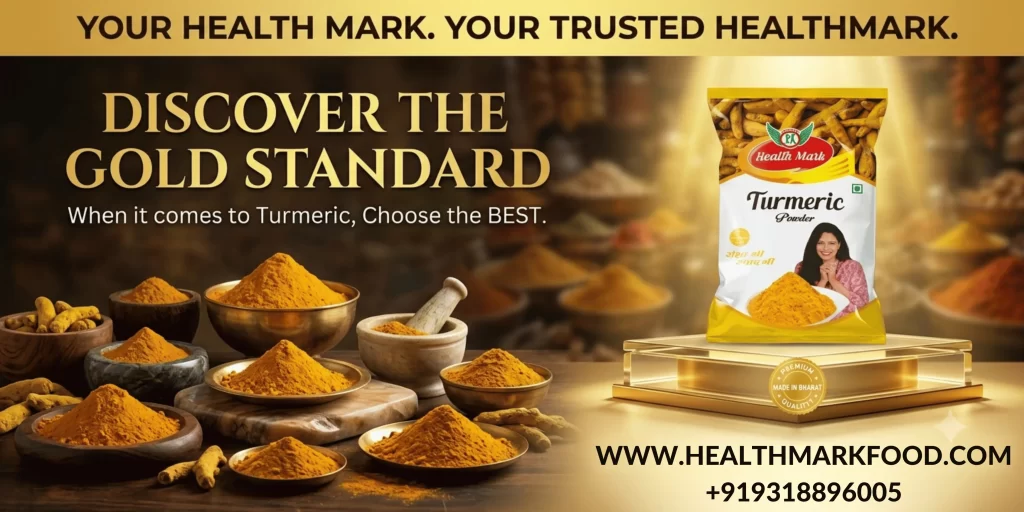
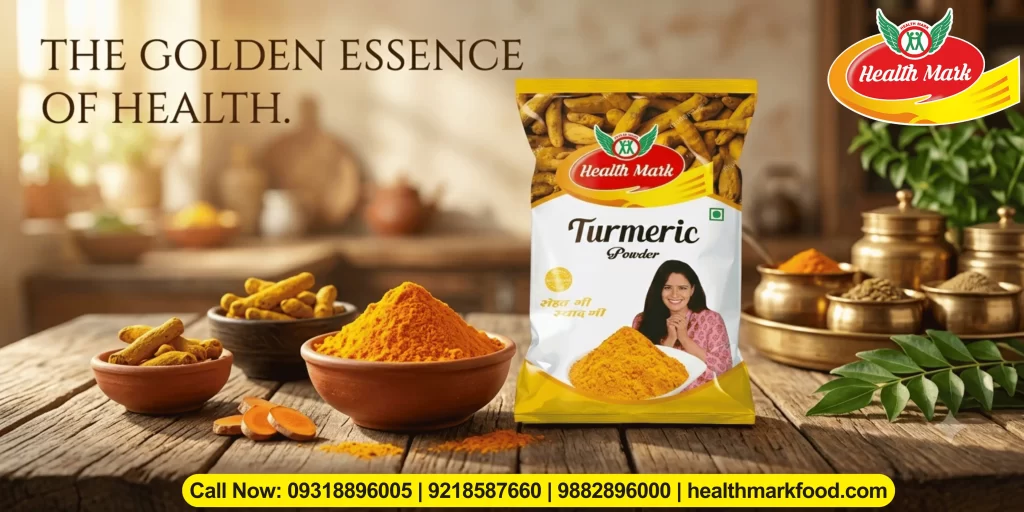
Health Mark Turmeric Powder is made from carefully selected turmeric roots, finely ground for a smooth texture and a strong, natural aroma. It is designed to deliver rich golden colour and warm flavour in everyday Indian cooking, while being packed hygienically to protect freshness during transport and storage.
Key highlights of Health Mark Turmeric Powder include:
• Bright, natural golden colour without artificial additives
• Strong aroma and purity retained through careful processing
• Finely milled, smooth texture suitable for curries, marinades, and health preparations
• Hygienic, sealed packaging available in 100gm, 200gm, and 500gm sizes
• Backed by a manufacturer with a transparent, organic-first sourcing philosophy
You can view the full product details, pack sizes, and enquiry options on the Health Mark Turmeric Powder product page.
If you’re exploring the wider range, the Spices category on Health Mark also includes garam masala, red chilli powder, coriander powder, and fennel seeds useful if you want to build a full masala shelf from one trusted, quality-checked source.
Comparison Table: Loose Market Haldi vs Branded vs Health Mark
Here is a simple side-by-side look at the three most common ways people buy turmeric powder in India, using the quality factors discussed earlier.
| Factor | Loose / Unbranded Market Haldi | Generic Branded Supermarket Haldi | Health Mark Turmeric Powder |
| Source traceability | Usually unknown | Rarely disclosed in detail | Sourced with a transparent, organic-first supply chain |
| Risk of adulteration | Higher no consistent quality checks | Low to moderate, varies by manufacturer | Low natural colour and aroma, no synthetic additives |
| Texture & grinding | Inconsistent | Generally fine | Finely milled for a smooth, uniform texture |
| Packaging & hygiene | Often loose or poorly sealed | Sealed, standard packaging | Hygienically packed to protect freshness |
| Pack size flexibility | Sold loose by weight | Fixed standard sizes | 100gm, 200gm, and 500gm options |
| Customer support | None | Limited, indirect | Direct enquiry and WhatsApp support |
Health Benefits of Turmeric Powder
Turmeric has been used in Indian households for generations, both in cooking and in traditional wellness routines. While turmeric powder is a food product and not a medicine, it is widely valued for:
• Its curcumin content, which is associated with the spice’s traditional anti-inflammatory reputation
• Its natural antioxidant compounds
• Its traditional use in warm milk (“haldi doodh”) as a comfort drink
• Its role in traditional skincare pastes and face packs
• Its use as a natural food colourant in cooking, replacing artificial dyes
Turmeric Powder in the Kitchen: Everyday Uses
Turmeric’s versatility is a big part of why it sells so consistently across India. Common everyday uses include:
• Base seasoning for dal, sabzi, and curries
• Marinades for chicken, paneer, and fish before grilling or frying
• Golden milk (haldi doodh) with black pepper and warm milk
• Pickles and preserved foods, where it also acts as a natural preservative
• Rice dishes like turmeric rice or pulao for colour and mild flavour
• Homemade face packs mixed with besan or curd
Best Practices for Storing Turmeric Powder
Even the best turmeric powder loses colour, aroma, and potency if stored poorly. Follow these best practices:
1. Keep it in an airtight container, away from direct sunlight.
2. Store in a cool, dry place heat and humidity speed up flavour loss.
3. Use a dry spoon every time to avoid introducing moisture.
4. Buy smaller packs (like 100gm or 200gm) if you use turmeric occasionally, so it stays fresh until finished.
5.Check for clumping or a faded colour as early signs that it’s time to replace your stock.
Common Mistakes Buyers Make
• Judging quality by colour alone: An unnaturally bright yellow can be a red flag for added colour, not a sign of better quality.
• Buying the cheapest option without checking the label: Ultra-low prices sometimes come from fillers or poor-quality roots.
• Ignoring the manufacturing address and FSSAI details: Transparency on the pack is a strong quality signal that’s easy to overlook.
• Storing turmeric powder near the stove: Heat and steam degrade both colour and aroma faster than most people expect.
• Buying large packs “to save money” without checking usage speed: Turmeric that sits too long loses its potency before you finish it.
Why Health Mark Is a Trusted Turmeric Powder Manufacturer
Health Mark operates from an industrial facility in Baddi, Himachal Pradesh, and positions itself around organic sourcing, sustainability, and full supply-chain transparency from certified organic farms to the final sealed pack. This approach applies across its full product range, which spans atta, besan, pulses, dry fruits, pickles, and spices, giving the brand consistent, repeatable quality-control practices across categories rather than treating turmeric as an isolated side product.
For buyers comparing a best turmeric powder seller, this kind of category-wide consistency the same sourcing philosophy applied to every product is often a more reliable signal than a single flagship item.
How to Order Health Mark Turmeric Powder
Ordering directly from the manufacturer is usually the simplest way to be sure you’re getting fresh stock rather than powder that has sat on a distributor’s shelf for months. You can:
• Visit the product page and place an enquiry:
• Browse the full spice range: healthmarkfood.com/product-category/spices
• Message the team directly on WhatsApp for quick pricing and bulk order details
• Call the sales team at +91 93188 96005, +91 92185 87660, or +91 98828 96000
Bulk buyers, restaurants, and retailers can also use the Product Enquiry option on the website to discuss pricing for larger quantities and repeat supply.
FAQ
Which brand turmeric powder is best for daily cooking?
The best choice is a brand that discloses its sourcing, avoids artificial colour, and grinds turmeric finely without fillers. Health Mark Turmeric Powder is built around exactly these standards, with organic sourcing and hygienic packaging.
How can I tell if turmeric powder is pure or adulterated?
Check texture (should be smooth, not gritty), do a simple water test (pure turmeric settles with a mild yellow tint rather than turning the water intensely bright), and check the label for FSSAI details and a clear manufacturing address.
Is organic turmeric powder better than regular turmeric powder?
Organic turmeric powder is grown without synthetic pesticides or herbicides, which many buyers prefer for both health and environmental reasons. Quality still depends on proper drying, grinding, and storage, so organic labelling should be paired with other purity checks.
What is the shelf life of good quality turmeric powder?
Properly packed turmeric powder typically stays fresh for around 12 to 24 months when stored in an airtight container away from heat and moisture. Always check the best-before date printed on the pack.
Why does turmeric powder sometimes taste bitter?
A slightly bitter, earthy note is natural to turmeric. Excessive bitterness can indicate over-drying, old stock, or lower-quality roots used in processing.
Which pack size of turmeric powder should I buy?
For regular household use, a 200gm or 500gm pack offers good value. If you use turmeric occasionally or want to test a new brand, a 100gm pack is a low-risk way to start.
Does turmeric powder need refrigeration?
No. Turmeric powder should be stored in a cool, dry place in an airtight container refrigeration is not necessary and can introduce moisture if the container isn’t fully sealed.
What makes Health Mark a good turmeric powder manufacturer?
Health Mark sources from certified organic farms, avoids synthetic additives, and applies the same transparent, quality-focused process across its entire range of staples and spices, including turmeric powder.
Can I buy turmeric powder in bulk for restaurant or retail use?
Yes. Health Mark accepts bulk and business enquiries through its Product Enquiry page and direct sales contact numbers, making it suitable for restaurants, retailers, and distributors.
Is turmeric powder the same as turmeric root or fresh turmeric?
No. Turmeric powder is made by drying and grinding turmeric rhizomes (roots). Fresh turmeric has a milder flavour and shorter shelf life, while the powder is concentrated, shelf-stable, and easier to use in daily cooking.
Conclusion
So, which brand turmeric powder is best? The real answer is the one that keeps earning your trust batch after batch natural colour, fine texture, no hidden fillers, and a manufacturer that is transparent about where the turmeric comes from and how it’s processed. Judged against those standards, Health Mark Turmeric Powder is built to deliver consistent purity, aroma, and colour, backed by an organic-first sourcing philosophy across its wider spice and staples range.
If you’re ready to taste the difference, explore the Health Mark Turmeric Powder product page or browse the full Spices collection to build a complete, quality-checked masala shelf. For bulk orders or quick questions, call +91 93188 96005, +91 92185 87660, or +91 98828 96000, or send a message directly on WhatsApp.