
Bite into a well-made pakora and you’ll notice two things instantly: a shattering crisp crust and a soft, spiced centre. That contrast doesn’t happen by accident. It happens because of besan, the humble gram flour that sits at the heart of almost every fried Indian snack. Yet not all besan behaves the same way in hot oil. Some batters turn out light and crackly, others go soft, greasy, or oddly chewy within minutes of leaving the kadhai.

If you’ve ever wondered why your pakoras don’t stay as crisp as the ones from your favourite sweet shop, the answer usually traces back to the besan itself, its fineness, freshness, and how it’s used in the batter. In this guide, we’ll break down exactly how besan for crispy snacks works, what separates the best besan from an average one, and how to choose, store, and cook with it for consistently crunchy results, whether you’re a home cook or run a snack business.
What Is Besan, and Why Is It the Secret to Crispy Snacks?
Besan is finely milled flour made from chana dal (split Bengal gram). It’s one of the oldest and most versatile ingredients in Indian kitchens, used in everything from pakoras and dhokla to kadhi, ladoos, and dosa batters. Its popularity in fried snacks isn’t a coincidence besan has a naturally low gluten content and a starch-protein structure that behaves very differently from wheat flour when it meets hot oil.
Where wheat-based batters can turn chewy or bready, besan sets into a delicate, porous crust. That texture is exactly what makes onion pakoras, aloo bhajiya, mirchi bhajji, and dozens of regional snacks so satisfying to bite into.
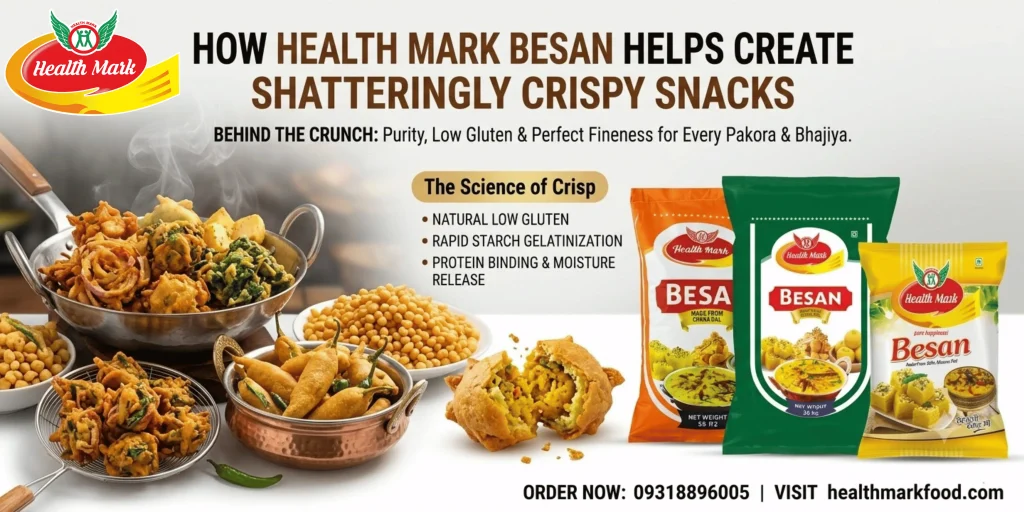
The Science Behind Besan’s Crispiness
Understanding why besan crisps up so well helps you use it more effectively:
Low gluten content: Unlike wheat flour, besan has little to no gluten. Gluten forms elastic, chewy networks without it, besan batters set into a brittle, crisp shell instead of a soft one.
Starch gelatinization: When besan batter hits hot oil, its starches rapidly absorb heat and moisture, expanding and then firming up into a light, aerated crust.
Protein structure: Chana dal is naturally protein-rich. This protein helps bind the batter to whatever it’s coating (onions, potatoes, spinach) while still allowing moisture to escape as steam, which is essential for crispiness.
Moisture release: A well-made besan batter allows steam to escape through tiny pores as it fries, drying out the surface and locking in crunch this is why over-thick or under-rested batter often turns soggy.
Types of Besan and Which One Fries Up Crispiest
Not all besan is milled the same way, and the grind size has a direct impact on texture:
Bareek (Fine) Besan
This is the go-to choice for crispy snacks. Its fine, smooth grind coats vegetables evenly and fries into a light, crackly crust ideal for pakoras, bhajiyas, and fritters.
Regular Besan
A medium-fine grind that works well across most everyday recipes dhokla, kadhi, and mixed savoury batters while still giving a reasonably crisp result when fried.
Motichur / Mota Besan
A coarser grind traditionally used for motichur ladoo and boondi. It’s built for texture in sweets rather than a crisp fried coating, so it’s not the first pick for pakora batter.
Powder Besan
An extra-smooth, finely powdered besan that’s excellent for delicate batters and thin, even coatings where a light crunch is the goal.
How to Choose the Best Besan for Crispy Snacks
Whether you’re trying to buy besan for home cooking or sourcing in bulk for a food business, quality decides the outcome far more than the recipe does. Here’s what to check before you buy besan:
Look for Purity and Fineness
Choose besan made purely from chana dal, with no mixed or low-grade grains.
A consistent, fine texture (no lumps or grit) is a strong signal of premium quality besan.
Colour should be a natural pale yellow dull or greyish besan often points to poor storage or lower-grade dal.
Check Manufacturing and Hygiene Standards
Prefer a besan manufacturer in India with a hygienic, quality-controlled processing facility.
Sealed, moisture-proof packaging matters as much as the milling it protects freshness right up to the point you open the pack.
Clear labelling (batch details, pack sizes, storage instructions) reflects a brand that takes quality seriously.
Compare Before You Commit
When comparing the best besan brands in India, weigh freshness and consistency over price alone. A slightly higher best besan price is usually justified if it consistently delivers better texture and fewer failed batches of pakoras. If you’re searching for a besan seller near me or a dependable top besan supplier for regular orders, prioritise sellers who can guarantee consistent quality pack after pack not just a one-off good batch.
You can explore Health Mark’s premium quality besan range including fine, regular, and motichur variants to compare options suited to your specific recipe.
Step-by-Step: Getting Perfectly Crispy Pakoras & Bhajiyas Every Time
1. Sift the besan first. This removes lumps and aerates the flour, helping it blend smoothly with water or vegetables.
2. Add water gradually. Pour in small amounts while whisking to avoid a lumpy or overly thin batter.
3. Aim for ribbon consistency. The batter should coat the back of a spoon and fall in a slow ribbon not drip like water, not sit like paste.
4. Season and rest. Add salt, chili, ajwain or other spices, then let the batter rest for 10–15 minutes so the besan fully hydrates.
5. Add a crisping agent (optional). A spoon of rice flour or cornflour boosts crunch further, especially for air-fried or shallow-fried versions.
6. Heat oil to 170–180°C. Test with a drop of batter it should sizzle and rise steadily, not sink or burn instantly.
7. Fry in small batches. Overcrowding drops the oil temperature and leads to soggy, oily snacks.
8. Drain on a wire rack, not paper towels alone. This keeps steam from softening the underside of freshly fried snacks.
Expert Tips & Best Practices for Extra Crunch
Use besan that’s been stored correctly stale flour absorbs moisture and fries unevenly.
Don’t over-mix the batter once vegetables are added; this can release excess water and thin it out.
A pinch of baking soda (used sparingly) can add extra lightness to the crust.
Double-fry for extra-crisp results: fry once at a lower temperature to cook through, then again at a higher temperature just before serving.
Always salt the batter, not the oil salting oil affects its smoke point and can make snacks greasier.
Common Mistakes That Ruin Besan’s Crispiness
Using a batter that’s too thin, which soaks up excess oil and turns limp.
Skipping the resting time, leading to patchy, uneven frying.
Frying at low oil temperature, which cooks snacks slowly and leaves them oily rather than crisp.
Stacking hot snacks immediately after frying, trapping steam that softens the crust.
Using old or improperly stored besan, which loses its ability to crisp up properly.
Besan Types Compared: Quick Reference Table
| Besan Type | Texture | Best For | Crispiness Level |
| Bareek (Fine) Besan | Ultra-fine, smooth | Pakoras, bhajiyas, batters | Very High |
| Regular Besan | Medium-fine | Dhokla, kadhi, dal preparations, mixed snacks | High |
| Motichur / Mota Besan | Coarse granules | Motichur ladoo, boondi, coarse-textured sweets | Moderate (for texture, not crisp coating) |
| Powder Besan | Extra-smooth powder | Delicate batters, thin coatings, chaklis | High |
Why Health Mark Is Among the Top Selling Besan Brands in India
Consistency is the real test of any besan brand a single good batch means little if the next pack behaves differently in the kadhai. Health Mark Besan is milled from carefully selected chana dal and processed under hygienic, quality-controlled conditions to keep every pack consistent in colour, fineness, and flavour.
Health Mark offers besan across multiple formats to match different cooking needs:
● Fine (Bareek) Besan for pakoras, bhajiyas, and crisp fritters
● Regular Besan for everyday cooking, dhokla, and kadhi
● Motichur / Mota Besan for traditional ladoo and boondi preparations
● Powder Besan for smooth, delicate batters
Packs are available in 55gm, 200gm, 500gm, and 1kg sizes, making it easy for both households and food businesses to buy besan in the quantity they need. If you’re comparing the best besan brand in India for reliability, freshness, and everyday value, it’s worth putting Health Mark’s full besan collection side by side with what you currently use.
Besan’s Nutritional Edge (Beyond the Crunch)
Besan isn’t just about texture it also brings nutritional value that wheat-based coatings don’t. Being made from chana dal, it’s naturally gluten-free and a good source of plant protein and fibre compared to refined wheat flour, which is part of why it’s a staple across both indulgent fried snacks and lighter dishes like dhokla and chilla. For households balancing indulgence with nutrition, that combination of great texture and better nutritional makeup is a big part of besan’s staying power in Indian kitchens.
FAQ
1. Which besan is best for crispy snacks?
Bareek (fine) besan or a good-quality powder besan works best for crispy snacks like pakoras and bhajiyas because its fine particle size coats ingredients evenly and fries into a light, crunchy shell. Coarser besan, like motichur or mota besan, is better suited to sweets and boondi rather than crisp fried coatings.
2. Why does besan make snacks crispy?
Besan is naturally low in gluten and high in starch and protein from chana dal. When it hits hot oil, the starch gelatinizes quickly and the low-gluten structure prevents the batter from turning chewy or doughy, giving pakoras and bhajiyas their signature light, crisp bite.
3. Should besan batter be thick or thin for crispy pakoras?
A medium-thick, ribbon-consistency batter works best. Batter that is too thin absorbs excess oil and turns soggy, while batter that is too thick stays raw inside and doesn’t crisp evenly on the outside.
4. Does resting besan batter improve crispiness?
Yes. Resting the batter for 10 to 15 minutes lets the besan fully hydrate, which improves how evenly it coats ingredients and helps it fry up crisper instead of flaky or uneven.
5. What oil temperature is ideal for crispy besan snacks?
Medium-hot oil, around 170 to 180 degrees Celsius, is ideal. Oil that is too cool makes snacks greasy and soft, while oil that is too hot browns the outside before the inside cooks through.
6. Can I make besan snacks crispy without deep frying?
Yes, air-frying or shallow-frying with a light oil brush can produce a reasonably crisp result, though traditional deep frying still gives the most authentic crunch. Adding a spoon of rice flour or cornflour to the besan batter also helps crisp texture in lower-oil methods.
7. How do I store besan to keep it fresh for crispy results?
Store besan in an airtight container in a cool, dry place away from direct sunlight and moisture. Stale or damp besan absorbs odors and loses its ability to fry up light and crisp, so buying smaller packs more frequently is often better than storing large ones for months.
8. Which is the best besan brand in India for snacks?
Look for a besan manufacturer that sources clean, high-quality chana dal, grinds it hygienically, and packs it to preserve freshness. Health Mark Besan is built around exactly this standard, making it a reliable choice for home cooks and food businesses looking for consistently crispy results.
9. Is besan gluten-free?
Yes, besan is made purely from ground chana dal (Bengal gram) and is naturally gluten-free, making it a popular choice for gluten-sensitive diets as well as traditional Indian cooking.
10. How much besan seller near me should I buy at once?
For regular home use, a 500g to 1kg pack is usually enough for 3 to 4 weeks of cooking. Food businesses or those making frequent snacks may prefer bulk packs directly from a besan manufacturer for better pricing and consistent supply.
Conclusion
Crispy snacks start long before the oil heats up they start with the besan you choose. Fineness, freshness, and how well it’s milled all decide whether your pakoras turn out light and crackly or flat and greasy. Once you understand the science and follow a few simple techniques, consistent crunch becomes far less of a gamble.
If you’re ready to upgrade your snacks, it starts with upgrading your besan. Explore Health Mark’s premium quality besan range, pick the variant suited to your recipe, and taste the difference fresh, well-milled gram flour makes.
Order Now: Browse the full Besan category | Visit healthmarkfood.com
For bulk orders, wholesale pricing, or questions about the best besan for your specific recipe, call us at 09318896005, 9218587660, or 9882896000.