
Walk into almost any Indian kitchen on a weekday morning and there is a fair chance you will find a bowl of poha being tempered with mustard seeds, curry leaves, and a handful of peanuts. It is one of those foods that has quietly stayed relevant for generations, moving from home kitchens to hostel messes to five-star breakfast buffets without losing its charm. But here is the catch that most buyers do not think about until they actually taste a bad batch: not all poha is created equal.
If you have ever cooked poha that turned mushy within seconds of adding water, or found strange husk bits mixed into the pack, you already know why choosing the right seller matters as much as the recipe itself. This guide walks you through everything you need to know before you buy premium quality Poha in India from what actually separates a good batch from an average one, to the questions you should ask any Poha manufacturer or wholesaler before placing an order.
Whether you are a home cook trying to find the best Poha near me, a shopkeeper scouting Poha wholesalers in India, or a business owner comparing the best Poha brand in India for bulk supply, this article is built to give you a clear, practical framework not just marketing claims.
What Is Poha? Understanding India’s Favourite Flattened Rice
Poha, also known as flattened rice or beaten rice, is made by parboiling paddy and then pressing the grains flat under controlled pressure. The process removes the outer husk while keeping the rice grain intact, which is why poha looks like thin, pale flakes rather than whole grains of rice.
Because the grains are already partially cooked during the parboiling stage, poha needs very little additional cooking. A quick rinse and a few minutes on the stove is usually enough, which explains why it has remained a go-to option for busy mornings across Indian households for decades.
Poha is known by different names depending on the region some call it chivda in Maharashtra, others simply refer to it by its use, like kanda poha when onions are the star ingredient. Regardless of the name, the base product is the same: lightly processed, flattened rice that is quick to prepare and gentle on digestion.
Why Poha Deserves a Permanent Place in Your Kitchen
Poha’s popularity is not just about nostalgia or convenience there are real practical reasons it continues to hold its ground against newer breakfast trends.
Quick to cook: Ready in under 15 minutes, making it ideal for rushed mornings.
Light on the stomach: A good option when you want a filling meal that does not feel heavy.
Versatile: Works as a breakfast dish, an evening snack, or a base for fusion recipes.
Budget-friendly: Even premium quality Poha remains an affordable staple compared to many packaged breakfast alternatives.
Customisable: Pairs well with vegetables, peanuts, sev, curry leaves, and regional spice blends.
It is worth noting that poha is naturally low in fat and, when cooked with vegetables and a modest amount of oil, can fit comfortably into a balanced diet. It is not a protein powerhouse on its own, so many households add peanuts, sprouts, or a side of curd to round out the meal a small tweak that makes a noticeable difference nutritionally.
What Actually Makes Poha “Premium Quality”?
The word “premium” gets used loosely in food marketing, so it helps to know what should genuinely back up that label when you are trying to buy premium quality Poha in India.
Grain Selection
Premium quality Poha starts with the paddy itself. High-grade, well-sorted paddy produces flakes that are uniform in size and colour, while mixed or lower-grade paddy tends to produce a batch with visible inconsistency some flakes thick, some almost powdery.
Flattening & Thickness Control
The flattening process determines texture. Poha that is flattened evenly cooks uniformly, whereas uneven flattening leads to a dish where some flakes are perfectly done while others remain undercooked or turn mushy.
Hygienic Processing
Best Poha manufacturing facilities operate under food safety protocols, keeping the product away from dust, pests, and manual contamination. This is one of the clearest markers separating a high quality Poha seller from an unregulated local supplier.
Packaging That Protects Freshness
Moisture is poha’s biggest enemy. Sealed, moisture-resistant packaging with clear batch and manufacturing information is a strong signal of a serious, quality-focused seller rather than someone repacking loose stock without traceability.
Consistency Across Batches
A one-off good pack does not make a brand reliable. What actually matters is whether the taste, texture, and cooking behaviour stay consistent every time you reorder that consistency is usually the result of standardised sourcing and processing.
How to Identify the Best Poha Seller in India
With so many options online and in local markets, narrowing down the best Poha seller can feel overwhelming. Here is a practical checklist to simplify the decision.
Manufacturing Standards to Look For
• FSSAI licence number displayed on the packaging or website.
• Clear information about where and how the Poha is manufactured.
• A dedicated product page detailing quantity options and ingredients.
• Transparent contact details phone number, email, and physical address.
Packaging & Freshness Indicators
• Sealed pouches rather than loosely tied bags.
• Visible manufacturing and best-before information.
• No signs of moisture damage, discolouration, or pest activity.
• Multiple pack sizes (such as 80gm, 350gm, and 500gm) to suit different household needs.
Price vs Quality What’s Reasonable?
The best Poha price is rarely the cheapest one on the shelf. Extremely low prices often indicate lower-grade paddy, minimal quality checks, or compromises on packaging. Instead of chasing the lowest number, compare the price per 100 grams across a few trusted sellers and weigh it against packaging quality, hygiene claims, and customer reviews. A slightly higher price for consistently good texture and taste is almost always the better long-term value.
Top Qualities of a Trustworthy Poha Manufacturer
If you are evaluating a Poha manufacturer whether for home use or for stocking a store these traits are worth checking before you commit to a brand.
• Transparency about sourcing and processing methods.
• A track record of supplying consistent stock to retailers or households.
• Willingness to answer product queries directly via call, WhatsApp, or enquiry forms.
• A wider product range (such as atta, besan, pulses, spices, and snacks) that suggests an established, quality-driven food business rather than a one-product seller.
• Positive word-of-mouth reputation in the local market, not just online claims.
Retail Buyer vs Wholesale Buyer: What Changes?
Not everyone buying Poha has the same needs. A household buying a 500gm pack for weekly breakfasts has very different priorities compared to a caterer or shopkeeper sourcing in bulk.
Poha Wholesalers in India What to Expect
• Bulk pricing that becomes more competitive as order quantity increases.
• Documentation such as FSSAI licence copies and batch certificates for business buyers.
• Flexible delivery arrangements for recurring orders.
• The option to request samples before committing to a large purchase.
If you run a hotel, hostel mess, tiffin service, or grocery store, working directly with a top Poha supplier rather than a middleman often means better pricing and more predictable stock quality over time.
Premium Poha vs Regular Market Poha: Side-by-Side Comparison
The table below breaks down the practical differences you are likely to notice between premium quality Poha and the loose, unbranded Poha commonly found in open markets.
| Parameter | Premium Quality Poha | Regular / Loose Market Poha |
| Raw Paddy Selection | Sorted, uniform, high-grade paddy | Mixed grades, inconsistent sourcing |
| Thickness & Texture | Even flattening, soft yet non-sticky | Uneven, sometimes too thick or powdery |
| Hygiene & Processing | Machine-processed in FSSAI-compliant units | Often open processing, higher contamination risk |
| Packaging | Sealed, moisture-proof, batch-coded packs | Loose or poorly sealed packaging |
| Shelf Life | Longer, with visible manufacturing & expiry dates | Shorter, often undocumented |
| Cooking Result | Fluffy, non-mushy, consistent every time | Can turn mushy or remain hard in patches |
| Price Transparency | Clearly listed price per pack/quantity | Variable pricing, often unstandardised |
Common Mistakes to Avoid When Buying Poha
• Buying purely on price without checking packaging or hygiene claims.
• Ignoring the manufacturing date on the pack, especially for loose or unbranded stock.
• Assuming all poha is the same thickness always check whether you need thick or thin flakes for your recipe.
• Not checking for an FSSAI licence number before buying in bulk.
• Storing poha in a humid area after purchase, which shortens its shelf life regardless of how good the seller was.
Step-by-Step: How to Order Premium Poha Online in India
1. Visit the seller’s product page and review the available pack sizes and ingredient details.
2. Check for FSSAI compliance, packaging quality, and any customer reviews available.
3. Decide on the quantity based on your household or business consumption smaller packs like 80gm are ideal for trial purchases.
4. Reach out via the enquiry form, phone call, or WhatsApp to confirm pricing and availability.
5. Share your delivery location and preferred quantity to get a final quote.
6. Confirm the order and ask about expected delivery timelines, especially for bulk orders.
Best Ways to Cook and Store Poha for Maximum Freshness
Cooking Tips
• Rinse poha gently in a strainer rather than soaking it for long, to avoid a mushy texture.
• Let it rest for a few minutes after rinsing so it softens evenly.
• Add tempering (mustard seeds, curry leaves, onions) before mixing in the poha for better flavour absorption.
• Finish with lemon juice and fresh coriander for a lighter, fresher taste.
Storage Tips
• Keep poha in an airtight container away from direct sunlight and moisture.
• Avoid storing it near strong-smelling spices, as poha can absorb odours.
• Use opened packs within a few weeks for the best texture and taste.
• Reseal packaging tightly after every use to prevent moisture from creeping in.
Why Health Mark Is Among India’s Trusted Poha Sellers
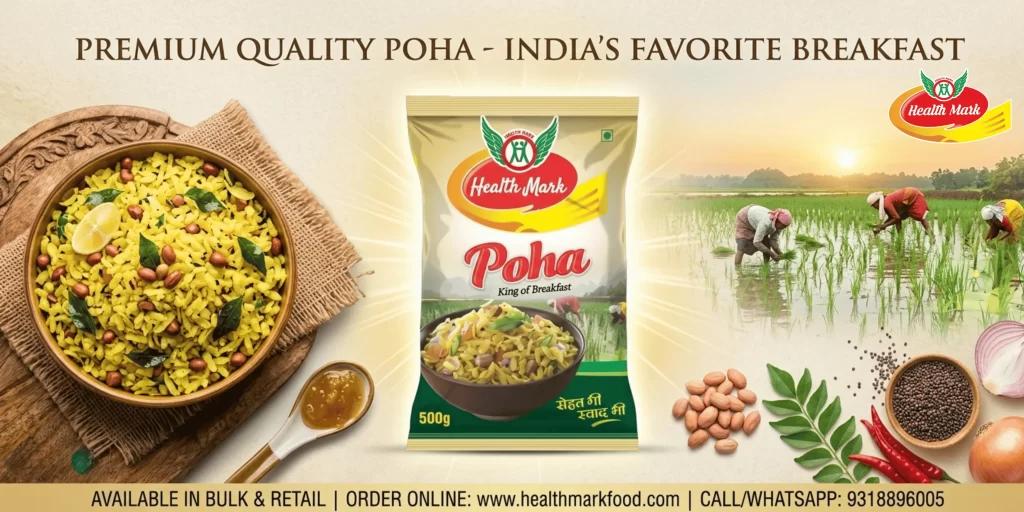
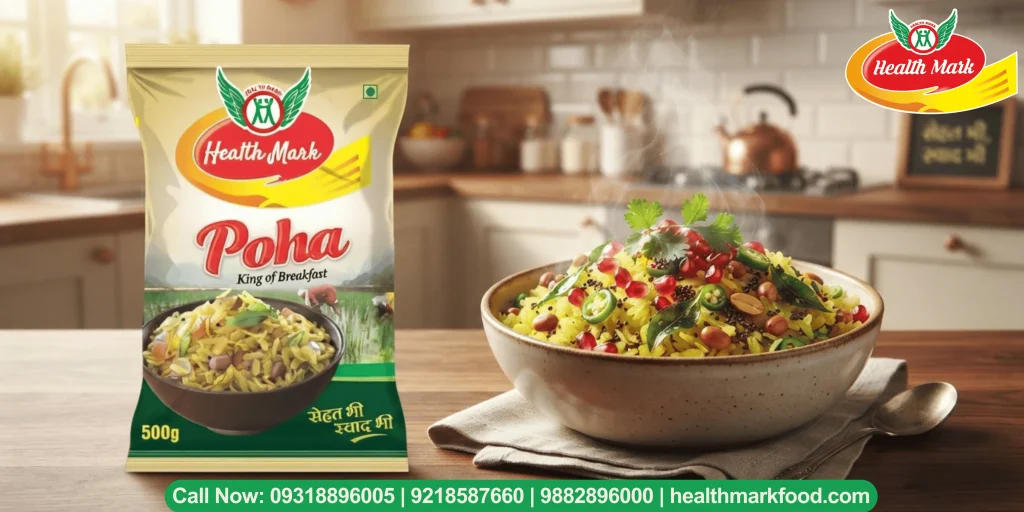
Health Mark Poha is made from carefully selected flattened rice and processed under hygienic conditions to deliver a soft texture and authentic taste. It is positioned as a light, easy-to-digest option suited for breakfast or a quick snack, and is available in multiple pack sizes 80gm, 350gm, and 500gm making it convenient for both small households and larger family needs.
Beyond Poha, Health Mark operates across a broad range of everyday food categories, including atta, besan, pulses, rice, spices, and snacks, which reflects an established food business rather than a single-product operation. The brand’s manufacturing base is located in Baddi, with visibility across Chandigarh, Panchkula, and Ludhiana, making it a practical option for buyers searching for a top Poha seller in Chandigarh or nearby regions in North India.
For anyone comparing options for the best Poha seller near me, Health Mark’s combination of hygienic processing, multiple pack sizes, and direct contact channels for enquiries makes it a straightforward choice to evaluate alongside other regional brands.
FAQ
What is the difference between thick and thin Poha?
Thick Poha holds its shape better and is preferred for dishes like chivda and dishes that are cooked for longer, while thin Poha cooks faster and works well for a soft kanda poha breakfast. A premium quality Poha seller usually offers both variants so you can choose based on the recipe.
How can I tell if Poha is fresh before buying it?
Fresh Poha looks pale white to light cream, feels dry and slightly crisp to the touch, and has a mild, neutral smell. Avoid packs that feel damp, smell musty, or have broken, powdery flakes at the bottom, as this usually signals poor storage or an aging batch.
Is Poha good for weight loss and daily breakfast?
Yes, Poha is naturally low in fat, easy to digest, and can be made more balanced by adding vegetables, peanuts, and a squeeze of lemon. Because it is light on the stomach, it is a popular choice for people watching their weight without giving up on a filling breakfast.
What should I look for in a best Poha brand in India?
Look for a brand that discloses its sourcing, follows FSSAI food safety norms, uses sealed and labelled packaging, and has transparent contact details for queries. A trustworthy best Poha seller will also be upfront about batch quality and offer support if you have concerns about a pack.
Can I buy Poha in bulk from a wholesaler in India?
Yes, many Poha wholesalers in India supply in bulk quantities to retailers, hotels, hostels, and caterers. When buying wholesale, always ask for FSSAI licence details, batch documentation, and sample packs before committing to a large order.
How should Poha be stored at home after purchase?
Store Poha in an airtight container in a cool, dry place away from direct sunlight and moisture. Once opened, try to use it within a few weeks for the best taste and texture, and always reseal the pack tightly after each use.
Does premium Poha cost significantly more than regular Poha?
Premium Poha is usually priced only slightly higher than loose market Poha, but the difference in hygiene, taste, and consistency often makes it far better value. Since a good best Poha price reflects quality control and proper packaging, it is a worthwhile trade-off for most households.
What is Poha traditionally made from?
Poha, also called flattened or beaten rice, is made by parboiling paddy and then flattening the grains under pressure. This traditional process removes the husk while keeping the rice light, which is why it cooks quickly and absorbs spices and flavours so well.
Which Indian states are known for producing quality Poha?
Poha is widely manufactured across India, with strong production hubs in states known for rice cultivation. Many manufacturing units also operate out of northern industrial belts, supplying fresh stock to distributors and retailers across neighbouring states.
How do I place a bulk or retail order for Poha online?
You can browse the product listing, choose your preferred pack size, and reach out through the enquiry form or WhatsApp number listed on the seller’s website. Most sellers will confirm quantity, pricing, and delivery details before finalising your order.
Conclusion
Health Mark Poha may look like a simple everyday food, but the difference between an average pack and a genuinely premium one shows up the moment it hits your pan. Uniform flakes, hygienic processing, transparent packaging, and consistent taste are not small details they are exactly what separates the best Poha seller from an average one.
Whether you are buying a small pack for your family’s breakfast table or sourcing in bulk as a retailer, the checklist in this guide should make the decision far easier. If you are ready to try a brand that checks these boxes, explore Health Mark Poha and snacks range and place your inquiry today a lighter, tastier breakfast is just one order away.
Ready to order? Visit the Poha product page, choose your pack size, and reach out via WhatsApp or a quick call to get started.