If your last few packets of penne pasta turned mushy, bland, or stuck together in a sad clump, you’re not alone. Most people don’t realise how much the quality of raw pasta affects the final dish — and that quality starts long before the pot of water even boils. It starts with the wheat, the milling, the shaping, and the way the pasta is packed and sealed.
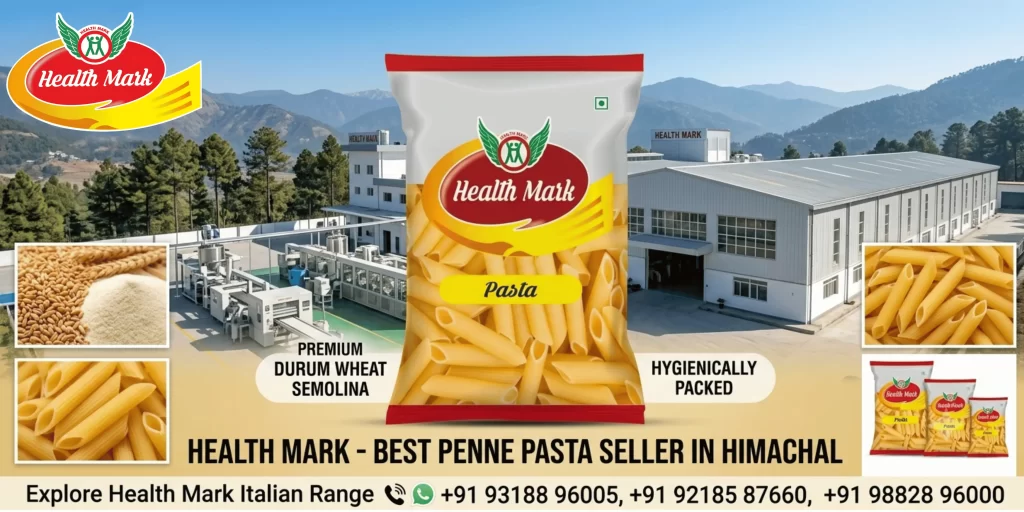
That’s exactly where Health Mark, based in the industrial belt of Baddi, Himachal Pradesh, has built its reputation. Known among home cooks, caterers, and retailers as one of the best penne pasta sellers in Himachal, the brand has focused on one simple idea: pasta made from real durum wheat, packed hygienically, and priced fairly for Indian households.
In this guide, we’ll walk through everything you need to know before you buy your next packet of penne pasta — from what separates premium pasta from the average supermarket stock, to how to cook it perfectly, to where you can buy penne pasta online in India without compromising on quality. Whether you’re a home cook, a small restaurant owner, or a distributor looking for a reliable penne pasta manufacturing partner, this article has you covered.
Why Himachal Pradesh Is Becoming India’s Trusted Pasta-Making Hub
Himachal Pradesh isn’t the first place that comes to mind when people think of Italian food. But over the last decade, the state’s industrial townships particularly Baddi, Barotiwala, and Nalagarh have quietly become one of India’s most active food manufacturing corridors.
Several factors make this region attractive for food producers:
• Clean environment: Lower pollution levels and access to good-quality water support hygienic food processing.
• Strong industrial infrastructure: Purpose-built industrial townships with reliable power and logistics support consistent production.
• Proximity to wheat-growing states: Easy access to Punjab and Haryana, two of India’s largest wheat-producing regions, means fresher raw material with shorter supply chains.
• Growing local expertise: A cluster of food manufacturers in the region has created a skilled workforce familiar with modern food-safety practices.
Health Mark operates out of Plot No. 60, Industrial Township Bhatoli Kalan, Baddi, Himachal Pradesh — right in the heart of this manufacturing belt. This location isn’t just a manufacturing address; it’s part of the reason the brand is regularly searched for as the best penne pasta seller in Himachal by customers across North India who want a locally rooted, quality-first pasta brand.
What Makes Health Mark the Best Penne Pasta Seller in Himachal
There’s no shortage of pasta brands on supermarket shelves today, so what actually separates a good seller from a great one? It comes down to three things: ingredient quality, manufacturing discipline, and consistency. Here’s how Health Mark approaches each one.
Premium Durum Wheat Sourcing
Health Mark Penne Pasta is made from high-quality durum wheat, chosen specifically for its high protein and gluten content. Durum wheat is the gold standard for pasta-making worldwide because it holds its shape during boiling and gives that classic ‘bite’ known as al dente texture that separates good pasta from a soggy disappointment.
Hygienic Manufacturing and Packing
Every batch is processed and hygienically packed to lock in freshness. This matters more than most buyers realise: pasta that’s exposed to moisture or handled poorly during packing can develop off-flavours or clump together long before you even open the packet at home.
Accreditation and Quality Focus
Health Mark maintains its quality commitments across its full food portfolio — from atta and besan to pulses, spices, and Italian staples like penne pasta. You can review the brand’s certifications and quality standards on its Accreditation page, which reflects the same standards applied to its Italian product range.
A Full Italian Range, Not Just One Product
Health Mark Italian product category includes penne pasta alongside elbow pasta macaroni and vermicelli — meaning buyers can source multiple pasta formats from a single trusted seller instead of juggling different brands for different dishes.
Penne Pasta 101: What It Is and Why It Belongs in Every Kitchen
Penne is a short, tube-shaped pasta with diagonally cut ends — the name comes from the Italian word for ‘pen’ or ‘quill,’ referencing its angled tips. It’s one of the most versatile pasta shapes in the world, and there’s real engineering behind why it works so well.
The Science Behind the Shape
Penne’s ridged, tubular structure isn’t just for looks. The hollow centre traps chunky sauces and vegetables, while the ridged exterior (in the ‘rigate’ variety) helps sauce cling to the surface. This means every bite delivers a balanced ratio of pasta to sauce — unlike flat noodles, which sauce tends to slide off.
Nutritional Profile of Durum Wheat Penne
Because it’s made from durum wheat semolina, penne pasta typically offers:
A good source of complex carbohydrates for sustained energy
Moderate plant-based protein content
Low fat when prepared without heavy cream-based sauces
A firmer texture that digests more slowly than refined flour-based noodles
As with any packaged food, it’s worth checking the nutrition label on your specific packet, since exact values can vary slightly by batch and brand.
Best Penne Pasta vs Other Pasta Shapes: A Quick Comparison
Not sure whether penne is the right shape for your recipe? Here’s how it stacks up against other popular pasta shapes available in India.
| Pasta Shape | Best For | Sauce Pairing | Typical Cook Time |
| Penne | Baked dishes, salads, tossed pastas | Thick tomato, arrabbiata, creamy white sauce | 10–12 minutes |
| Fusilli (spiral) | Cold pasta salads, chunky sauces | Pesto, vegetable-based sauces | 9–11 minutes |
| Elbow Macaroni | Mac and cheese, soups | Cheese sauce, light gravies | 7–9 minutes |
| Spaghetti | Classic Italian mains | Oil-based, marinara, aglio e olio | 9–11 minutes |
| Vermicelli | Desserts, quick stir-fries | Light broths, sweet preparations | 3–5 minutes |
For most Indian households cooking red sauce pasta or white sauce pasta at home, penne remains the top choice because it’s forgiving to cook, holds up well to reheating, and works equally well in a lunchbox or a dinner-table dish.
How to Choose the Best Penne Pasta Brand in India: A Buyer’s Checklist
With so many pasta brands competing for shelf space, here’s a practical checklist to help you separate premium quality penne pasta from the average packet.
Check the Wheat Source
Look for ‘100% durum wheat’ or ‘durum wheat semolina’ on the packaging. Pasta made from blended or lower-grade flour tends to turn gummy and lose shape during cooking.
Look at Texture and Colour
Good-quality dry penne should have a pale golden-yellow colour and a smooth, slightly matte surface. Overly white or chalky-looking pasta can indicate lower wheat quality.
Check Packaging and Shelf Life
Hygienically sealed packaging protects pasta from moisture, pests, and odour absorption. Always check the manufacturing and best-before dates before purchase.
Verify Certifications
Reliable manufacturers display food safety certifications such as FSSAI licensing. Reviewing a brand’s accreditation page (where available) is a simple way to confirm this before you buy in bulk.
Read the Fine Print on Quantity Options
A good seller usually offers multiple pack sizes so you can choose according to household size or business need — for example, Health Mark offers its penne pasta in 90gm, 180gm, and 450gm packs.
Top-Selling Penne Pasta in India: What’s Driving the Demand
Pasta consumption in Indian households has grown steadily over the past decade, driven by a few clear trends:
• Quick, kid-friendly meals: Penne pasta cooks fast and pairs well with mild, Indian-adapted sauces that appeal to children.
• Fusion cooking: Home cooks are increasingly blending Indian spices with Italian bases — think tandoori pasta or masala penne.
• Tiffin and lunchbox culture: Penne holds its texture well even after a few hours, making it a practical lunchbox option compared to noodles that turn sticky.
• Rising health awareness: More buyers are actively comparing brands for wheat quality and ingredient transparency rather than picking whatever’s cheapest on the shelf.
This shift in buyer behaviour is exactly why searches like ‘best Penne Pasta brand in India‘ and ‘top selling Penne Pasta in India’ have grown — shoppers want assurance, not just availability.
Step-by-Step: How to Cook Perfect Penne Pasta at Home
Even premium pasta can turn out disappointing if it’s cooked incorrectly. Here’s a simple, foolproof method.
1. Boil water generously: Use at least 4–5 litres of water per 500g of pasta so the penne has room to move and cook evenly.
2. Salt the water well: Add salt once the water is boiling — it should taste like mild seawater. This is your only chance to season the pasta itself.
3. Add pasta and stir immediately: Stir within the first minute to prevent the pieces from sticking together.
4. Cook until al dente: Follow the pack timing (usually 10–12 minutes for penne), but start tasting a minute early. Al dente means firm to the bite, not hard in the centre.
5. Reserve pasta water before draining: A ladle of starchy pasta water helps bind your sauce to the pasta beautifully.
6. Drain and toss immediately: Don’t rinse pasta meant for a hot sauce — the starch on the surface helps the sauce cling.
7. Combine with sauce off the heat: Toss the drained penne directly into your sauce pan for a minute so every piece is coated evenly.
Common Mistakes to Avoid When Buying or Cooking Penne Pasta
• Buying on price alone: The cheapest pack isn’t always the best value if it turns mushy or lacks flavour.
• Ignoring the wheat type: Pasta made from low-grade flour blends often disintegrates during boiling.
• Overcrowding the pot: Too little water causes uneven cooking and starchy, clumpy pasta.
• Skipping the salt: Unsalted pasta water leads to bland pasta, no matter how good your sauce is.
• Overcooking: Soft, overcooked penne loses its structure and can’t hold sauce properly.
• Storing opened packs incorrectly: Always reseal or transfer to an airtight container to protect against moisture and pests.
Best Penne Pasta Price in India: What Affects the Cost
Penne pasta prices in India vary based on several factors, and understanding them helps you evaluate whether you’re getting genuine value.
• Wheat quality: 100% durum wheat pasta typically costs more than pasta made from blended flours, but delivers better texture and taste.
• Pack size: Smaller packs (like 90gm) cost less per unit but often have a higher price per kilogram than larger 450gm packs.
• Brand positioning: Established manufacturers with certifications and quality control processes may price slightly higher than unbranded or loose pasta.
• Packaging type: Hygienic, sealed, moisture-resistant packaging adds a small cost but significantly extends shelf life and protects quality.
Rather than chasing the lowest price, it’s worth comparing price-per-100g across a few trusted brands and prioritising manufacturers who are transparent about ingredients and sourcing.
Why Buy Penne Pasta Online From Health Mark
You can browse and enquire about Health Mark Penne Pasta directly on the official product page. Here’s what makes it a dependable choice for households and businesses alike:
• Made from premium quality wheat: For a firm, non-sticky texture every time.
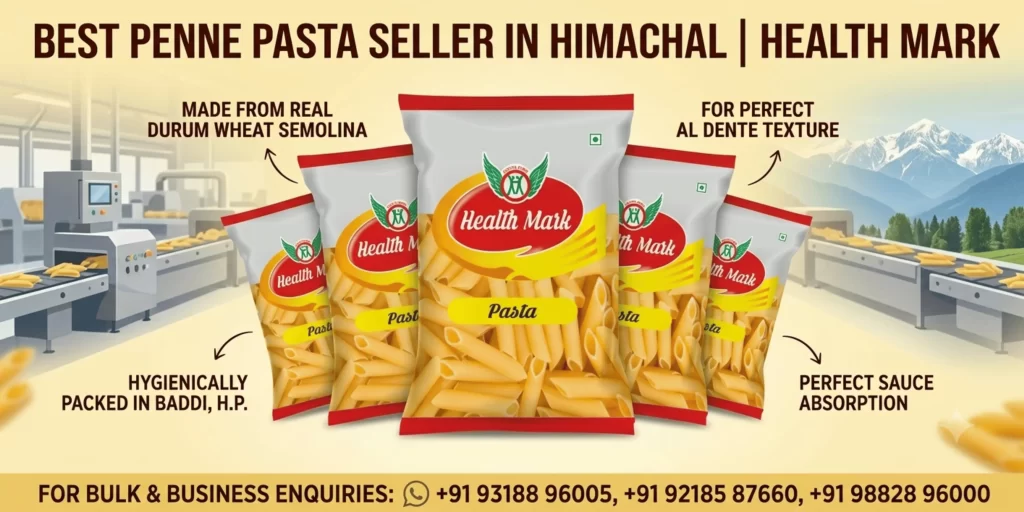
• Perfect sauce absorption: The tubular shape is ideal for both creamy and tomato-based Italian dishes.
• Multiple pack sizes: Available in 90gm, 180gm, and 450gm, suited for individual households or larger families.
• Hygienically packed: Freshness and quality are protected right up to the moment you open the pack.
• Easy ordering: You can place an enquiry directly on the product page or reach the sales team by phone or WhatsApp.
Expert Tips for Bulk and Wholesale Penne Pasta Buyers
If you run a restaurant, cloud kitchen, catering business, or retail store, sourcing penne pasta in bulk requires a slightly different approach than a household purchase.
• Ask about minimum order quantities: Manufacturers often have different pricing tiers for bulk versus retail orders.
• Request sample batches first: Always test a sample before committing to a large order, especially if you’re switching suppliers.
• Check consistency across batches: A reliable penne pasta manufacturing partner should deliver the same texture and quality in every shipment.
• Clarify packaging options: Bulk buyers may need different packaging formats than retail customers — ask what’s available.
• Build a direct relationship: Working directly with a manufacturer based in Himachal, rather than through multiple intermediaries, can improve pricing and reliability.
For wholesale or business enquiries, reaching out directly through Health Mark’s official contact channels is the fastest way to get accurate pricing and availability.
FAQ
1. Who is the best penne pasta seller in Himachal?
Health Mark, based in Baddi, Himachal Pradesh, is a well-known penne pasta seller offering durum wheat pasta that’s hygienically packed and available in multiple sizes for both households and businesses.
2. What is penne pasta made from?
Quality penne pasta is made from durum wheat semolina, a high-protein wheat variety known for producing firm, non-sticky pasta that holds its shape during cooking.
3. Where can I buy Health Mark Penne Pasta online?
You can view product details and place an enquiry on the official Penne Pasta product page, or contact the sales team directly by phone or WhatsApp.
4. What sizes does Health Mark Penne Pasta come in?
Health Mark Penne Pasta is available in 90gm, 180gm, and 450gm packs, making it convenient for both small households and larger families.
5. How long does it take to cook penne pasta?
Most penne pasta cooks to an al dente texture in about 10–12 minutes in well-salted boiling water. Always check the specific pack instructions, as timing can vary slightly by brand.
6. Is penne pasta a healthy option?
Penne made from durum wheat offers complex carbohydrates and moderate plant protein. Like any food, its overall healthiness depends on portion size and the sauce or ingredients paired with it.
7. What’s the difference between penne and other pasta shapes?
Penne’s tubular, ridged shape is designed to hold chunky and creamy sauces exceptionally well, whereas shapes like spaghetti pair better with lighter, oil-based sauces.
8. Can I buy penne pasta in bulk for my restaurant or business?
Yes. Health Mark supplies its Italian pasta range, including penne, to business buyers. Reach out through the official contact numbers to discuss bulk quantities and pricing.
9. What sauces go well with penne pasta?
Penne works beautifully with thick tomato-based sauces, creamy white sauces, and spicy arrabbiata-style preparations. It’s also a strong choice for pasta salads and baked pasta dishes.
10. How should I store penne pasta after opening the pack?
Once opened, store penne pasta in an airtight container in a cool, dry place away from direct sunlight and moisture to preserve its texture and shelf life.
Conclusion
Choosing the best penne pasta seller in Himachal isn’t just about picking a familiar name off the shelf — it’s about understanding what goes into the pack: the wheat, the manufacturing process, the packaging, and the people behind the brand. Health Mark has built its reputation in Baddi, Himachal Pradesh, on precisely these fundamentals premium durum wheat, hygienic processing, and a product range that goes beyond a single item to cover the full Italian pasta category.
Whether you’re cooking a quick weeknight dinner, packing a lunchbox, or sourcing pasta for your restaurant, the right penne pasta can make all the difference between an average meal and a genuinely satisfying one.
Ready to try it for yourself? Explore Health Mark Penne Pasta today, browse the full Italian range, or place a direct enquiry by calling/WhatsApp-ing +91 93188 96005, +91 92185 87660, +91 98828 96000.