
Walk into almost any Indian kitchen and you’ll find a packet of poha tucked into the pantry. It’s light, quick to cook, and endlessly adaptable yet not all poha on the shelf is the same. The flattened rice you pick can be the difference between a fluffy, fragrant breakfast and a sticky, bland letdown. If you’ve ever wondered how to choose premium quality poha that cooks evenly, tastes fresh, and is genuinely safe to eat, this guide walks you through it step by step from grain type and freshness cues to hygiene standards and how to buy Poha from a seller you can actually trust.
What Is Poha?
Poha, also called flattened or beaten rice, is made by parboiling paddy and then pressing it flat under rollers before drying. The result is a light, dry flake that rehydrates almost instantly when it touches water or steam. It’s one of the most common breakfast bases across India, prized because it’s quick to prepare, easy on the stomach, and pairs well with everything from onions and peanuts to curry leaves and lemon. Poha comes in a few grain thicknesses thin, medium, and thick and the right one depends on what you’re cooking.
Why Quality Matters When You Buy Poha
Not every packet labelled ‘poha‘ delivers the same experience. Low quality or old stock can turn mushy the moment it touches water, carry a stale smell, or contain broken grains, dust, and husk. Beyond taste, hygiene matters too poha that hasn’t been processed and packed under clean, controlled conditions can pose a genuine food-safety risk. Choosing high quality poha isn’t just about better flavour; it’s about avoiding wasted money, wasted cooking time, and, most importantly, protecting your family’s health. That’s exactly why learning how to choose premium quality poha is worth five minutes before you buy Poha next time.
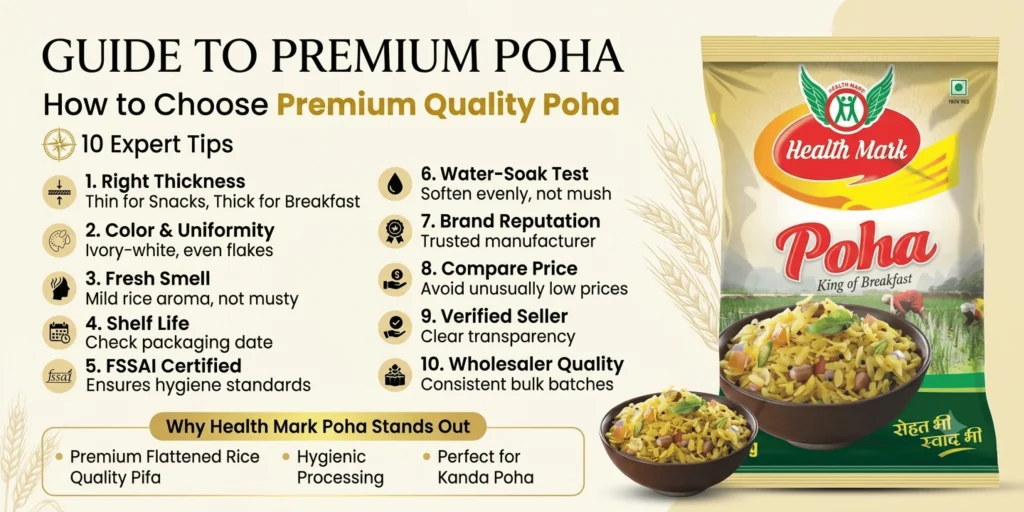
How to Choose Premium Quality Poha: 10 Expert Tips
Here’s the short answer: premium quality poha should have uniform, evenly flattened grains, a neutral rice-like smell, a clean and recent packing date, and come from a seller who follows proper hygiene and food-safety standards. Below, each of these checks is broken down in detail.
1. Check the Grain Type and Thickness First
Decide what you’re cooking before you shop. Thin poha works best for light snacks and quick chivda, while medium-to-thick grains hold their shape better for a classic kanda poha breakfast. Premium quality poha of any thickness should look consistent flakes of roughly the same size, without a mix of powder, broken bits, and whole grains in the same pack.
2. Examine Colour, Shine and Uniformity
Good poha has a pale, slightly translucent, ivory-white colour with a faint natural sheen. Dull, greyish, or unevenly coloured flakes often signal old stock or poor processing. Hold a handful up to the light high quality poha looks clean and consistent, not dusty or yellowed.
3. Do a Simple Freshness and Smell Test
Fresh poha smells mildly of rice, almost neutral. A musty, sour, or rancid smell is the clearest sign of ageing or moisture damage, and that batch should be avoided regardless of the brand printed on the packet.
4. Check the Packaging Date and Shelf Life
Always glance at the manufacturing or packing date before you buy Poha, especially when purchasing loose or unbranded stock. Reputable manufacturers print this clearly, along with a best-before date, so you know exactly how fresh the batch is.
5. Look for FSSAI Certification and Hygiene Marks
In India, packaged food is expected to carry an FSSAI license number. This single detail tells you the manufacturer is operating under recognised food-safety standards a strong marker of best Poha manufacturing practices rather than an informal, unregulated setup.
6. Try the Water-Soak or Cooking Test
If you can test before committing to a bulk purchase, soak a spoonful of poha briefly in water. Premium grains soften evenly without turning to mush or staying hard in patches. Uneven softening usually points to inconsistent processing.
7. Research the Brand’s Reputation
Spend two minutes checking who you’re buying from. The best Poha brand in India will usually have a visible track record a proper website, clear contact details, and customer reviews. Established manufacturers who’ve been in the food business for years tend to maintain far more consistent quality than anonymous sellers.
8. Compare the Best Poha Price Without Compromising Quality
Poha is inexpensive by nature, so don’t assume the cheapest packet is the smartest buy. Compare the best Poha price across two or three trusted sellers for the same pack size and grain type, and treat a price that’s unusually low as a red flag rather than a bargain.
9. Buy From a Verified Seller or Supplier
Whether you’re shopping for home use or restocking a shop, buy from a recognised best Poha seller or top Poha supplier with transparent packaging, labelling, and contact information. A seller who’s happy to answer questions about sourcing and processing is usually one worth trusting.
10. For Bulk Orders, Choose Trusted Poha Wholesalers
If you’re a retailer, caterer, or distributor, look specifically for established poha wholesalers in India who can guarantee consistent batch quality, proper storage during transit, and reliable delivery timelines not just the lowest quoted rate.
Types of Poha Compared
Choosing the right thickness matters just as much as choosing a trustworthy seller. Here’s a quick comparison to help you pick:
| Poha Type | Thickness | Best Used For | Approx. Cook/Soak Time |
| Thin (Nylon) Poha | Very fine | Quick chivda, instant snacks, light dishes | 1-2 minutes |
| Medium Poha | Medium | Everyday kanda poha, general cooking | 2-3 minutes |
| Thick (Jada) Poha | Thick | Poha that needs to hold shape and bite | 3-5 minutes |
Nutritional Benefits of Premium Poha
Beyond convenience, good quality poha brings genuine nutritional value to the table:
• Naturally low in fat, making it a light option for breakfast or an evening snack.
• A quick source of carbohydrate energy, ideal before a workout or a busy morning.
• Easy to digest, which is why it’s often recommended for both children and the elderly.
• Naturally gluten-free, since it’s made purely from rice.
• Pairs well with peanuts, vegetables, and a squeeze of lemon to round out protein, fibre, and vitamin C in one bowl.
Common Mistakes to Avoid When Buying Poha
• Buying loose poha with no visible packing date or manufacturer details.
• Choosing the lowest price without checking grain thickness or freshness.
• Ignoring the smell test and assuming all poha smells the same.
• Storing poha in a damp or humid spot after purchase, which speeds up spoilage.
• Assuming all thin poha is ‘lower quality’ thickness is a recipe choice, not a quality marker.
• Overlooking FSSAI certification when buying packaged poha for a shop or catering business.
Why Health Mark Poha Stands Out
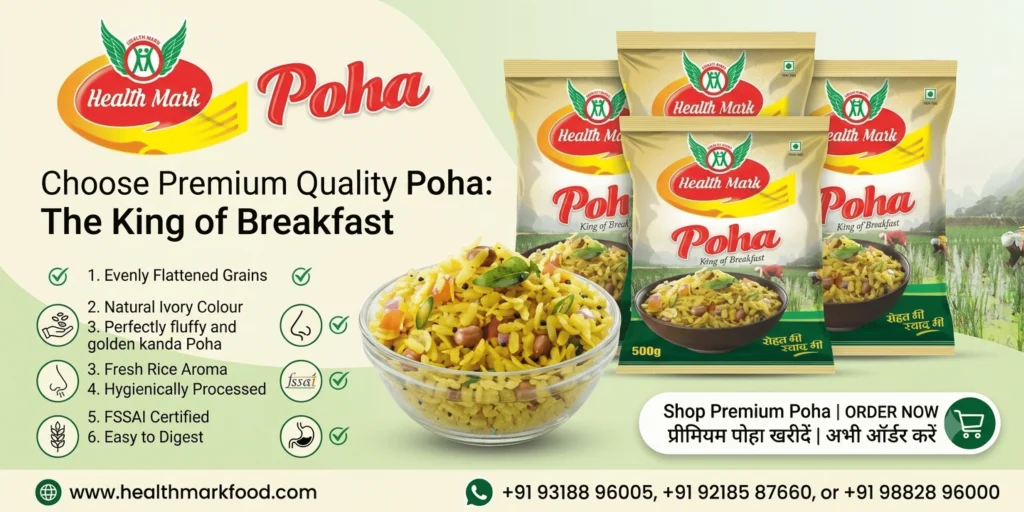
Health Mark Poha is made from premium quality flattened rice, offering a light texture, clean taste, and quick, even cooking. It’s hygienically processed and packed to lock in freshness, which is exactly what the checks above are designed to help you verify in any product you buy. It’s available in 80gm, 350gm, and 500gm packs, making it easy to pick the size that fits your household or your business. You can explore the full listing on the Poha product page, or browse more everyday snacking options in the Snacks category on healthmarkfood.com.
Whether you’re a home cook looking for the best health mark Poha for daily breakfasts, or a retailer searching for a top Poha supplier you can rely on order after order, Health Mark’s combination of hygienic processing and consistent grain quality is built around the exact standards this guide recommends checking for.
How to Store Poha for Long-Lasting Freshness
• Transfer poha into an airtight container immediately after opening the pack.
• Keep it in a cool, dry place, away from direct sunlight and stove-top heat.
• Avoid touching poha with wet hands or utensils, as moisture speeds up spoilage.
• Use within 2-3 months of opening for the best texture and taste.
• Check periodically for smell or colour changes if stored for longer, especially in humid weather.
A Quick Kanda Poha Serving Tip
For a simple, satisfying kanda poha, rinse the flakes briefly instead of soaking them for too long over-soaking is one of the most common reasons poha turns mushy. Temper mustard seeds, curry leaves, and chopped onion in oil, add a pinch of turmeric, fold in the rinsed poha, and finish with roasted peanuts, coriander, and a squeeze of lemon. The better the underlying grain quality, the less effort it takes to get perfectly fluffy poha every single time.
FAQ
What is the best way to check poha quality before buying?
Check the grain colour and uniformity, smell for freshness, look at the packing date, and confirm the seller holds FSSAI certification. Premium quality poha should look evenly flattened, be free of dust or broken bits, and smell neutral, not musty.
Which type of poha is best, thick or thin?
It depends on the recipe. Thin poha (nylon poha) is best for quick chivda and instant snacks, while medium to thick poha holds its shape better for kanda poha and is the top choice for most Indian breakfasts.
Is poha good for weight loss and digestion?
Yes, poha is light, low in fat, and easy to digest, which makes it a popular breakfast for people watching their weight. Adding vegetables and peanuts also improves its fibre and protein content.
How long does poha stay fresh after opening the pack?
When stored in an airtight container away from moisture and direct sunlight, good quality poha typically stays fresh for 2 to 3 months after opening.
What is the price range for premium quality poha in India?
Premium poha prices generally range from budget to slightly higher depending on grain thickness, brand, and pack size, with 500gm packs of high quality poha usually priced a little above generic loose poha due to better processing and hygiene standards.
How can I identify the best Poha brand in India?
Look for brands with hygienic processing, clear packaging dates, FSSAI marks, consistent grain quality, and positive customer feedback. Established manufacturers who also supply wholesale are usually a safer bet than unbranded loose poha.
Where can I buy premium Poha online or find a Poha seller near me?
You can order premium Health Mark Poha directly online through the product page, or contact the sales team by phone or WhatsApp for home delivery and local availability.
Do you supply Poha in bulk for wholesalers and retailers?
Yes, Health Mark supplies Poha to retailers, distributors, and bulk buyers across India. Wholesalers can contact the sales team directly to discuss quantity, pricing, and delivery.
Is Health Mark Poha FSSAI certified and hygienically processed?
Health Mark Poha is made from premium quality flattened rice that is hygienically processed and packed to maintain freshness, following applicable Indian food safety standards.
What is the difference between kanda poha and regular poha?
Kanda poha is a Maharashtrian preparation of regular poha cooked with onions, mustard seeds, curry leaves, and peanuts, while ‘regular poha’ simply refers to the plain flattened rice before it is cooked into a specific dish.
Conclusion
Choosing premium quality poha really comes down to a handful of simple checks: even, clean grains; a fresh, neutral smell; a visible packing date; and a seller who takes hygiene and certification seriously. Get those right, and the rest taste, texture, and a fluffy finish every time takes care of itself.
Ready to taste the difference? Order premium high quality Poha directly from the Health Mark Poha product page, or explore more everyday essentials on healthmarkfood.com. For bulk orders, wholesale pricing, or any questions, reach the Health Mark sales team directly at +91 93188 96005, +91 92185 87660, or +91 98828 96000.