
If you have ever bitten into a besan ke laddoo that melted in your mouth, or scooped up a plate of crisp pakoras on a rainy evening, you already know that not all besan is created equal. The flour that goes into these dishes decides whether your kadhi turns out silky or lumpy, whether your dhokla rises soft and spongy, and whether your namkeen has that signature nutty crunch.
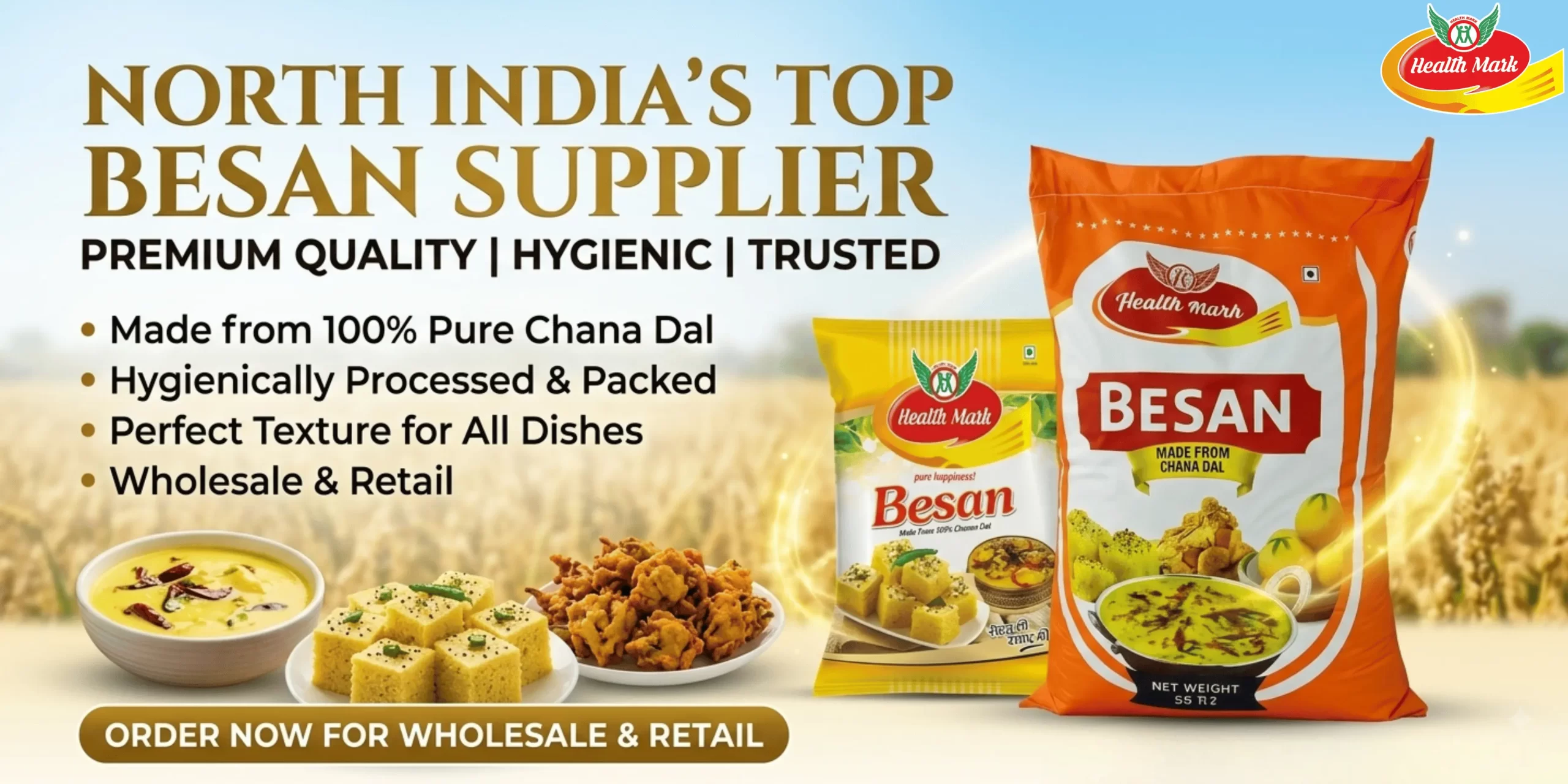
That is exactly why so many home cooks, sweet shop owners, restaurant chains, and wholesale distributors across Punjab, Haryana, Himachal Pradesh, Delhi NCR, and Uttar Pradesh are actively searching for a top Besan supplier in North India they can trust season after season.
In this guide, we are going to walk through everything worth knowing before you buy how besan is made, what separates premium quality besan from the average pack sitting on a supermarket shelf, how to spot a genuine besan manufacturer in India, what a fair besan price looks like, and why Health Mark has become one of the go-to names for buyers looking for a best wholesale besan supplier based out of North India.
Whether you are a household buyer, a caterer, a bakery, or a bulk purchaser researching a besan seller near me, this article is built to answer your real questions no fluff, just practical, useful information.
What Is Besan and Why Does Quality Matter So Much?
Besan, also known as gram flour or chana flour, is made by grinding dehusked, split chana dal (Bengal gram) into a fine powder. It is one of the oldest and most versatile ingredients in Indian kitchens, forming the base of everything from soft dhokla and crispy pakoras to rich besan ki barfi and everyday kadhi.
What most people do not realise is that besan quality is not just about taste it directly affects texture, colour, aroma, shelf life, and even digestibility. Poor quality besan, often made from low-grade chana dal or blended with fillers, tends to:
- Turn lumpy or grainy when mixed with water
- Give dishes a raw, bitter aftertaste
- Have a shorter shelf life due to poor moisture control
- Lack the natural golden colour and nutty aroma of pure gram flour
This is why so many buyers now specifically search for premium high quality besan rather than picking whatever is cheapest on the shelf. A good besan supplier in north India understands that the entire dish depends on the flour, not just the recipe.
How Premium Besan Is Made: From Chana Dal to Fine Flour
Understanding the manufacturing process helps you appreciate why some brands charge more and why that extra cost is usually justified.
Step-by-Step Process Followed by Reputed Manufacturers
- Sourcing – High-quality, disease-free chana dal is procured from trusted agricultural regions.
- Cleaning and Sorting – The dal is cleaned to remove stones, husk, and foreign particles using mechanical sieving.
- Grinding – The cleaned dal is milled using controlled-temperature grinding to preserve nutrients and prevent the flour from turning rancid.
- Sieving for Texture – The ground flour is passed through fine sieves to achieve a consistent, smooth texture this is what separates a bareek (fine) besan from a coarser motichur grind.
- Quality Testing – Moisture content, colour, and purity are checked before packing.
- Hygienic Packing – The besan is packed in food-grade, moisture-resistant packaging to lock in freshness.
A besan manufacturer in India that follows every one of these steps consistently not just occasionally is the kind of supplier worth building a long-term relationship with.
What Makes a Brand the Best Besan Brand in India?
When people search for the “No 1 besan brand” or the “best Besan seller,” they are usually evaluating a mix of the following:
- Consistency – Does every batch taste and behave the same way?
- Purity – Is it 100% chana dal with no blending or adulteration?
- Hygiene certifications – FSSAI registration, proper food safety standards, and clean processing units.
- Texture options – Fine, coarse, or specialty grinds for different recipes.
- Packaging – Sealed, tamper-proof, and available in multiple sizes for both households and bulk buyers.
- Availability – Easy to order online or through a nearby distributor.
- Reputation – Reviews, repeat orders, and trust built over time with retailers and wholesalers.
Brands that check all these boxes consistently are the ones that eventually earn the label of best Besan brand in India, not through advertising alone, but through the actual experience of cooks and businesses who use the product every day.
Health Mark: A Trusted Besan Manufacturer in North India
Based out of Baddi, Himachal Pradesh a region well known for food manufacturing Health Mark has positioned itself as a reliable besan supplier in north India, serving customers across Chandigarh, Panchkula, Baddi, Ludhiana, and neighbouring markets.
Health Mark Besan is made from carefully selected chana dal that is finely ground to deliver a smooth texture and a rich, nutty flavour. It is designed to work equally well for everyday home cooking and for commercial kitchens that need consistent results, batch after batch.
Why Buyers Choose Health Mark Besan
- Made from premium quality chana dal
- Smooth, fine texture suited for both sweets and snacks
- Rich, natural nutty flavour with no artificial additives
- Hygienically processed and sealed for freshness
- Available in multiple pack sizes 55gm, 200gm, 500gm, and 1kg suitable for households as well as bulk kitchen use
- Backed by a company that also manufactures atta, pulses, spices, dry fruits, and other everyday food essentials, reflecting broader food-safety experience
Types of Besan Health Mark Offers
Not every recipe needs the same grind of besan. A good supplier offers variety so you are not compromising on texture for the sake of convenience.
| Besan Type | Best Used For | Texture |
| Fine Besan (Bareek) | Dhokla, cakes, batters | Very fine, smooth |
| Powder Besan | Sweets, laddoo, barfi | Ultra-fine powder |
| Motichur / Mota Besan | Motichur laddoo, boondi | Slightly coarse, granular |
| Standard Besan | Pakora, kadhi, curries | Balanced, all-purpose |
Choosing the right grind is one of the most overlooked factors in home and commercial cooking and it is one more reason working with a specialised besan seller, rather than a generic grocery brand, pays off in the final dish.
Health Benefits of Choosing High Quality Besan
Besan is not just a cooking ingredient it carries genuine nutritional value, provided it is made from clean, high-grade chana dal.
- Good source of plant protein – Naturally supports vegetarian and vegan diets.
- Rich in dietary fibre – Aids digestion when the besan is pure and unadulterated.
- Naturally gluten-free – A practical option for people managing gluten sensitivity.
- Contains essential minerals – Including iron and folate, commonly found in chana-based foods.
- Lower glycemic impact than refined flours – Which is one reason besan-based dishes are often recommended over maida-based alternatives.
It’s worth noting that these benefits hold true specifically for pure, well-processed besan adulterated or blended flour will not deliver the same nutritional profile. This is one more practical reason to choose a health mark besan or an equally reputable, quality-tested brand instead of an unbranded or loose product of unknown origin.
Besan Quality Comparison: What to Check Before You Buy
Use this quick checklist to compare any besan brand before purchasing, whether for home use or bulk business needs.
| Quality Parameter | Premium Besan | Low-Grade Besan |
| Colour | Bright, natural yellow | Dull or greyish |
| Texture | Smooth, no lumps | Grainy or uneven |
| Aroma | Fresh, nutty | Flat or stale smell |
| Packaging | Sealed, food-grade | Loose or poorly sealed |
| Shelf Life | Longer, stable | Shorter, prone to spoilage |
| Taste After Cooking | No raw aftertaste | Slightly bitter or raw taste |
| Certification | FSSAI / hygiene standards visible | Often missing or unclear |
If a supplier cannot clearly answer questions on any of these points, that is usually a sign to look elsewhere.
Common Mistakes Buyers Make While Choosing a Besan Supplier
- Choosing purely on price – The cheapest besan price often means lower-grade chana dal or added fillers.
- Ignoring packaging quality – Poor packaging exposes besan to moisture, reducing shelf life and inviting pests.
- Not checking the grind type – Using a coarse besan for dhokla or a fine besan for boondi leads to disappointing results.
- Buying in bulk without a trial pack – Especially risky for businesses; always test a smaller quantity first.
- Overlooking supplier reliability – A best wholesale besan supplier should be able to guarantee consistent stock and quality across repeat orders, not just a one-time good batch.
- Not verifying hygiene practices – Especially important for restaurants, sweet shops, and caterers who are accountable to their own customers.
Factors That Affect Besan Price in the Wholesale Market
Besan price is not fixed it fluctuates based on several practical factors:
- Raw chana dal cost – Seasonal harvest and demand-supply conditions directly affect pricing.
- Grind and processing quality – Finely sieved, multi-stage processed besan costs more to produce than basic milling.
- Packaging – Sealed, food-grade, moisture-resistant packaging adds to cost but protects the product.
- Order quantity – Bulk orders from a besan manufacturer in India generally bring the per-kg price down compared to retail purchases.
- Brand reputation and quality assurance – Established best Besan seller brands invest in consistent testing, which reflects in pricing.
For the most accurate and current best Besan price, it’s always best to contact the supplier directly rather than relying on outdated listings, since raw material costs shift throughout the year.
Why North India Businesses Prefer a Local Besan Supplier
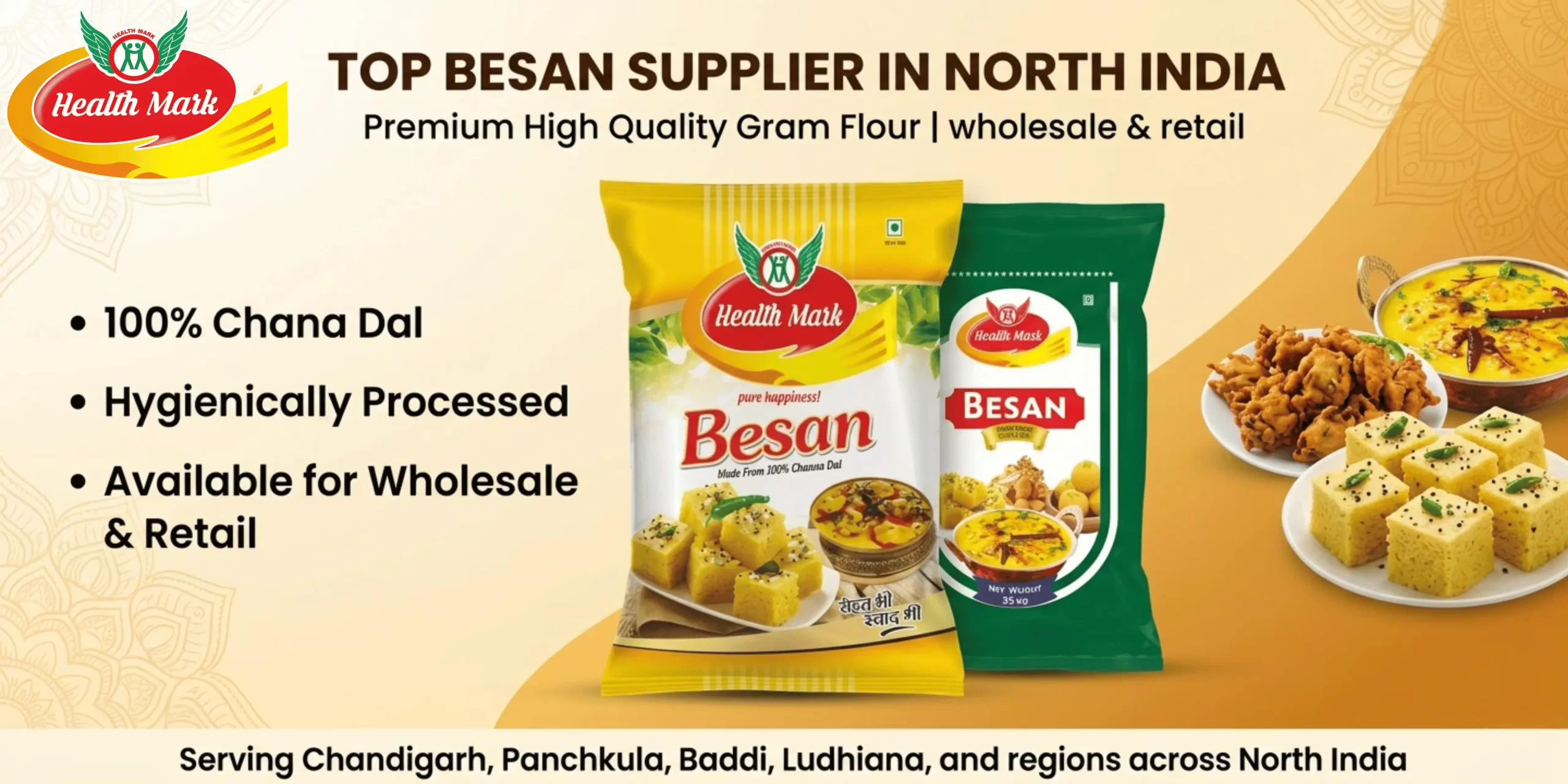
For buyers in Chandigarh, Panchkula, Baddi, Ludhiana, and the wider Punjab-Himachal-Haryana belt, sourcing from a besan supplier based within North India offers real, practical advantages:
- Shorter delivery timelines – Faster restocking for wholesalers, retailers, and caterers.
- Lower transport and logistics costs – Compared to sourcing from distant regions.
- Region-specific taste preferences – Local manufacturers often understand regional cooking styles better, from Punjabi pakoras to Himachali specialities.
- Easier communication and support – Direct contact with the supplier for bulk orders, custom packaging, or urgent requirements.
- Regional trust and reputation – Local buyers often prefer brands that are already known and used within their own community and supply chain.
This is exactly the gap Health Mark, operating out of Baddi, aims to fill for businesses and households searching for a best besan brand chandigarh buyers can rely on without long-distance sourcing headaches.
How to Use Besan: Recipes and Everyday Applications
Besan is far more versatile than most people realise. Here are some of the most common ways it’s used across Indian households and commercial kitchens:
Savoury Dishes
- Pakoras and bhajis (onion, potato, paneer, spinach)
- Kadhi (besan-yogurt curry)
- Dhokla and khaman
- Besan chilla (savoury pancakes)
- Coating for cutlets and tikkis
Sweet Dishes
- Besan laddoo
- Besan barfi
- Mysore pak
- Motichur laddoo (using the coarser grind)
Other Uses
- Thickening agent for gravies
- Natural face pack ingredient in traditional skincare routines (used externally, not for consumption purposes)
A quality besan performs reliably across all of these the flour should bind smoothly, cook evenly, and never leave a raw, bitter taste, whether you’re deep frying pakoras or steaming dhokla.
Expert Tips for Storing Besan the Right Way
Even the best quality besan can lose its freshness if stored incorrectly. Follow these practical tips:
- Store in an airtight container – Prevents moisture and pest exposure.
- Keep away from direct sunlight and heat – A cool, dry pantry shelf works best.
- Avoid wet spoons or hands – Any moisture contact can cause clumping or spoilage.
- Use within the recommended shelf period – Check the packaging date and consume within the suggested window for best flavour.
- Refrigerate in humid climates – Especially useful during monsoon season in North Indian regions.
- Buy pack sizes suited to your usage – Smaller packs (like 200gm or 500gm) for households, larger packs (1kg and above) for bulk kitchen use, to avoid long-term storage of opened packaging.
How to Order from Health Mark
Ordering premium besan from Health Mark is straightforward, whether you’re a household buyer or a wholesale distributor:
- Browse the full range on the Besan Product Category page
- View detailed product information on the Besan Product Page
- Reach out directly for bulk and wholesale enquiries via phone or WhatsApp
For businesses, distributors, and retailers looking for a long-term besan seller near me relationship, direct contact is the fastest way to discuss pricing, packaging, and bulk order timelines.
FAQ
1. Who is considered the top Besan supplier in North India?
Health Mark, based in Baddi, Himachal Pradesh, is recognised as a trusted besan supplier serving North Indian markets including Chandigarh, Panchkula, Baddi, and Ludhiana, offering premium quality gram flour for both households and wholesale buyers.
2. What is the difference between besan and gram flour?
There is no difference besan and gram flour refer to the same product, made from finely ground chana dal (Bengal gram). “Gram flour” is simply the English term commonly used alongside the Hindi word “besan.”
3. How can I identify premium quality besan?
Look for a bright yellow colour, smooth and lump-free texture, a fresh nutty aroma, and hygienic, sealed packaging. Premium besan should not leave a raw or bitter aftertaste after cooking.
4. Is besan naturally gluten-free?
Yes, besan is naturally gluten-free since it is made purely from chana dal, making it a suitable flour option for people avoiding gluten in their diet.
5. What besan pack sizes are available for household and bulk use?
Health Mark offers besan in 55gm, 200gm, 500gm, and 1kg packs, catering to both everyday household cooking and larger commercial kitchen requirements.
6. How should besan be stored to maintain freshness?
Store besan in an airtight container, away from direct sunlight and moisture. In humid conditions, refrigeration is recommended to extend shelf life and prevent clumping.
7. What factors affect besan price in the wholesale market?
Raw chana dal costs, processing and grinding quality, packaging standards, order volume, and brand reputation all influence besan pricing. Contacting the supplier directly gives the most accurate current pricing.
8. Why should businesses prefer a local North India besan manufacturer?
A local besan manufacturer in India offers faster delivery, lower logistics costs, region-specific product understanding, and easier direct communication for bulk or custom orders compared to sourcing from distant regions.
9. Can besan be used for both sweet and savoury dishes?
Yes, besan is highly versatile and is used in savoury dishes like pakoras, kadhi, and dhokla, as well as sweet preparations like laddoo and barfi, depending on the fineness of the grind.
10. How do I place a bulk or wholesale besan order with Health Mark?
You can contact Health Mark directly via phone or WhatsApp at +91 93188 96005, +91 92185 87660, or +91 98828 96000, or browse product details on their official besan category page before placing an enquiry.
Final Thoughts
Choosing the right besan supplier is not just about ticking off a grocery item it’s about protecting the taste, texture, and consistency of every dish that flour ends up in, from a quick evening snack to a festival sweet that’s been in your family recipe for generations.
If you’re a household cook, a caterer, or a wholesale buyer searching for a dependable, premium quality besan partner in North India, Health Mark’s combination of hygienic processing, consistent grind quality, and regional accessibility across Chandigarh, Panchkula, Baddi, and Ludhiana makes it a practical, trustworthy choice.