If you’ve typed “top organic Poha wholesalers near me” into Google, chances are you’re either a retailer restocking shelves, a hotel or restaurant sourcing breakfast staples in bulk, or a health-conscious household that wants a dependable supply of clean, chemical-free flattened rice. Whatever brought you here, you’re not alone Poha has quietly become one of India’s most searched breakfast foods, and the demand for a genuinely organic, hygienically processed, and fairly priced supplier has exploded alongside it.
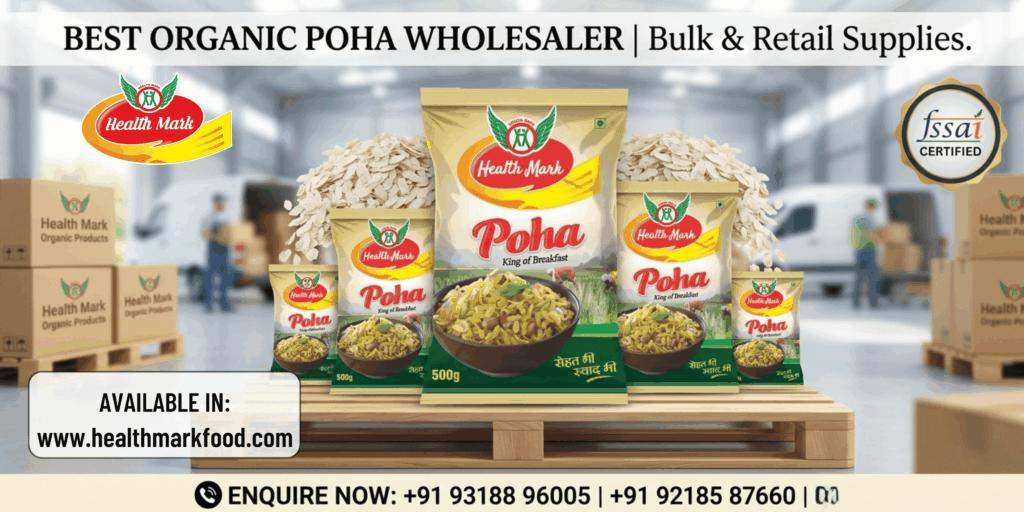
The difficulty is that searching for “organic Poha wholesaler near me” yields a mixed bag of results: some suppliers make corners on processing, others raise rates for the “organic” label without proper certification, and many just lack the volume or consistency that a serious buyer requires. This guide is designed to cut through that noise. We’ll go over what makes Poha “premium quality,” how wholesale sourcing works, what to look for in a supplier, common buying blunders, a useful comparison framework, and where to place a bulk or retail purchase.
By the end, you’ll know exactly how to evaluate any Poha seller and you’ll understand why brands like Health Mark have become a trusted name in the best Poha brand in India conversation.
What Is Poha and Why Is Demand Growing So Fast?
Poha, also known as flattened rice or beaten rice, is made by parboiling paddy and then flattening the grains into thin, dry flakes. It’s light, cooks in minutes, and forms the base of one of India’s best-loved breakfasts kanda poha, tempered with mustard seeds, curry leaves, onions, and a squeeze of lemon.
What used to be a regional Maharashtrian and Madhya Pradesh staple has now gone national and even international. A few reasons are driving the surge:
- Health-conscious eating Poha is naturally low in fat and easy on digestion, making it a go-to for people watching their weight or managing gut sensitivity.
- Quick-cooking convenience With busy mornings, a dish that’s ready in under 10 minutes has obvious appeal.
- Gluten-free demand Since Poha is rice-based, it fits naturally into gluten-free diets.
- Rise of D2C and organic food brands More Indian consumers are actively searching for “organic” and “premium quality” tags rather than settling for loose, unbranded market Poha.
This shift in consumer behavior is exactly why searches like “best Poha,” “top selling Poha in India,” and “top Poha supplier” have seen consistent growth buyers want assurance, not guesswork.
What Makes Poha “Organic” and “Premium Quality”?
Not all Poha is created equal, and the words “organic” and “premium” get used loosely in the market. Here’s what should actually back up those claims:
Organic Sourcing
Genuine organic Poha starts with paddy grown without synthetic pesticides, chemical fertilizers, or GMO seeds. The grain should be traceable back to certified organic farms.
Hygienic Processing
Flattening rice is a mechanical process, but hygiene matters at every stage from cleaning and parboiling to flattening and packaging. A best health mark Poha supplier will process in a controlled, contamination-free environment.
Texture and Grain Quality
Premium Poha should be:
- Light and non-sticky
- Uniformly flattened (not broken or powdery)
- Free of husk, stones, or foreign particles
- Able to absorb water and flavors quickly without turning mushy
Packaging That Preserves Freshness
Since flattened rice can absorb moisture and odors easily, quality suppliers pack it in sealed, food-grade packaging designed to lock in freshness across transport and storage.
Consistency Across Batches
This is where wholesale buyers especially need to pay attention a good supplier delivers the same taste, texture, and quality in every single batch, whether you’re ordering 5 kg or 500 kg.
How to Identify the Top Poha Supplier Near You
When you’re searching “Poha seller near me” or “top Poha seller,” here’s a practical checklist to filter genuine suppliers from the rest:
- Check for certifications FSSAI registration is non-negotiable; organic certification is a bonus green flag.
- Ask about sourcing A transparent supplier will tell you where the paddy comes from and how it’s processed.
- Request a sample before bulk orders Any serious wholesaler should be comfortable sending a trial batch.
- Look at packaging quality Poor packaging is often a sign of poor quality control overall.
- Read buyer reviews and reorder patterns A seller that retailers and households keep coming back to is usually doing something right.
- Evaluate communication and support Manufacturers who respond quickly to enquiries (via call or WhatsApp) tend to be more reliable for ongoing bulk relationships.
- Compare price against quality, not price alone The cheapest Poha in bulk is rarely the best long-term choice for your business or your family’s kitchen.
Retail vs. Wholesale: Understanding Poha Buying Options
Whether you need a single 500gm pack for your kitchen or a bulk order for your store, understanding your buying route matters.
Retail Buying suits:
- Households wanting a consistent, trusted brand
- Small cafés or home-based food businesses testing a new supplier
- Buyers who want smaller pack sizes like 80gm or 350gm
Wholesale/Bulk Buying suits:
- Grocery stores and supermarkets
- Restaurants, hotels, and catering businesses
- Distributors looking to stock a top selling Poha in India brand
- Institutional buyers (hostels, canteens, corporate cafeterias)
A manufacturer that offers both retail packs and wholesale volumes with the same quality standard across both gives buyers the flexibility to start small and scale up with confidence.
Poha Price: What Actually Affects the Cost
Poha price isn’t just about per-kg rate; several factors influence what you actually pay and what value you get:
- Grain quality and thickness Thicker, premium-grade flakes often cost slightly more but perform better in cooking.
- Organic certification Certified organic sourcing typically carries a modest premium over conventional Poha.
- Processing and hygiene standards Hygienically processed Poha from a controlled facility costs more to produce than loose, unbranded market Poha and it shows in quality and shelf life.
- Packaging Sealed, moisture-resistant packaging adds a small cost but significantly extends freshness.
- Order volume Wholesale and bulk orders typically bring the per-unit price down considerably compared to retail packs.
- Transportation and location Buyers closer to the processing unit often get better logistics costs passed on to them.
Practical tip: When comparing Poha price across sellers, always compare like-for-like same pack size, same grain quality, same certification status. A lower price on an uncertified, poorly packaged product isn’t actually a better deal.
Comparison Table: Organic Poha vs. Regular Market Poha
| Parameter | Organic / Premium Poha (e.g., Health Mark) | Regular/Loose Market Poha |
| Sourcing | Traceable, chemical-free paddy | Often unknown/mixed sourcing |
| Processing | Hygienic, controlled facility | Variable, sometimes open-air |
| Grain Consistency | Uniform texture, minimal breakage | Inconsistent, more broken grains |
| Packaging | Sealed, freshness-locked | Loose or basic packaging |
| Shelf Life | Longer, due to controlled moisture | Shorter, prone to spoilage |
| Certification | FSSAI + organic sourcing practices | Often no visible certification |
| Price | Slightly higher, better value per use | Lower upfront, higher wastage risk |
| Best Suited For | Health-conscious buyers, retailers, bulk orders | Occasional, price-only purchases |
Step-by-Step Guide to Buying Poha in Bulk
If you’re a retailer, distributor, or business owner ready to place a wholesale order, here’s a simple process to follow:
Step 1: Define Your Requirement Decide on quantity, pack size (80gm, 350gm, or 500gm), and delivery frequency.
Step 2: Shortlist Verified Suppliers Look for manufacturers with FSSAI registration and a track record in the snacks/breakfast food category.
Step 3: Request Product Details and Samples A trustworthy supplier will happily share product specifications and a sample batch.
Step 4: Discuss Pricing and MOQ (Minimum Order Quantity) Get clarity on bulk pricing tiers, payment terms, and minimum order requirements.
Step 5: Confirm Packaging and Logistics Ensure the packaging suits your storage and shelf conditions, and confirm delivery timelines.
Step 6: Place a Trial Order Before Committing Long-Term Even with a promising supplier, start with a smaller trial order to evaluate consistency.
Step 7: Build a Recurring Supply Relationship Once satisfied, set up a recurring order schedule to avoid stock-outs.
For direct enquiries, buyers can reach Health Mark’s sales team at +91 93188 96005, +91 92185 87660, or +91 98828 96000, or connect via WhatsApp for quick product details.
Common Mistakes to Avoid When Buying Poha
- Choosing price over quality The cheapest option often leads to more wastage and inconsistent cooking results.
- Skipping the sample stage Never commit to a bulk order without testing the actual product first.
- Ignoring packaging quality Poor packaging leads to moisture absorption and faster spoilage.
- Not checking certification Assuming “organic” without verifying sourcing claims.
- Overlooking storage conditions after delivery Even the best Poha degrades quickly if stored in humid or open conditions.
- Buying in bulk without a trial relationship Long-term bulk commitments should always follow a successful trial order.
Nutritional Value of Poha: Why It’s a Smart Everyday Choice
Poha’s popularity isn’t just about taste and convenience it holds up nutritionally too:
- Low in fat A naturally light option compared to fried breakfast alternatives.
- Easy to digest Gentle on the stomach, making it suitable for most age groups.
- Gluten-free A safe choice for those avoiding wheat-based grains.
- Good source of quick energy The carbohydrate content makes it an effective breakfast fuel.
- Customizable nutrition Adding peanuts, vegetables, and legumes easily boosts protein and fiber content.
While Poha itself is a simple, rice-based food, choosing an organic, well-processed variant means you’re also avoiding residues from pesticides or poor handling an important consideration for anyone eating it regularly.
Why Health Mark Is Recognized Among the Best Poha Sellers
Health Mark’s Poha is made from premium quality flattened rice, offering a light texture and authentic taste that cooks quickly and absorbs flavors well whether it’s a simple kanda poha or a more elaborate preparation with vegetables and peanuts.
Here’s what sets it apart:
- Premium quality flattened rice sourced with care
- Light and easy to digest, suitable for daily breakfast
- Quick cooking, ideal for busy mornings
- Hygienically packed to preserve freshness from factory to kitchen
- Multiple pack sizes 80gm, 350gm, and 500gm suited for households, retailers, and bulk buyers alike
Health Mark operates as part of a broader organic food philosophy, sourcing ingredients with an emphasis on purity, nutrition, and sustainable agriculture avoiding synthetic pesticides, herbicides, and GMOs across its product range. This is part of why the brand has built a reputation not just for Poha, but across its wider Snacks category, which includes items like roasted chana and traditional papads.
You can view the full product details and place an order directly on the Health Mark Poha product page.
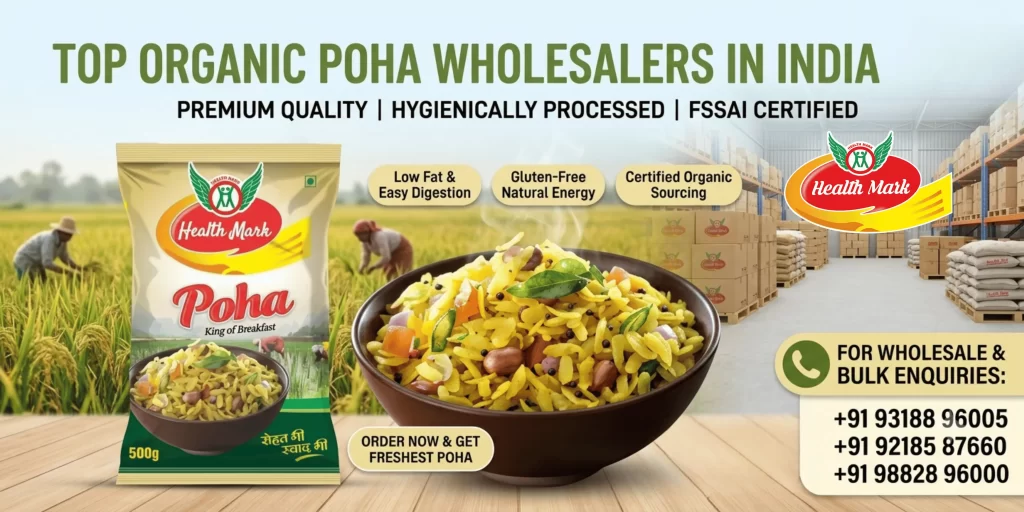
For bulk, wholesale, or retail enquiries, buyers can contact the Health Mark sales team directly:
Expert Tips for Storing and Cooking Poha
Storage Tips:
- Store in an airtight container away from direct sunlight and moisture.
- Avoid transferring Poha to a damp container, as it absorbs moisture quickly.
- Use within the recommended shelf life for the best texture and taste.
Cooking Tips:
- Rinse Poha lightly and let it sit for a couple of minutes rather than soaking it over-soaking makes it mushy.
- Temper with mustard seeds, curry leaves, and green chilies for authentic flavor.
- Add roasted peanuts for crunch and a protein boost.
- A dash of lemon juice at the end brightens the flavor significantly.
FAQ
Q1. What is the difference between organic Poha and regular Poha?
Organic Poha is made from paddy grown without synthetic pesticides or chemical fertilizers, and is typically processed under stricter hygiene controls, resulting in better consistency, taste, and shelf life compared to regular market Poha.
Q2. How do I find a reliable Poha wholesaler near me?
Look for a supplier with FSSAI registration, transparent sourcing information, sample availability before bulk orders, and positive reorder patterns from existing retail or business buyers.
Q3. What is the best pack size for household use versus retail?
Smaller packs like 80gm or 350gm work well for household use and trial purchases, while 500gm and bulk quantities suit retail shelves, restaurants, and institutional buyers.
Q4. Is Poha suitable for weight management?
Poha is naturally light and low in fat, which makes it a reasonable choice for those managing their weight, especially when prepared with vegetables and minimal oil.
Q5. How should Poha be stored to maintain freshness?
Store Poha in an airtight container in a cool, dry place away from direct sunlight and moisture to preserve its texture and prevent spoilage.
Q6. What affects Poha’s wholesale price the most?
Grain quality, organic certification, processing hygiene, packaging standard, and order volume are the biggest factors influencing wholesale Poha pricing.
Q7. Can I request a sample before placing a bulk Poha order?
Yes reputable suppliers, including Health Mark, are typically open to providing sample batches so buyers can evaluate quality before committing to a larger order.
Q8. Is Poha gluten-free?
Yes, Poha is made from rice, making it naturally gluten-free and suitable for those avoiding wheat-based grains.
Q9. How can I place a wholesale enquiry with Health Mark?
You can contact the Health Mark sales team directly at +91 93188 96005, +91 92185 87660, or +91 98828 96000, or visit the Poha product page to submit a product enquiry.
Q10. What makes Health Mark’s Poha different from other brands?
Health Mark’s Poha uses premium quality flattened rice that’s hygienically processed and packed to retain freshness, with a focus on organic sourcing principles across its broader product range, including its Snacks category.
Conclusion
Finding the right organic Poha wholesaler isn’t just about typing “Poha near me” and picking the first result it’s about verifying sourcing, checking hygiene standards, testing samples, and building a relationship with a supplier who delivers consistent quality, order after order. Whether you’re a retailer looking to stock a top Poha supplier, a restaurant sourcing breakfast staples, or simply a household that wants premium quality Poha on hand, the fundamentals stay the same: transparency, consistency, and genuine organic sourcing.
If you’re ready to experience the difference that hygienically processed, premium flattened rice can make, explore Health Mark’s Poha today, or reach out directly for retail and wholesale enquiries at +91 93188 96005, +91 92185 87660, or +91 98828 96000.
s, reputable suppliers, including Health Mark, are typically open to providing sample batches so buyers can evaluate quality before committing to a larger order.”