
If you run a grocery store, a sweet shop, a snack unit, or a distribution business anywhere in India, you already know that not all besan is created equal. Two packets can look identical on the shelf and still behave completely differently in the kadhai one turns your pakoras golden and crisp, the other turns them oily and uneven. For a home cook, that’s a minor inconvenience. For a retailer or a wholesale buyer placing repeat orders every month, it’s a business risk.
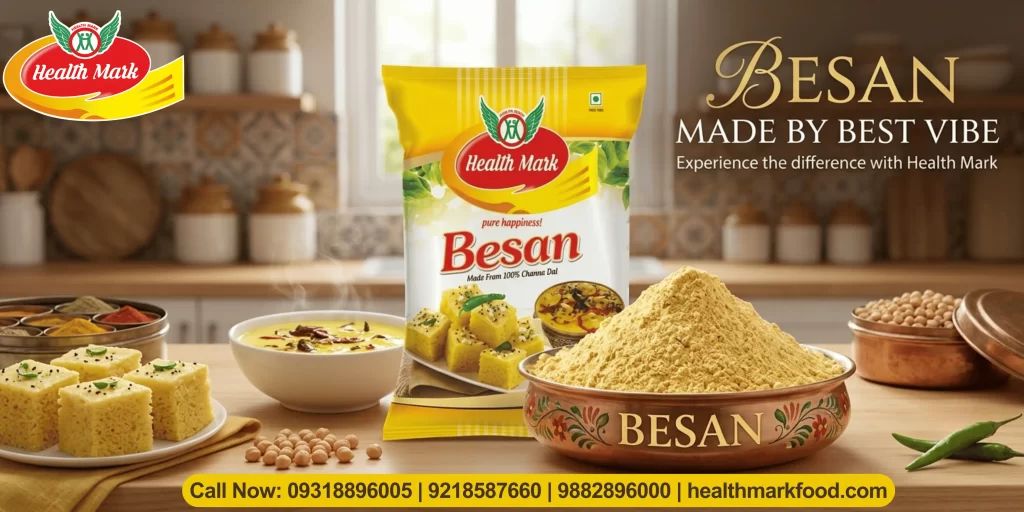
This guide is written specifically for people who buy besan to resell or to use in commercial quantities retail shop owners, distributors, caterers, sweet and snack manufacturers, and wholesale buyers. We’ll walk through what actually separates high-quality besan from average besan, how pricing works at different order volumes, what to check before you commit to a supplier, and how a manufacturer like Health Mark approaches quality, hygiene, and consistency for exactly this kind of buyer.
What Is Besan and Why Does Quality Matter So Much?
Besan, also called gram flour or chana flour, is made by milling dehusked and split chickpeas (chana dal) into a fine powder. It’s one of the most versatile ingredients in Indian kitchens the base for pakoras, dhokla, kadhi, laddoos, chilla, and countless regional snacks and sweets. Because it’s used across so many recipes and price points, the quality bar shifts depending on who’s buying it and why.
How Besan Is Made
Good besan starts with good chana dal. The dal is cleaned to remove stones, husk, and foreign matter, then ground either through traditional stone grinding or modern roller milling to a fine, uniform consistency. The finer and more even the grind, the smoother the batter it produces and the better it binds in recipes like dhokla or besan laddoo. Poor grinding leaves a gritty texture that shows up immediately in the final dish.
Why Quality Varies So Widely Across Brands
Three factors typically explain why one brand’s besan performs so differently from another’s:
● Raw material grade: Premium chana dal produces a naturally sweeter, nuttier flour, while lower-grade or older dal produces a flat, sometimes bitter taste.
● Processing hygiene: Flour mills that follow strict cleaning, sieving, and packing protocols keep out moisture, insects, and contamination a major concern for any food product sold at scale.
● Storage and packaging: Even well-milled besan degrades quickly if it’s packed in low-barrier packaging or stored in humid warehouses, leading to clumping, rancidity, or a shortened shelf life.
Retail-Grade vs Wholesale-Grade Besan: The Real Difference
Retail buyers and wholesale buyers are technically buying the same ingredient, but their priorities differ enough that it’s worth laying them out side by side.
| Buying Consideration | Retail Buyer Priority | Wholesale/Bulk Buyer Priority |
| Pack size | Small, shelf-ready packs (55g–1kg) | Bulk packs and repeat-order consistency |
| Price sensitivity | Competitive shelf pricing per unit | Volume-based pricing, negotiated rates |
| Shelf appeal | Attractive packaging, clear labeling | Sturdy, transport-friendly packaging |
| Consistency | Same taste and texture every purchase | Batch-to-batch uniformity across large orders |
| Documentation | Basic labeling, FSSAI number visible | Invoices, certifications, compliance paperwork |
| Supply reliability | Regular restocking from local distributor | Guaranteed lead times and production capacity |
What to Look for When You Buy Besan (Retail Buyers)
If you’re stocking besan for a grocery store or general store, here’s a practical checklist before you commit to a supplier or brand:
● Color and texture: Look for a consistent pale yellow color and a fine, non-gritty texture visible through the packaging.
● FSSAI license number: Every legally sold food product in India must display this on the pack.
● Manufacturing and expiry dates: Freshness directly affects taste, so avoid stock that’s been sitting for a long time.
● Smell test on samples: Fresh besan has a mild, nutty aroma; a musty or sour smell signals poor storage.
● Packaging integrity: Multi-layer, moisture-resistant packaging keeps besan fresh for longer on the shelf.
● Return and replacement policy: A dependable supplier should stand behind damaged or expired stock.
What Wholesale and Bulk Buyers Should Check Before Ordering
Wholesale buyers distributors, caterers, sweet shops, and food manufacturers are placing larger, recurring orders, so due diligence matters even more.
Manufacturing Capacity and Consistency
Ask potential suppliers how much besan they can produce monthly and whether they can guarantee the same quality across every batch. A manufacturer with dedicated processing infrastructure, rather than a small-scale trader repackaging third-party stock, is generally better positioned to maintain consistency at scale.
Certifications and Food Safety Compliance
For bulk and commercial buying, certifications aren’t just a formality they’re your assurance of food safety standards. At minimum, check for a valid FSSAI license. Manufacturers that maintain additional accreditations for hygiene and quality systems typically indicate a more mature, audit-ready production process.
Packaging Options and MOQ
Different businesses need different formats. A caterer might want 25kg or 50kg bulk bags, while a retailer restocking a shop shelf needs smaller, ready-to-sell packs like 200g, 500g, or 1kg. Confirm the supplier’s minimum order quantity (MOQ) and whether they can accommodate your preferred pack sizes.
Pricing Transparency
Besan price fluctuates with chana dal availability and seasonal demand, so ask for a clear, written price list rather than relying on verbal quotes, and clarify whether pricing includes transport and packaging costs.
Types of Besan and Which One Fits Your Business
Not all besan is milled the same way. Depending on your recipe and customer base, one of these variants will usually serve you better than a generic single option.
| Besan Type | Texture | Best Used For |
| Fine Besan | Smooth, fine powder | Everyday cooking, curries, batters |
| Bareek Besan | Extra-fine, silky texture | Dhokla, khaman, delicate sweets |
| Motichur / Mota Besan | Slightly coarse | Motichur laddoo and boondi-based sweets |
| Powder Besan | Ultra-fine powder | Instant mixes, chilla, ready-to-cook blends |
Stocking more than one variant is often the smarter move for retailers who serve both households and small sweet-makers, since the two customer groups typically ask for different grinds.
Why Health Mark Is Becoming a Trusted Besan Brand in India
Health Mark, based out of Baddi in Himachal Pradesh, manufactures besan alongside a wider range of staples including atta, pulses, dry fruits, and spices. For retail and wholesale buyers evaluating a besan brand, a few things stand out about how Health Mark approaches the product.
Sourcing From Premium Chana Dal
Health Mark Besan is prepared from carefully selected, premium quality chana dal, milled to a smooth, consistent texture. This directly affects the final taste and texture buyers and their customers notice a fine grind with a naturally nutty flavor that performs reliably in both savory dishes like pakoras and kadhi, and sweet preparations like laddoos.
Hygienic Processing and Packing
The besan is hygienically processed and packed to retain freshness and purity, which matters for both retail buyers restocking a shop shelf and wholesale buyers who need the product to travel and store well before it reaches the end consumer.
Product Range for Every Buyer
Health Mark offers besan in multiple formats including standard Besan, Bareek Besan, Motichur/Mota Besan, and Powder Besan as well as multiple pack sizes (55gm, 200gm, 500gm, and 1kg), giving retail and wholesale buyers flexibility depending on their shelf space, customer base, and order volume.
Besan Price: What Determines Cost and How to Get the Best Deal
Factors That Influence Besan Price
● Chana dal market rates, which shift with the agricultural season and crop yield
● Grind quality finer, more refined besan (like Bareek Besan) often costs marginally more due to additional processing
● Packaging format bulk bags typically work out cheaper per kg than small retail packs
● Transport distance from the manufacturing unit to the buyer’s location
● Order volume larger, recurring orders usually unlock better per-unit pricing
Retail Pricing vs Bulk/Wholesale Pricing
Retail buyers generally pay a per-pack price that includes the cost of branded, shelf-ready packaging. Wholesale and bulk buyers, on the other hand, can often negotiate rates based on total order size, delivery frequency, and payment terms. If pricing is a priority for your business, it’s worth requesting a direct quote for your expected monthly volume rather than comparing against generic online listings, since besan pricing is rarely static.
How to Choose the Best Besan Seller Near You
Whether you’re searching for a “besan seller near me” or evaluating suppliers across states, use this checklist to shortlist genuinely reliable partners:
● Verified FSSAI registration and, ideally, additional quality accreditations
● A visible, established manufacturing facility rather than only a trading/repacking setup
● A track record years in business, existing retail or B2B clients, and reviews or references
● Clear communication channels (phone, WhatsApp, email) for quick order queries and support
● Willingness to provide product samples before a bulk commitment
● Transparent pricing and documented terms for returns, replacements, or short shipments
Step-by-Step: How to Start Sourcing Besan From Health Mark
1. Browse the product range: Review the Besan category page to compare available variants and pack sizes.
2. Send an enquiry: Use the Product Enquiry option on the website, or contact the sales team directly by phone or WhatsApp.
3. Discuss your requirement: Share your expected order volume, preferred pack size, and delivery location so the team can quote accurately.
4. Request a sample (for bulk buyers): Test the product’s texture, taste, and packaging before committing to a large order.
5. Confirm pricing and terms: Get a written quote covering price, minimum order quantity, and delivery timelines.
6. Place your order and set a repeat schedule: Once satisfied, arrange recurring orders to keep your shelf or production line consistently stocked.
Common Mistakes Buyers Make When Purchasing Besan in Bulk
● Choosing the lowest price without checking the source or grind quality first
● Skipping a sample order before committing to a large purchase
● Not confirming shelf-life and storage requirements upfront, leading to spoilage
● Overlooking packaging suitability for their specific transport or storage conditions
● Failing to lock in a written agreement on pricing and delivery timelines, especially during seasonal price swings
Best Practices for Storing Besan (Retail Shelf & Warehouse)
● Store in a cool, dry area away from direct sunlight and moisture
● Keep bulk bags sealed tightly between uses to prevent humidity absorption and pest entry
● Follow a first-in-first-out (FIFO) rotation system so older stock sells or is used before newer stock
● Avoid stacking bags directly on damp warehouse floors; use pallets where possible
● Periodically check stored stock for clumping, discoloration, or odor changes
Besan in Indian Cuisine: Why Demand Keeps Growing
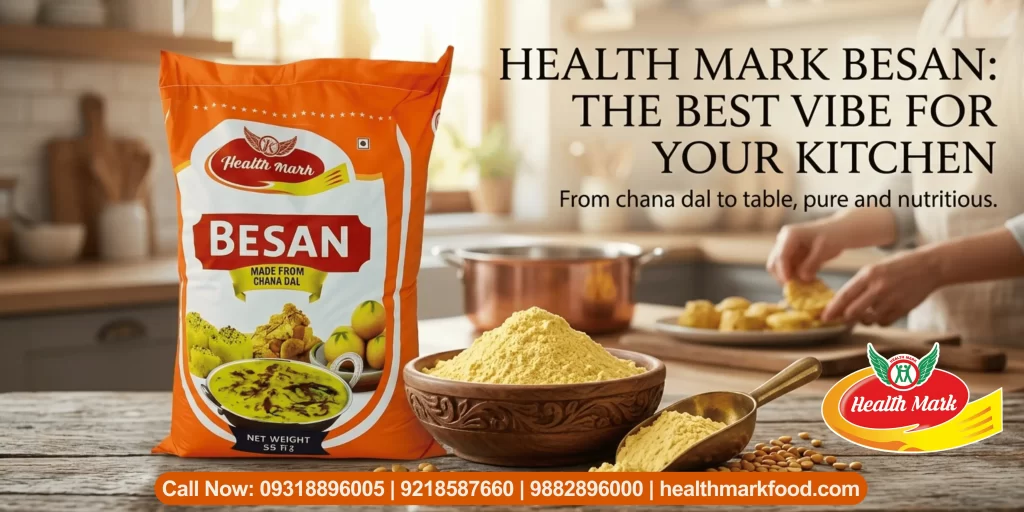
Besan sits at the intersection of everyday cooking and festive tradition, which keeps demand steady across seasons. It’s the base for street-food favorites like pakoras and bhajiyas, the key ingredient in dhokla and khaman, and essential to festive sweets like besan laddoo and mysore pak. Its growing popularity as a gluten-free, protein-rich flour has also expanded its use beyond traditional recipes into health-focused snacks, chillas, and baked goods creating fresh demand from retailers, cafés, and health food outlets alongside the usual sweet and snack trade.
FAQ
What is the difference between besan and gram flour?
There is no difference besan and gram flour refer to the same product. Besan is the Hindi/regional name, while gram flour is the English term used internationally; both are made by grinding split chana dal.
How do I identify high-quality besan before buying in bulk?
Check for a fine, consistent texture, a pale yellow color, a mild nutty aroma, a valid FSSAI license number on the packaging, and clear manufacturing and expiry dates. For bulk orders, always request a sample before committing to a large purchase.
What is the ideal shelf life of besan?
Properly milled and packed besan typically stays fresh for several months when stored in a cool, dry place away from moisture and direct sunlight. Always check the manufacturing and expiry dates printed on the packaging for the exact shelf life of a specific batch.
What pack sizes are available for retail and wholesale buyers?
Health Mark offers Besan in multiple pack sizes 55gm, 200gm, 500gm, and 1kg allowing retail buyers to stock shelf-ready packs and giving wholesale buyers the flexibility to order in the format that suits their business.
Does besan price change frequently?
Yes. Besan price is influenced by chana dal market rates, which shift with seasonal crop yields, along with packaging format and order volume. It’s best to request a current, written quote rather than relying on old pricing.
What is the difference between Besan, Bareek Besan, and Motichur/Mota Besan?
Besan is the standard fine-ground flour suited to everyday cooking. Bareek Besan is milled to an extra-fine, silky texture ideal for dhokla and delicate sweets. Motichur or Mota Besan has a slightly coarser grind, traditionally used for motichur laddoo and boondi-based sweets.
Is Health Mark besan suitable for both retail shops and wholesale buyers?
Yes. Health Mark manufactures besan in multiple variants and pack sizes specifically to serve both retail shop owners looking for shelf-ready packs and wholesale or bulk buyers such as distributors, caterers, and sweet shop owners.
How can I place a bulk or wholesale enquiry for besan?
You can reach out through the Product Enquiry page on the Health Mark website, or contact the sales team directly at +91 93188 96005, +91 92185 87660, or +91 98828 96000 to discuss quantity, pricing, and delivery.
Is besan gluten-free?
Yes, besan is naturally gluten-free since it’s made purely from ground chana dal (split chickpeas), which makes it a popular choice for gluten-free cooking and baking.
What should I check before finalizing a besan supplier for my business?
Verify their FSSAI registration, ask about their manufacturing capacity and consistency across batches, request a product sample, confirm packaging and minimum order quantity options, and get a transparent, written price quote before finalizing the partnership.
Conclusion
Sourcing besan for a business is a very different exercise from buying a single pack for the kitchen shelf. Quality, consistency, hygiene, and transparent pricing all compound across every order you place and a slightly cheaper but inconsistent supplier often costs more in the long run through customer complaints, wastage, or supply gaps. Whether you’re a retail store owner looking for a besan brand your regular customers will keep coming back for, or a wholesale buyer trying to lock in a dependable, food-safe supply chain, the fundamentals stay the same: check the source, verify the certifications, test a sample, and get your pricing in writing.
If you’re ready to explore high-quality Besan for your retail shelf or wholesale requirement, explore Health Mark’s Besan range or reach out directly to discuss your order.
Explore the Besan Product Range →
Call to order or enquire: +91 93188 96005 | +91 92185 87660 | +91 98828 96000