
Crisp pakoras on a rainy evening, soft dhokla for breakfast, silky kadhi for lunch, and festive laddoos for Diwali all made with flour. However, most buyers grab a packet off the shelf without ever asking the simple question: is this truly premium quality besan, or is it just a cheap gram flour blend dressed up in attractive packaging?
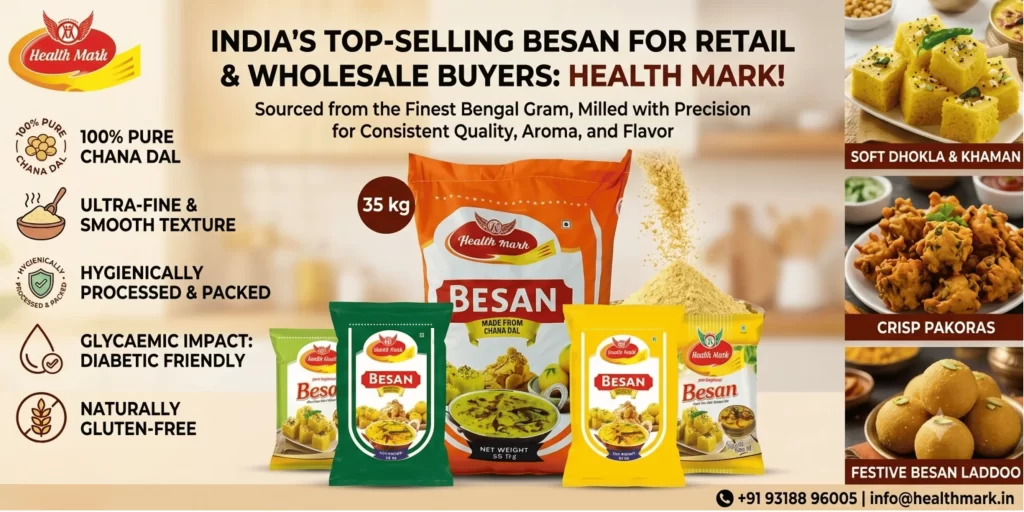
That question is important because besan is not a neutral ingredient. Its colour, aroma, fineness, and purity decide whether your dhokla turns out spongy or dense, whether your pakoras stay crisp or turn soggy, and whether your sweets taste rich or flat. For retailers and wholesale buyers, the stakes are even higher: a batch of low-quality besan can result in customer complaints, wasted inventory, and lost repeat business.
This guide breaks down everything you need to know before you buy besan how it is made, what separates the best besan sellers from the rest, how besan price today in India is determined, and why Health Mark has become one of the top selling besan brands for both home cooks and bulk buyers across Punjab, Himachal Pradesh, Chandigarh, and beyond. Whether you run a kirana store, a sweet shop, a restaurant, or simply want the best besan for your own kitchen, you will find a clear, practical answer here.
What Is Besan (Gram Flour) and How Is It Made?
Besan, also known as gram flour or chana flour, is made by grinding dehusked and split Bengal gram (chana dal) into a fine powder. It is one of the oldest and most widely used flours in South Asian cooking, prized for its nutty aroma, pale yellow colour, and versatility across sweet and savoury dishes.
Good besan manufacturing follows a fairly simple but precision-dependent process:
● Sourcing: Selecting clean, mature Bengal gram with low moisture content.
● Cleaning and grading: Removing stones, dust, and broken grains before milling.
● Dehusking and splitting: Converting whole chana into chana dal.
● Grinding: Milling the dal into flour of the desired fineness bareek (fine), motichur/mota (coarse), or powder besan.
● Sieving and packing: Filtering out impurities and packing in moisture-proof, food-grade material to preserve freshness.
The difference between an average besan and a best besan seller’s product usually comes down to two things: the quality of the raw chana dal, and how tightly the manufacturer controls moisture, hygiene, and grinding consistency at every one of these steps.
Why Premium Quality Besan Makes a Real Difference
Not all gram flour behaves the same way in the kitchen. Here is what changes when you move from an average packet to genuinely premium quality besan:
1. Texture and Cooking Performance
Fine, evenly milled besan absorbs water and oil more predictably. This means smoother batters for pakoras and bhajiyas, a lighter and spongier dhokla, and a kadhi that thickens without turning lumpy.
2. Flavour
Freshly milled besan has a distinct, mildly sweet, nutty aroma. Old or poorly stored besan tends to smell flat or slightly bitter, which comes through in the final dish especially in delicate preparations like besan laddoo or besan barfi.
3. Colour Consistency
Premium besan has a uniform pale-yellow colour. Uneven colour, greyish patches, or visible husk fragments are signs of poor grading or a mix of low-grade chana.
4. Shelf Life and Safety
Proper drying and hygienic packing prevent moisture absorption, which is the leading cause of clumping, rancidity, and fungal growth in stored flour. This is where certified, hygienically processed besan brands have a clear edge over loose, open-market flour.
5. Nutrition
Gram flour is naturally rich in plant protein, dietary fibre, and complex carbohydrates, and is gluten-free which is why it is a staple for health-conscious households and a common ingredient in protein-rich snacks and diabetic-friendly recipes. Poor processing or adulteration can dilute these natural benefits.
What Makes a Brand the Best Besan Seller? Health Mark’s Approach
If you search for the best besan manufacturing companies in India, you will notice the same criteria coming up again and again: sourcing, hygiene, consistency, and transparency. This is precisely where
Health Mark, a manufacturer of premium quality besan for retail and wholesale buyers, has built its reputation.
Careful Selection of Chana Dal
Health Mark besan is prepared from carefully selected Bengal gram, chosen for uniform size, low moisture, and minimal impurities before it ever reaches the grinding stage.
Fine, Consistent Milling
The Besan product line is finely ground to deliver a smooth texture and rich, nutty flavour that performs consistently whether you are making a delicate dhokla batter or a thick pakora coating.
Hygienic Processing and Packing
From milling to packaging, the process is designed to protect freshness and purity, reducing the risk of moisture contamination and extending shelf life a critical factor for retailers who hold stock for weeks at a time.
Range of Formats for Every Kitchen and Business
Health Mark besan is not a one-size-fits-all product. The range includes:
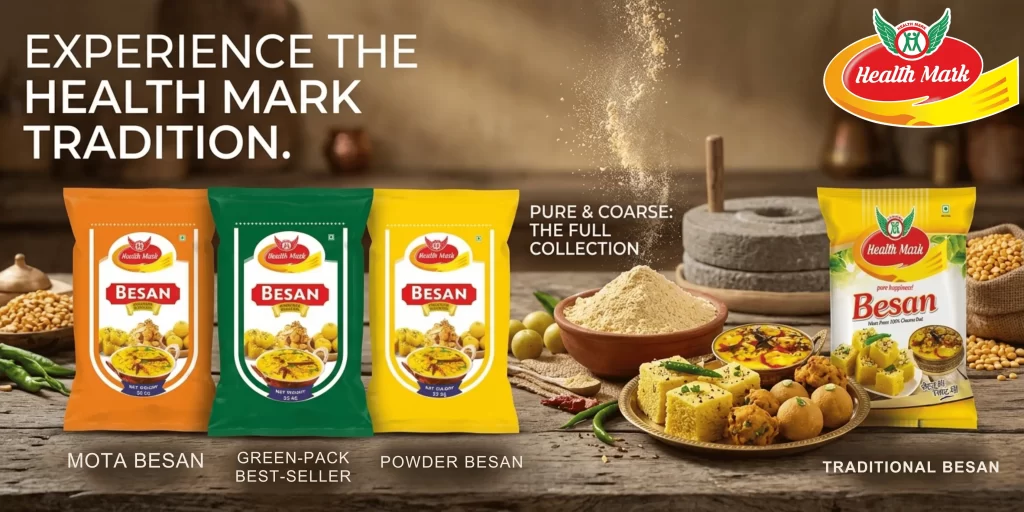
● Bareek Besan extra-fine texture, ideal for smooth batters and sweets
● Motichur / Mota Besan coarser grind, popular for motichur ladoo and boondi
● Powder Besan an all-purpose fine flour for everyday cooking
Explore the full range on the Besan category page.
Flexible Pack Sizes for Retail and Wholesale
Packs are available in 55gm, 200gm, 500gm, and 1kg formats, which makes it easy for both individual households and retail stores to stock the right size without over-committing shelf space or working capital.
Besan Price Today in India: What You Should Expect to Pay
One of the most searched questions among buyers is simple: what is the besan price 1 kg today? The honest answer is that besan pricing in India is not fixed it moves with the wholesale price of chana dal, the season, transport costs, and the brand’s processing quality. That said, understanding the broad price bands helps you judge whether a quote is fair.
| Besan Type | Typical Retail Price Range (per kg) | Best Suited For |
| Loose / open-market besan | ₹50 – ₹90 | Budget cooking, high turnover kitchens |
| Branded packaged besan (standard grade) | ₹80 – ₹130 | Everyday household cooking |
| Premium quality besan (fine-milled, hygienically packed) | ₹100 – ₹180 | Sweets, dhokla, gifting, retail resale |
| Wholesale / bulk besan (10kg+) | Negotiated, generally below retail per-kg rate | Retailers, sweet shops, restaurants, institutions |
What Actually Drives Besan Price Changes
● Mandi price of raw chana / Bengal gram, which fluctuates with harvest cycles
● Processing and milling costs, including how fine the flour is ground
● Packaging quality moisture-proof, food-grade packs cost more but protect shelf life
● Brand hygiene certifications and quality control investment
● Transportation and regional demand, especially around festive seasons like Diwali and Navratri
A slightly higher besan price today in India is often justified when it reflects better sourcing, tighter hygiene standards, and consistent fineness the difference shows up in every batch you cook, not just on the price tag.
How to Identify Premium Quality Besan Before You Buy
Whether you are a home cook filling a monthly grocery list or a retailer placing a wholesale order, use this checklist before finalising a purchase:
1. Check the colour it should be a consistent pale yellow, not greyish or patchy.
2. Smell it genuine besan has a mild, nutty aroma; a sour or musty smell signals age or moisture damage.
3. Feel the texture premium besan should feel smooth and powdery, not gritty or lumpy.
4. Look for clumping clumps usually mean moisture has already entered the pack.
5. Check the packaging date and shelf life fresher stock performs better and lasts longer.
6. Review the manufacturer’s hygiene practices brands that disclose their sourcing and processing standards are usually more reliable.
7. Compare pack sizes and pricing a fair besan price 1 kg should sit within the standard market band for that quality tier, not far below it.
How to Buy Besan: A Simple Guide for Retail and Wholesale Buyers
For Retail Buyers
● Decide on the pack size based on your household’s monthly consumption 500gm to 1kg packs suit most families.
● Pick the grind type based on use: bareek besan for sweets and smooth batters, mota/motichur besan for boondi and ladoo.
● Store in an airtight container away from direct sunlight and moisture.
For Wholesale and Bulk Buyers
● Request a sample before committing to a bulk order, especially for a new supplier relationship.
● Ask about consistent supply capacity can the best besan manufacturing partner deliver the same quality across repeat orders?
● Clarify packaging options for bulk (retail-ready packs vs. larger sacks for repacking).
● Discuss delivery timelines and minimum order quantities upfront.
● Confirm hygiene and quality documentation, especially if you are a restaurant, caterer, or sweet shop that needs to reassure your own customers.
Health Mark caters to both retail and wholesale needs across its wider product range, making it a practical single-source supplier for stores that also stock atta, pulses, spices, and snacks alongside besan.
Popular Ways to Use Besan in Everyday and Festive Cooking
● Pakoras and bhajiyas the classic crisp, savoury fritter
● Dhokla and khaman steamed, spongy Gujarati snacks
● Kadhi a yogurt-and-besan curry popular across North and West India
● Besan chilla a quick, protein-rich savoury pancake
● Besan laddoo and besan barfi festive sweets made with roasted besan, ghee, and sugar
● Thickening agent used in gravies and certain batters for extra body
Health Benefits of Besan You Should Know
Besan’s popularity is not just about taste it also fits well into health-conscious diets:
● Naturally gluten-free, making it suitable for people avoiding wheat
● A good plant-based source of protein and fibre compared to refined wheat flour
● Lower glycaemic impact than many refined flours, which is why it often appears in diabetic-friendly recipes
● Versatile enough to fit into both indulgent festive sweets and lighter everyday meals
Common Mistakes to Avoid When Buying or Storing Besan
● Buying in bulk without checking freshness first besan does not store indefinitely.
● Ignoring the pack’s manufacturing or best-before date.
● Storing besan near spices with strong odours it absorbs smells easily.
● Choosing the cheapest option without checking texture or aroma the lowest besan price today in India is not always the best value.
● Using coarse motichur besan where a smooth, fine batter is needed, or vice versa.
● Leaving the pack open in humid weather, which accelerates clumping and spoilage.
Health Mark vs. Typical Market Besan: A Quick Comparison
| Factor | Typical Loose / Unbranded Besan | Health Mark Premium Quality Besan |
| Sourcing | Often mixed-grade, unverified chana | Carefully selected Bengal gram |
| Texture | Inconsistent, sometimes gritty | Smooth, finely milled |
| Hygiene | Variable, open handling common | Hygienically processed and packed |
| Pack sizes | Limited or loose by weight | 55gm, 200gm, 500gm, 1kg |
| Suitability | General cooking only | Everyday cooking plus sweets, dhokla, pakora |
| Availability for business buyers | Case-by-case | Retail and wholesale supply available |
Expert Tips and Best Practices
● Sift besan before using it in batters to remove any lumps and aerate it for a lighter texture.
● Dry-roast besan on low heat before using it in laddoo or barfi to remove raw taste and enhance aroma.
● Keep besan away from direct sunlight heat speeds up rancidity in the natural oils present in gram flour.
● For restaurants and sweet shops, rotate stock using a first-in-first-out approach to always use the freshest batch.
● If you’re unsure which grind suits your recipe, ask your supplier a good best besan seller will guide you rather than push a single product.
Why Retailers and Wholesale Buyers Choose Health Mark
Health Mark operates as a food products company with a manufacturing base in Baddi, Himachal Pradesh, supplying multiple categories atta, besan, pulses, spices, dry fruits, snacks, and more under one roof. For retail and wholesale buyers, this matters because:
● A single, reliable supplier for besan alongside other staple categories simplifies procurement.
● Consistent besan manufacturing processes mean fewer quality surprises across repeat orders.
● Direct sales contact makes it easy to discuss bulk pricing, custom pack sizes, and delivery schedules.
FAQs
1. What is the besan price 1 kg today in India?
Besan prices vary by brand, grind type, and region, typically ranging from around ₹80 to ₹180 per kg for packaged, branded besan. For an accurate, current besan price list, it’s best to contact the supplier directly.
2. Who is the best besan seller for both retail and wholesale orders?
Look for a manufacturer that controls sourcing, milling, and hygienic packing in-house and offers flexible pack sizes. Health Mark is one such best besan manufacturing brand that serves both individual retail buyers and wholesale/bulk orders.
3. What is the difference between bareek besan, mota besan, and powder besan?
Bareek besan is extra-fine and ideal for smooth batters and sweets. Mota or motichur besan is coarser and used for boondi and motichur ladoo. Powder besan is a general-purpose fine flour suited to everyday cooking.
4. Is besan gluten-free?
Yes, besan is made from chana dal (Bengal gram) and is naturally gluten-free, making it a popular choice for people avoiding wheat-based flours.
5. How should I store besan to keep it fresh longer?
Store besan in an airtight container, away from direct sunlight, moisture, and strong-smelling spices. Properly stored, hygienically packed besan typically stays fresh for several months.
6. How can I tell if besan is premium quality before buying?
Check for a consistent pale-yellow colour, a mild nutty aroma, a smooth non-gritty texture, no visible clumping, and a clear manufacturing or best-before date on the pack.
7. Can besan be used for both sweet and savoury dishes?
Yes. Besan is extremely versatile it’s used in savoury dishes like pakoras, dhokla, and kadhi, as well as sweet dishes like besan laddoo and besan barfi.
8. Does Health Mark supply besan for wholesale and bulk orders?
Yes. Health Mark supplies premium quality besan for both retail customers and wholesale/bulk buyers such as retailers, sweet shops, and restaurants. Contact the sales team to discuss quantities and pricing.
9. What packaging sizes does Health Mark besan come in?
Health Mark besan is available in 55gm, 200gm, 500gm, and 1kg packs, suitable for individual households as well as retail shelf stocking.
10. Why does besan price vary so much between brands?
Price differences usually come down to the quality of raw chana dal used, how finely and consistently the flour is milled, the hygiene standards followed during processing and packing, and the quality of the packaging material used to preserve freshness.
Conclusion: Choose Besan That Performs Every Time You Cook
Besan might look like a simple pantry staple, but the difference between an average pack and genuinely premium quality besan shows up in every dhokla, pakora, and laddoo you make. For home cooks, that means better texture and flavour. For retailers and wholesale buyers, it means fewer complaints, better repeat sales, and a supplier you can depend on order after order.
If you’re ready to buy besan that’s carefully sourced, finely milled, and hygienically packed, explore the Health Mark Besan range or visit the product page to place a retail or wholesale enquiry.
For bulk pricing, custom pack sizes, or a wholesale supply partnership, reach out directly to the Health Mark sales team:
● Sales: +91 93188 96005
● Sales: +91 92185 87660
● Sales: +91 98828 96000