
Open any Indian kitchen cabinet and you will find the real story of the country’s cooking: little steel dabbas of turmeric, red chilli, coriander, and garam masala, refilled every few weeks without anyone thinking twice about it. Spices are not a garnish in India, they are the backbone of every meal, from a Monday dal to a wedding biryani. But with so many brands, loose bazaar options, and “organic” labels competing for shelf space, choosing the best spices powder has actually gotten harder, not easier.
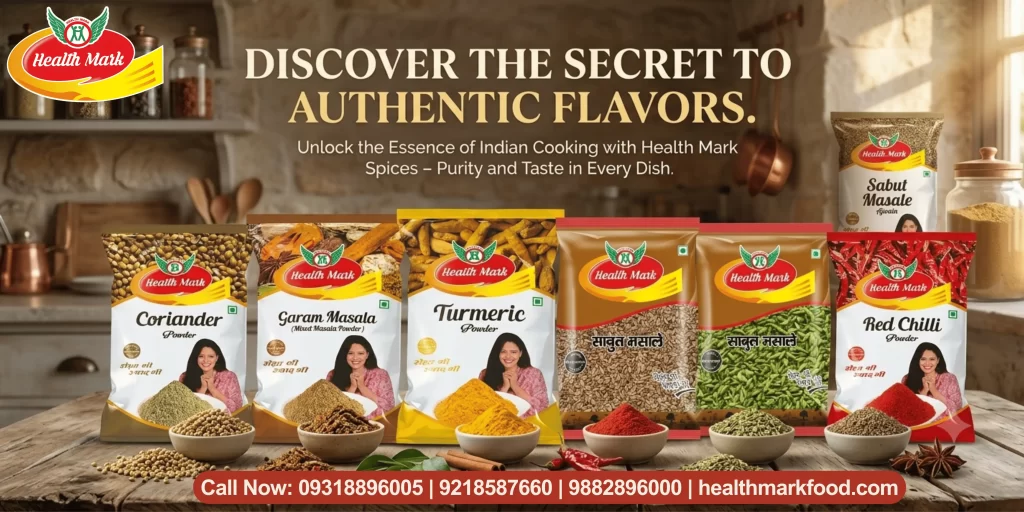
This guide breaks down the top selling spices in India, what genuinely separates quality spices from the rest, and how to buy spices powder online without falling for empty marketing claims. We will also look at what to expect from a serious best spices manufacturing setup, so you know exactly what to check before you add anything to your cart.
Why India Is Still the World’s Spice Capital in 2026
India is renowned for producing some of the world’s finest spices, valued for their rich aroma, vibrant color, and authentic flavor. Whether for home cooking, restaurants, or wholesale businesses, selecting a trusted spice seller is essential to ensure purity, freshness, and consistent quality. Reliable brands help preserve the authentic taste of Indian cuisine while meeting modern food safety and quality standards.
The Indian spice industry continues to experience strong growth, driven by rising consumer demand in both domestic and international markets. India remains one of the world’s leading producers and exporters of spices, with turmeric, chilli, cumin, and cardamom among the most sought-after varieties. Their consistent quality, rich flavor, and wide culinary applications make them highly valued across households, food manufacturers, and global markets.
One number matters most for everyday buyers: powdered spices now account for close to 45% of the overall spice market by form, ahead of whole, crushed, or chopped formats. In simple terms, more Indian households are choosing ready ground spices powder over grinding at home, which makes the question of quality and purity more important than ever.
Top Selling Spices in India Right Now
Before you can judge quality, it helps to know which spices actually move the most volume in Indian kitchens. Here are the top selling spices in India, along with what each one is best used for.
1. Turmeric Powder (Haldi)
Turmeric is the spice every Indian dish starts with. Its deep yellow colour comes from curcumin, the compound responsible for its earthy flavour and much of its reputation as a wellness ingredient. Good turmeric powder should smell faintly bitter and earthy, not musty, and should leave a warm yellow-orange stain rather than a flat, chalky one.
2. Red Chilli Powder (Lal Mirch)
Chilli remains the single largest contributor to India’s spice export basket, and it is just as dominant on the domestic shelf. A good red chilli powder should have a bright, even red colour and a smoky-sharp aroma. If it looks unnaturally bright or oddly uniform, that is often a sign of added colour rather than a strong original variety.
3. Coriander Powder (Dhania)
Coriander powder is the quiet workhorse of Indian cooking, used to thicken and round off gravies more than to add heat. Freshly ground coriander powder (Dhania) has a light citrusy, slightly sweet aroma. If a pack smells flat or dusty, the seeds were likely ground and stored a long time before packaging.
4. Garam Masala
Garam masala is less a single spice and more a signature blend, typically built around cinnamon, cloves, cardamom, black pepper, and cumin. Because it is a mix, garam masala is where quality differences show up fastest: a well-made blend smells layered and warm, while a poor one tastes flat because cheaper fillers have replaced the expensive whole spices.
5. Cumin (Jeera), Whole and Powder
Cumin is used in almost every regional Indian cuisine, from the tempering in a South Indian sambar to the base of a North Indian tadka. It is also one of India’s top spice exports by value. Whole cumin seeds should look plump and unbroken; cumin powder should smell nutty and slightly smoky when rubbed between two fingers.
6. Carom Seeds (Ajwain)
Ajwain punches well above its size. A small pinch tempered in hot oil brings a sharp, thyme-like aroma to parathas, pakoras, and digestive teas. Good Carom Seeds (ajwain) seeds are small, uniform, and release a strong smell the moment you crush one between your fingers.
7. Fennel Seeds (Saunf)
Fennel is one of the few spices used both in cooking and after a meal as a mouth freshener. It has a naturally sweet, liquorice-like flavour, and quality fennel seeds should be plump, pale green, and fragrant rather than dry, brittle, or dusty.
Quick Reference: Top Selling Spices in India
| Spice | Best Used In | What To Look For | Shelf Life (Sealed) |
| Turmeric Powder | Curries, dals, milk, marinades | Deep yellow-orange colour, earthy aroma | 9–12 months |
| Red Chilli Powder | Curries, tandoori marinades, pickles | Bright natural red, smoky-sharp smell | 9–12 months |
| Coriander Powder | Gravies, dry sabzis, chaat masala base | Light citrusy aroma, fine even texture | 8–10 months |
| Garam Masala | Finishing spice for curries and biryani | Warm, layered aroma, visible spice flecks | 6–9 months |
| Cumin (Jeera) | Tempering, rice, raita, spice mixes | Plump seeds, nutty smoky smell | 10–12 months |
| Carom Seeds (Ajwain) | Parathas, snacks, digestive teas | Small uniform seeds, sharp aroma | 10–12 months |
| Fennel Seeds (Saunf) | Mouth freshener, tea, meat curries | Plump, pale green, sweet aroma | 10–12 months |
What Separates the Best Spices Powder From Ordinary Masala
Not all spices powder sold under “premium” labels actually deserves the word. Here is what genuinely marks out quality spices from the average patop selling spices in indiack on a grocery shelf.
True colour, not added colour: real turmeric and chilli powders get their colour from the spice itself, not from synthetic dyes like metanil yellow or Sudan red.
- Strong, specific aroma: quality spices smell like themselves. Weak or musty smells usually mean old stock or poor storage before packaging.
- Fine, consistent texture: good grinding produces an even powder with no visible husk, stones, or lumps.
- No unnecessary fillers: rice flour, starch, or sawdust are sometimes added to bulk up cheap spice powders. Ingredient lists should be short and honest.
- Proper packaging and batch information: a trustworthy pack always carries a manufacturing date, best-before date, batch number, and FSSAI licence number.
- Consistent sourcing: reliable manufacturers work with the same farms or clusters season after season, which keeps flavour and quality predictable pack to pack.
How to Buy Spices Powder Online Without Getting Duped
Buying spices powder online is convenient, but you lose the ability to smell or touch the product before purchase. Use this checklist every time you order.
- Check the FSSAI licence number on the product page or packaging photo. Every legal food seller in India must display one.
- Read the ingredient list carefully. A pure turmeric powder should list only turmeric; a pure chilli powder should list only chilli, sometimes with a small amount of edible oil to prevent clumping.
- Look at the manufacturing and expiry dates in the listing images, not just the brand description.
- Compare the price with the market average. Prices far below the norm for that spice usually mean lower quality or under-filled packaging.
- Check for recent, detailed customer reviews that mention aroma, colour, and packaging quality, not just delivery speed.
- Prefer sellers who mention their sourcing, manufacturing location, and certifications openly, rather than only showing lifestyle photography.
- Start with a smaller pack size from a new seller before committing to bulk quantities.
Whole Spices vs Ground Spices Powder: Which Should You Buy
Both formats have a place in an Indian kitchen, and the right choice depends on how you cook and how often.
| Factor | Whole Spices | Ground Spices Powder |
| Flavour strength | Stronger, retains essential oils longer | Convenient, but flavour fades faster once opened |
| Shelf life | Usually 12–24 months | Typically 6–12 months once ground |
| Convenience | Needs grinding or tempering at home | Ready to use straight from the pack |
| Best for | Tempering (tadka), slow-cooked dishes, biryani | Everyday cooking, quick meals, marinades |
| Adulteration risk | Lower, easier to inspect visually | Slightly higher, needs a trusted seller |
A practical middle ground many households follow: buy whole spices for items like cardamom, cloves, and cinnamon that you use in small quantities, and buy quality spices powder for high-turnover staples like turmeric, red chilli, and coriander that you use almost daily.
Common Mistakes People Make When Buying Spices in India
- Judging quality by colour alone. Some sellers use synthetic dyes specifically to make spices look more vivid than a natural batch ever would.
- Buying loose, unpackaged spices from unknown sources purely because they seem cheaper.
- Ignoring the packaging date and only checking the expiry date.
- Storing spices powder near the stove, where heat and steam quietly degrade both flavour and shelf life.
- Assuming every “organic” label is third-party verified rather than just a marketing claim.
- Buying very large bulk packs of ground spices that will not be used up within a few months, leading to flavour loss long before the printed expiry.
How to Spot a Genuine Best Spices Manufacturer
The label “best spices manufacturing” gets used loosely online, so it helps to know what actually backs up that claim. Look for these markers before you trust a spices seller with repeat business.
- FSSAI registration or licence number displayed clearly on packaging and the website.
- Traceability from farm to final pack, ideally with named sourcing regions or certified organic farms.
- A dedicated manufacturing facility rather than a purely reselling or repackaging operation.
- Clear commitment to avoiding synthetic pesticides, herbicides, and GMOs in raw material sourcing.
- Consistent product photography, batch coding, and packaging quality across the full spice range, not just the bestsellers.
- A real, contactable business address and customer support number, not just a marketplace storefront.
This is exactly the standard Health Mark holds itself to. As an FMCG brand operating out of Baddi, Himachal Pradesh, Health Mark sources ingredients from certified organic farms, keeps its supply chain traceable from farm to shelf, and avoids synthetic pesticides, herbicides, and GMOs across its spices, atta, besan, pulses, and dry fruits ranges.
Simple At-Home Checks for Spice Quality
You do not need a lab to get a rough sense of whether a spice pack is genuine. These are simple, well-known household checks, not substitutes for buying from a certified seller.
- Water test for turmeric or chilli powder: drop a small pinch into a glass of water. Pure powder settles slowly and colours the water gently; synthetic dye-heavy powder often releases colour instantly and unnaturally.
- Smell test: rub a small amount between your palms. Genuine spices release a full, specific aroma; adulterated or old stock smells weak, musty, or “off.”
- Texture test: rub the powder between two fingers. It should feel fine and slightly oily for spices like chilli or turmeric, not chalky or gritty.
- Clumping check: naturally oily spices like red chilli powder will clump slightly in humid weather; a powder that never clumps at all may contain anti-caking fillers.
How to Store Spices Powder So It Stays Fresh Longer
- Keep spices powder in airtight glass or steel containers, away from direct sunlight.
- Store the spice rack away from the stove and any source of steam or heat.
- Use a dry spoon every time; moisture is the fastest way to spoil ground spices.
- Buy smaller packs of spices you use rarely, and larger packs only for daily staples like turmeric, chilli, and coriander powder.
- Label containers with the purchase date so you naturally rotate older stock first.
Why Health Mark Is Among the Best Spices Sellers for Indian Kitchens
Health Mark brings together everything this guide recommends checking for: a genuine manufacturing base, traceable sourcing, and a spice range built around the everyday staples Indian households actually reach for most.
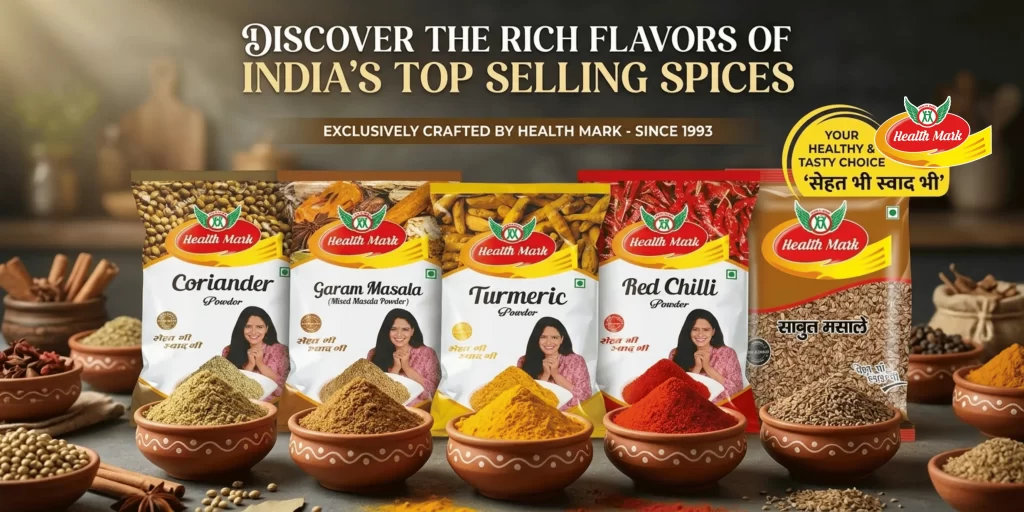
The current spices powder range includes Turmeric Powder, Red Chilli Powder, Coriander Powder, and Garam Masala for daily cooking, alongside Carom Seeds (Ajwain) and Fennel Seeds (Saunf) for tempering, digestion, and after-meal use. Every product is sourced with the same organic, pesticide-free philosophy that runs across Health Mark’s wider range of atta, besan, pulses, dry fruits, and pickles.
If you run a kitchen, restaurant, or retail business and are comparing spices sellers, it is worth asking any manufacturer the same three questions Health Mark is happy to answer directly: where the raw material is sourced, how the product is tested for purity, and how fresh the batch on your shelf actually is.
Best Spices Powder for Every Indian Dish: A Quick Pairing Guide
| Dish Type | Spices Powder You Need |
| Everyday dal or sabzi | Turmeric powder, red chilli powder, coriander powder |
| Paneer or chicken curry | Garam masala, red chilli powder, coriander powder |
| Biryani or pulao | Garam masala, whole cumin, fennel seeds |
| Parathas and snacks | Carom seeds (ajwain), red chilli powder |
| Pickles and marinades | Turmeric powder, red chilli powder, fennel seeds |
| After-meal freshener | Fennel seeds (saunf) |
FAQ
Which are the top selling spices in India?
Turmeric, red chilli, coriander, garam masala, and cumin are the top selling spices in India, followed closely by carom seeds and fennel seeds, which are staples in almost every regional kitchen.
How can I tell if spices powder is adulterated?
Check the colour against the natural shade of that spice, smell it for a full and specific aroma rather than a weak or musty one, and try the simple water test described above. For anything beyond a rough home check, buy only from sellers who publish their FSSAI licence and lab-tested claims.
What does FSSAI certification actually guarantee?
An FSSAI licence means the manufacturer or seller is registered with India’s Food Safety and Standards Authority and is expected to follow its safety and labelling norms. It is a baseline compliance requirement, so always check it alongside sourcing and manufacturing details rather than treating it as the only quality signal.
Is it better to buy whole spices or spices powder?
Whole spices generally keep their flavour longer and are worth it for items you use in small amounts, like cardamom or cinnamon. For high-use staples like turmeric, red chilli, and coriander, a quality spices powder from a trusted manufacturer is more practical for daily cooking.
How long do spices powder packs stay fresh once opened?
Most ground spices stay at peak flavour for 6 to 12 months if stored in an airtight container away from heat and moisture. Aroma is usually the first thing to fade, well before a pack looks visibly different.
What is the difference between garam masala and curry powder?
Garam masala is a warming, aromatic Indian spice blend added mostly near the end of cooking, built around cinnamon, cardamom, cloves, and pepper. Curry powder is a broader, often milder blend popularised outside India and typically includes turmeric and a wider mix of ground spices as its base.
Why do some chilli or turmeric powders look unusually bright?
An unnaturally vivid, uniform colour can be a sign of added synthetic dye rather than a strong natural batch. Genuine spices have some natural variation in shade from batch to batch depending on the crop and season.
Can I buy spices powder online safely in India?
Yes, as long as you buy from a seller who displays FSSAI details, ingredient lists, and manufacturing information clearly, and who has a genuine, verifiable manufacturing or sourcing base rather than only a marketplace listing.
What makes Health Mark a good choice for buying spices powder?
Health Mark manufactures its spices powder range, including turmeric, red chilli, coriander, and garam masala, with ingredients sourced from certified organic farms, avoiding synthetic pesticides, herbicides, and GMOs, and maintaining traceability from farm to final pack.
How do I place a bulk or business order for spices with Health Mark?
You can reach the Health Mark sales team directly at +91 93188 96005, +91 92185 87660, or +91 98828 96000, or place a product enquiry through the Health Mark website for bulk, retail, or business orders.
Conclusion: Choose Spices That Actually Match the Label
India’s spice market is only getting bigger, and so is the gap between spices that genuinely deliver on flavour and purity, and those that simply look the part on a shelf or a product photo. The top selling spices in India, turmeric, red chilli, coriander, garam masala, cumin, ajwain, and fennel, are only worth buying repeatedly if the pack behind the label is honest about sourcing, freshness, and certification.
If you are ready to stock your kitchen with quality spices powder that is sourced, packed, and tested with that standard in mind, explore the full spices range from Health Mark, or reach the sales team directly at +91 93188 96005, +91 92185 87660, or +91 98828 96000 for retail and bulk enquiries.