
Walk into almost any Indian kitchen and you will find a small steel container or glass jar of turmeric powder sitting close to the stove. Known across India as haldi, it is used in dal, vegetable sabzi, pickles, marinades, and everyday curries. Because turmeric is used so frequently, many people rarely stop to check whether the product they are using is genuinely pure.
This makes it important to understand how to identify pure turmeric powder at home before making it a regular part of your cooking. Turmeric can sometimes be mixed with artificial colours, fillers, or other substances that affect its quality. Fortunately, a few simple checks using water, appearance, aroma, texture, and packaging details can help you judge whether your haldi looks fresh and authentic.
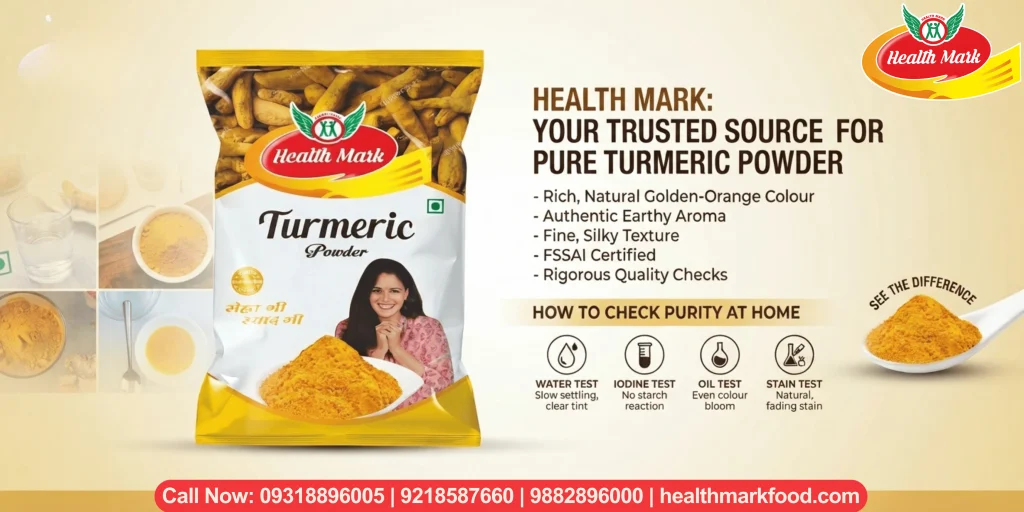
In this guide, we will explain simple ways to check turmeric powder at home, what signs may indicate poor quality, what to look for on the label, and how to store turmeric properly so it retains its colour, aroma, and freshness for longer.
Why Turmeric Purity Matters More Than You Think
Turmeric is not just a colouring agent. It brings earthy warmth, a gentle bitterness and a distinctive aroma that defines the flavour base of countless recipes. When the powder is diluted with cheaper fillers or artificially coloured, the dish suffers in two ways. The taste becomes flat, sometimes with an off note that is hard to pin down, and the colour may look bright but fail to deliver the depth you expect once it hits hot oil.
There is also a health dimension. The active compounds in turmeric, mainly curcumin, are the reason the spice has been studied so widely. Research into curcumin has explored its antioxidant and anti-inflammatory properties, though it is important to be measured here. Most of the evidence comes from laboratory and early clinical studies, and no spice should be treated as a cure for a medical condition. Still, if you are cooking with turmeric partly for its potential benefits, you want the product you use to actually contain turmeric and not a mix of starch, chalk or worse.
The concern is not theoretical. Food safety authorities in South Asia and elsewhere have repeatedly reported cases of turmeric adulterated with non-food substances. Some of these additives are used to boost weight or brightness. For that reason, purity is not a luxury feature. It is a basic expectation of any spice you bring into your home.
What Pure Turmeric Powder Should Look Like
Before you can spot a fake, you need a clear picture of the real thing. Pure turmeric powder has a few consistent characteristics, though minor variations exist depending on the variety of rhizome, the region where it was grown and how it was processed.
Colour. Good turmeric shows a warm yellow to deep golden-orange tone. It should look rich rather than glaring. When you tip a small pile onto a white plate, it should appear earthy and natural. A powder that looks unusually neon, almost fluorescent, deserves a closer look. Extremely uniform, lurid colour can indicate added dye.
Aroma. Pure turmeric has a warm, slightly peppery and earthy smell, often described as woody or mildly medicinal. Open the packet, bring it close to your nose and take a gentle sniff. If you detect something chemical, sharp or like paint, stop there. Fresh, aromatic turmeric has a pleasant fragrance that lingers in the kitchen while you cook.
Texture. High-quality haldi is finely ground and feels soft and silky between your fingers. It should flow easily and resemble a fine dust. Grittiness, visible lumps of different colour or a powder that clumps unnaturally can signal mixing or poor processing.
Taste. A tiny pinch on the tip of your tongue should taste earthy and slightly bitter with a mild warmth. Be careful here: you only need a minuscule amount for this check, and you should never taste a product that smells or looks suspicious.
Behaviour in cooking. When you bloom turmeric in hot oil for a few seconds, pure powder releases a rich, toasty aroma and colours the oil evenly. Impure powder may turn muddy, leave a grey tinge or produce a sharp smell.
Home Tests to Identify Pure Turmeric Powder
No home test can replace proper laboratory analysis, but several simple checks can flag problems quickly. Think of them as screening tools. If a sample passes all of them, you can feel reasonably confident. If it fails one or more, it is wise to stop using it and look for a more trustworthy source.
Test 1: The Water Settling Test
This is one of the most popular checks, and it is easy to perform.
- Take a clear glass and fill it with about 200 millilitres of room-temperature water.
- Add one teaspoon of turmeric powder and stir gently for a few seconds.
- Watch what happens over the next two to three minutes.
With pure turmeric, the water turns a bright yellow colour and the powder slowly settles to the bottom in a fine layer. The liquid tends to stay tinted rather than turning clear quickly. If the water looks heavily stained but the sediment forms a thick, uneven or chalky layer, be suspicious. Some adulterated samples settle very fast or leave a patchy residue. This test does not confirm purity on its own, but it gives useful clues when combined with the other checks.
Test 2: The Iodine Starch Check
Starch is one of the most common fillers added to powdered spices because it is cheap and bulks up the weight. You can screen for it at home with a few drops of tincture of iodine, which is available at most pharmacies.
- Prepare the turmeric water as described above and let it settle.
- Carefully take a small amount of the clear liquid from the top, or a little of the settled powder mixed with water.
- Add two or three drops of iodine solution.
If the mixture turns deep blue or black, starch is likely present. Pure turmeric typically does not produce this reaction. Handle iodine with care, keep it away from children and wash your hands afterwards.
Test 3: The Hand and Surface Test
Pure turmeric is a natural pigment, so it tends to behave in a predictable way. Rub a small amount between your palms with a little water. Genuine turmeric leaves a soft yellow stain on the skin that fades within several hours with ordinary washing. Synthetic dyes often leave a stain that is much more intense and stubborn. Similarly, if you wipe a damp cloth across a steel surface after handling the powder, the yellow should come off easily. Overly persistent staining is worth noting.
Test 4: The Sink or Float Observation
Place a pinch of powder on the surface of still water and observe. Pure turmeric usually sinks gradually, with a little of the fine particles staying suspended. Powders with heavy fillers or foreign matter can behave differently, sometimes floating unevenly or forming clumps that drop too quickly. This check is best used alongside the settling test, not on its own.
Test 5: The Hot Oil Behaviour Check
Heat one tablespoon of cooking oil in a pan until it is warm but not smoking. Turn the heat to low, add half a teaspoon of turmeric and stir for about fifteen seconds. Pure haldi will release an even, golden colour and a fragrant, toasty smell. If the oil turns a dull brown, separates into streaks or gives off a sharp, plastic-like odour, the product deserves suspicion.
Each of these tests provides a piece of evidence. Passing all of them does not guarantee perfection, but failing several should prompt you to switch brands.
Reading the Label Like a Quality Inspector
The packet itself offers a great deal of information if you know where to look. Spending thirty seconds on the label before you buy can save you from disappointment.
Ingredient list. The ingredient statement should be short. For a pure powder, you should see turmeric or haldi as the sole ingredient. Be wary of lists that include colour, starch, salt or flavour enhancers unless the product is a blend and the blend is clearly labelled as such.
FSSAI licence number. In India, packaged food products are required to carry a Food Safety and Standards Authority of India licence number. You can verify licence details through the official FSSAI portal. A missing or unverifiable licence is a serious red flag.
Manufacturing and packing details. Look for the name and address of the manufacturer or packer, the batch number, the date of packing and the best-before date. A product without traceable production details is harder to trust.
Storage instructions. Reputable brands tell you to keep the powder in a cool, dry place away from direct sunlight and moisture. Clear storage guidance suggests the producer understands spice quality.
Net weight and packaging type. Sealed, moisture-resistant packaging helps preserve aroma and colour. Thin, loosely sealed pouches may allow moisture and air to degrade the spice over time.
Certifications and quality claims. Some manufacturers highlight lab testing, hygienic processing or quality certifications. Treat these as positive signals, but check that the claims are specific and verifiable rather than vague marketing phrases.
Common Adulterants and Warning Signs
Knowing what adulterants look for can sharpen your instincts while shopping. Here are some of the most commonly reported fillers and colourants in turmeric.
- Starch and flour: Cheap bulking agents that can be detected with the iodine test.
- Chalk or limestone powder: Added to increase weight. Chalk often settles very quickly in water and may feel gritty.
- Coloured dyes: Used to create a brighter, more uniform yellow. The colour can look unnaturally intense.
- Lead chromate: A toxic substance that has been reported in some cases of turmeric adulteration. This is one of the main reasons buying from trusted, regulated sources matters so much.
- Wheat bran or sawdust-type fillers: These can add bulk and may produce uneven texture or odd smells.
Warning signs to watch for include an unusually low price compared with reputable brands, an overpowering colour, a chemical or chalky smell, a powder that leaves heavy residue on your hands, and packaging that lacks any verifiable information. None of these alone proves adulteration, but several together should make you cautious.
Choosing the Right Turmeric for Different Dishes
Not every cook needs the same type of haldi. The right choice depends on how you cook and what flavour you want to achieve.
Everyday dal and sabzi. For daily cooking, you want a dependable, well-balanced powder with a clean aroma and consistent colour. A fine, aromatic turmeric works beautifully in tempering and in quick vegetable preparations because it blends evenly into oil and onions.
Rich curries and gravies. Slow-cooked curries benefit from a turmeric with depth. A robust, earthy powder holds up well during long simmering and contributes a deeper, rounder flavour to the base. Blooming the powder in oil at the start of cooking helps draw out its aroma.
Pickles and preserves. Turmeric is a staple in many pickles. Here, purity matters for both colour and preservation qualities. Choose a powder that is finely ground so it disperses evenly in the brine or oil.
Marinades for tandoori and grilled dishes. A smooth, finely ground powder mixes well into yogurt marinades and coats proteins uniformly. Clumps are more likely with coarse powders, so fineness is useful here.
Golden milk and beverages. When you add turmeric to warm milk or tea, a fine, dissolvable powder gives a smoother drink without grainy residue. Pair it with a little black pepper and fat, as is commonly recommended, to support absorption of curcumin.
Storage Habits That Protect Freshness
Even pure turmeric loses quality if it is stored poorly. Light, heat, humidity and air are the main enemies of spice aroma and colour. Here are practical habits that make a noticeable difference.
- Keep it sealed. Transfer the powder to an airtight container after opening, or keep it in its original resealable packet with the air pressed out.
- Store it away from heat. Avoid placing spice containers directly above the stove or near the dishwasher, where steam and warmth can accelerate deterioration.
- Protect it from moisture. Always use a dry spoon. Moisture encourages clumping and can encourage mould over time.
- Shield it from light. Opaque or dark containers help preserve colour. A cupboard is better than an open shelf facing a window.
- Buy in amounts you will use. Large quantities of ground spice lose potency. Buying in moderate packs and replacing them regularly keeps your cooking vibrant.
As a general guideline, ground turmeric tends to stay at its best for several months after opening, though the exact period depends on packaging and storage conditions. If the aroma has faded noticeably or the colour looks dull, it is time for a fresh pack.
Common Mistakes Buyers Make
Even careful shoppers fall into a few traps. Being aware of them helps you buy better.
Choosing by colour alone. A brighter yellow is not automatically a better yellow. In fact, an unnaturally vivid shade can be a warning sign. Judge by the whole combination of colour, aroma and texture.
Ignoring the label. Many people glance at the front of the packet and ignore the small print. The ingredient list, licence number and batch details are where the real information lives.
Buying the cheapest option every time. Price matters, but extremely low prices for spices can indicate corners cut in sourcing or processing. Reasonable value beats the lowest possible cost.
Testing only once. A single good batch does not guarantee every future pack will be the same. Keep an eye on consistency and be willing to switch if quality drops.
Storing spices near heat and humidity. Even excellent turmeric will taste flat if it sits beside the gas burner for months.
Mistaking a dull powder for a fresh one. Old turmeric can look ordinary and smell weak. Freshness is part of quality, so check the packing date when you can.

Expert Tips for Buying Premium Haldi
If you want to move beyond basic checks and become a more discerning buyer, these habits will help.
- Smell before you buy. If the store allows you to open a sample or if you are buying from a shop with bulk containers, take a moment to smell the spice.
- Look for consistent colour across the batch. Uniformity is good, but it should look natural rather than painted.
- Prefer sealed, dated packaging. Clear packing information shows that the producer tracks production and cares about traceability.
- Buy from sellers who share details. A reputable supplier will happily provide information about sourcing, processing and packing standards.
- Keep a simple purchase log. Note the brand, batch and how the powder performed in your cooking. Over time you will develop a reliable list of trusted products.
- Compare with a known-good sample. If you have one pack you trust, use it as a reference. Any new product that looks or smells dramatically different deserves a closer look.
FAQ
How can I quickly tell if turmeric powder is pure?
Start with a sensory check. Pure turmeric has a warm, earthy aroma, a rich yellow to golden-orange colour and a fine, soft texture. Follow up with the water settling test and, if you want an extra screen for starch, the iodine check. These simple methods will catch many common problems, though they cannot replace laboratory testing.
Does pure turmeric powder stain hands?
Yes, genuine turmeric does leave a yellow stain on the skin, especially when moistened. This stain usually fades within a few hours of washing. If a powder leaves an intensely stubborn stain that lingers for days, it may contain added colourants.
Is an extremely bright turmeric powder always fake?
Not always, but an unusually vivid, almost neon colour is worth questioning. Natural turmeric varies in shade depending on the rhizome and processing, but it generally looks warm and earthy rather than artificial. When in doubt, compare it with another trusted pack.
What is the iodine test for turmeric?
The iodine test checks for starch. You mix a little turmeric in water, let it settle, then add a few drops of tincture of iodine to a sample. A deep blue or black reaction suggests starch is present. Pure turmeric generally does not produce this colour change. Handle iodine carefully and keep it away from children.
Can turmeric powder contain harmful substances?
Yes, it can, which is why buying from regulated, transparent sources matters. Reports of adulteration with lead chromate and other non-food substances have prompted food safety authorities to set testing standards and enforce labelling rules. Choose products with a valid FSSAI licence and clear manufacturing details.
What should I look for in the label of a good turmeric powder?
Look for a short ingredient list with turmeric as the main or only item, an FSSAI licence number, manufacturer or packer details, batch and packing dates, and clear storage instructions. Sealed, moisture-resistant packaging is also a good sign.
How long does turmeric powder stay fresh?
Ground turmeric is best used within several months of opening, provided it is stored in a cool, dry, dark place in an airtight container. Freshness is best judged by aroma and colour. If the spice smells weak or looks dull, it is time to replace it.
Does cooking with turmeric require a special technique?
Not really, but blooming it in hot oil for a short time helps release its aroma and colour evenly. Add it after the onions or base ingredients have softened, stir quickly and avoid letting it burn, since scorched turmeric turns bitter.
Why does pure turmeric sometimes taste slightly bitter?
A mild bitterness is a natural characteristic of turmeric and is part of its flavour profile. Excessive bitterness, however, can point to over-processing, poor storage or lower-quality rhizomes. Balance it in cooking with fats, acids or other spices rather than adding more powder.
Is organic turmeric better than conventional turmeric?
Organic certification addresses how the crop was grown, particularly regarding synthetic inputs. It does not automatically guarantee purity or freshness. A conventional product from a well-regulated, transparent producer can be excellent, and an organic product from a poorly managed source can still be disappointing. Evaluate purity, aroma and packaging alongside any organic claim.
Final Thoughts
Learning to identify pure turmeric powder at home is less about becoming a food scientist and more about developing attentive habits. Look at the colour, breathe in the aroma, feel the texture, run a simple water test and read the label carefully. Store your spices well and replace them when they lose their character. Each of these steps takes little time, yet together they transform how your food tastes and how confident you feel about what you serve.
If you are shopping for a dependable product for everyday cooking, look for a powder that passes these checks and comes from a transparent supplier. You can explore the full range of spice blends and single-ingredient masalas on the Powder Masale category page, or view the details of our turmeric powder directly on the product page. Our team is also happy to answer questions about sourcing, packing and how to use haldi in your favourite recipes.
Ready to cook with confidence? Browse our Turmeric Powder product page or explore the full Powder Masale collection. For bulk enquiries, wholesale questions or product guidance, call us at 09318896005, 9218587660 or 9882896000.