If you have ever stood in a kitchen in Punjab, Himachal, or Chandigarh at 8 in the morning, chances are good that someone nearby is stirring a pan of poha. It’s the dish that shows up when you want something light, something fast, and something that still feels like a proper meal instead of a snack. But here is the question most buyers do not ask until it is too late: where does that poha actually come from, and is it made well?
This guide walks through everything worth knowing before you buy poha in bulk or for your household how it is manufactured, what separates a top Poha supplier from an average one, what a fair Poha price looks like, and why Health Mark has built a reputation as one of the best Poha brands in India. Whether you are a retailer searching for a top Poha seller, a distributor comparing options, or a home cook who simply wants the best health mark Poha for breakfast, you will find a clear, practical answer here.
What Is Poha, and Why Does North India Eat So Much of It?
Poha is flattened rice ordinary paddy that has been parboiled, pressed flat, and dried until it turns into thin, light flakes. It is not a separate grain or a processed invention; it is simply rice reshaped so that it cooks in minutes instead of the twenty or so it normally takes. That single property is why poha became a breakfast staple across Maharashtra, Madhya Pradesh, Gujarat, and increasingly across Punjab, Haryana, Himachal Pradesh, and Delhi NCR.
In north India specifically, poha has moved from being a regional curiosity to a everyday breakfast and evening snack. Families like it because it is light on the stomach, quick to prepare before office or school, and flexible enough to take on whatever spices, vegetables, or peanuts are in the kitchen that day. Roadside stalls sell kanda poha with a squeeze of lemon, offices serve it during meetings, and it has quietly become one of the top selling Poha in India categories within the packaged snacks and staples segment.
None of that popularity matters, though, if the poha itself is poor quality. Flakes that are too thick take forever to soften. Flakes that are stale turn gummy or bitter. Flakes packed carelessly pick up moisture and smell musty within weeks. This is exactly why the manufacturer behind the packet matters as much as the recipe.
How Premium Quality Poha Is Actually Made
Good poha manufacturing is a controlled, multi-step process, not a rough village task scaled up. Understanding it helps you judge quality the next time you are comparing a best Poha seller against a generic wholesale option.
Step 1: Paddy Selection
The process starts with selecting good-quality paddy, usually a medium or short grain variety that flattens cleanly without breaking. Poor paddy selection is the single biggest reason cheap poha turns to powder in the packet.
Step 2: Soaking and Parboiling
The paddy is soaked and lightly parboiled. This softens the husk and starts to gelatinise the starch inside the grain, which is what allows the rice to be pressed flat later without shattering.
Step 3: Roasting
The parboiled paddy is roasted briefly at controlled temperature. Roasting time and heat matter enormously under-roasting leaves the grain too moist to flatten well, and over-roasting can give the poha a scorched taste.
Step 4: Flattening (Flaking)
The roasted grain passes through heavy rollers that press it into thin flakes. Thickness here decides the final grade: thin flakes cook almost instantly and suit light preparations, while thicker flakes hold up better in heavier dishes.
Step 5: Cleaning, Grading, and Packing
Finally, the flakes are sieved to remove broken bits and husk, graded by size, and packed under hygienic, moisture-controlled conditions. This last step is where a serious high quality Poha manufacturer separates itself from an unbranded local supplier proper packing is what keeps the product fresh from the factory floor in a place like Baddi, Himachal Pradesh, all the way to a kitchen shelf in Amritsar or Gurugram.
What Makes a Manufacturer the ‘Best Poha Manufacturer in North India’
Not every supplier that lists poha in a catalogue deserves the title. Buyers whether retailers, distributors, or households should judge manufacturers against a short, practical checklist.
Sourcing discipline: consistent, traceable paddy sourcing rather than mixed-batch buying
Process hygiene: clean roasting, flaking, and packing lines with proper food-safety practices
Consistency: every batch should look, cook, and taste the same, not vary pack to pack
Packaging integrity: sealed, moisture-resistant packs that protect shelf life
Transparent quantity and pricing: clear weights (like 80gm, 350gm, 500gm packs) and a fair Poha price without hidden markups
Accessibility: a manufacturer that is easy to reach for bulk orders, repeat orders, or queries not just a listing with no real support
Manufacturers based in north India carry a practical advantage for buyers in this region too shorter transit times, fresher stock on arrival, and better responsiveness for regional retailers and distributors compared to ordering from a supplier several states away.
Why Health Mark Is Recognised as a Top Poha Supplier
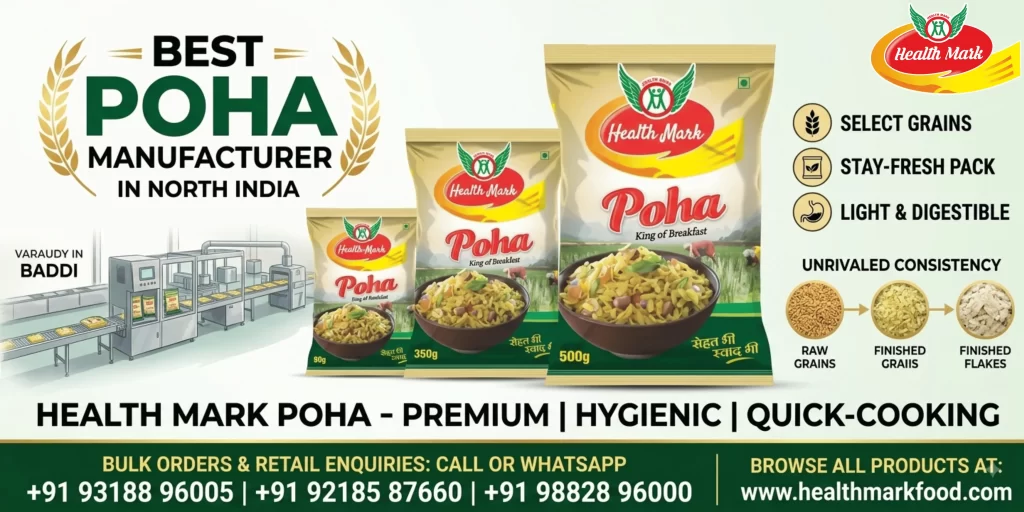
Health Mark manufactures its Poha from carefully selected rice grains, flattened and processed under hygienic conditions to deliver a soft texture and authentic taste. The product is positioned squarely for the everyday buyer light, easy to digest, quick-cooking, and packed to stay fresh from the moment it leaves the facility.
A few things stand out about how Health Mark approaches this category:
Premium quality flattened rice, selected for consistent texture batch after batch
Light, easily digestible flakes suited to breakfast, snacks, and light meals
Quick-cooking flakes that absorb spices, vegetables, and peanuts evenly
Hygienic processing and packaging designed to protect freshness during transit and storage
Multiple pack sizes 80gm, 350gm, and 500gm so households and small retailers are not forced into oversized bulk packs
Health Mark operates from Baddi, Himachal Pradesh, an industrial belt well positioned to serve Punjab, Haryana, Chandigarh, Himachal, and Delhi NCR efficiently. For buyers searching specifically for a Poha seller near me across these states, that regional footprint translates into faster order fulfilment and fresher stock compared with suppliers shipping in from further south.
Beyond poha, Health Mark also produces atta, besan, dry fruits, pulses, spices, sauces, pickles, and other snacks which matters if you are a retailer looking to consolidate orders with a single reliable supplier rather than juggling multiple vendors for related grocery categories. You can browse the full poha listing directly on the
You can view current pack sizes and place an enquiry directly on the Health Mark Poha product page, or explore the wider snacks range on the
Nutritional Profile: Is Poha Actually Healthy?
Poha earns its reputation as a light, wholesome breakfast for a few concrete reasons, not just tradition. As flattened rice, it is naturally low in fat and easy on digestion compared to heavier fried breakfast options. When cooked with vegetables and a modest amount of oil, a typical bowl of poha is a moderate-calorie, carbohydrate-forward meal that also picks up added nutrition from whatever is added to it.
Peanuts add protein and healthy fats
Onions, peas, and carrots add fibre and micronutrients
Lemon juice adds vitamin C, which also helps iron absorption from the rice
Curry leaves and mustard seeds contribute small but real amounts of minerals and antioxidants
It is worth being direct about limits, too: poha is not a high-protein food on its own, and pre-packaged instant poha mixes with heavy oil or excess salt can undercut the benefits. This guide’s advice is simple buy plain, high quality Poha and season it fresh at home so you control exactly what goes into the meal.
Types of Poha and How Each One Is Used
Not all poha is interchangeable. Thickness and processing style change what a batch is best suited for, and a good manufacturer will grade for this rather than selling one undifferentiated product.
Thin Poha
Thin flakes cook almost instantly with just a rinse and light steaming. They suit delicate preparations like chivda mixtures and light snacks where you do not want the rice to turn mushy.
Medium Poha (Standard Kanda Poha Grade)
This is the everyday grade most households reach for. It holds its shape through sautéing with onions, mustard seeds, curry leaves, and turmeric the classic kanda poha breakfast.
Thick Poha
Thicker flakes are suited to heavier, more indulgent preparations such as poha chivda for snacking, or dishes where the rice needs to hold texture through longer cooking or frying.
Health Mark’s standard offering is positioned as a versatile, medium-style flake light enough for daily breakfast, but sturdy enough to hold its texture when cooked with vegetables and spices, which is what most north Indian households are actually looking for.
Poha Price: What Should You Actually Expect to Pay?
Poha price varies by pack size, flake grade, and whether you are buying retail or in bulk. As a general guide for the Indian market in 2026:
Small retail packs (around 80gm) are priced for trial or single-use purchases
Mid-size packs (around 350gm) suit regular household consumption
Larger packs (around 500gm) work better for bigger families or light bulk buying
Exact pricing depends on current input costs and the manufacturer’s own positioning, so it is always worth confirming the latest Poha price directly with the seller rather than relying on old listings. Health Mark keeps its pricing straightforward across its 80gm, 350gm, and 500gm packs, and can be reached directly for current rates and bulk or distributor pricing.
A quick note on ‘cheapest is best’: the lowest-priced poha in a market is very often the lowest-graded flake too thin, brittle, and likely to break down into powder before it even reaches your kitchen. When comparing Poha price across sellers, weigh it against flake consistency, packaging, and freshness, not just the number on the label.
Comparison: Choosing Between Poha Sellers and Brands
Here is a straightforward way to compare a branded, hygienically processed manufacturer like Health Mark against typical loose or unbranded market options.
| Factor | Loose / Unbranded Poha | Health Mark Poha |
| Sourcing | Often mixed batches, untraceable | Selected, consistent rice grains |
| Hygiene | Variable, open-market handling | Hygienically processed and packed |
| Freshness | Depends on how long it sat unpacked | Sealed packaging protects shelf life |
| Consistency | Texture and cook time vary batch to batch | Consistent light texture and quick cooking |
| Pack sizes | Usually sold loose by weight only | 80gm, 350gm, and 500gm options |
| Support / reorder | No direct contact for bulk or repeat orders | Direct enquiry and WhatsApp ordering available |
How to Cook Poha the Right Way (Step-by-Step)
Even the best Poha brand in India will disappoint if it is cooked incorrectly. Poha does not need to be boiled it needs to be rinsed and softened, then briefly steamed with tempering. Here is the reliable method:
Rinse the flakes gently in a sieve under running water for a few seconds do not soak them, or they will turn mushy.
Let the rinsed poha rest for 5–10 minutes so it softens naturally from the residual moisture.
Heat oil in a pan, add mustard seeds, curry leaves, chopped green chilli, and chopped onion; sauté until the onion turns soft.
Add turmeric, salt, and any vegetables (peas, potato, carrot) and cook briefly.
Add the softened poha, mix gently on low heat for 2–3 minutes so it heats through without breaking apart.
Finish with roasted peanuts, fresh coriander, and a generous squeeze of lemon juice before serving.
Tip: cook on low to medium heat once the poha is added high heat is the fastest way to turn good flakes into a sticky, broken mess.
Common Mistakes Buyers and Cooks Make with Poha
Soaking poha in water instead of a quick rinse, which leaves it soggy
Buying loose poha without checking how it has been stored or how long it has been sitting out
Assuming all poha packs of the same weight are the same quality flake thickness and grading differ across manufacturers
Storing opened packs in humid kitchen conditions without resealing, which shortens shelf life fast
Buying the cheapest option in bulk without testing a small pack first
Overcooking the poha once it is in the pan, which breaks down the texture and makes it gummy
Expert Tips for Buying and Storing Poha
Buy from a manufacturer that lists clear pack weights and hygiene practices rather than unlabelled loose stock
Store poha in an airtight container away from direct sunlight and moisture
If you cook poha often, the 500gm pack is usually more economical per serving than repeatedly buying 80gm packs
For bulk or retail buying, ask the supplier directly about current Poha price and minimum order quantities rather than assuming online listings are final
Test a smaller pack first if you are switching manufacturers, especially before committing to a large distributor order
How to Find a Reliable ‘Poha Seller Near Me’
If you are searching for a Poha seller near me across Punjab, Himachal Pradesh, Haryana, Chandigarh, or Delhi NCR, prioritise sellers who can answer three questions clearly: where the poha is manufactured, how it is packed, and how quickly you can reorder. A manufacturer based in the region, like Health Mark in Baddi, Himachal Pradesh, typically means shorter delivery times and fresher stock than ordering from a distant unbranded supplier.
Health Mark also makes direct ordering simple for buyers who prefer speaking to someone before purchasing in bulk:
Sales enquiries: +91 93188 96005
Sales enquiries: +91 92185 87660
Sales enquiries: +91 98828 96000
You can also place a quick enquiry or check current stock directly on the Poha product page or browse related snacks on the
Snacks category page on the Health Mark website.
FAQ
1. Who is the best Poha manufacturer in North India?
There is no single official ranking, but buyers generally look for manufacturers with hygienic processing, consistent flake quality, transparent pricing, and regional accessibility. Health Mark, based in Baddi, Himachal Pradesh, meets these criteria and serves Punjab, Haryana, Himachal, and the wider north Indian market.
2. Is poha good for weight management?
Poha is lighter than many fried breakfast options and is easy to digest, which is why it is often recommended as part of a balanced diet. Its overall healthiness depends heavily on how much oil and salt are added during cooking, so home-cooked poha with fresh vegetables is generally a better choice than heavily processed instant mixes.
3. What is the difference between thin and thick poha?
Thin poha cooks almost instantly and suits light dishes and chivda-style snacks, while thick poha holds its texture better in heavier preparations. Most everyday kanda poha recipes use a medium grade that balances both.
4. How should I store poha to keep it fresh?
Keep poha in an airtight container in a cool, dry place away from direct sunlight. Once a pack is opened, reseal it tightly or transfer it to a clean, dry jar to prevent moisture from making the flakes stale or musty.
5. What is a fair Poha price in India right now?
Pricing varies by pack size and flake grade, with smaller retail packs costing proportionally more per gram than larger packs. It is best to confirm current pricing directly with the manufacturer, since input costs shift throughout the year.
6. Can poha be eaten by people with digestive sensitivity?
Poha is generally considered light and easy to digest compared to many fried snacks, which is part of why it is popular as a breakfast option. Anyone with a specific medical condition should check with a doctor or dietitian before making dietary changes.
7. Does Health Mark sell poha in small pack sizes for households?
Yes. Health Mark offers poha in 80gm, 350gm, and 500gm pack sizes, which covers both trial-size household purchases and larger family or light bulk needs.
8. How do I place a bulk or distributor order for poha?
You can contact Health Mark’s sales team directly by phone or WhatsApp using the numbers listed on this page, or submit an enquiry through the Poha product page on the Health Mark website.
9. What makes packaged poha better than loose market poha?
Packaged poha from a hygienic manufacturer is protected from open-air moisture, dust, and handling that loose poha is typically exposed to in open markets, which helps it stay fresher for longer and cook more consistently.
10. Is Health Mark poha suitable for retailers and distributors, not just households?
Yes. Health Mark’s regional base in Baddi, Himachal Pradesh, and its range of pack sizes make it a practical option for retailers and distributors across north India who want a consistent, direct supply relationship rather than sourcing from multiple unbranded vendors.
Final Word and How to Order
Poha earns its place on the breakfast table because it is quick, light, and genuinely versatile but only when the flakes themselves are made well. A manufacturer’s sourcing, roasting, flaking, and packing decisions all show up in how the poha cooks and tastes at home, which is exactly why the search for the best Poha manufacturer in North India is worth taking seriously rather than defaulting to whatever is cheapest at the local store.
Health Mark manufactures its poha from selected rice grains, processes it hygienically, and packs it in 80gm, 350gm, and 500gm sizes to suit households, retailers, and distributors across Punjab, Himachal Pradesh, Haryana, Chandigarh, and Delhi NCR. If you are ready to order or want current pricing for bulk purchases, reach out directly.