Walk into almost any Indian kitchen on a weekday morning and there’s a fair chance poha is already on the stove, or about to be. It’s the country’s most dependable breakfast quick to cook, light on the stomach, and flexible enough to absorb whatever vegetables and spices happen to be lying around. But if you’ve ever ended up with a soggy, stale, or oddly gritty batch, you already know that the brand behind the pack matters just as much as the recipe you follow.
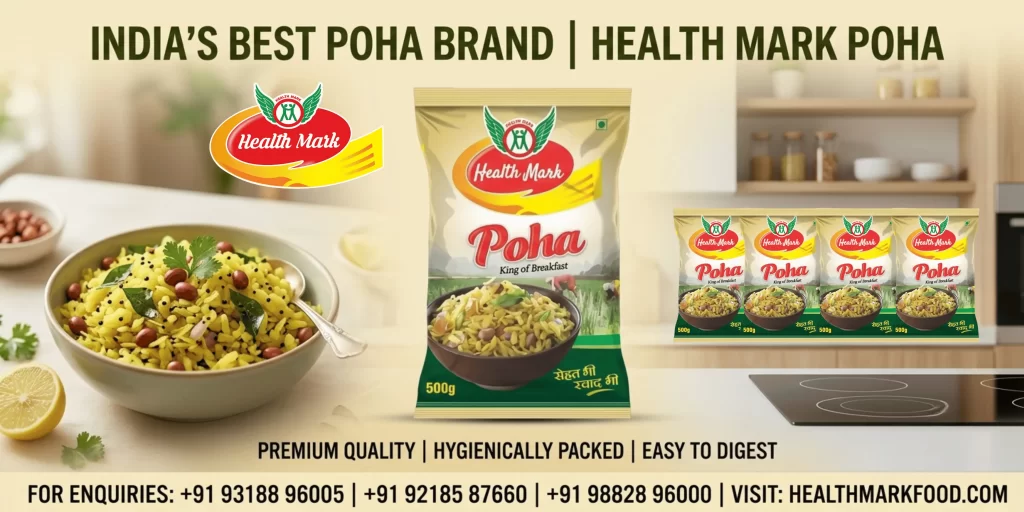
This guide breaks down what actually separates an average poha from a genuinely good one, what to look for while comparing the best poha brand in India, and why Health Mark poha made from premium quality flattened rice and hygienically packed at its Baddi facility in Himachal Pradesh deserves a place on your grocery list. Whether you’re a home cook stocking up for the family or a retailer scouting a reliable poha supplier, you’ll find straightforward, practical answers below.
What Is Poha, and Why Does India Eat So Much of It?
Poha is flattened rice rice grains that are parboiled, pressed flat, and dried, so they cook in minutes rather than the twenty-odd it takes for regular rice. It goes by different names depending on where you are: aval in Tamil Nadu and Kerala, avalakki in Karnataka, chivda when it’s turned into a spiced dry snack, and simply poha across most of North and Central India.
What keeps poha on breakfast tables from Indore to Ludhiana isn’t tradition alone it’s practicality. There’s no grinding, no fermenting, and no waiting overnight. A quick rinse, a light soak, a tempering of mustard seeds, curry leaves, onions and peanuts, and you have a meal in under fifteen minutes. That’s exactly why demand for a dependable, best health mark poha or any other trusted brand keeps climbing every year as more households look for quick meals that don’t compromise on quality.
How to Judge the Best Poha Brand in India: A 7-Point Checklist
Not every packet labelled ‘poha’ delivers the same cooking experience. Here’s what actually separates premium quality poha from the average shelf option.
Grain quality and uniformity Good poha flakes should be similar in size and thickness. Uneven flakes cook unevenly, leaving some parts mushy and others hard.
Processing hygiene Look for brands that mention FSSAI-compliant, hygienically processed facilities. This affects both safety and shelf life.
Moisture control Poha that’s too moist turns sticky and spoils faster; poha that’s too dry crumbles. A well-processed batch sits right in between.
Packaging integrity Sealed, moisture-proof pouches protect against humidity, pests, and staleness far better than loosely packed or open-bin poha.
Absence of impurities Premium batches are cleaned to remove stones, husk, and broken grains before packing.
Right thickness for your recipe Thin poha suits chivda and quick snacks; medium poha is the standard choice for kanda poha; thick poha holds its shape better in heavier preparations.
Transparent labelling and traceability A brand that clearly states its manufacturing location, ingredients, and pack sizes signals accountability which matters more than marketing claims.
Health Mark Poha Premium Quality Poha Built for Everyday Cooking
Health Mark poha is made from carefully selected, premium quality flattened rice grains, processed under hygienic conditions to keep the texture light and the taste authentic. It’s positioned squarely as an everyday breakfast and snacking option quick to prepare, easy to digest, and versatile enough to pair with vegetables, peanuts, and everyday Indian spices.
What Makes Health Mark Poha Different
• Premium quality flattened rice with a soft, consistent texture
• Light and easy to digest suitable for breakfast, light lunches, or evening snacks
• Quick-cooking, ready in minutes with minimal preparation
• Hygienically packed to help preserve freshness during storage and transit
• Backed by Health Mark’s broader commitment to sourcing standards across its food portfolio
Available Pack Sizes and Poha Price
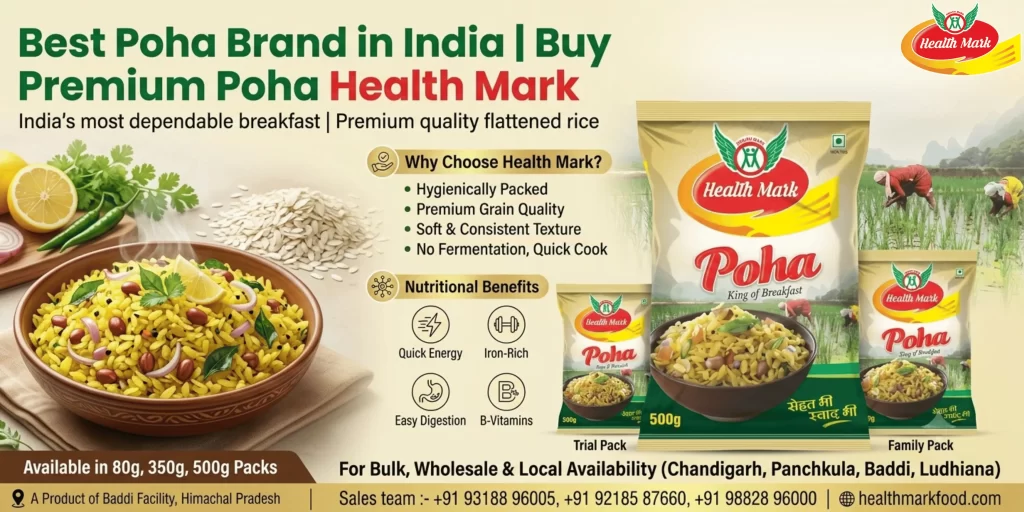
Health Mark poha is available in three pack sizes to suit different household needs a trial-size pack, a standard family pack, and a larger pack for bigger households or light bulk use.
| Pack Size | Best Suited For | Typical Use Case |
| 80 gm | Trial pack / single-person households | Try before committing to a larger pack |
| 350 gm | Small to medium families | Regular weekly breakfast stock |
| 500 gm | Larger families / frequent use | Better value per gram for regular cooking |
For the latest poha price on each pack size, current offers, or bulk pricing, it’s best to check the live product listing or send a direct enquiry, since packaged food pricing can shift with input costs. You can view current pack options on the official Poha product page, or reach the sales team directly for updated rates.
Why Health Mark Is a Trusted Poha Manufacturer
Health Mark operates out of an industrial manufacturing unit in Bhatoli Kalan, Baddi one of North India’s established FMCG manufacturing hubs. The brand’s broader positioning centres on sourcing from certified sources, maintaining supply chain transparency, and processing food hygienically before it reaches store shelves or doorsteps. This same sourcing philosophy extends across its wider range, which includes atta, besan, pulses, spices, dry fruits, and snacks poha being one part of a larger, quality-driven food catalogue.
Nutritional Benefits of Poha
Poha’s popularity isn’t just about convenience it earns its place on the breakfast table nutritionally too.
Quick, sustained energy: Poha is primarily a carbohydrate-based food, making it a practical source of morning energy without feeling heavy.
A meaningful iron contribution: Flattened rice naturally carries iron, and pairing it with a squeeze of lemon or chopped tomatoes (both vitamin C sources) improves how much of that iron your body actually absorbs which is why the lemon-on-poha habit isn’t just about flavour.
Light on fat, easy on digestion: Poha is generally low in fat before cooking oil is added, and its soft, pre-cooked texture makes it gentle on the stomach a reason it’s often recommended during recovery from illness or for those with sensitive digestion.
Retains some B-vitamins: The parboiling process used to make flattened rice helps retain a portion of the thiamine and niacin that would otherwise be lost in regular milled rice, both of which support everyday energy metabolism.
Portion-friendly for weight-conscious eating: Because poha absorbs water when soaked, a filling plate can be built with a moderate quantity of dry flakes plus vegetables, keeping the overall calorie load in check when oil is used sparingly.
As with any packaged staple, exact nutrient values vary slightly by brand, thickness, and preparation method, so treat the figures above as general guidance rather than a fixed nutrition label.
Poha vs Other Popular Indian Breakfasts
Here’s how poha stacks up against a few other everyday Indian breakfast staples, purely on practicality and everyday nutrition.
| Breakfast | Prep Time | Digestibility | Notable Point |
| Poha | 10–15 min | Light, easy to digest | No fermentation or soaking overnight required |
| Upma | 10–15 min | Light to moderate | Made from semolina; similar quick-cook convenience |
| Idli | Overnight ferment + steam | Very light, gut-friendly | Fermentation adds natural probiotics |
| Paratha | 15–20 min | Heavier, oil-dependent | More filling but calorie-dense with ghee/oil |
None of these is objectively ‘better’ in every situation the right choice depends on how much time you have and what your body needs that morning. Poha’s advantage is that it needs no advance preparation at all, which is precisely why it remains a weekday favourite.
How to Buy Poha Online in India Step by Step
If you’re looking to buy poha Online without visiting a store, here’s a simple process using Health Mark’s website:
Visit the Poha product page on healthmarkfood.com and review the description and pack sizes.
Compare the 80gm, 350gm, and 500gm options based on your household’s typical monthly consumption.
Use the ‘Enquiry Now’ option or message directly on WhatsApp to confirm current pricing and availability.
Share your delivery location and quantity required so the team can confirm order details.
For recurring or bulk requirements retailers, caterers, or distributors mention this while enquiring so you’re routed to the right pricing and supply terms.
Retailers and distributors interested in becoming a poha seller or stocking Health Mark as their regular supplier can reach the sales team directly at +91 93188 96005, +91 92185 87660, or +91 98828 96000.
3 Poha Recipes Worth Trying at Home
1. Classic Kanda (Onion) Poha
Rinse the poha briefly under water until soft, then drain fully it shouldn’t sit in water or it’ll turn mushy. In a pan, temper mustard seeds, curry leaves, chopped green chilli, and sliced onions until the onions turn translucent. Add turmeric, a pinch of salt, and the drained poha. Toss gently on low heat for two to three minutes, finish with lemon juice and chopped coriander, and serve warm.
2. Peanut and Lemon Poha
Follow the same base as kanda poha, but add roasted peanuts along with the onions for crunch. A slightly more generous squeeze of lemon at the end brightens the dish and, as a bonus, helps improve iron absorption from the rice flakes.
3. Poha Chivda (Spiced Snack Mix)
Use thin poha for this one. Dry roast the flakes lightly, then mix in fried peanuts, curry leaves, a few cashews, turmeric, and a touch of sugar and salt. Once cooled completely, store in an airtight container for a crunchy, tea-time snack that keeps for over a week.
Common Mistakes to Avoid When Buying or Cooking Poha
Buying loose, unbranded poha without checking hygiene or packaging you lose traceability and often end up with more broken grains or impurities.
Over-soaking the flakes, which turns the final dish pasty instead of light and separate.
Ignoring the pack or best-before date, especially with loose stock sold from open bins.
Using too much oil, which cancels out poha’s natural advantage as a light meal.
Picking the wrong thickness for the recipe thick poha in a quick chivda, or thin poha in a dish meant to hold its shape, rarely works well.
Storing an opened pack in humid kitchen conditions instead of an airtight container, which shortens shelf life considerably.
Why Health Mark Is Among the Top Poha Suppliers in India
Beyond individual retail packs, Health Mark also positions itself as a poha manufacturer and supplier for businesses retailers, small grocery chains, and food service operators looking for a consistent, quality-checked source. Being part of a wider FMCG catalogue that spans atta, besan, pulses, spices, and snacks means the same manufacturing discipline and sourcing standards apply across categories, not just to a single product line.
For bulk or wholesale enquiries, business owners can contact the sales team directly to discuss quantities, packaging options, and supply timelines.
Finding a Poha Seller Near You
If you’re specifically searching for a poha seller near me, Health Mark’s manufacturing base is located in Bhatoli Kalan, Baddi, and the brand serves customers across the wider Chandigarh, Panchkula, Baddi, and Ludhiana region, in addition to fulfilling orders placed directly through its website and WhatsApp. For the most current information on local stockists or nearby availability, it’s best to call the sales numbers directly or send a product enquiry through the website this avoids relying on outdated store listings and ensures you get real-time stock information.
Expert Tips for Storing Poha at Home
Always transfer poha to an airtight container after opening, rather than leaving the original pack loosely folded.
Store in a cool, dry place away from direct sunlight and stove-side humidity.
Check periodically for any signs of dampness or pests, especially during monsoon months.
Use within the timeframe suggested on the pack for the best texture and taste poha doesn’t spoil quickly, but its crispness does fade over time.
Avoid transferring poha while your hands or utensils are wet, as trapped moisture inside a sealed container accelerates clumping.
FAQ
1. What is the best poha brand in India?
The ‘best’ brand ultimately depends on what you value most texture, hygiene standards, pack sizes, or price. Brands like Health Mark focus on premium quality flattened rice, hygienic processing, and transparent packaging, which are the same factors worth checking with any brand you’re considering.
2. Is poha good for weight loss?
Poha can fit into a weight-conscious diet when portions are controlled and it’s cooked with minimal oil. Because the flakes absorb water when soaked, a satisfying plate can be made without needing a large quantity of dry poha, and adding vegetables boosts fibre and fullness.
3. What’s the difference between thin, medium, and thick poha?
Thickness affects how the flakes behave when cooked. Thin poha works best for chivda and snacks since it stays crisp; medium poha is the standard for everyday kanda poha; thick poha holds up well in heavier or wetter preparations without turning mushy.
4. How long does packaged poha last once opened?
This varies by brand and storage conditions, but as a general rule, opened poha stays best for a few weeks when kept in an airtight container in a cool, dry place. Always check the specific best-before guidance printed on your pack.
5. Can diabetics eat poha?
Poha can be included in moderate portions as part of a balanced diet, especially when paired with vegetables and a protein source to slow down glucose absorption. This is general dietary information and not medical advice anyone managing diabetes should check portion sizes with their doctor or dietitian.
6. What is the typical poha price in India?
Poha pricing varies by pack size, brand, and region. Health Mark offers 80gm, 350gm, and 500gm packs; for the most accurate, current poha price, check the product page directly or send a quick enquiry, since packaged food pricing can change with input costs.
7. Is Health Mark poha organic?
Health Mark’s broader brand positioning centres on organic and sustainably sourced food products across its catalogue. For specific certification details on the poha product itself, it’s best to check the accreditation page on the website or confirm directly with the sales team.
8. How do I place a bulk or wholesale poha order?
Retailers, distributors, and food businesses can reach Health Mark sales team directly at +91 93188 96005, +91 92185 87660, or +91 98828 96000 to discuss bulk quantities, pricing, and delivery timelines.
9. What is the shelf life of packaged poha?
Unopened, hygienically packed poha generally has a shelf life ranging from several months up to around a year, depending on the brand’s packaging and processing method. The exact duration is printed on the pack itself and should always take priority over general estimates.
10. Which parts of India consume the most poha?
Poha is especially popular in Madhya Pradesh (notably Indore), Maharashtra, and Gujarat, though it’s eaten as a quick breakfast option across almost every Indian state today.
Conclusion: Choosing a Poha Brand You Can Rely On
A good breakfast shouldn’t require a trade-off between convenience and quality and that’s really the whole point of looking for the best poha brand in India rather than grabbing whatever’s closest on the shelf. Grain quality, hygienic processing, sensible packaging, and honest labelling are the things that actually show up in your plate, whether you’re making a quick weekday kanda poha or stocking up for a small retail business.
Health Mark’s poha is built around exactly these fundamentals premium quality flattened rice, hygienic processing, and pack sizes suited to different household needs. If you’d like to try it, browse the poha product page for current pack options and pricing, explore the wider snacks category for more everyday staples, or reach out directly on WhatsApp at +91 93188 96005 for a quick order or bulk enquiry. Our sales team is also reachable at +91 92185 87660 and +91 98828 96000 for any questions before you buy.