If you have typed “best penne pasta seller in North India” into Google, chances are you are done compromising on soggy, starchy, or bland pasta packets picked up randomly off a supermarket shelf. You want pasta that holds its shape, soaks up sauce properly, and actually tastes like it was made with real durum wheat not just labelled that way.
This guide walks you through exactly what separates an average pasta seller from a genuinely reliable one, why North India’s food belt (think Chandigarh, Panchkula, Ludhiana and the industrial townships around Baddi in Himachal Pradesh) has quietly become a serious hub for quality Italian-style staples, and where Health Mark’s Penne Pasta fits into that picture. Along the way, you will also get practical cooking tips, a transparent price expectation, and answers to the questions most first-time buyers ask before they order.
What Makes Penne Pasta a Favourite in Indian Kitchens
Penne is that short, ridged, tube-shaped pasta cut on the diagonal instantly recognisable and endlessly versatile. It has become a staple in Indian households for a few simple reasons:
• Sauce-friendly shape: The hollow tube and ridged surface trap sauce inside and outside every piece, so you get flavour in every bite instead of a puddle at the bottom of the bowl.
• Fast, forgiving cooking: Penne cooks in roughly 10–12 minutes and is far more forgiving than delicate pasta shapes like angel hair, which makes it ideal for weeknight dinners and beginner cooks.
• Works with Indian flavours too: From classic red sauce and creamy white sauce to a desi-style masala pasta with paneer and capsicum, penne adapts easily to Indian spice profiles.
• Great for meal prep and tiffins: Its sturdy shape holds up well when packed for lunch boxes or reheated the next day, unlike softer noodle-style pastas.
This versatility is exactly why demand for top selling Penne Pasta in India has grown steadily and why the quality of the seller you choose matters more than most buyers realise.
Why North India Is Becoming a Hub for Pasta Manufacturing
Pasta is traditionally associated with Italy, but a growing number of Indian food manufacturers have set up serious production units across North India’s industrial belt particularly around Baddi in Himachal Pradesh, which sits close to Chandigarh, Panchkula, and Ludhiana. This region has become a preferred manufacturing base for packaged foods for a few practical reasons:
• Access to good-quality wheat sourcing from Punjab and Haryana, two of India’s largest wheat-producing states.
• Established food-processing infrastructure and industrial townships built specifically for manufacturing units.
• Strong logistics connectivity to major North Indian cities, which keeps products fresher for longer by the time they reach your kitchen.
• A cooler climate for parts of the year, which is favourable for storing and packing dry goods like pasta, atta, and pulses.
This is where a best Penne Pasta manufacturing setup like Health Mark’s Baddi facility becomes relevant proximity to raw material and North Indian markets translates directly into fresher stock reaching retailers and doorsteps faster.
How to Identify the Best Penne Pasta Seller in North India
Not every seller labelled “premium” actually earns the term. Before you buy, run through this checklist it is the same one experienced home cooks and small food businesses use when choosing a supplier.
1. Ingredient Quality: Is It Real Durum Wheat?
Genuine penne pasta should be made from durum wheat (semolina), which has a higher protein and gluten content than regular wheat flour. This is what gives cooked pasta its firm, springy bite commonly called instead of turning mushy within minutes.
2. Texture: Firm, Non-Sticky, Consistent
Good penne should hold its shape after boiling, not clump together, and stay firm even after the sauce is mixed in. If a pasta brand turns gluey or falls apart quickly, that is usually a sign of low-quality wheat blending or poor drying during manufacturing.
3. Hygiene and Manufacturing Standards
A trustworthy seller should be transparent about where and how the pasta is made. Look for manufacturers who highlight hygienic packing, quality sourcing, and a physical manufacturing address rather than an anonymous listing.
4. Packaging and Shelf Life
Proper sealed packaging protects pasta from moisture and pests, and extends shelf life significantly. Sellers offering multiple pack sizes (small, medium, family-size) usually cater better to different household needs, from a single trial pack to regular bulk cooking.
5. Price-to-Quality Ratio
The cheapest option is rarely the best value once you account for taste, texture, and wastage from pasta that overcooks or breaks apart. The best Penne Pasta price is one that reflects genuine durum wheat quality without unnecessary mark-ups.
6. Reach and Availability Across North India
A seller with an established presence across cities like Chandigarh, Panchkula, Ludhiana, and Baddi and the ability to ship or deliver beyond that is generally more reliable than a single-city operation, simply because consistent scale usually reflects consistent quality control.
Meet Health Mark: A Trusted Name in North India’s Pasta Industry
Health Mark is a North India–based food manufacturer with its production facility located in the Industrial Township of Bhatoli Kalan, Baddi, Himachal Pradesh strategically placed near Chandigarh, Panchkula, and Ludhiana. Alongside staples like atta, besan, pulses, spices, and dry fruits, Health Mark’s Italian range includes Penne Pasta, Elbow Pasta Macaroni, and Vermicelli.
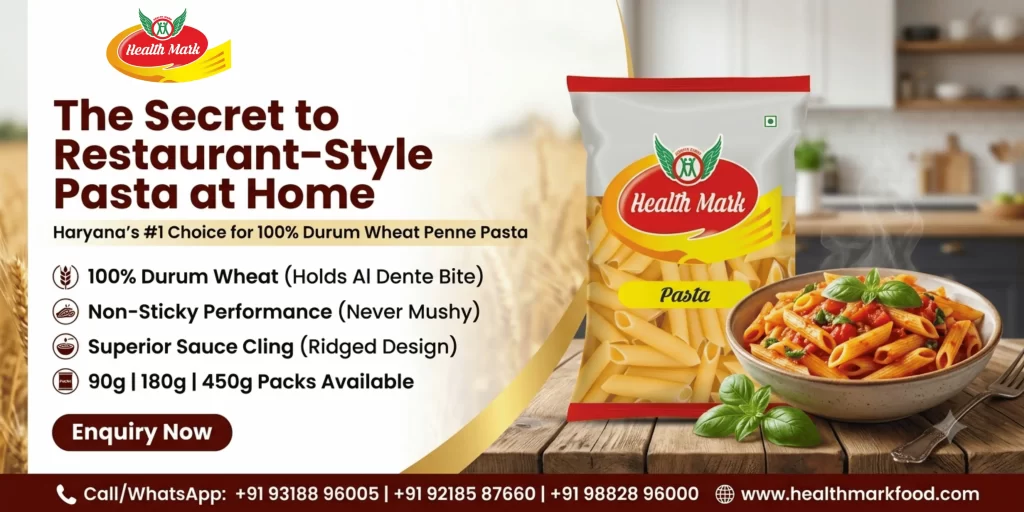
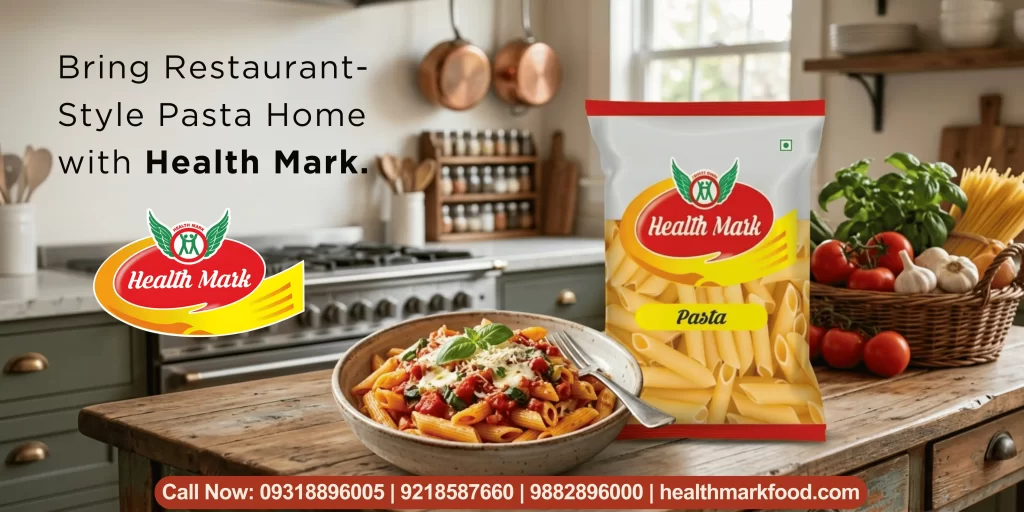
Health Mark’s Penne Pasta is made from high-quality durum wheat and is positioned specifically for households and food businesses that want a premium quality Penne Pasta without paying import prices for imported Italian brands.
What Makes Health Mark Penne Pasta Different
Made From High-Quality Durum Wheat
The pasta is produced from carefully selected durum wheat, which is what delivers the firm texture and “perfect bite” that separates good pasta from average pasta.
Firm Texture, Non-Sticky Cook
Health Mark Penne Pasta is designed to cook evenly and stay firm rather than turning starchy or clumping together in the pot a common complaint with lower-grade pasta.
Excellent Sauce Absorption
The ridged, tubular shape is built to hold both creamy white sauces and tangy tomato-based sauces beautifully, so every forkful carries flavour rather than just the pasta itself.
Hygienically Packed for Freshness
Each pack is sealed to protect the pasta’s freshness and quality from the manufacturing unit all the way to your kitchen shelf.
Flexible Pack Sizes
Available in 90gm, 180gm, and 450gm packs suitable for a quick trial, a regular family meal, or bulk cooking for gatherings and small food businesses.
Health Mark vs Other Penne Pasta Brands: A Quick Comparison
Here is how the essentials typically stack up when comparing a North India–based durum wheat brand like Health Mark against generic or imported alternatives commonly available in Indian retail.
| Factor | Health Mark Penne Pasta | Generic Local Brands | Imported Brands |
| Core ingredient | High-quality durum wheat | Often mixed/refined wheat | Durum wheat (varies by brand) |
| Texture after cooking | Firm, non-sticky | Can turn sticky/mushy | Usually firm |
| Sauce absorption | Strong (ridged tube shape) | Inconsistent | Strong |
| Pack size flexibility | 90gm / 180gm / 450gm | Limited options | Usually large packs only |
| Price positioning | Competitive, mid-range | Low, but variable quality | Premium/high due to import cost |
| Regional manufacturing base | Baddi, North India | Varies | Manufactured abroad |
| Freshness to North India buyers | Shorter supply chain | Varies | Longer supply chain |
How to Cook Perfect Penne Pasta at Home (Step-by-Step)
1. Boil water generously: Use about 1 litre of water for every 100gm of pasta, in a large pot so the pasta has room to move.
2. Salt the water: Add salt once the water is boiling this seasons the pasta from the inside out, not just the surface.
3. Add pasta and stir immediately: Stir for the first minute to stop the pieces from sticking together.
4. Cook to al dente: Boil for 10–12 minutes, tasting a piece a minute or two before the package time is up. It should be firm with a slight bite, not soft throughout.
5. Reserve a cup of pasta water: This starchy water is useful for loosening sauces later without diluting flavour.
6. Drain, don’t rinse: Rinsing washes away the starch that helps sauce cling to the pasta. Drain and move straight to your sauce.
7. Toss with sauce off the heat: Combine pasta and sauce in the pan for a minute so every piece is coated evenly, adding a splash of reserved pasta water if it looks dry.
Popular Penne Pasta Recipes You Can Try Today
Classic Red Sauce Penne
A tomato-based sauce with garlic, onion, basil or oregano, and a touch of chilli flakes simmered until it thickens, then tossed with boiled penne for a comforting, tangy plate.
Creamy White Sauce Penne
A béchamel-style sauce made from butter, flour, and milk, finished with cheese, black pepper, and sautéed vegetables a favourite for kids and for those who prefer a milder, richer flavour.
Spicy Arrabbiata Penne
A fiery Italian classic built on tomatoes, garlic, and red chilli, offering bold heat for those who want their pasta night with a kick.
Desi-Style Masala Penne
An Indianised take using onion-tomato masala, paneer or vegetables, and everyday spices a practical way to introduce penne pasta into a typical Indian dinner rotation.
Common Mistakes to Avoid When Buying or Cooking Penne Pasta
• Choosing the cheapest pack blindly: Ultra-low prices often mean lower wheat quality, which shows up as mushy or bland pasta after cooking.
• Not salting the boiling water: Skipping this step results in flat-tasting pasta no matter how good the sauce is.
• Overcooking past al dente: Leaving pasta in boiling water too long makes it soft and starchy, and it will continue to soften once mixed with hot sauce.
• Rinsing the pasta after draining: This removes the surface starch that helps sauce stick, leaving you with slippery, under-flavoured pasta.
• Ignoring pack size for your household: Buying a large 450gm pack for a one-time trial (or a tiny pack for a family gathering) leads to either waste or running short.
• Not checking manufacturing details: Skipping a look at where and how the pasta is made means missing out on genuinely comparing sellers on quality, not just price.
Is Penne Pasta Healthy? A Look at Durum Wheat Nutrition
Durum wheat is a hard wheat variety that is naturally higher in protein and has a lower glycemic response compared to many refined flour products, which is part of why durum-based pasta is often recommended over instant noodle alternatives for a more balanced meal. Penne pasta made from durum wheat can be paired with vegetables, lean protein, and healthy fats (like olive oil) to build a genuinely balanced plate rather than an empty-carb dinner.
As with any packaged food, portion control and the sauce you pair it with matter a vegetable-loaded red sauce penne is a very different nutritional profile from a cheese-heavy white sauce version. For readers with specific dietary needs, it is worth checking the nutrition label on the pack and, where relevant, speaking with a nutritionist.
Best Penne Pasta Price in India: What You Should Expect
Pricing for quality durum wheat penne pasta in India typically scales with pack size rather than following a flat per-gram rate, since smaller packs carry proportionally higher packaging costs. As a buyer, here is a simple way to evaluate whether a best Penne Pasta price is fair:
• Compare price per 100gm across brands rather than comparing pack-to-pack, since sizes vary (90gm, 180gm, 450gm and beyond).
• Factor in ingredient quality genuine durum wheat pasta will generally cost a little more than pasta made from blended or refined flour, and that difference is usually worth it in texture and taste.
• Watch for bulk or multi-pack pricing if you cook pasta regularly or run a small food business, as most sellers offer better per-unit value on larger packs.
For exact, current pricing on Health Mark’s 90gm, 180gm, and 450gm Penne Pasta packs, it’s best to check the live product listing or contact the sales team directly, since pricing can be updated periodically.
Why Buy Penne Pasta Online from Health Mark
• Regional manufacturing advantage: Produced in Baddi, North India, keeping the supply chain shorter for buyers across Punjab, Himachal Pradesh, Haryana, Chandigarh, and neighbouring states.
• Focus on durum wheat quality: Built around a firm, non-sticky, sauce-friendly cook rather than a generic mass-market recipe.
• Part of a wider trusted food range: Health Mark also manufactures atta, besan, pulses, spices, dry fruits, and other Italian staples like Elbow Pasta Macaroni and Vermicelli, reflecting an established food-manufacturing operation rather than a single-product seller.
• Direct ordering options: You can enquire, order, or ask questions directly via call or WhatsApp instead of navigating a crowded third-party marketplace.
How to Order Health Mark Penne Pasta
You can explore the full product details and place an enquiry directly on the official product page, browse the wider Italian range, or reach the sales team using the contact details below.
Browse the full Italian range (Penne, Macaroni, Vermicelli) https://healthmarkfood.com/product-category/italian/
Visit the Health Mark homepage https://healthmarkfood.com/
Call or WhatsApp the Sales Team
• +91 93188 96005
• +91 92185 87660
• +91 98828 96000
FAQ
Who is the best Penne Pasta seller in North India?
Health Mark, manufactured out of Baddi, Himachal Pradesh, is a strong option for buyers across North India looking for durum wheat penne pasta with a firm, non-sticky texture and hygienic packaging, alongside a wider trusted range of Italian and everyday food staples.
What is penne pasta made from?
Quality penne pasta, including Health Mark’s version, is made from durum wheat (semolina), a hard wheat variety known for higher protein content and the firm bite associated with authentic pasta.
What pack sizes does Health Mark Penne Pasta come in?
Health Mark Penne Pasta is available in 90gm, 180gm, and 450gm packs, catering to single trials, regular family cooking, and bulk requirements.
How do I cook Health Mark Penne Pasta perfectly?
Boil in generously salted water for 10–12 minutes until al dente, drain without rinsing, and toss immediately with your chosen sauce, adding a splash of reserved pasta water if needed.
Is durum wheat penne pasta healthier than regular pasta?
Durum wheat generally has a higher protein content and a firmer structure than pasta made from refined flour blends, making it a comparatively better base when paired with vegetables and lean proteins in a balanced meal.
Where is Health Mark Penne Pasta manufactured?
It is manufactured at Health Mark’s facility in the Industrial Township, Bhatoli Kalan, Baddi, Himachal Pradesh close to Chandigarh, Panchkula, and Ludhiana.
How can I check the best Penne Pasta price before ordering?
You can check current pricing directly on the official product page or confirm details with the sales team via call or WhatsApp before placing an order.
Can I use Health Mark Penne Pasta for both red sauce and white sauce recipes?
Yes. Its ridged, tubular shape is designed to hold both tomato-based red sauces and creamy white sauces well, making it suitable for a wide range of Italian-style and Indian-style pasta recipes.
How do I place a bulk order for a restaurant or food business?
You can contact the Health Mark sales team directly at +91 93188 96005, +91 92185 87660, or +91 98828 96000 to discuss bulk quantities and pricing.
Does Health Mark deliver Penne Pasta across all of North India?
Health Mark’s manufacturing base in Baddi is centrally positioned for North Indian markets; for delivery availability in your specific city, it’s best to confirm directly through the product enquiry page or sales team.
Conclusion
Choosing the best Penne Pasta seller in North India really comes down to three things: genuine durum wheat quality, a manufacturing process you can actually trust, and pricing that reflects real value rather than a marketing label. Health Mark checks each of those boxes with its Baddi-manufactured, durum wheat Penne Pasta firm, non-sticky, sauce-friendly, and hygienically packed in 90gm, 180gm, and 450gm options to suit any kitchen.
Ready to taste the difference for yourself? Explore Health Mark’s Penne Pasta on the official product page, browse the full Italian range, or call the sales team directly to place your order today.