
Walk down the snacks aisle of any Indian grocery store and you’ll find a dozen packets of poha lined up, each one promising to be “premium,” “pure,” or “the best.” For a dish that seems this simple just flattened rice, after all picking the right one feels surprisingly hard. Some packets cook into a mushy paste. Others stay hard no matter how long you soak them. A few smell faintly of stale grain the moment you open the bag.
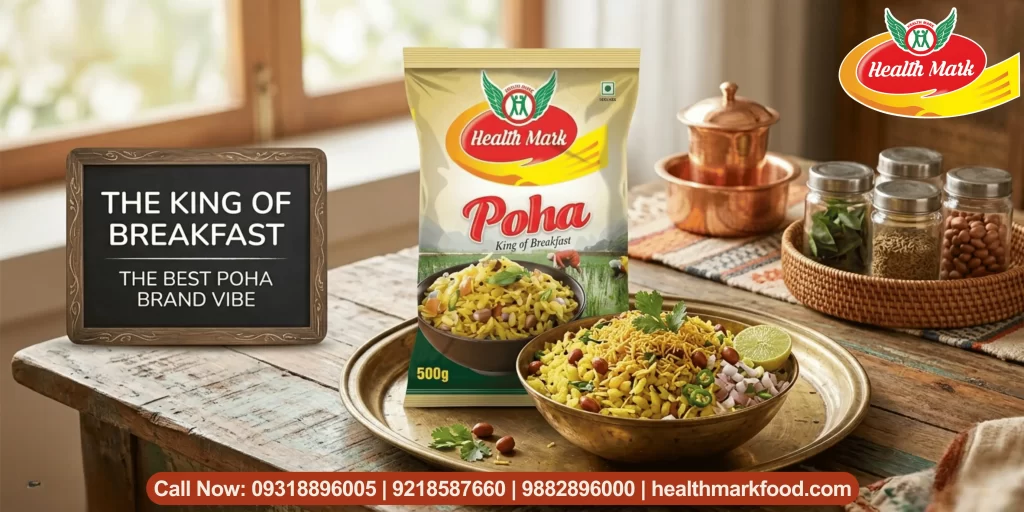
If you’ve ever stood in that aisle wondering which brand poha is best, you’re not alone. This guide breaks down exactly what separates a good poha brand from a forgettable one the processing method, the grain quality, the packaging, and the small details most shoppers never think to check. By the end, you’ll know precisely what to look for the next time you buy poha, whether you’re a home cook making a quick breakfast or a business owner sourcing in bulk.
What Is Poha and Why Does Brand Quality Matter?
Poha is parboiled rice that has been flattened into thin, dry flakes. It’s one of India’s most-loved breakfast staples light on the stomach, quick to cook, and versatile enough to be sweet, spicy, or savoury depending on the region. In Maharashtra it becomes kanda poha with onions and peanuts; in Gujarat it’s tempered with lemon and sugar; in Madhya Pradesh, Indore-style poha is practically a street-food institution.
But here’s what most people don’t realise: poha isn’t just “flattened rice” in a generic sense. The paddy variety used, the moisture content during flattening, the thickness of the flake, and the hygiene of the processing unit all directly affect how the poha cooks, tastes, and holds up on your plate. Two packets that look identical on the shelf can behave completely differently in the kitchen one turns fluffy and separate, the other clumps into a sticky mess.
This is exactly why brand matters. A trustworthy, well-processed poha brand controls these variables consistently, batch after batch. A cheap, unbranded, loose poha sold without traceability often doesn’t.
How Poha Is Made And Why the Process Decides the Quality
Understanding the manufacturing process helps you judge quality far better than reading a label alone. Broadly, poha production follows these steps:
- Paddy selection Good manufacturers start with clean, mature paddy free from broken grains or impurities.
- Soaking and parboiling The paddy is soaked and lightly steamed, which locks in nutrients and makes the grain easier to flatten.
- Roasting Controlled roasting removes excess moisture without over-drying the grain.
- Flattening (pressing) The roasted grain passes through rollers that flatten it into flakes. This is where thickness thick, medium, or thin is decided.
- Sorting and packing Quality manufacturers sieve out broken flakes, dust, and husk before hygienically packing the poha to protect it from moisture and pests.
Every one of these steps is a place where quality can slip. Rushed roasting leaves poha half-cooked and gritty. Poor sorting means you’re paying for a packet full of broken bits and chaff. Careless packing lets in humidity, which is why some poha smells musty even before the expiry date. When you’re comparing brands, you’re really comparing how carefully each company controls this entire chain not just the final flake you see through the packet.
7 Factors That Decide Which Brand Poha Is Best
When people ask which brand poha is best, they’re usually really asking, “which poha will actually taste good and cook properly in my kitchen?” Here are the seven things worth checking before you buy:
- Grain source and purity Look for poha made from good-quality rice with minimal broken grains, dust, or foreign particles.
- Texture consistency Every flake in the packet should be roughly the same thickness. Uneven flakes cook unevenly some turn mushy while others stay raw.
- Colour Fresh, well-processed poha has a light, natural white-to-cream colour. Greyish or overly bright white poha can indicate poor processing or artificial treatment.
- Aroma Good poha smells mildly nutty and neutral. Any sour, musty, or chemical smell is a red flag for old stock or poor storage.
- Cooking behaviour Quality poha softens in 1–2 minutes of rinsing or soaking in water, without turning sticky or falling apart.
- Hygiene certifications Brands that follow FSSAI norms and maintain ISO, GMP, or HACCP-aligned processing facilities are generally more accountable for consistency and food safety.
- Packaging Sealed, moisture-resistant packaging protects poha from humidity, insects, and contamination far better than loose, open sacks.
If a brand checks most of these boxes consistently, pack after pack, it’s a strong sign you’ve found a reliable one.
Thick vs. Thin Poha: Which One Should You Buy?
Not all poha is meant for the same recipe, and this is one of the most overlooked reasons people end up disappointed with a “bad” batch that was actually just the wrong type for their dish.
| Poha Type | Best For | Cooking Behaviour |
| Thick poha | Kanda poha, batata poha, poha upma | Holds shape well, needs slightly longer soaking, stays fluffy |
| Medium poha | Everyday breakfast poha, mixed vegetable poha | Balanced texture, cooks quickly, versatile |
| Thin poha | Poha chivda, poha bhel, instant snacks | Crisps up well when roasted or fried, softens almost instantly in liquid |
If you’ve bought poha before and found it “too mushy,” there’s a good chance you used thin poha for a dish that needed the thick variety, or soaked it for too long. Matching the flake thickness to your recipe is just as important as the brand you choose.
Poha Nutrition: What You’re Actually Eating
Part of poha’s popularity comes from its reputation as a light, easily digestible food and nutritionally, that reputation largely holds up. A typical serving of plain poha (flattened rice) is:
- Low in fat, especially when prepared with minimal oil
- A source of easily digestible carbohydrates, making it a common choice for a light breakfast
- Naturally gluten-free, since it’s rice-based
- Iron-retentive, as the parboiling process used in poha production helps preserve some of the iron and B-vitamins naturally present in rice
- Easy to fortify, since poha pairs naturally with peanuts, vegetables, and legumes to build a more balanced, protein-rich meal
Because poha is so mild in flavour and light on the stomach, it’s frequently recommended as a recovery food and a common choice on light-eating days. That said, the nutritional value of your final plate still depends heavily on how it’s cooked a poha loaded with extra oil and deep-fried garnishes won’t offer the same light-meal benefits as a poha tempered simply with mustard seeds, curry leaves, and vegetables.
Comparison Table: How to Judge Any Poha Brand
Use this checklist the next time you’re comparing packets on a store shelf or scrolling through options online:
| Criteria | What to Look For | Why It Matters |
| Grain quality | Uniform, unbroken flakes | Affects cooking texture and taste |
| Processing hygiene | FSSAI-compliant, ISO/GMP/HACCP-aligned facility | Ensures food safety and consistency |
| Packaging | Sealed, moisture-proof pouches | Preserves freshness and shelf life |
| Aroma & colour | Neutral smell, natural cream-white colour | Indicates freshness and proper roasting |
| Available quantities | Multiple pack sizes (e.g., 80g, 350g, 500g) | Useful for both households and bulk buyers |
| Traceability | Clear manufacturer address and contact details | Builds trust and accountability |
| Price consistency | Fair, stable pricing without unexplained fluctuation | Reflects supply chain reliability |
A brand that performs well across most of these rows is a genuinely strong contender for “best poha brand in India” not just because of marketing, but because of measurable, repeatable quality.
Why Health Mark Poha Stands Out
So, where does this leave you when you’re actually standing in front of the shelf? Health Mark Poha is built around the exact quality markers discussed above, which is why it consistently comes up when people search for premium quality poha in India.
Here’s what makes it a dependable choice:
- Premium quality flattened rice sourced and processed to maintain a consistent, light texture batch after batch.
- Quick-cooking, easy-to-digest flakes ideal for busy mornings when you need breakfast on the table fast.
- Hygienically processed and packed Health Mark operates under FSSAI guidelines and follows ISO-certified, GMP, and HACCP-aligned processes at its manufacturing facility in Baddi, Himachal Pradesh, helping ensure every pack meets consistent safety and quality standards.
- Part of a trusted FMCG portfolio Health Mark isn’t a one-product brand chasing a trend; it’s an established food company also known for its besan and spices ranges, alongside a wider snacks category, which reflects broader manufacturing experience and quality control across product lines.
If you’re looking for a best poha seller that combines traceable sourcing, hygienic processing, and consistent grain quality, Health Mark Poha is worth adding to your shortlist. You can explore the full product listing here or place a quick enquiry directly with the team.
Poha Price Guide: What Should You Really Pay?
Poha price in India varies based on flake thickness, brand positioning, and pack size, but as a shopper, the goal isn’t to chase the cheapest packet on the shelf it’s to get fair value for consistent quality. A few pointers:
- Unusually cheap poha is often a sign of higher broken-grain content, poor sorting, or older stock you may end up using more product per meal to get the same result.
- Mid-range, well-packaged poha from an established, FSSAI-compliant brand typically offers the best balance of price and reliability for everyday households.
- Bulk or wholesale poha pricing (for restaurants, caterers, or retailers) should always be paired with a check on the supplier’s hygiene certifications a lower per-kg rate isn’t worth it if spoilage or inconsistency eats into your margins.
Common Mistakes People Make While Buying Poha
Even careful shoppers slip up here. Watch out for these common mistakes:
- Buying loose, unpackaged poha without checking hygiene or storage conditions.
- Ignoring the manufacturing/packing date poha does have a shelf life, and older stock cooks and tastes noticeably different.
- Choosing the wrong thickness for the recipe, then blaming the brand for “bad” texture.
- Over-soaking poha, which turns even good-quality flakes mushy a light rinse or brief soak is usually enough.
- Storing poha incorrectly after opening, which lets in moisture and invites pests.
- Assuming all “premium” labels are equal without checking for actual certifications like FSSAI, ISO, or HACCP.
How to Store Poha for Maximum Freshness
Even the best poha brand can disappoint you if it’s stored poorly at home. Follow these simple steps:
- Transfer poha into an airtight container immediately after opening the packet.
- Store it in a cool, dry place, away from direct sunlight and humidity.
- Avoid storing poha near strong-smelling spices, as flattened rice can absorb odours easily.
- Use opened poha within 4–6 weeks for the best taste and texture.
- Always check for a musty smell or discolouration before cooking if either appears, discard the batch.
Best Ways to Use Poha Beyond Breakfast
While poha is best known as a breakfast dish, its versatility makes it far more useful than a single meal slot:
- Kanda Poha the classic onion-tempered breakfast, garnished with coriander and lemon.
- Poha Chivda a crunchy, roasted snack mix made with thin poha, peanuts, and spices great for tea-time or travel.
- Poha Cutlets or Tikkis mashed with potatoes and spices, shallow-fried for a quick evening snack.
- Poha Khichdi a light, one-pot meal combined with vegetables and mild spices, gentle on digestion.
- Sweet Poha tempered with jaggery or sugar, coconut, and cardamom, popular in Gujarati and Bengali households.
This flexibility is part of why poha remains a pantry essential across Indian kitchens one good-quality packet can serve breakfast, snacks, and even light dinners through the week.
Expert Tips for Choosing a Reliable Poha Supplier
If you’re buying poha for a household, a small eatery, or as a retailer looking to stock it, keep these expert tips in mind:
- Ask about certifications directly a genuine top poha supplier will readily share FSSAI registration and quality certification details.
- Request a sample batch before committing to bulk orders, especially for restaurants and retail stockists.
- Check pack sizes offered a supplier offering multiple sizes (retail and bulk) is usually better equipped to serve varied buyer needs.
- Confirm shelf life and storage guidance a transparent supplier will always specify this clearly.
- Look for an established manufacturing footprint brands with a dedicated production facility (rather than just a trading or repackaging setup) tend to offer more consistent quality control.
FAQ
1. Which brand poha is best for daily breakfast?
The best poha brand for daily breakfast is one that offers consistent grain quality, hygienic processing, and quick-cooking flakes. Health Mark Poha is a strong option, offering premium flattened rice in convenient 80gm, 350gm, and 500gm packs suited for everyday use.
2. What is the difference between thick and thin poha?
Thick poha holds its shape well and is ideal for dishes like kanda poha or batata poha, while thin poha softens almost instantly and is better suited for chivda, bhel, or quick snacks.
3. Is poha healthy for weight loss?
Poha is light, low in fat, and easy to digest, which is why it’s often included in weight-conscious diets. Preparing it with minimal oil and adding vegetables or peanuts for extra fibre and protein makes it an even more balanced choice.
4. How can I tell if poha is good quality before cooking it?
Check for uniform flake size, a natural cream-white colour, a mild neutral aroma, and minimal broken grains or dust in the packet. Poor-quality poha often has an uneven texture or a musty smell.
5. How long does poha stay fresh after opening the packet?
When stored in an airtight container in a cool, dry place, poha typically stays fresh for around 4–6 weeks after opening. Always check for smell or discolouration before use.
6. Why does my poha turn mushy every time I cook it?
This usually happens due to over-soaking or using thin poha for a recipe meant for thick poha. A brief rinse or short soak, matched to the correct flake thickness, prevents this.
7. What is the average poha price in India?
Poha price varies with flake thickness, brand, and pack size, and can also shift with the paddy season. It’s best to check current rates directly with a trusted seller for accurate, up-to-date pricing.
8. Is Health Mark a good poha brand for bulk or wholesale buying?
Yes. Health Mark offers poha in multiple pack sizes and operates under FSSAI guidelines with ISO-certified, GMP, and HACCP-aligned processes, making it a suitable option for both household and bulk or business needs. You can contact the team directly for wholesale enquiries.
9. Does poha contain gluten?
No, poha is made from rice, which is naturally gluten-free, making it suitable for people avoiding gluten in their diet.
10. Where can I buy premium quality poha online in India?
You can buy premium quality Health Mark Poha directly through the official product page or by contacting the team via phone or WhatsApp for orders and bulk enquiries.
Final Verdict: Which Brand Poha Is Best?
There’s no single universal answer to “which brand poha is best” but there is a reliable method for finding out. Look past the packaging claims and check the fundamentals: grain purity, processing hygiene, consistent texture, proper certifications, and transparent sourcing. A brand that gets these right, consistently, earns your trust one packet at a time.
Health Mark Poha checks these boxes with premium quality flattened rice, hygienic FSSAI-compliant processing, and pack sizes suited for every kitchen from a single household breakfast to bulk business orders. If you’re ready to taste the difference for yourself, browse Health Mark’s poha range or reach out directly at +91 93188 96005 / +91 92185 87660 / +91 98828 96000 to place your order today.