Ask ten Indian home cooks why their pakoras came out soggy, oily, or bland, and at least six will blame the oil temperature. However, before the pan even heats up, the amount of besan (gram flour) used determines the majority of the outcome. Two batters can utilize the same spices, vegetables, and oil, yet one produces golden, crackly, restaurant-style pakoras, while the other collapses into a greasy, pallid mess. The difference is nearly usually in the flour.
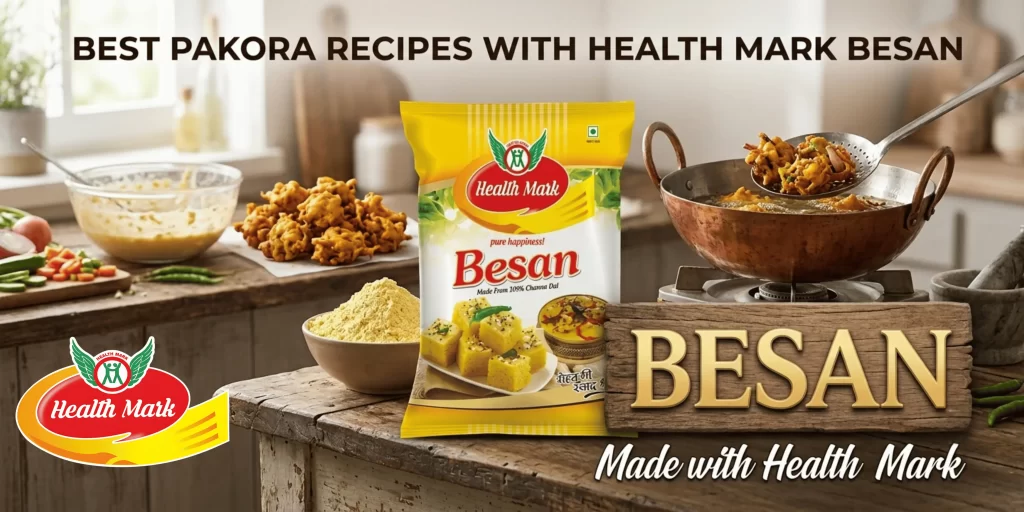
This tutorial answers the most frequently asked question: which besan works best for pakora and why. We’ll go over the various types of besan sold in India, the specific qualities that make a besan “pakora-grade,” how to judge a premium quality besan by sight and smell, what a fair besan price looks like, and how a trusted best besan brand in India, such as Health Mark Besan, fits into all of this. By the end, you’ll be able to walk into any store or shop online and confidently select the appropriate bundle.
What Exactly Is Besan? A Quick Refresher
Besan is the flour made by grinding dried, dehusked, and split chana dal (Bengal gram). It’s naturally gluten-free, high in protein compared to wheat flour, and has a distinctive nutty flavour that becomes even more pronounced once it’s fried or roasted. In Indian kitchens, besan isn’t just for pakora it’s the backbone of dhokla, kadhi, cheela, laddoo, and countless regional snacks. But pakora is arguably the toughest test for besan, because the flour has almost nowhere to hide: it’s the main structural ingredient, it’s fried at high heat, and any impurity, staleness, or coarseness shows up immediately in texture and taste.
Not all besan sold in the market is created equal, though. Milling technique, dal quality, moisture content, and storage conditions all change how a batter behaves in hot oil which is exactly why “besan is besan” is a myth worth retiring.
Types of Besan Available in India Compared
Walk down any grocery aisle or browse a besan product category online, and you’ll notice besan isn’t sold as a single, uniform product. Here are the main variants you’ll come across, and how each performs for pakora specifically.
| Besan Type | Texture | Best Used For | Good for Pakora? |
| Fine Besan (standard) | Smooth, uniform, silky | Pakora, kadhi, cheela, batters | Yes the classic pakora choice |
| Bareek Besan | Extra-fine, almost powder-like | Delicate sweets, smooth batters, dhokla | Yes gives a lighter, crisper coating |
| Motichur / Mota Besan | Slightly coarse, granular | Motichur laddoo, boondi | Not ideal alone better blended for texture |
| Powder Besan | Ultra-fine powder | Sweets, thickening, quick-mix batters | Works, but can make batter too smooth/soft without added rice flour |
For most home cooks asking which besan is best for pakora, the answer is straightforward: a good-quality fine besan (or a fine besan blended with a spoon of rice flour for extra crunch) is the safest, most versatile pick. Bareek besan is an excellent upgrade if you specifically want an ultra-light, delicate coating.
How to Choose the Best Besan for Pakora: 7 Buying Criteria
Whether you’re buying from a local kirana store or looking to buy besan, use these seven checkpoints. They apply whether you’re picking a 200gm pack for home use or evaluating options as a bulk buyer.
Colour
Good besan has a consistent, natural bright yellow colour. Dull, greyish, or patchy besan often signals old stock, poor dal quality, or improper storage.
Texture
Rub a pinch between your fingers. It should feel smooth and slightly silky not gritty (a sign of coarse, uneven grinding) and not clumpy or damp (a sign of moisture contamination).
Aroma
Fresh besan smells mildly nutty and earthy. A sour, musty, or “off” smell almost always means the flour is old, has absorbed moisture, or has gone slightly rancid this will ruin your pakora batter’s flavour no matter how good your spices are.
Purity (No Adulteration)
Some cheaper besan is cut with corn flour, tapioca starch, or other cheap fillers to bulk up weight. This is one of the biggest hidden reasons pakoras turn soft or oily. Always check the ingredient list it should say 100% chana dal / Bengal gram, nothing else.
Fineness Level
For pakora, a fine, uniform grind traps air better in the batter, giving you that classic crisp, slightly puffy coating. Overly coarse besan tends to soak up more oil.
Packaging & Freshness Date
Besan absorbs moisture and odours quickly if the packaging is weak. Look for besan sold in sealed, food-grade packaging with a visible manufacturing/best-before date, rather than loose flour of unknown age.
Hygiene & Certification
A trustworthy best besan seller will highlight FSSAI compliance and hygienic, dust-free processing facilities. This isn’t just a formality it directly affects shelf life and safety.
How to Identify a Premium Quality Besan Brand
With so many packets on the shelf claiming to be the “best besan brand in India,” here’s a practical filter you can apply in under a minute:
• Ingredient transparency: The pack clearly states 100% chana dal with no blends or fillers.
• Consistent batch quality: Colour, texture, and aroma should be identical pack after pack inconsistency usually means poor quality control.
• Visible sourcing story: Reputable manufacturers explain how and where their chana dal is sourced and milled.
• Multiple pack sizes: A brand offering 55gm to 1kg (or larger, bulk) packs signals it caters to both trial buyers and serious home cooks or bulk users.
• Customer accessibility: Easy-to-reach contact numbers, WhatsApp support, and responsive service usually indicate a brand that stands behind its product.
This is exactly the criteria worth applying to Health Mark Besan, one of the top selling besan in India options for households looking for a dependable, everyday pantry staple.
Why Health Mark Besan Is a Top Choice for Pakora
Health Mark Besan is milled from carefully selected chana dal and ground to a smooth, fine consistency designed to perform well across both savoury dishes like pakora and kadhi, and sweet preparations like laddoo. Here’s what stands out about it as a besan option for pakora specifically:
• Made from premium quality chana dal, without added starches or fillers.
• Smooth, fine texture that blends evenly into batter no lumps, no grittiness.
• Rich, natural nutty flavour that comes through even after frying.
• Hygienically processed and sealed to protect freshness from the mill to your kitchen.
• Available in multiple formats to match different needs: standard Besan, Bareek Besan (for extra-fine, delicate batters), Motichur / Mota Besan (for laddoo and boondi), and Powder Besan (for sweets and quick-mix uses).
For the standard pakora-friendly besan specifically, see the Health Mark Besan product page, available in 55gm, 200gm, 500gm, and 1kg packs convenient whether you’re trying it for the first time or stocking up for a festive season of frying.
If you also cook with spice-heavy pakora batters (ajwain, red chilli powder, garam masala), it’s worth pairing your besan with a trusted spice source Health Mark’s spice range is available in the same store, which can simplify your kitchen shopping into one order.
Besan Price in India: What Affects the Cost
People often ask about besan price as if there’s one fixed number, but pricing genuinely varies based on a few honest factors. Understanding these helps you judge whether a deal is actually good value, or just cheap for a reason.
| Factor | How It Affects Price |
| Chana dal quality | Higher-grade, cleaner dal costs more to source but yields better colour, taste, and shelf life. |
| Milling technique | Fine, controlled grinding (vs. mass, low-cost grinding) costs slightly more but improves texture. |
| Packaging | Sealed, food-grade, moisture-resistant packaging adds cost but protects freshness cheaper loose packaging often means a shorter usable life. |
| Pack size | Smaller packs (55gm–200gm) have a higher per-kg price than bulk packs (500gm–1kg+), which is normal across most packaged foods. |
| Brand trust & hygiene certification | FSSAI-compliant, hygienically processed besan typically carries a modest premium over uncertified, loose-market flour. |
The takeaway: don’t chase the lowest besan price blindly. A slightly higher price for a genuinely premium quality besan usually pays for itself in better texture, less oil absorption, and a longer shelf life meaning less wastage.
Step-by-Step: The Perfect Crispy Pakora Recipe
Once you’ve picked the right besan, technique does the rest. Here’s a reliable, restaurant-style method that works with onion, potato, spinach, or paneer pakora.
1. In a large bowl, take 1 cup fine besan. Add 1 tsp red chilli powder, ½ tsp turmeric, 1 tsp ajwain (carom seeds), a pinch of hing (asafoetida), and salt to taste.
2. Add your chopped vegetables (onion, potato slices, spinach leaves, etc.) directly into the dry besan mix and toss well, so the vegetables release a little moisture and coat themselves in flour first.
3. Add water gradually, a tablespoon at a time, mixing continuously. Stop once the batter is thick enough to coat the back of a spoon too thin, and pakoras will absorb excess oil; too thick, and the coating turns doughy.
4. Rest the batter for 5–10 minutes. This lets the besan hydrate fully, which improves crispness.
5. Heat oil to a medium-high temperature (around 170–180°C). Test with a small drop of batter it should sizzle and rise steadily, not sink or burn instantly.
6. Fry in small batches, turning occasionally, until golden brown and firm to the touch usually 3–5 minutes per batch.
7. Drain on a wire rack or paper towel (a rack keeps the underside crisp longer than paper alone) and serve immediately with chutney or ketchup.
Expert Tip: Adding one tablespoon of rice flour to your besan batter is a well-known trick among Indian home cooks and street vendors for an even crunchier, longer-lasting crisp especially useful if your pakoras need to stay crisp for a party spread.
Common Mistakes People Make With Besan for Pakora
• Using stale or long-stored besan: Old besan loses aroma and can taste faintly bitter once fried.
• Skipping the batter rest time: Un-rested batter often fries unevenly and tastes “raw” in the centre.
• Making the batter too watery: This is the single biggest cause of oily, limp pakoras.
• Frying at low oil temperature: Pakoras soak up oil like a sponge if the oil isn’t hot enough before the first batch goes in.
• Overcrowding the pan: This drops the oil temperature suddenly and leads to soggy, unevenly cooked pakoras.
• Ignoring the ingredient label: Choosing the cheapest packet without checking for fillers or adulteration, which affects both taste and texture.
How to Store Besan So It Stays Fresh Longer
• Always store besan in an airtight container, away from direct sunlight and heat.
• Keep it in a cool, dry pantry shelf humidity is besan’s biggest enemy, as it encourages clumping and mould.
• If you live in a humid climate or buy in bulk, consider refrigerating besan in a sealed container to extend freshness by several weeks.
• Always use a dry spoon when scooping besan moisture introduced from a wet spoon is one of the most common causes of spoilage.
• Buy pack sizes that match your usage. A 1kg pack sitting half-used for months will lose quality faster than restocking smaller 200gm–500gm packs more frequently.
Health Benefits of Besan
Besan isn’t just a frying-batter staple it also brings genuine nutritional value to the table, which is one reason it has stayed a kitchen essential across generations.
• Naturally gluten-free, making it suitable for people avoiding wheat-based flours.
• Higher protein content compared to refined wheat flour, since it’s derived from a pulse (chana dal).
• Good source of dietary fibre, which supports digestion.
• Contains folate and other micronutrients naturally present in chana dal.
Of course, pakora is a fried dish, so the overall health profile of the meal also depends on oil quantity, portion size, and cooking method but starting with a clean, pure besan (no fillers or additives) is the healthiest possible base.
Buying in Bulk? What to Look for in a Besan Manufacturer or Supplier
If you run a restaurant, sweet shop, snack unit, or catering business, sourcing decisions matter even more, since besan quality directly affects your finished product at scale. Here’s what to evaluate when comparing a best besan manufacturing partner or a top besan supplier:
• Consistency across large batches bulk besan should match the same colour, fineness, and taste every single time.
• Proper industrial hygiene standards and FSSAI-compliant facilities.
• Transparent sourcing of raw chana dal.
• Flexible pack sizes for both retail resale and back-of-house bulk use.
• Responsive sales support for repeat, reliable ordering.
Health Mark offers besan sourcing and bulk enquiries directly you can reach the sales team at +91 93188 96005, +91 92185 87660, or +91 98828 96000, or explore the full Health Mark website.
FAQ
Which besan is best for pakora fine besan or coarse besan?
Fine besan is generally best for pakora because it creates a smoother, crisper coating and blends evenly with water and spices. Coarse or motichur besan is better suited to laddoo and boondi, not pakora batter.
Can I mix besan with rice flour for crispier pakoras?
Yes. Adding one to two tablespoons of rice flour per cup of besan is a common trick to increase crispness and help pakoras stay crunchy for longer after frying.
How do I know if besan is adulterated?
Check the ingredient list for anything other than 100% chana dal or Bengal gram. Adulterated besan often has an unusually pale colour, a starchy smell, or a chalky texture instead of a smooth, silky feel.
What is the shelf life of good quality besan?
Properly packaged, pure besan typically stays fresh for 4 to 6 months when stored in a cool, dry, airtight container, though this can vary by brand and storage conditions.
Is besan the same as chickpea flour?
Besan is made specifically from chana dal (split Bengal gram), while some Western chickpea flours are made from whole chickpeas (kabuli chana). The flavour and texture can differ slightly, so for authentic Indian recipes like pakora, chana dal-based besan is recommended.
Why do my pakoras turn soggy even with good besan?
Sogginess is usually caused by a batter that’s too watery, oil that isn’t hot enough before frying, or overcrowding the pan. Even the best besan can’t compensate for these technique issues.
What is besan price usually based on?
Besan price depends on chana dal quality, milling fineness, packaging, pack size, and brand certification. Smaller packs cost more per kilogram than bulk packs, which is standard across packaged foods.
Is Health Mark Besan suitable for both pakora and sweets?
Yes. Health Mark offers a standard Besan and Bareek Besan suited to pakora, kadhi, and cheela, along with Motichur/Mota Besan and Powder Besan for sweets like laddoo and boondi.
Can I buy besan online from Health Mark?
Yes, you can browse and enquire about the full besan range, including pack sizes from 55gm to 1kg, on the Health Mark website’s besan category page.
What should I check before buying besan in bulk for a business?
Look for a supplier offering consistent batch quality, transparent sourcing, FSSAI compliance, and flexible pack sizes, and confirm this with direct sales communication before committing to a large order.
Conclusion
So, which besan is best for pakora? The honest answer isn’t a single brand name it’s a checklist: pure chana dal with no fillers, a fine and even texture, a natural yellow colour, a fresh nutty aroma, and hygienic packaging that protects it until it reaches your kitchen. Once you know how to judge these qualities, you’ll never have to guess again while standing in the flour aisle or scrolling through an online store.
If you’d rather skip the guesswork, Health Mark Besan is built around exactly this checklist premium chana dal, fine and consistent milling, and hygienic processing, available in pack sizes to suit every kitchen.
Ready to try it for your next batch of pakoras? Browse the Health Mark Besan range or view the standard Besan pack details. For bulk orders or business enquiries, call +91 93188 96005, +91 92185 87660, or +91 98828 96000.